Anndles ADP-115 vs Plyor P-810
Quick Verdict
The Anndles ADP-115 earns a 70 out of 100, while the Plyor P-810 earns a 68. Choose the Anndles if you want a console style package with a bench, power adapter, a published stereo speaker setup, and a French Dream sound chip, and you do not need published polyphony. Choose the Plyor if you value 128 note polyphony, a specific USB MIDI port, and a desk mode with flip lid more than detailed speaker specs. Both include 88 weighted keys and a triple pedal unit. The Anndles is slightly stronger for sound and touch sensitivity on paper. The Plyor is slightly stronger for connectivity and features.
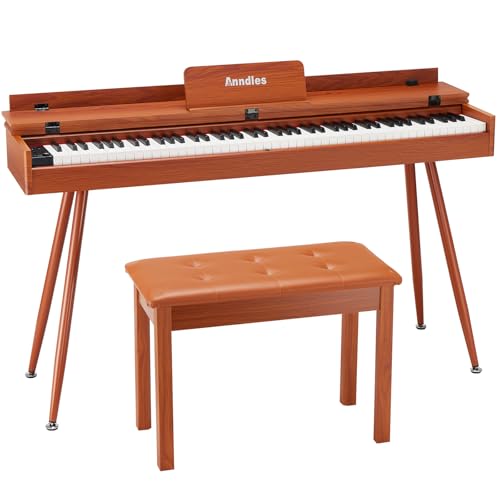
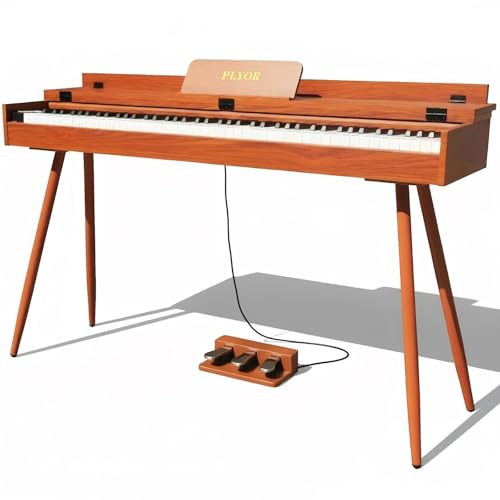
| Spec | Anndles ADP-115 | Plyor P-810 |
|---|---|---|
| Keys | 88 | 88 |
| Key action | Weighted hammer action with touch sensitivity, as described by the listing | Weighted progressive hammer action |
| Polyphony | Not published in listing | 128 note |
| Sounds | Not published in listing; listing names a French Dream sound source chip | Not published in listing |
| Speakers | 2 built-in stereo surround speakers, wattage not published in listing | Not published in listing |
| Connectivity | MIDI functionality and headphone mode listed; exact physical ports not published in listing | USB MIDI, headphone jack |
| Bluetooth | Not published in listing | Not published in listing |
| Pedals included | Three pedal unit indicated by listing title | Sustain, soft, sostenuto triple pedal unit |
| Weight | Not published in listing | Not published in listing |
| Included accessories | Piano bench, power adapter, user manual | Stand, triple pedal unit, desk mode lid |
Key Action
Both the Anndles ADP-115 and the Plyor P-810 offer 88 full size keys with weighted hammer style actions. The Anndles listing describes its key action as a weighted hammer action with touch sensitivity, which means the keys respond to playing dynamics. The Plyor listing describes a weighted progressive hammer action, which typically means the bass keys feel heavier than the treble keys. On the published sub-scores, the Anndles earns 21 out of 30 for key action, while the Plyor earns 20 out of 30.
The Anndles listing does not state whether its hammer action is progressive, graded, or uniform across the keyboard. The Plyor listing does not mention touch sensitivity, though many weighted actions include this feature by default. Without in-person testing, the feel cannot be verified. Beginners should expect a realistic piano like resistance from either model, but the Anndles has a small advantage because its listing explicitly names touch sensitivity.
Piano Sound and Speakers
The Anndles ADP-115 lists a French Dream sound source chip and two built in stereo surround speakers. The wattage of those speakers is not published in the listing. The Plyor P-810 does not publish speaker configuration, wattage, or sound count, but its verdict text mentions a grand piano style sound chip. The Anndles has a higher piano sound sub-score at 18 out of 25, while the Plyor scores 15 out of 25.
Neither model publishes the total number of built in sounds, so variety cannot be compared. The Plyor does publish 128 note polyphony, which helps prevent note dropouts during sustained passages. The Anndles does not publish polyphony, which is a significant unknown. For headphone practice, the Anndles lists a headphone mode, and the Plyor lists a headphone jack. Without speaker wattage for either model, buyers who rely on built in amplification will need to rely on the published descriptions alone.
Both piano sound engines remain partially mysterious because sound counts are not published. The Anndles gives a brand name for its chip, while the Plyor does not publish a chip name in the specs but mentions a grand piano style sound. For buyers who use external amp or headphones, these unknowns matter less. The headphone connection on both models allows private practice without disturbing others.
Features and Modes
The Anndles ADP-115 includes a triple pedal unit, headphone mode, and MIDI functionality, and its pros list says it can double as a small table. The Plyor P-810 includes a triple pedal unit, USB MIDI, a headphone jack, and a desk mode with a flip lid for a workstation feel. The published feature sub-score is 10 out of 15 for the Anndles and 11 out of 15 for the Plyor.
The Plyor's desk mode with flip lid is a practical feature for holding music books, a laptop, or a tablet. The Anndles listing does not mention a desk mode, only that the console can double as a small table. Neither listing mentions built in songs, lesson modes, metronome, transpose, or recording functions, so these cannot be compared. Both models appear focused on core piano functions rather than a broad set of modes.
Build, Design and Portability
The Anndles ADP-115 is described as a console style upright digital piano, and the listing includes a piano bench, which reinforces a home furniture role. The Plyor P-810 includes a stand and a desk mode lid, suggesting a permanent or semi permanent home installation. Both models earn the same build and portability sub-score of 7 out of 10.
Neither listing publishes the weight or dimensions of the instrument, so portability cannot be assessed directly. The Anndles pros list notes that it is likely too heavy for frequent transport, but this is an inference from the console design rather than a published spec. The Plyor also lacks published weight. For buyers who do not plan to move the piano often, either model should fit a dedicated home corner. Those who need a portable slab should look elsewhere.
The desk mode lid on the Plyor suggests a more flexible work surface than the Anndles small table claim. The Anndles includes a bench, which the Plyor does not list. Both consoles should be placed on a level floor against a wall. Since weights are not published, buyers who need to lift the piano up stairs should ask the seller for this information.
Connectivity
The Anndles ADP-115 listing mentions MIDI functionality and a headphone mode, but it does not specify whether the MIDI connection is USB, traditional DIN, or both. The Plyor P-810 listing is more specific, naming USB MIDI and a headphone jack. The published connectivity sub-score is 6 out of 10 for the Anndles and 7 out of 10 for the Plyor.
Neither model lists Bluetooth, wireless audio, or line outputs in its published specs. The Plyor's USB MIDI is a clear advantage for connecting to a computer, tablet, or DAW without an adapter. The Anndles should also connect to a computer using some form of MIDI, but the exact port is not disclosed. Both models support silent practice through a headphone connection.
Setup and Accessories
The Anndles ADP-115 includes a piano bench, a power adapter, a user manual, and a three pedal unit indicated by the listing title. The Plyor P-810 includes a stand, a triple pedal unit, and a desk mode lid. The Plyor listing does not mention a power adapter, so buyers may need to supply one separately or check with the seller.
Both packages include the essential three pedal unit for sustain, soft, and sostenuto functions. The Anndles has an advantage for beginners because the bench and power adapter are listed as included. The Plyor includes a stand, which is also essential for a furniture style setup. Neither listing states assembly difficulty or setup time, but both are likely straightforward for a console or stand based piano.
Daily Use
For everyday home practice, the Anndles ADP-115 offers a weighted hammer action with touch sensitivity, a published stereo surround speaker setup, and a headphone mode. Its triple pedal and included bench support traditional piano posture. The unknown polyphony may be a concern for advanced pieces with sustained chords, but beginners will likely not notice.
The Plyor P-810 offers 128 note polyphony, a weighted progressive hammer action, USB MIDI, and a headphone jack. The desk mode with flip lid can make daily practice more organized by holding books or a tablet. However, the absence of published speaker details means the built in sound may be less predictable. Both models are intended for stationary home use, and neither publishes weight for easy room to room movement.
Daily routines will differ based on included accessories. The Anndles owner can sit on the included bench immediately after setup. The Plyor owner may need a chair if a bench is not supplied. Both triple pedal units support standard piano technique. The unknown speaker output on the Plyor may push more users toward headphone practice.
The Deciding Question
The main deciding question is whether known polyphony and a specific USB MIDI port matter more than an included bench, power adapter, and published speaker configuration. The Anndles ADP-115 lists a French Dream sound chip, stereo surround speakers, and touch sensitivity, but it omits polyphony and exact connectivity ports. The Plyor P-810 lists 128 note polyphony and USB MIDI, but it omits speaker details and sound count.
Overall, the Anndles ADP-115 scores 70 out of 100, while the Plyor P-810 scores 68 out of 100. The Anndles earns its slight edge from a higher piano sound sub-score and an explicit touch sensitivity listing. The Plyor counters with better connectivity and feature sub-scores, plus a clearer polyphony specification. Buyers should weigh these published differences against the gaps in each listing.
Who Should Buy Which
Choose the Anndles ADP-115 if you are a beginner who wants an inexpensive 88 key weighted console piano with a bench, power adapter, a published stereo speaker setup, and a French Dream sound chip. It is best for home use where the piano can double as a small table. Avoid this model if you need published polyphony, exact MIDI ports, Bluetooth, or a portable slab design.
Choose the Plyor P-810 if you want 128 note polyphony, a weighted progressive hammer action, USB MIDI, and a desk mode with flip lid. It includes a stand and triple pedal unit out of the box, but you may need to check on power adapter inclusion. Avoid this model if you need detailed audio specifications, loud built in speakers, or a proven brand sound engine.
Anndles ADP-115
Pros
- 88 weighted keys with hammer action at budget price
- Console style upright with included bench
- Triple pedal unit listed in package
- Headphone mode for quiet practice
- MIDI functionality for computer connection
- Can double as a small table
Cons
- Polyphony and sound count not published
- Speaker wattage and weight not specified
- No Bluetooth or wireless features
- Limited connectivity details
- Likely too heavy for frequent transport
Plyor P-810
Pros
- Full 88 key weighted progressive hammer action
- 128 note polyphony reduces note dropouts
- Includes triple pedal unit and stand
- USB MIDI for computer connectivity
- Desk mode with flip lid for a workstation feel
- Headphone jack for silent practice
Cons
- Speaker power not published
- Sound count not published
- No Bluetooth listed
- Weight and dimensions not published
- Unknown long term build quality
Who Should Buy Each
Anndles ADP-115
- Home beginners who want a furniture style keyboard without a large budget
- Players who prioritize an 88 key weighted action over advanced sounds
- Households that can use the cabinet as a small table or stand
- Buyers who want a bench and triple pedal out of the box
Plyor P-810
- Beginner pianists building finger strength
- Home players who use headphones
- Budget conscious buyers wanting a full size weighted keybed
- Composers who need USB MIDI for software instruments
Quick Decision Guide
| If you want a complete console package with a bench and power adapter included | Choose Anndles ADP-115 |
| If you need known 128 note polyphony to avoid note dropouts | Choose Plyor P-810 |
| If you want published speaker configuration and a named sound chip | Choose Anndles ADP-115 |
| If you need USB MIDI specifically listed and a headphone jack | Choose Plyor P-810 |
| If you value a desk mode with flip lid for a workstation feel | Choose Plyor P-810 |
FAQ
About This Comparison
Mandrillis Team
The Mandrillis editorial team researches and compares audio and music gear using manufacturer documentation, verified specs and real buyer feedback, so you can make a confident purchase without wading through marketing claims.
Read our full research methodology.
We may earn a commission at no extra cost to you.