Boss Katana Mini vs Orange Crush 12
Quick Verdict
The Boss Katana Mini fits players wanting compact battery powered practice with three Katana voicings and a built in tape style delay. Choose it for travel, quiet jamming, and headphone practice. The Orange Crush 12 fits beginners and home players who prefer a simple analog amp with dual gain controls, a three band EQ, and a CabSim output for direct recording. Its 12 watts and 6 inch speaker give more headroom on paper than the Katana Mini, but without built in effects or app features. If you want core Orange tone and straightforward controls, pick the Crush 12. If you want Katana amp models and ambience in a tiny package, pick the Mini.
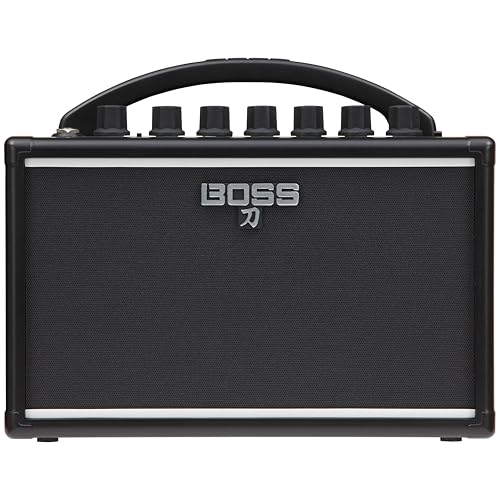

| Spec | Boss Katana Mini | Orange Crush 12 |
|---|---|---|
| Power output | 7 watts | 12 watt |
| Speaker | Not published in listing | 6 inches speaker |
| Amp models or channels | Brown, Crunch, Clean | Not published in listing |
| Effects | Built-in tape-style delay | Not published in listing |
| Inputs and outputs | Aux input; phones/recording output with cabinet voicing (listing does not list a separate guitar input but one is implied) | CabSim output for practice, recording and monitoring (as noted in listing title); other connections not published |
| Headphone and line out | Phones/recording output doubles as headphone and line out with cabinet voicing | CabSim output can serve for practice, recording and monitoring; explicit headphone or line out not specified |
| Bluetooth and app | Not published in listing | Not published in listing |
| Weight | Not published in listing | Not published in listing |
| Dimensions | Not published in listing | Not published in listing |
| Included accessories | Not published in listing | Not published in listing |
Amp Models and Tone
The Boss Katana Mini offers three distinct amp models labeled Brown, Crunch, and Clean. These voicings come from the Katana family and are selected through the amp's controls. The Orange Crush 12 does not publish amp models or channels in its listing, so its voicing relies on the analog gain structure. That makes the Katana Mini more versatile for players who want named amplifier flavors.
The Katana Mini also includes an analog gain circuit and a three band EQ for direct tonal control. The Orange Crush 12 lists dual gain controls and a three band EQ, which should allow clean to overdriven tones. Without published amp models on the Crush 12, direct comparison is limited. However, both amps offer accessible tone shaping without deep menus.
The Brown setting on the Katana Mini is aimed at high gain textures, while Crunch and Clean cover lower gain and clean sounds. The Crush 12's dual gain controls allow a continuous range. Which is better depends on whether you prefer labeled amp types or a simpler gain based approach. The Katana Mini's named models may appeal to those who know Boss Katana tones.
Effects and Features
The Boss Katana Mini includes one built in effect: a tape style delay. This delay adds ambience for practice and jamming. The Orange Crush 12 does not list any built in effects. For players who want echo without external pedals, the Katana Mini has the edge.
Beyond the delay, the Katana Mini does not list other effects such as reverb or modulation. The Crush 12 also omits effects entirely in its published specs. Both amps keep their feature sets simple, but the Katana Mini provides at least one ambient effect. The Crush 12 relies on pure amp tone.
The Katana Mini also has an aux input for jamming with tracks, which is a practical feature. The Crush 12 listing does not mention an aux input. If you often practice along with music from a phone or media player, the Katana Mini offers a direct connection. The Crush 12 may require external speakers or other workarounds.
Power, Speaker and Volume
The Orange Crush 12 publishes 12 watts of power and a 6 inch speaker. The Boss Katana Mini publishes 7 watts but does not list its speaker size. On power alone, the Crush 12 has more wattage, which may translate to more clean headroom at low volumes. However speaker size is unknown for the Mini, so volume cannot be precisely compared.
The Crush 12's 6 inch speaker limits low end response, according to the listing's cons. The Katana Mini's speaker size is not published, making a direct low end comparison impossible. Both amps are intended for practice and home use, not loud stage work. The Crush 12's extra 5 watts is a published advantage, but the Mini's portability may be its own tradeoff.
Neither listing states maximum volume level in decibels. The Crush 12 is described as not having enough volume for live band use. The Katana Mini is described as limited to home and quiet practice. Both are practice amplifiers, so expect modest loudness.
Build and Portability
The Boss Katana Mini is described as ultra compact and battery powered for travel. The listing does not provide weight or dimensions, so exact size and heft are not known. The Orange Crush 12 does not publish weight or dimensions either. However the Katana Mini's battery power and compact design suggest greater portability.
The Crush 12 is a small practice amp with a 6 inch speaker, but its listing does not mention battery power. The Katana Mini's battery operation is a key portability feature. If you need an amp for travel, camping, or street practice, the Mini is likely the better fit. The Crush 12 appears to be more of a stationary home amp.
Build quality details are not published for either amp. The pros for the Mini mention ultra compact and battery powered, which imply a lightweight design. The Crush 12 pros do not mention portability, instead focusing on analog design and simple controls. Without weights and dimensions, portability is inferred from features rather than measured.
Connectivity and Apps
The Boss Katana Mini includes an aux input and a phones/recording output with cabinet voicing. The phones/recording output doubles as a headphone and line out for silent practice or recording. The Orange Crush 12 lists a CabSim output for practice, recording, and monitoring. Both amps provide some form of direct output.
The Katana Mini's listing implies a guitar input, but it is not separately listed. The Crush 12 listing does not publish other connections beyond the CabSim output. Neither amp lists Bluetooth or app support. For players who want wireless editing or deep app control, both amps fall short.
The Katana Mini's aux input is a connectivity advantage for jamming with tracks. The Crush 12's CabSim output may provide a speaker simulated signal for direct recording, but the listing does not specify separate headphone or line out. The Katana Mini's phones/recording output is clearly stated to double as headphone and line out. Both offer practical home recording options, but the Mini adds an aux input.
Setup and Daily Use
The Boss Katana Mini uses a simple layout with amp type selection, gain, three band EQ, and delay controls. There are no menus or app settings to navigate. The Orange Crush 12 also uses a straightforward control set with dual gain, three band EQ, and presumably volume. Both amps should be easy for beginners to set up.
The Katana Mini's battery power means you can set up anywhere without finding an outlet. The Crush 12 likely requires AC power, as no battery option is mentioned. Daily practice with the Mini can be more flexible, especially in small spaces or on the go. The Crush 12 is better for a fixed spot near an outlet.
Neither amp includes a footswitch or external speaker output according to the listings. The Katana Mini's built in delay is always available without pedals. The Crush 12 requires external pedals for any effects. For simple plug and play use, both amps are friendly, but the Mini offers one more onboard tool.
Home Practice Versus Stage
Both amplifiers are clearly intended for home practice, not stage use. The Orange Crush 12's cons state it does not have enough volume for live band use. The Katana Mini's cons state 7 watts limits use to home and quiet practice. Neither amp should be considered for live performance.
For home use, the Crush 12's 12 watts and 6 inch speaker may provide a fuller sound at low volumes than the Mini's 7 watts, though the Mini's speaker is unknown. The Katana Mini's battery power allows practice in a bedroom, living room, or outdoors. If you need a grab and go home amp for quiet jamming, the Mini fits well.
The Crush 12's CabSim output allows direct recording and monitoring, which is useful for home recording. The Katana Mini's phones/recording output with cabinet voicing also supports silent practice and recording. Both are viable for late night practice with headphones, but the Mini's battery power adds flexibility. Stage use is not a realistic scenario for either amp.
The Deciding Question
The core decision comes down to portability and built in features versus analog simplicity and power. The Boss Katana Mini offers battery operation, three Katana amp models, and a tape style delay. The Orange Crush 12 offers 12 watts, a 6 inch speaker, dual gain controls, and a CabSim output. Both cost around the same general budget tier, though exact prices are not provided.
Ask whether you need to play away from an outlet. If yes, the Katana Mini is the only battery powered option. Ask whether you want a built in ambient effect. If yes, the Mini again has the advantage. Ask whether you want a classic Orange voiced analog practice amp with more power on paper. If yes, the Crush 12 fits.
Speaker size remains unknown for the Katana Mini, so tone fullness cannot be directly compared. The Crush 12's 6 inch speaker is a known quantity, even if it limits low end. If you prioritize knowing exactly what speaker you get, the Crush 12 is more transparent. If you trust the Katana brand voicings and value portability, the Mini is compelling.
Who Should Buy Which
Buy the Boss Katana Mini if you want battery powered practice, three Katana amp types, a built in tape style delay, and an aux input for jamming with tracks. It suits travel, dorm rooms, apartments, and quiet practice. The phones/recording output with cabinet voicing makes it good for silent playing. Avoid it if you need more power or deep effects.
Buy the Orange Crush 12 if you want a simple analog amp with dual gain controls, a three band EQ, and a CabSim output for recording. It is ideal for beginners and home players who prefer core Orange tone without digital extras. The 12 watt power and 6 inch speaker give a known baseline for practice. Avoid it if you need built in effects, battery power, or app control.
If you are torn, note that the Katana Mini has a slight overall score advantage at 74 versus 73. That narrow gap reflects different priorities. Choose based on whether portability and a delay matter more than extra watts and a known speaker size. Both are budget friendly practice amps that serve different kinds of home players.
Boss Katana Mini
Pros
- Ultra-compact and battery powered for travel
- Three Katana amp types: Brown, Crunch, Clean
- Analog gain circuit and three-band EQ for tonal control
- Built-in tape-style delay for ambience
- Aux input for jamming with tracks
- Phones/recording output with cabinet voicing for silent practice
Cons
- Speaker size and weight not published, making direct comparison hard
- Only one built-in effect (tape-style delay)
- No Bluetooth or app support listed
- 7 watts limits use to home and quiet practice
- No footswitch or external speaker output mentioned
Orange Crush 12
Pros
- Budget friendly analog design
- Dual gain controls allow clean to overdriven tones
- Three band EQ for flexible tone shaping
- CabSim output for silent practice and recording
- Simple control layout ideal for beginners
Cons
- No built in effects
- Six inch speaker limits low end response
- No Bluetooth or app connectivity
- Weight and dimensions not published
- Not enough volume for live band use
Who Should Buy Each
Boss Katana Mini
- Beginners needing a simple, affordable practice amp
- Travelers and buskers wanting battery operation
- Apartment dwellers needing headphone practice with cabinet voicing
- Fans of Katana amp sounds wanting a low-volume option
Orange Crush 12
- Beginners looking for a straightforward first amplifier
- Home practice players who want a simple analog tone
- Players who need a headphone or recording output via CabSim
- Fans of the Orange Crush series voicing
Quick Decision Guide
| If you need a battery powered amp for travel or outdoor practice | Choose Boss Katana Mini |
| If you want a built in tape style delay for ambience | Choose Boss Katana Mini |
| If you want more published wattage and a known 6 inch speaker | Choose Orange Crush 12 |
| If you prefer simple analog dual gain controls without digital amp models | Choose Orange Crush 12 |
| If you need an aux input for jamming along with tracks | Choose Boss Katana Mini |
FAQ
About This Comparison
Mandrillis Team
The Mandrillis editorial team researches and compares audio and music gear using manufacturer documentation, verified specs and real buyer feedback, so you can make a confident purchase without wading through marketing claims.
Read our full research methodology.
We may earn a commission at no extra cost to you.