Bowers & Wilkins Px8 vs Sony WH-1000XM6
Quick Verdict
The Bowers & Wilkins Px8 wins for pure sound quality and luxury build, while the Sony WH-1000XM6 fights back with LDAC high resolution audio, a foldable travel case, faster quick charging, and more detailed adaptive noise cancellation. Buy the Px8 if you want a flagship carbon driver and Nappa leather without a flagship price. Buy the Sony if you commute or fly often and need high resolution wireless codecs, ambient sound automation, and a compact carrying case. Both deliver around 30 hours of battery life. If a wired option is important, only Sony explicitly lists one.
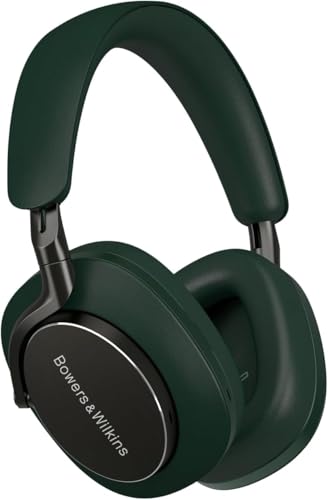

| Spec | Bowers & Wilkins Px8 | Sony WH-1000XM6 |
|---|---|---|
| Type | Over-Ear Wireless Headphones | Over-ear wireless noise cancelling headphones |
| Driver | Angled, ultra-high-resolution carbon drive unit | Specially designed driver with lightweight carbon fiber dome |
| Noise cancelling | Advanced Active Noise Cancellation | HD Noise Canceling Processor QN3, 12 microphones, Adaptive NC Optimizer, Auto Ambient Sound Mode |
| Bluetooth and codecs | Not published in listing | Bluetooth, LDAC, High-Resolution Audio and High-Resolution Audio Wireless |
| Battery life | 30 hours from a 2-hour charge | Up to 30 hours, USB charging, quick charge 3 minutes for up to 3 hours with USB-PD compatible AC adapter |
| Wired option | Not published in listing | Audio cable connection supported |
| Controls and app | B&W Music App for iOS and Android, multi-function button on ear cup | Not published in listing |
| Water resistance | Not published in listing | Not published in listing |
| Weight | Not published in listing | Not published in listing |
| Included accessories | Not published in listing | Compact carrying case with magnetic closure, USB charging cable, audio cable connection supported |
Sound Quality
The Bowers & Wilkins Px8 uses an angled, ultra-high-resolution carbon drive unit that the listing positions as the core of its sound signature. Its Sound Quality score is 29 out of 30, one of the highest in this comparison. The B&W Music App provides customizable EQ for iOS and Android, which lets listeners adjust the response to taste. However, the listing does not publish Bluetooth codec support, so it is unclear whether the Px8 can stream high-resolution audio wirelessly in the same way as some rivals.
The Sony WH-1000XM6 uses a specially designed driver with a lightweight carbon fiber dome, and its Sound Quality score is 27 out of 30. The listed LDAC support and High-Resolution Audio Wireless certification give it a clear advantage for Android users who want higher bitrate wireless playback. The listing does not describe an equalizer or companion app controls, so on-device or in-app sound customization is not confirmed. On paper, the Px8 scores higher for sound, but the Sony's published high-resolution codec support is more transparent.
Comfort and Fit
The Px8 earns an 18 out of 20 for Comfort and Fit. The listing specifically mentions Nappa leather and aluminum in the design, which suggests a premium, durable feel and a soft contact surface for long listening sessions. However, the exact weight of the headphones is not published, so buyers cannot estimate long-term neck fatigue from the spec sheet alone.
The Sony WH-1000XM6 scores 17 out of 20 for Comfort and Fit. Its foldable design and compact carrying case imply that it is built for portability, but the listing does not state the weight or the specific earcup materials. Without published weight or pad details, comfort comparisons are limited to the overall score and the travel-friendly folding mechanism.
Both models score well, and neither lists an IP rating that would affect sweat or weather comfort. The Px8's explicit Nappa leather and aluminum construction gives it a slight edge in perceived build comfort, while the Sony's foldable architecture may feel more flexible to pack. Buyers who prioritize soft leather over a foldable frame may lean toward the Px8.
Noise Control and Features
The Px8 includes Advanced Active Noise Cancellation, and the listing's pros mention effective ANC with voice clarity. The feature set also includes a multi-function button on the ear cup and the B&W Music App for iOS and Android. However, the number of microphones dedicated to noise cancelling is not published, and there is no mention of adaptive ambient sound modes.
The Sony WH-1000XM6 lists far more noise control detail: an HD Noise Canceling Processor QN3, 12 microphones, Adaptive NC Optimizer, and Auto Ambient Sound Mode. These features suggest a more adaptive and automated approach to blocking or letting in outside sound. Both models receive the same 14 out of 15 score for Features and Noise Control, but the Sony's published specifications are much more granular.
For buyers who want manual control over ambient passthrough, the Px8's app and multi-function button may be enough, but the listing does not confirm a dedicated ambient mode. Sony's Auto Ambient Sound Mode reduces the need to adjust settings manually. This makes the Sony a stronger choice for busy commuters who move between quiet and noisy environments.
Battery, Bluetooth and Connectivity
The Px8 offers 30 hours of battery life from a 2-hour charge, and the listing's pros mention strong battery life with quick charging, though the exact quick charge minutes are not published. Bluetooth codecs are not listed, and there is no wired option mentioned in the specs. The B&W Music App and multi-function button cover control, but connectivity details beyond Bluetooth are absent.
The Sony WH-1000XM6 also provides up to 30 hours of battery life, and it adds a specific quick charge claim: 3 minutes for up to 3 hours with a USB-PD compatible AC adapter. It supports LDAC, High-Resolution Audio, and High-Resolution Audio Wireless, and the listing states that an audio cable connection is supported. These details give the Sony a practical edge for users who want fast top-ups and a wired fallback.
Despite Sony's stronger published connectivity and charging specs, the Px8 scores 14 out of 15 in Battery and Connectivity, while the Sony scores 13. The Px8's score likely reflects the overall battery and app integration, but buyers who need LDAC or a confirmed wired connection will find the Sony's listing more reassuring.
Build, Design and Portability
The Px8 scores 9 out of 10 for Build and Portability. Its Nappa leather and aluminum construction are highlighted as premium materials, and the design appears to be a rigid, non-folding over-ear shape. No included accessories are listed, and the weight is not published, which makes it hard to assess how travel-friendly the complete package is.
The Sony WH-1000XM6 scores 8 out of 10 in the same category but offers a foldable design and a compact carrying case with magnetic closure. The listing also includes a USB charging cable and supports an audio cable connection, so the out-of-box travel kit is more complete. However, the Sony's materials are not described with the same detail as the Px8's Nappa leather and aluminum.
If portability is the top priority, the Sony's foldable frame and included case are clear advantages. If build materials and a luxury feel matter more, the Px8's leather and aluminum construction edges out the Sony. Both models lack a published water resistance rating, so neither is marketed for wet or sweaty conditions.
Call Quality and Daily Use
The Px8 listing mentions dual external microphones and voice clarity, though it does not specify a total microphone count or an AI call system. The multi-function button and B&W Music App provide straightforward daily control, and the 30-hour battery means less frequent charging. However, without a published IP rating, daily use in rain or during workouts is not covered.
The Sony WH-1000XM6 lists 12 microphones total, which are likely split between noise cancellation and voice pickup, and it includes an AI call system. The Auto Ambient Sound Mode can automatically adjust noise control during daily movement. The Sony's controls and app are not published in the listing, which is a notable gap for daily usability.
For daily commuting, the Sony's foldable case and quick charge make it easy to carry and top up. The Px8's leather pads and aluminum build may feel more premium during long desk sessions. Both headphones offer similar battery stamina, but the Px8's app is confirmed while the Sony's app support is not stated.
Who Should Buy It
Choose the Bowers & Wilkins Px8 if you want flagship-level sound, luxury materials, and strong active noise cancellation at a lower mid-range price. The listing's description of who it is best for explicitly targets listeners who value sound quality and premium design. Avoid it if you need a published wired option, water resistance, or detailed Bluetooth codec support, as those are not listed.
Choose the Sony WH-1000XM6 if you are a commuter or frequent flyer who wants Sony's latest adaptive noise cancellation, LDAC high-resolution audio, and a foldable travel design. The listing highlights these features in its description of who it is best for. Avoid it if you need a published IP rating for workouts, explicit app controls, multipoint connectivity, or complete weight and driver specifications.
The Deciding Question
The core decision is whether you prioritize luxury sound and materials or adaptive noise control and high-resolution wireless codecs. The Px8 has a higher overall score and a stronger Sound Quality mark, but the Sony publishes more detail on noise cancelling, LDAC, wired playback, and quick charging.
If you can try both, comfort may be the tiebreaker because neither listing publishes weight. The Px8's Nappa leather and aluminum are tangible luxury cues, while the Sony's foldable case and likely lighter footprint (based on foldable design, not weight) suit travel. If you need a confirmed wired connection, the Sony is the only one that lists one.
Both are lower mid-range priced according to their listings, and both offer 30 hours of battery life. The Sony gives more published connectivity features, while the Px8 gives more published material quality. Decide what you cannot compromise on: a specific codec or a specific material.
Who Should Buy Which
Buy the Bowers & Wilkins Px8 if sound quality and premium materials are your top priorities, and you are comfortable with the lack of published Bluetooth codec and wired option details. Its 29 out of 30 Sound Quality score, Nappa leather, aluminum build, and app EQ make it a strong choice for desk listeners and design-focused buyers.
Buy the Sony WH-1000XM6 if you need LDAC high-resolution audio, a foldable travel case, 3-minute quick charge for 3 hours, and detailed adaptive noise cancellation features. Its 12 microphones, QN3 processor, and Auto Ambient Sound Mode are built for frequent travel and changing noise environments.
If you are still split, consider that the Px8 wins on sound score and build materials, while the Sony wins on published connectivity and portability. Neither has a water resistance rating, and both offer 30 hours of battery. The choice ultimately hinges on whether luxury or adaptability matters more to you.
Bowers & Wilkins Px8
Pros
- Excellent sound with carbon driver
- Comfortable Nappa leather and aluminum design
- Effective ANC with voice clarity
- Strong battery life with quick charging
- Customizable EQ via app
- Premium materials at lower mid-range price
Cons
- Bluetooth codecs not published
- No wired option mentioned
- Weight not published
- No water resistance rating
- No included accessories listed
Sony WH-1000XM6
Pros
- QN3 processor and 12 microphones promise flagship-level adaptive noise cancellation
- LDAC support for High-Resolution Audio and High-Resolution Audio Wireless
- Foldable design with compact magnetic closure case
- Up to 30 hours battery with quick charge
- Auto Ambient Sound Mode and AI call system
- Lower mid-range price tier for a full featured Sony ANC headphone
Cons
- No published IP rating for water or sweat resistance
- Weight and exact driver size are not published
- Listing does not describe app support or touch controls
- Bluetooth version and multipoint support not stated
- No battery life figure with noise cancelling off
Who Should Buy Each
Bowers & Wilkins Px8
- Commuters and travelers needing long battery life
- Those who value premium build and comfort
- Listeners wanting customizable sound via app
- Anyone wanting flagship features at a lower mid-range price
Sony WH-1000XM6
- Commuters and frequent travelers seeking strong adaptive ANC
- Android users who want LDAC high resolution wireless audio
- Remote workers who need clear call quality with AI noise reduction
- Buyers who value foldable portability and a compact case
Quick Decision Guide
| If you prioritize flagship-level sound quality and premium materials | Choose Bowers & Wilkins Px8 |
| If you need LDAC high-resolution wireless audio and a wired option | Choose Sony WH-1000XM6 |
| If you want the most detailed adaptive noise cancellation with ambient automation | Choose Sony WH-1000XM6 |
| If you want a foldable travel design with a compact carrying case | Choose Sony WH-1000XM6 |
| If you want confirmed app based EQ and a multi-function button for daily control | Choose Bowers & Wilkins Px8 |
FAQ
About This Comparison
Mandrillis Team
The Mandrillis editorial team researches and compares audio and music gear using manufacturer documentation, verified specs and real buyer feedback, so you can make a confident purchase without wading through marketing claims.
Read our full research methodology.
We may earn a commission at no extra cost to you.