Casio Privia PX-S5000 vs Roland FP-60X
Quick Verdict
Choose the Casio PX-S5000 for the Smart Hybrid action with spruce sides and a Hamburg grand in a 232 mm deep, 25 pound case with USB recording. Choose the Roland FP-60X for the PHA-4 Standard action with escapement, 2 x 13 W speakers, a display, 358 tones and a mic input. The Casio is the slim, light, serious piano; the Roland is the louder, more complete performer's instrument.
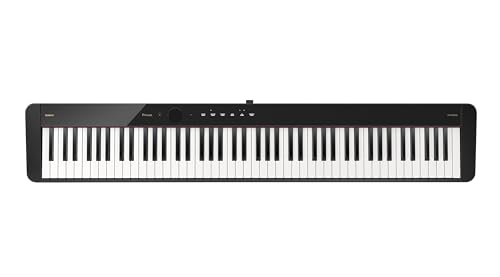

| Spec | Casio Privia PX-S5000 | Roland FP-60X |
|---|---|---|
| Key Action | Smart Hybrid Hammer Action with spruce key sides | PHA-4 Standard with escapement and Ivory Feel |
| Sound Engine | Casio AiR with Hamburg grand | Roland SuperNATURAL Piano with Piano Designer |
| Voices | 23 | 358 |
| Polyphony | 192 notes | 256 notes |
| Speakers | 2 x 8 W, redesigned stereo | 2 x 13 W |
| Bluetooth | Audio and MIDI via included WU-BT10 adapter | Audio and MIDI |
| USB | USB to Host; USB-A audio recording and playback | USB audio and MIDI |
| Pedals | Sustain pedal included; SP-34 triple pedal optional | DP-10 pedal included; KPD-90 triple pedal optional |
| Weight | 25.4 lb (11.5 kg) | 42.6 lb (19.3 kg) |
| Form Factor | Ultra-slim portable with hybrid keys | Mid-range portable with display |
Slim Hybrid Versus Full Performer
Both are upper mid-range portables at similar prices with 192 or 256-note polyphony, Bluetooth and USB audio. The Casio is 232 mm deep and 25 pounds; the Roland is deeper and 42.6 pounds. The Casio has 23 tones; the Roland 358 with a display and a mic input.
Action
The Casio's Smart Hybrid Hammer Action uses spruce along the key sides with a longer pivot and textured tops; the Roland's PHA-4 Standard has three sensors, escapement and Ivory Feel tops. The Casio's wooden sides give a firm, well-damped return; the Roland's escapement gives the grand's release notch. They are close in weight and feel, and pianists split on preference.
Sound and Speakers
The Casio's Hamburg grand through the AiR engine is warm and detailed; the Roland's SuperNATURAL grand is bright and responsive with Piano Designer on the display. The Roland's 2 x 13 W speakers are louder than the Casio's 2 x 8 W. The Roland has 256-note polyphony; the Casio 192.
Size, Weight and Power
The Casio's slimness and weight are its reason to exist: it fits a desk and a soft bag the Roland cannot. The Roland needs a double-braced stand and a heavy case. Neither runs on batteries; the Casio PX-S1100 does, the PX-S5000 does not.
Display, Tones and Mic
The Roland's display, 358 tones, onboard Piano Designer and mic input make it a solo performer's instrument. The Casio's touch panel and 23 tones are focused on piano; its app handles settings. For a singer or a keyboard player the Roland leads.
Connectivity
Both have Bluetooth audio and MIDI, USB audio and MIDI, line outputs and two headphone jacks. The Casio adds a USB-A port for flash-drive recording; the Roland records over USB to a computer.
Value
At similar prices the Casio gives hybrid keys in a slim case; the Roland gives speakers, a display, tones and a mic input. Value depends on whether space or performance leads.
What a Complete Setup Costs
The Casio ships with the SP-3 switch pedal and the Roland with the DP-10 half-damper pedal, so the Casio needs the SP-34 triple unit or a half-damper pedal sooner. Casio's CS-68 stand with the SP-34 unit and Roland's KSC-72 stand with the KPD-90 unit convert either into a console. Priced together, the complete setups land closer than the bare pianos. The Casio's slimness also saves money on a case; it fits a padded bag that costs half what a case for the deeper Roland does.
Practice Tools and Learning
Both connect to lesson apps over Bluetooth MIDI. Casio's Music Space app gives a score display, a lesson function with hand separation and the Scene memory; the piano's touch panel is minimal by design and the app does most of the work. Roland's Piano App and the FP-60X's display put Piano Designer, a metronome, a recorder and Twin Piano on the panel. Both have Duo modes and two headphone jacks. The Casio records audio to a USB flash drive; the Roland records over USB to a computer. Both play phone audio through their speakers over Bluetooth.
Long-Term Ownership
PX-S5000 owners who move on usually want louder speakers and buy the PX-S7000 with its four-speaker system and included stand; FP-60X owners who move on buy the FP-90X for the PHA-50 action and the four-speaker system. Both are current models with firm resale. The Casio's hybrid action was new in 2022 and has proved durable; the Roland's PHA-4 Standard has a long service record across many models. Both serve an advanced player for years. The Casio is the piano for a small room that will stay small; the Roland is the piano for a player who performs.
The Deciding Question
Ask how much room there is. If the piano must fit a desk, a narrow alcove or a padded bag on the bus, the Casio is the only one of the two that fits, and its hybrid action means the slimness costs nothing in touch. If room is not a constraint, the Roland's louder speakers, display, 358 tones and mic input make it the more complete instrument and the one a performer will keep longer. Both have Bluetooth audio and MIDI and USB audio, both have actions pianists respect, and both are priced close together at the listings we checked. The Casio's 25 pounds against the Roland's 42.6 is the practical fact that settles most purchases.
Who Should Buy Which
Buy the Casio PX-S5000 for a serious slim piano. Buy the Roland FP-60X for a performer's portable with speakers and a mic input. Both have actions pianists respect.
Casio Privia PX-S5000
Pros
- Hybrid keys with spruce sides in a 232 mm deep, 25 pound case
- Hamburg grand sample with the AiR engine
- Two quarter-inch outputs, two headphone jacks and USB audio recording
- Bluetooth adapter included
Cons
- Only 23 tones
- Speakers are the same 2 x 8 W as the PX-S1100
- Priced close to the Roland FP-60X
Roland FP-60X
Pros
- PHA-4 Standard action with escapement and 256-note polyphony
- Powerful 2 x 13 W amplifier with custom speakers
- 358 tones with onboard Piano Designer and a display
- Bluetooth audio and MIDI, USB audio, mic input and line outputs
Cons
- Same action as the cheaper FP-30X
- Heavier and deeper than the slim rivals
- The PHA-50 wooden action is reserved for the FP-90X
Who Should Buy Each
Casio Privia PX-S5000
- You love the PX-S1100's size but want a more substantial, wooden-sided action
- The Hamburg grand tone is the sound you want
- You record to a USB stick and gig with real outputs
Roland FP-60X
- You perform and want strong onboard speakers plus a microphone input
- You want a display and dedicated buttons rather than hold-and-press
- You want 358 tones and deep Piano Designer control on the panel
Quick Decision Guide
| If space and weight are tight | Choose Casio PX-S5000 |
| If you want louder speakers and a display | Choose Roland FP-60X |
| If you sing and want a mic input | Choose Roland FP-60X |
| If you want flash-drive recording | Choose Casio PX-S5000 |
| If you want escapement in the action | Choose Roland FP-60X |
FAQ
About This Comparison
Mandrillis Team
The Mandrillis editorial team researches and compares audio and music gear using manufacturer documentation, verified specs and real buyer feedback, so you can make a confident purchase without wading through marketing claims.
Read our full research methodology.
We may earn a commission at no extra cost to you.