Edifier R1280Ts vs Logitech Z407
Quick Verdict
Both of these budget speaker systems score 75 out of 100 in the published breakdown, but they reach that number from opposite directions. The Edifier R1280Ts is a wired 2.0 bookshelf pair with dual RCA inputs, a subwoofer output and physical tone controls, built for a desktop or small room that may later grow an active sub. The Logitech Z407 is a 2.1 Bluetooth system with a wireless control dial, multiple inputs and a down-firing subwoofer built in. Choose the R1280Ts if you want simple wired sound with room to expand. Choose the Z407 if wireless convenience and built-in bass matter more than analog simplicity.
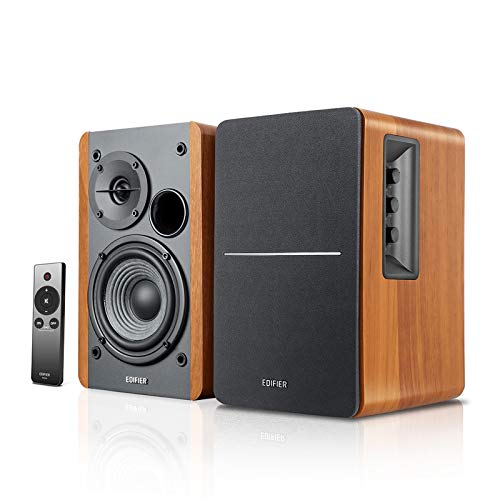
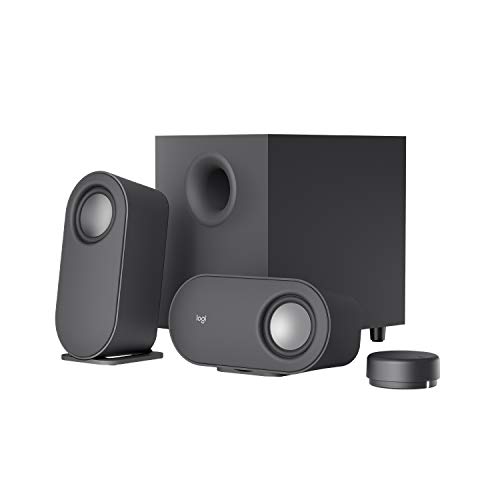
| Spec | Edifier R1280Ts | Logitech Z407 |
|---|---|---|
| Type | Powered bookshelf speaker pair (2.0 stereo active near field monitor) | 2.1 Bluetooth computer speaker system with wireless control |
| Drivers | 4 inch subwoofer unit and 13 mm silk dome tweeter | Not published in listing |
| Power or sensitivity | 42 watts RMS continuous undistorted power | 80 watts peak, 40 watts RMS total; 20 watts subwoofer bass |
| Frequency response | Not published in listing | Not published in listing |
| Inputs and connectivity | Dual RCA inputs; subwoofer line output | Bluetooth, micro USB, 3.5 mm input; supports up to three devices |
| Bluetooth and streaming | None Bluetooth version; no wireless streaming | Bluetooth wireless; wireless control dial with 30 m line of sight |
| Dimensions | Not published in listing | Not published in listing |
| Weight | Not published in listing | Not published in listing |
| Finish | Wooden enclosure | Graphite gray oval satellite speakers |
| Included accessories | Remote control; audio cables not clearly specified in listing | Wireless control dial |
Sound Quality
The Edifier R1280Ts scores 24 out of 30 on sound quality, built around a 4 inch subwoofer unit and a 13 mm silk dome tweeter delivering 42 watts RMS of continuous undistorted power. The listing does not publish frequency response, so the tonal balance cannot be confirmed beyond the driver sizes and power rating given.
The Logitech Z407 scores 22 out of 30 on the same criteria. Its listing does not state driver sizes at all, only that the system delivers 80 watts peak and 40 watts RMS total, including 20 watts dedicated to the subwoofer. Frequency response is likewise not published.
Both scores sit close together, and the gap favors the R1280Ts slightly, likely because its silk dome tweeter and stated driver sizes give a clearer picture of what to expect than the Z407's power-only specification. Neither listing gives a sensitivity figure in decibels, which would normally help explain how loud each pair can get at a given volume setting, so comparisons here rely mostly on wattage and driver size rather than a full acoustic profile.
Drivers, Power and Room Fit
The R1280Ts pairs a 4 inch woofer with a 13 mm tweeter in a 2.0 stereo configuration rated at 42 watts RMS continuous. That combination is suited to near field desktop listening or a small room rather than filling a larger space on its own.
The Z407 is a 2.1 setup with a down-firing subwoofer carrying 20 watts of the total 40 watts RMS, and its 80 watts peak figure describes a different kind of listening position, closer to a desk with the subwoofer handling low end that the smaller satellite drivers cannot.
Neither listing publishes dimensions or weight, so room fit has to be judged on driver count and layout alone. The R1280Ts offers a subwoofer line output for anyone who wants to add a dedicated sub later, while the Z407 already includes one in the box. For a buyer trying to picture either system on a real desk or shelf, the published numbers leave physical footprint as the one open question that neither listing answers.
Features and Connectivity
The R1280Ts scores 12 out of 20 on features and connectivity, limited to dual RCA inputs and a subwoofer line output with automatic detection and a built-in crossover. There is no Bluetooth version and no wireless streaming at all, and no digital inputs such as USB, optical or coaxial.
The Z407 scores 16 out of 20, offering Bluetooth, micro USB and a 3.5 mm input that together support up to three connected devices, plus a wireless control dial with 30 meters of line of sight range for volume and playback.
The difference in connectivity scores reflects the real feature gap. The Z407 covers wireless and multi-device use that the R1280Ts simply does not attempt, while the R1280Ts answers only with a remote control for volume, mute and its Soundfield Spatializer feature. For someone who already keeps a wired source permanently connected at a desk, that gap matters less, but for anyone switching between a phone, a laptop and a tablet through the day, the Z407's three input types carry real practical weight.
Build, Design and Finish
The R1280Ts scores 11 out of 15 on build and design, built with a wooden enclosure and side panel bass and treble controls. The listing does not publish dimensions or weight, and finish options beyond the wooden cabinet are not stated either.
The Z407 also scores 11 out of 15, with graphite gray oval satellite speakers that can sit vertically or horizontally thanks to a dual-position design. Like its rival, the Z407's listing does not publish dimensions or weight.
Both products tie on this category, and both leave buyers without hard numbers for planning a desk or shelf layout. The R1280Ts leans on a traditional wooden cabinet look, while the Z407 leans on a more flexible dual-position satellite shape. Buyers who care about matching a speaker's look to a particular desk or shelving setup will have to rely on product photos rather than published measurements for either model.
Setup and Placement
Setting up the R1280Ts means running RCA cables from a source and, optionally, a line to a separate subwoofer, since its automatic crossover detection is built to work with an added sub. There is no pairing process since there is no wireless connection to configure.
Setting up the Z407 means pairing over Bluetooth or plugging in via micro USB or 3.5 mm, then using the wireless control dial to manage volume and switch between up to three paired sources without walking back to the speaker.
For a desk that already has an active subwoofer or plans to add one, the R1280Ts's dedicated crossover and line output make that expansion simple. For a desk with multiple source devices, the Z407's three-input Bluetooth setup covers that case more directly.
Daily Use
Day to day, the R1280Ts rewards a fixed, wired setup, since its remote handles basic playback control and the side panel knobs cover bass and treble adjustment without needing an app or a wireless connection to drop out.
Day to day, the Z407's wireless control dial is the standout convenience, letting a user adjust volume and switch inputs from 30 meters away without touching the speaker body itself, which matters more in a room where the speaker is not within arm's reach.
Neither system offers an app or EQ beyond their basic controls, Soundfield Spatializer on the R1280Ts and bass control on the Z407, so daily tone shaping stays limited on both sides. Anyone coming from a speaker with a full app-based equalizer should expect a step down in tuning flexibility with either of these two budget systems, even though both remain simple to operate day to day.
Who Should Buy It
The listing frames the R1280Ts as best for a wired desktop or small room stereo setup that may later add an active subwoofer, while advising against it for anyone who needs Bluetooth, digital inputs or room filling volume in a large space.
The listing frames the Z407 as best for desktop users who want a compact 2.1 setup with wireless control and multiple source switching, while cautioning that buyers who need detailed specifications, high-resolution codec support or predictable placement dimensions should look elsewhere.
Both products land in the budget tier with a tied overall score of 75, so the choice comes down to whether wired simplicity with expansion room or wireless convenience with built-in bass matters more to the buyer. Neither verdict claims to have measured the sound directly, since both assessments are drawn from what each listing states about drivers, power and features rather than a listening session.
The Deciding Question
The real question is whether a wireless connection is worth more to you than a dedicated subwoofer output. The Z407 answers the wireless question directly with Bluetooth, a control dial and multiple inputs. The R1280Ts answers the expansion question directly with its automatic crossover detection for an external sub.
A second question is how much you value published detail. Neither listing states dimensions, weight or frequency response, but the R1280Ts at least confirms its driver sizes, where the Z407's driver sizes are not published at all.
If neither feature set fully satisfies you, the tied score of 75 suggests these two are close enough in overall merit that the deciding factor should be your own cabling and source device situation rather than a clear quality gap.
Who Should Buy Which
Buy the Edifier R1280Ts if you want a simple wired 2.0 pair with a subwoofer output for later expansion, and you do not need Bluetooth or digital inputs for your sources.
Buy the Logitech Z407 if you want wireless Bluetooth streaming, a control dial you can use from across the room, and a built-in subwoofer without adding a separate unit.
Buyers who need confirmed frequency response, dimensions or weight before choosing should treat both listings as incomplete on those points and look for further confirmation before ordering either system.
Edifier R1280Ts
Pros
- Dual RCA inputs allow two wired sources to stay connected
- Subwoofer line output with automatic detection and built in crossover
- Remote control for volume, mute, and Soundfield Spatializer
- Side panel bass and treble controls
- Wooden cabinet at a budget price tier
Cons
- No Bluetooth or wireless streaming
- No digital inputs such as USB, optical, or coaxial
- Listing omits frequency response, dimensions, weight, and sensitivity
- Modest 4 inch woofer and 42 watt RMS limit large room output
- No published finish options beyond wooden enclosure
Logitech Z407
Pros
- 2.1 setup with down-firing subwoofer adds bass depth
- Wireless control dial with 30 m range for volume and playback
- Multiple inputs including Bluetooth, micro USB, and 3.5 mm
- Dual-position satellites can sit vertically or horizontally
- 80 watts peak power is solid for nearfield use
Cons
- Driver sizes and frequency response not published
- No optical or RCA inputs
- No published dimensions or weight makes placement planning harder
- Bluetooth codec and version not specified
- No remote app or EQ beyond bass control
Who Should Buy Each
Edifier R1280Ts
- Buyers with analog sources like a computer, TV, or DAC with RCA outputs
- People who want a budget powered bookshelf pair with subwoofer expandability
- Users who prefer physical tone controls and a remote
- Small room or near field listeners who do not need wireless streaming
Logitech Z407
- Desktop and laptop users wanting a small speaker system with a subwoofer
- Listeners who value a wireless volume and playback dial across the room
- Buyers who switch between Bluetooth, USB, and analog sources
- Those who prefer graphite gray speakers that can lie flat or stand upright
Quick Decision Guide
| If you want a wired setup with room to add an external subwoofer later | Choose Edifier R1280Ts |
| If you want Bluetooth streaming and a wireless control dial | Choose Logitech Z407 |
| If you need a confirmed driver size and tweeter type on paper | Choose Edifier R1280Ts |
| If you want a built-in subwoofer without adding a separate unit | Choose Logitech Z407 |
| If you need to switch between three connected source devices easily | Choose Logitech Z407 |
FAQ
About This Comparison
Mandrillis Team
The Mandrillis editorial team researches and compares audio and music gear using manufacturer documentation, verified specs and real buyer feedback, so you can make a confident purchase without wading through marketing claims.
Read our full research methodology.
We may earn a commission at no extra cost to you.