Epiphone ES-335 vs Gretsch Electromatic Black Limba CVT
Quick Verdict
Choose the Epiphone ES-335 if you want a classic semi-hollowbody electric guitar with a maple body, mahogany neck and cherry finish, and you trust the Epiphone platform despite missing detail. Choose the Gretsch Electromatic Black Limba CVT if you prefer a solidbody with a black limba body and neck, a rosewood fingerboard, sunburst finish, and a slightly higher tone score at 21 versus 20. Both listings omit scale length, fret count, controls, bridge and tuners, so specification-focused buyers may need to ask questions. The Epiphone scores 80 overall and the Gretsch scores 78, with close playability and build scores.
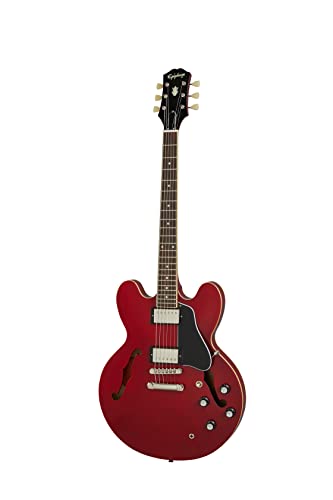

| Spec | Epiphone ES-335 | Gretsch Electromatic Black Limba CVT |
|---|---|---|
| Body | Semi-hollowbody electric guitar with maple top, maple back and sides | Black Limba |
| Neck and fingerboard | Mahogany neck with laurel fingerboard | Black Limba neck with rosewood fingerboard |
| Scale length | Not published in listing | Not published in listing |
| Frets | Not published in listing | Not published in listing |
| Pickups | 2 humbucking pickups | 2 Humbucking Pickups |
| Controls | Not published in listing | Not published in listing |
| Bridge | Not published in listing | Not published in listing |
| Tuners | Not published in listing | Not published in listing |
| Finish | Cherry | Sunburst |
| Included accessories | Not published in listing | Not published in listing |
Body, Neck and Playability
The Epiphone ES-335 has a semi-hollowbody with a maple top, back, and sides, finished in cherry. The Gretsch Electromatic Black Limba CVT uses a solid black limba body with a sunburst finish. These body constructions create different physical and acoustic characteristics. The listing does not publish weight or dimensions for either model.
The Epiphone uses a mahogany neck with a laurel fingerboard, while the Gretsch uses a black limba neck with a rosewood fingerboard. Neither listing publishes scale length, fret count, neck profile, or nut width. The playability subscore is 24 out of 30 for the Epiphone and 23 for the Gretsch. The one point difference is small and not explained by missing measurements.
A semi-hollowbody often provides more acoustic resonance and a lighter feel than a solidbody, but the listing does not confirm that for the Epiphone. The Gretsch solidbody may feel more compact and focused, though dimensions are absent. Players who prefer semi-hollowbody resonance may lean toward the Epiphone, while those who want a solidbody with an unusual wood pairing may lean toward the Gretsch.
Pickups and Tone
Both guitars are listed with two humbucking pickups. The Epiphone does not publish a pickup brand, output, or magnet type. The Gretsch also omits the pickup model, magnet, and output. The tone and pickups subscore is 20 out of 25 for the Epiphone and 21 for the Gretsch.
The Epiphone semi-hollow maple construction suggests an open, airy tone with a rounded low end, based on the body wood combination. The Gretsch black limba solidbody suggests a warm and balanced voice for rock and blues, as stated in the pros. Neither listing provides frequency response or output measurements.
Because neither company states the pickup model, exact output and magnetic character remain unverified. The one point tone score difference favors the Gretsch but is not supported by published electrical detail. Buyers who need a known pickup brand or specific output level should ask the seller.
Hardware and Electronics
The listings are thin on hardware. The Epiphone does not publish its bridge type, tuners, control layout, switch, or nut material. The Gretsch also omits the bridge, tuners, control layout, switch, and nut material. The hardware and electronics subscore is 8 out of 10 for the Epiphone and 7 for the Gretsch.
We know only that both guitars have two humbucking pickups. The absence of control and bridge detail makes it difficult to assess tuning stability, intonation, or control comfort. Neither listing mentions included accessories. The lower Gretsch score may reflect uncertainty about the limited edition hardware, but the listing does not confirm that.
Buyers who care about locking tuners, roller bridges, or named control pots will need additional details. The hardware score difference is small and based on an incomplete picture. Players should plan to ask about the bridge type and tuner ratio before making a final decision.
Build Quality and Finish
Both models score 12 out of 15 for build and materials. The Epiphone uses a maple top, back, and sides with a mahogany neck and laurel fingerboard. The Gretsch uses a black limba body and neck with a rosewood fingerboard. Neither listing mentions country of origin or finish thickness.
The Epiphone has a cherry finish, a traditional look for a semi-hollowbody. The Gretsch has a sunburst finish that highlights the black limba grain and may hide minor wear, according to the pros. The Gretsch listing also calls the model limited edition. Neither listing states the finish type.
The equal build scores reflect sound wood choices and twin humbucker construction. Missing details on binding, inlays, and fretwork prevent a stronger endorsement. Buyers should check the specific instrument for finish blemishes and fret sprout. These are common quality concerns for guitars in this price range.
Setup Out of the Box
Neither listing states the factory setup, string gauge, or action out of the box. Both guitars have cons that mention setup quality as unknown from the listing. The overall scores of 80 and 78 do not include a separate setup category. The listings focus on materials and pickups but leave setup entirely to the buyer.
Many guitars in this range benefit from a professional setup after purchase, but that is not confirmed here. Neither listing mentions included tools or adjustment wrenches. Players who want a ready to play instrument should ask about setup before buying. Some retailers may offer a setup as part of the sale, but that is not stated in the listing.
The missing scale length, fret count, and neck profile make it hard to know the target action. A buyer should plan to adjust truss rod and bridge height to personal taste after purchase.
Daily Use and Practice
Daily use depends heavily on weight, balance, and upper fret access, none of which are published. The Epiphone is a semi-hollowbody, which traditionally has a larger body outline than a solidbody, but the listing does not state dimensions. The Gretsch is a solidbody, which may feel more compact, but again the listing gives no measurements.
The Epiphone cherry finish may show scratches more readily than the Gretsch sunburst, which the pros list says may hide minor wear. Neither listing includes a case or gig bag, so daily transport requires a separate purchase. Without tuner and bridge details, tuning stability during practice cannot be confirmed.
The published materials and dual humbuckers suggest both should be comfortable enough for regular use, but the missing hardware data keeps that recommendation cautious. Players who practice seated may find the semi-hollowbody larger, but that is not verified.
Versatility and Styles
Both models score 8 out of 10 for versatility. The Epiphone semi-hollowbody with two humbuckers suits blues, jazz, rock, pop and indie. The Gretsch solidbody with two humbuckers also covers rock and blues. Neither listing states if coil tap or series parallel options are available. The Epiphone best for players who need classic semi-hollow tone, while the Gretsch best for those wanting a solidbody with a different voice.
The Epiphone has the advantage of a traditional semi-hollow build for clean jazz and roots music. The Gretsch has a distinctive black limba solidbody that may appeal to rock players. Without control layout details, switching options and tone knob ranges cannot be compared.
Both are limited to two humbucking pickups as their only known electronic feature. This means versatility comes largely from amps and pedals rather than onboard switching. Buyers needing a coil split or phase switch should verify with the seller before making a decision.
The Deciding Question
The main decision is whether you want a semi-hollowbody with a maple body and cherry finish or a solidbody with a black limba body and sunburst finish. The Epiphone offers a traditional ES style silhouette with a mahogany neck and laurel fingerboard. The Gretsch offers a limited edition solidbody with a black limba neck and rosewood fingerboard.
A secondary question is how much you value published specification detail. Both listings omit scale length, fret count, controls, bridge, tuners, and included accessories. The Epiphone overall score is 80 and the Gretsch overall score is 78. The Epiphone has a higher hardware and electronics score, while the Gretsch has a slightly higher tone score.
If you trust the Epiphone brand and want a familiar semi-hollowbody, the ES-335 is the safer default. If you want a more unusual solidbody with black limba and a rosewood board, the Gretsch is compelling. Buyers who cannot accept unknown hardware or setup details should ask questions before choosing either model.
Who Should Buy Which
Choose the Epiphone ES-335 if you want a classic semi-hollowbody with a maple top, back, and sides, a mahogany neck, and a cherry finish. This model is best for players who trust the Epiphone dual humbucker platform and do not need every specification published. The overall score is 80 out of 100, and the listing suggests a mid-range price tier.
Choose the Gretsch Electromatic Black Limba CVT if you prefer a solidbody with a black limba body and neck, a rosewood fingerboard, and a sunburst finish. This model is best for players who want a limited edition Gretsch with a warm dual humbucker voice. The overall score is 78 out of 100, with a tone score of 21 versus the Epiphone 20.
Avoid either model if you need complete published specifications for scale length, fret count, controls, bridge, tuners, or included accessories before buying. Both listings are incomplete in these areas, and neither product is confirmed to include a case or gig bag.
Epiphone ES-335
Pros
- Classic semi-hollowbody design with maple top, back and sides
- Mahogany neck with laurel fingerboard for familiar feel
- Two humbucking pickups cover warm and clear tones
- Cherry finish gives a traditional look
- Mid-range price tier for a semi-hollow model
Cons
- Listing omits pickup brand and output details
- Scale length, fret count, bridge and tuner specs not published
- No included case or gig bag mentioned
- Setup quality out of the box is unknown from listing
Gretsch Electromatic Black Limba CVT
Pros
- Black limba body and neck provide a distinctive look and balanced tonal character
- Rosewood fingerboard offers a familiar and smooth playing surface
- Two humbucking pickups suit rock, blues, and other warm overdrive styles
- Sunburst finish highlights the wood grain and hides minor wear
- Limited edition designation may appeal to collectors
Cons
- Listing omits scale length, fret count, and neck profile details
- No published control layout, bridge, tuner, or nut information
- No included accessories are mentioned
- Unknown pickup model and output leave tonal character unverified
- Limited edition may mean parts or finish matching is harder later
Who Should Buy Each
Epiphone ES-335
- Blues and classic rock players who like warm semi-hollow tones
- Guitarists stepping up from a solid body to a semi-hollow
- Buyers who value a recognizable ES-style silhouette without a premium price
- Home players and gigging musicians who already know how to set up a guitar
Gretsch Electromatic Black Limba CVT
- Gretsch fans looking for a limited edition solidbody model
- Players who prefer humbuckers for rock, blues, and jazz
- Buyers who value a distinctive tonewood like black limba
- Intermediate players moving up from a beginner guitar
Quick Decision Guide
| If you want a semi-hollowbody with a maple top, back and sides | Choose Epiphone ES-335 |
| If you want a solidbody with a black limba body and neck | Choose Gretsch Electromatic Black Limba CVT |
| If you prefer a rosewood fingerboard over laurel | Choose Gretsch Electromatic Black Limba CVT |
| If you want a cherry finish and traditional ES style looks | Choose Epiphone ES-335 |
| If you want the higher overall review score | Choose Epiphone ES-335 |
FAQ
About This Comparison
Mandrillis Team
The Mandrillis editorial team researches and compares audio and music gear using manufacturer documentation, verified specs and real buyer feedback, so you can make a confident purchase without wading through marketing claims.
Read our full research methodology.
We may earn a commission at no extra cost to you.