Fender Rumble 200 V3 vs Fishman Loudbox Mini Charge
Quick Verdict
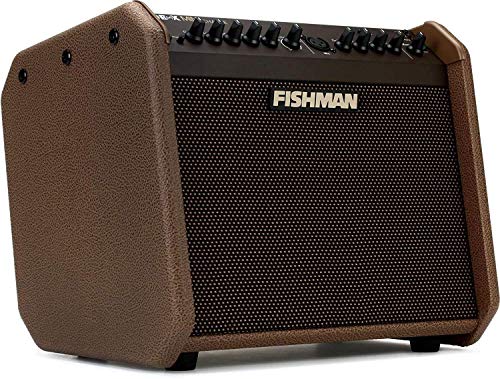
The Fender Rumble 200 V3 is the better choice for electric bass players who need a lightweight 200 watt class D combo for small to medium gigs. Its overdrive circuit, contour control, headphone output with speaker muting, and auxiliary input cover practice and live basics. The Fishman Loudbox Mini Charge targets acoustic singer-songwriters and buskers with a battery powered design, dedicated instrument and microphone channels, Bluetooth 4.0 streaming, and a post EQ D.I. output. If you need a loud, portable bass amp with simple tone shaping, choose the Fender. If you need a battery powered acoustic amp with a mic channel and direct output, choose the Fishman.

| Spec | Fender Rumble 200 V3 | Fishman Loudbox Mini Charge |
|---|---|---|
| Power output | 200 watts class D | Not published in listing |
| Speaker | Ported speaker enclosure (size not published in listing) | Not published in listing |
| Amp models or channels | Not published in listing | Dedicated instrument and microphone channels |
| Effects | Overdrive circuit and switchable contour controls | None listed |
| Inputs and outputs | 1/8 inch auxiliary input, 1/8 inch headphone output, instrument input implied by product type but not detailed in listing | Instrument input, microphone input, D.I. output |
| Headphone and line out | 1/8 inch headphone output mutes speaker, no line out published | Not published in listing |
| Bluetooth and app | Not published in listing | Bluetooth 4.0, no app mentioned |
| Weight | 34.5 pounds | Not published in listing |
| Dimensions | Not published in listing | Not published in listing |
| Included accessories | Not published in listing | Not published in listing |
Amp Models and Tone
The Fender Rumble 200 V3 listing does not publish any amp models or channel details. The product is presented as a straightforward bass combo with an instrument input implied by product type. The Fishman Loudbox Mini Charge publishes dedicated instrument and microphone channels. That gives the Fishman a fixed two channel architecture suited for acoustic guitar and vocals, while the Fender appears to focus on a single bass input without extra channel routing. Both models score 23 out of 30 for tone and amp models in the supplied breakdown.
For tone shaping, the Fender includes an overdrive circuit and switchable contour controls. The overdrive provides gritty bass tones, and the contour control allows quick tone shifts. The Fishman has no built-in effects and focuses on a clean acoustic platform. The listing does not publish speaker size or cabinet details for either, so we cannot determine the exact tonal character beyond the described features. For electric bass, the Fender likely offers more drive and mid shaping. For acoustic guitar and voice, the Fishman's clean reproduction and mic input are more relevant.
Effects and Features
The Fender Rumble 200 V3 has a built-in overdrive circuit, switchable contour controls, a 1/8 inch headphone output that mutes the speaker, and a 1/8 inch auxiliary input. The Fishman Loudbox Mini Charge has no built-in effects listed. Its feature set is built around battery power, Bluetooth 4.0 audio streaming, and a post EQ D.I. output. Both models receive the same score of 13 out of 20 for effects and features in the rating breakdown.
The Fender's effects are limited to overdrive and contour shaping. There is no modulation, reverb, or other built-in effects. The Fishman has no effects at all, relying on external pedals for tone shaping. For players who want a simple bass amp with a drive circuit, the Fender is more capable. For acoustic performers who prefer a pure signal path, the Fishman's clean platform will be acceptable, but the absence of even basic reverb or compression is notable. Neither listing mentions a footswitch or remote control option.
Power, Speaker and Volume
The Fender Rumble 200 V3 publishes a power output of 200 watts class D. The Fishman Loudbox Mini Charge does not publish a power output. This makes a direct volume comparison impossible from the supplied data. The Fender's 200 watts into a ported speaker enclosure suggests moderate stage volume for bass. The Fishman's battery powered design likely leans toward lower output, but without a wattage spec, we cannot confirm.
Speaker size and cabinet dimensions are not published for either model. The Fender listing says it uses a ported speaker enclosure, but the size is not stated. The Fishman listing does not publish speaker details at all. In the power and speaker scoring category, the Fender receives 13 out of 15 and the Fishman receives 9 out of 15. The difference likely reflects the Fender's published 200 watt output versus the Fishman's unknown power spec.
Build and Portability
The Fender Rumble 200 V3 weighs 34.5 pounds. Its dimensions are not published in the listing. The Fishman Loudbox Mini Charge does not publish weight or dimensions, but its pros list lightweight and portable design, and it is battery powered. Both models score 8 out of 10 for build and portability in the supplied breakdown.
A weight of 34.5 pounds is a strong known spec for a 200 watt bass combo, making the Fender easy to transport for gigs. The Fishman lacks a published weight, which is a data gap, but the model name Mini Charge and battery operation imply a compact format. The listing does not state included accessories such as covers, straps, or cables for either amp. Both appear designed for regular transport, but the Fishman's battery power adds portability for outdoor use.
Connectivity and Apps
The Fender Rumble 200 V3 has a 1/8 inch auxiliary input and a 1/8 inch headphone output. It does not list Bluetooth, app integration, dedicated line out, or D.I. output. The Fishman Loudbox Mini Charge has an instrument input, a microphone input, Bluetooth 4.0, and a post EQ D.I. output. It does not list a headphone output. In the connectivity score, the Fender receives 11 out of 15 and the Fishman receives 13 out of 15.
The Fishman's Bluetooth 4.0 allows wireless audio streaming, which is useful for backing tracks, but no companion app is mentioned. The Fender lacks Bluetooth entirely, though the auxiliary input covers wired playback from a phone or music device. The Fender's headphone output with speaker muting is a clear advantage for silent practice. The Fishman's D.I. output is a major advantage for connecting to a PA system, something the Fender does not offer. Neither listing mentions USB, MIDI, or effects loop connectivity.
Setup and Daily Use
The Fender Rumble 200 V3 is simple to set up: plug in a bass, adjust volume and tone, engage the overdrive and contour as needed, and use the headphone output for silent practice. The auxiliary input allows jamming along with tracks. The Fishman Loudbox Mini Charge is also straightforward: plug an instrument and microphone into their separate channels, adjust each gain, stream Bluetooth audio for backing tracks, and send the D.I. output to a PA. Both amps have an analog, knob based control set with no deep menus.
For daily use, the Fender's 34.5 pound weight is manageable for regular transport. The Fishman's battery power is convenient for outdoor performance and busking, though battery life is not published. Neither amp lists a built-in tuner, footswitch, or effects loop. The Fender's headphone output is a plus for late night practice. The Fishman's battery and D.I. output are better for performers who need to play without mains power or connect directly to a sound system.
Home Practice Versus Stage
For home practice, the Fender Rumble 200 V3 has a headphone output that mutes the speaker, allowing silent playing. Its auxiliary input makes it easy to play along with music. The 200 watt output is more than needed for a bedroom, but the volume can be turned down. The Fishman Loudbox Mini Charge offers battery power and Bluetooth streaming, which are also convenient for home use, but it does not list a headphone output, so silent practice is not confirmed.
On stage, the Fender's 200 watts class D output should cover small to medium bass gigs. The lack of a D.I. output is a drawback for sending a signal to a front of house mixer. The Fishman's post EQ D.I. output makes it stage friendly for acoustic acts that want to run directly to a PA while using the amp as a personal monitor. Its battery power is more relevant for street performance than large stages. Neither amp publishes a line out on the Fender, and the Fishman does not publish a line out beyond the D.I.
The Deciding Question
The deciding question is whether you need a dedicated bass amp or a battery powered acoustic amp. For electric bass, the Fender Rumble 200 V3 offers clear advantages: 200 watts class D, a built-in overdrive circuit, contour controls, headphone output with speaker muting, and auxiliary input. For acoustic guitar and vocals, the Fishman Loudbox Mini Charge offers a dedicated microphone channel, Bluetooth streaming, battery power, and a D.I. output. The answer depends on your primary instrument and performance context.
Another deciding factor is connectivity. If you need silent practice with headphones, the Fender is the only model with a published headphone output. If you need to connect directly to a PA system, the Fishman is the only model with a published D.I. output. The Fender does not list Bluetooth or app integration, while the Fishman has Bluetooth 4.0. These tradeoffs are clear from the listings and should guide your choice based on how you practice and perform.
Who Should Buy Which
Buy the Fender Rumble 200 V3 if you are a bass player who needs 200 watts, a lightweight combo at 34.5 pounds, built in overdrive and contour controls, a headphone output for silent practice, and an auxiliary input for jamming along with tracks. It is well suited for small to medium gigs and home practice with simple tone shaping. Avoid it if you need Bluetooth streaming, a D.I. output, or extensive built in effects.
Buy the Fishman Loudbox Mini Charge if you are an acoustic singer songwriter or busker who needs battery power, dedicated instrument and microphone channels, Bluetooth streaming, and a post EQ D.I. output for connecting to a PA. Avoid it if you need built in effects, a headphone output, or a published high wattage stage amp, because those features are not listed or confirmed.
Fender Rumble 200 V3
Pros
- 200 watt class D power in a portable package
- Built in overdrive circuit for gritty bass tones
- Switchable contour control for quick tone shifts
- Headphone output with speaker muting for silent practice
- Auxiliary input for jamming along with tracks
- Only 34.5 pounds for easy transport
Cons
- Speaker size and cabinet dimensions are not published
- No Bluetooth or app integration listed
- No dedicated line out or DI output mentioned
- Effects limited to overdrive and contour shaping
- No footswitch or channel switching details provided
Fishman Loudbox Mini Charge
Pros
- Battery-powered for portable use
- Dedicated microphone and instrument channels
- Bluetooth 4.0 audio streaming
- Post-EQ D.I. output for PA connection
- Lightweight and portable design
- Clean acoustic-focused platform
Cons
- No built-in effects listed
- Power output and speaker size not published
- No headphone output mentioned
- Bluetooth 4.0 is an older standard
- No companion app or deep editing
Who Should Buy Each
Fender Rumble 200 V3
- Gigging bassists who want 200 watts without a heavy cabinet
- Players who prefer analog tone controls over deep digital menus
- Home practice users who need headphone and aux input options
- Fender fans looking for a reliable mid range bass combo
Fishman Loudbox Mini Charge
- Solo acoustic performers who sing and play
- Buskers needing battery power and portability
- Home players wanting Bluetooth play-along
- Musicians who already use external effects
Quick Decision Guide
| If you play electric bass in a small to medium venue and need 200 watts of clean headroom. | Choose Fender Rumble 200 V3 |
| If you are an acoustic solo performer who needs battery power and a microphone input. | Choose Fishman Loudbox Mini Charge |
| If you want built in overdrive and simple contour tone shaping for bass. | Choose Fender Rumble 200 V3 |
| If you need Bluetooth audio streaming and a post EQ D.I. output for connecting to a PA. | Choose Fishman Loudbox Mini Charge |
| If you need silent practice with a headphone output that mutes the speaker. | Choose Fender Rumble 200 V3 |
FAQ
About This Comparison
Mandrillis Team
The Mandrillis editorial team researches and compares audio and music gear using manufacturer documentation, verified specs and real buyer feedback, so you can make a confident purchase without wading through marketing claims.
Read our full research methodology.
We may earn a commission at no extra cost to you.