FiiO S15 vs Denon PMA-1700NE
Quick Verdict
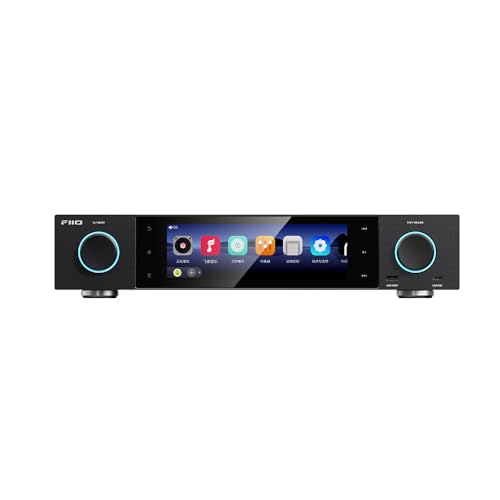
These two upper mid-range components solve different halves of a system. The FiiO S15 is a network audio streamer and desktop DAC with a 7.84-inch touchscreen, open Android 12 and balanced XLR output, but it has no amplifier stage at all. The Denon PMA-1700NE is a two channel integrated amplifier with 140 watts per channel, a phono stage for both moving magnet and moving coil cartridges, and a built-in USB DAC, but no streaming, Bluetooth or HDMI. Choose the S15 if you already own an amplifier and want one box to cover streaming, digital conversion and television audio. Choose the PMA-1700NE if you have a turntable, a transport or a streamer already and want power and a phono stage instead.

| Spec | FiiO S15 | Denon PMA-1700NE |
|---|---|---|
| Type | Network audio streamer and desktop DAC with 7.84-inch touchscreen, open Android 12 | Two channel integrated stereo amplifier with built in USB DAC and phono equalizer, silver finish |
| Power output | Not applicable. Source component with no amplifier stage, and no power figure is published in listing | 140 W x 2 as stated in the listing. Load impedance, frequency range and distortion conditions are not published |
| Channels | Stereo line output on RCA and balanced XLR | Two channel stereo |
| Inputs and outputs | Inputs: AES, coaxial, optical, HDMI with ARC, USB drives, TF card, external hard drives. Outputs: I2S, AES, coaxial, optical, HDMI, RCA line out, XLR balanced line out | Three digital inputs, a USB DAC input, a phono input and pre-amplifier input terminals. Analog line input count and speaker terminal details are not published |
| HDMI and video | HDMI input, HDMI output and HDMI ARC. Video passthrough details not published in listing | Not published in listing. No HDMI connection is described |
| Wireless and streaming | Roon Ready, AirPlay, DLNA, Bluetooth, plus UPnP, SMB and WebDAV network access. Wi-Fi and Ethernet hardware not explicitly stated | Not published in listing. No Wi-Fi, Bluetooth or streaming platform is described, though the listing mentions playback through a network connection without detailing an interface |
| Phono input | Not published in listing. No phono stage is described | Built in phono equalizer supporting both moving magnet and moving coil cartridges |
| Dimensions and weight | 430mm chassis width. Height, depth and weight not published in listing | Not published in listing |
| Remote and app | Dual knobs and dual virtual buttons on the unit, Bluetooth remote control and app-based remote control | Not published in listing |
| Included accessories | Not published in listing | Not published in listing |
| Drive type | N/A | Not published in listing |
| Cartridge | N/A | Not published in listing |
| Platter | N/A | Not published in listing |
| Tonearm | N/A | Not published in listing |
| Speeds | N/A | Not published in listing |
| Built-in preamp | N/A | Yes, built-in phono equalizer with MM and MC support |
| Bluetooth and USB | N/A | USB-DAC for D/A conversion; listing does not state Bluetooth |
| Outputs | N/A | Not published in listing; pre-amp input terminals are described |
Power and Sound Quality
The FiiO S15 scores 25 out of 30 on power and sound quality despite having no amplifier stage, since the listing credits its AK4191 and AK4499EX DAC pairing with a separated digital and analog architecture as the basis for its audio foundation. No power output figure applies because it is a source component, not an amplifier.
The Denon PMA-1700NE scores higher at 27 out of 30, built around 140 W per channel from what the listing calls an ultra high current single push-pull circuit, paired with Advanced AL32 Processing Plus supporting 384 kHz 32 bit resolution. The listing does not state the load impedance, frequency range or distortion conditions behind that power figure.
Because the S15 has no amplifier, it needs a separate amp to actually drive speakers, while the PMA-1700NE needs a separate source or streamer to feed it. Judged purely on their own stated roles, the PMA-1700NE's published power rating gives it a slightly stronger showing in this category. Neither listing states a maximum sample rate or confirms DSD playback support, so buyers chasing the highest possible resolution should treat both specification sheets as a starting point rather than a complete technical picture.
Connectivity and Inputs
The S15 scores 22 out of 25 on connectivity, and the list is extensive: AES, coaxial, optical and HDMI with ARC on the input side, I2S, AES, coaxial, optical, HDMI, RCA line out and balanced XLR line out on the output side, plus support for USB drives, TF cards and external hard drives.
The PMA-1700NE scores 19 out of 25, offering three digital inputs, a USB DAC input, a phono input and pre-amplifier input terminals. The listing does not publish the analog line input count or speaker terminal details, which leaves part of the picture incomplete.
The S15's connectivity list is built around flexibility as a central hub, while the PMA-1700NE's shorter list is built around the essentials an amplifier needs, digital inputs, a phono stage and pre-amp terminals for adding outboard processing later. A buyer assembling a rack from scratch should note that the S15 is meant to sit upstream of an amplifier, while the PMA-1700NE is meant to sit downstream of a source, so their connection lists are not directly comparable in isolation.
Formats, Processing and Room Correction
The S15 scores 12 out of 15 here, and its processing story centers on the AK4191 and AK4499EX converter pairing with selected femtosecond clocks, though the listing does not publish a maximum sample rate or confirm DSD support, leaving a real gap in an otherwise detailed spec sheet.
The PMA-1700NE also scores 12 out of 15, built around Advanced AL32 Processing Plus at 384 kHz and 32 bit resolution, plus an analog mode that shuts down digital circuitry entirely when playing analog sources, which is a specific feature aimed at purists who want the digital section out of the signal path.
Neither listing mentions room correction software, so buyers who want automated speaker or room tuning will not find it described on either unit. Processing strength here comes down to converter architecture rather than correction features. The S15's femtosecond clocks and separated digital and analog sections suggest an emphasis on jitter control, while the PMA-1700NE's analog mode suggests an emphasis on keeping digital processing out of the path entirely when it is not needed.
Features, Streaming and Apps
The S15 scores 9 out of 10, and its headline feature is an open Android 12 platform that lets major streaming apps install directly, combined with Roon Ready certification, AirPlay, DLNA, Bluetooth and UPnP, SMB and WebDAV network access for reaching files on a home network.
The PMA-1700NE scores only 6 out of 10, since the listing states no Wi-Fi, Bluetooth or named streaming platform, though it does mention playback through a network connection without detailing the interface used to achieve that.
This category is where the two products diverge most clearly. The S15 is built to be a streaming hub first, while the PMA-1700NE treats networking as a minor afterthought behind its amplification and phono duties. Buyers who already subscribe to several streaming services will feel that gap immediately, since the S15 can install those apps directly while the PMA-1700NE offers no comparable path without an external streaming box.
Build, Design and Controls
The S15 scores 8 out of 10, built around a 430mm chassis width with a 7.84-inch touchscreen, dual knobs, dual virtual buttons, a Bluetooth remote and app-based remote control. Height, depth and weight are not published in the listing.
The PMA-1700NE scores 9 out of 10 with a silver finish, though the listing does not publish dimensions, weight, remote details or included accessories, leaving its physical presence almost entirely undocumented compared with the S15's partial chassis width figure.
Both listings fall short on full physical specifications, but the S15 at least gives a width measurement and a detailed control layout, where the PMA-1700NE's build description stops at finish and the general integrated amplifier format.
Setup and Daily Use
Setting up the S15 day to day means navigating an open Android interface, which the listing frames as a benefit for app access but which also adds complexity for a user who wants a simple appliance rather than a small tablet-like device to manage.
Setting up the PMA-1700NE day to day is closer to a traditional amplifier experience, switching between digital inputs, the USB DAC and the phono stage, with the analog mode available as a dedicated switch for listeners who want to bypass digital circuitry entirely for vinyl or analog sources.
Listeners who want one device to just work without updates or app management may find the PMA-1700NE's simpler, more appliance-like design preferable, even though it demands a separate source component to make full use of its connections. The S15's touchscreen and app ecosystem suit a listener who wants one device managing everything from playlist selection to television sound, accepting the added complexity that comes with an open operating system.
Who Should Buy It
The listing frames the S15 as a fit for listeners who want one full-width component to handle streaming, local files, television audio and digital to analog conversion with a large screen, while advising against it for anyone who needs built-in amplification or a simpler closed interface.
The listing frames the PMA-1700NE as a fit for serious two channel listeners who want a high current integrated amplifier with a flexible phono stage and a built-in DAC, already owning or not needing a separate streamer, while cautioning against it for anyone who wants built-in streaming or HDMI ARC.
The S15 scores 83 out of 100 overall against 81 out of 100 for the PMA-1700NE, a close result that reflects two components built for different positions in a system rather than a clear overall winner.
The Deciding Question
The core question is what you already own. If you have a capable amplifier sitting idle without a modern streaming front end, the S15 fills that exact gap. If you have a turntable or a transport but no amplifier with real current and a phono stage, the PMA-1700NE fills that gap instead.
A second question is how you feel about an open Android interface versus a traditional amplifier control layout. The S15 asks you to manage an operating system. The PMA-1700NE asks you to turn knobs and flip an analog mode switch.
Buyers assembling a full system from scratch should recognize that neither component alone completes a two channel setup. The S15 needs an amplifier downstream, and the PMA-1700NE needs a source upstream, so many buyers may eventually want both.
Who Should Buy Which
Buy the FiiO S15 if you already have an amplifier and want a single hub for streaming apps, network files, HDMI ARC television audio and balanced XLR output into that amplifier.
Buy the Denon PMA-1700NE if you have a turntable with moving magnet or moving coil cartridges, or a separate streamer or transport, and you want real per-channel power and a flexible phono stage instead.
Buyers who want both a modern streaming source and a high current phono-capable amplifier in one shopping trip will need to budget for a separate unit on each side, since neither listing describes a single box doing both jobs at once.
FiiO S15
Pros
- AK4191 and AK4499EX DAC pairing with separated digital and analog architecture
- Open Android 12 lets major streaming apps install directly
- Roon Ready, AirPlay, DLNA and Bluetooth streaming
- I2S, AES, coaxial, optical and HDMI digital outputs plus balanced XLR
- 7.84-inch touchscreen with knobs, remote and app control
- HDMI ARC for television audio
Cons
- Maximum sample rate and DSD support not published
- Height, depth and weight not stated
- No amplifier, so passive speakers need a separate amp
- Open Android adds complexity for users who want an appliance
Denon PMA-1700NE
Pros
- 140 W per channel rating from an ultra high current single push-pull circuit
- Phono stage supports both MM and MC cartridges
- Advanced AL32 Processing Plus with 384 kHz 32 bit support
- USB DAC and three digital inputs built in
- Analog mode shuts down digital circuitry for analog sources
- Pre-amplifier input terminals for external processors
Cons
- Power rating conditions are not published
- No Wi-Fi, Bluetooth, HDMI or streaming platform described
- Dimensions, weight, remote and accessories are not stated
- Analog input count is not published
- Premium tier cost for a purely wired amplifier
Who Should Buy Each
FiiO S15
- Roon subscribers and NAS owners with mixed local and streamed libraries
- Owners of a good amplifier who want a modern source with balanced outputs
- Listeners who want television audio through a two-channel system via HDMI ARC
- Enthusiasts who value a large display and flexible control options
Denon PMA-1700NE
- Vinyl owners with moving coil cartridges who want a direct connection
- Listeners with demanding speakers who value high current amplification
- Owners of a disc transport or computer source who want an internal DAC
- Buyers who plan to add a separate streamer or already own one
Quick Decision Guide
| If you already own an amplifier and need a modern streaming source | Choose FiiO S15 |
| If you have a turntable and need a phono stage with real power | Choose Denon PMA-1700NE |
| If you want HDMI ARC and open Android app access in one unit | Choose FiiO S15 |
| If you prefer a simple amplifier control layout over an Android interface | Choose Denon PMA-1700NE |
| If you need balanced XLR output feeding a separate power amplifier | Choose FiiO S15 |
FAQ
About This Comparison
Mandrillis Team
The Mandrillis editorial team researches and compares audio and music gear using manufacturer documentation, verified specs and real buyer feedback, so you can make a confident purchase without wading through marketing claims.
Read our full research methodology.
We may earn a commission at no extra cost to you.