Fishman Loudbox Micro vs Fender Acoustic Junior
Quick Verdict
The Fishman Loudbox Micro suits acoustic players who need a compact amplifier with two independent channels, digital reverb and chorus, and a balanced XLR direct output for small live settings. The Fender Acoustic Junior fits players who prioritize a built-in 90-second looper and Bluetooth audio streaming for practice, despite missing published power and speaker specifications. Buy the Fishman if your primary need is a clean acoustic stage monitor with a microphone input. Choose the Fender if you want looper-based practice and streaming at home and can accept unknown hardware details. Both sit in a lower mid-range tier, but the Fishman's clearer live-focused feature set gives it the edge for performing singer-songwriters.

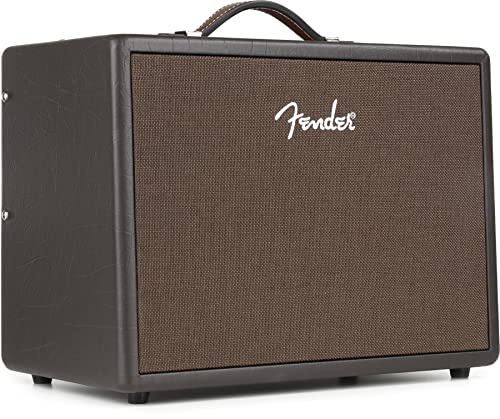
| Spec | Fishman Loudbox Micro | Fender Acoustic Junior |
|---|---|---|
| Power output | 40 watts | Not published in listing |
| Speaker | 1 x 5.25-inch | Not published in listing |
| Amp models or channels | Two channels: Instrument and Microphone | Not published in listing |
| Effects | Digital Reverb and Chorus | Built-in 90-second looper with Record/Dub, Play/Stop, and Undo buttons. No other effects are published in the listing. |
| Inputs and outputs | Instrument input, microphone input, 1/8 inch auxiliary input, balanced XLR D.I. output | Not published in listing |
| Headphone and line out | Balanced XLR D.I. output; dedicated headphone output not listed | Not published in listing |
| Bluetooth and app | Not published in listing | Bluetooth pairing for audio streaming from phones and tablets. No app control is mentioned in the listing. |
| Weight | Not published in listing | Not published in listing |
| Dimensions | Not published in listing | Not published in listing |
| Included accessories | Not published in listing | Not published in listing. The listing title mentions a 2-year warranty. |
Tone and Amp Models
The Fishman Loudbox Micro provides two independent channels, one dedicated to instrument and one to microphone. The listing does not claim any onboard amplifier modeling or guitar amp simulations, focusing instead on clean acoustic reproduction. The supplied tone score is 24 out of 30. In contrast, the Fender Acoustic Junior listing does not publish its number of channels or any amp model types, so we cannot compare its tonal architecture directly to the Fishman.
The Fender Acoustic Junior earns a tone score of 22 out of 30, slightly below the Fishman's 24. The Fender listing omits details about preamp voicings, EQ sections, or channel count, and the only listed effect beyond the looper is not a tone-shaping model. The Fishman's inclusion of a microphone channel suggests it is tailored for singer-songwriters who need both guitar and vocal amplification. The Fender may have microphone support, but the listing does not state it, so we cannot assume that capability.
Neither amplifier is a modeling amp with multiple amp models. The Fishman uses its two channels to handle instrument and microphone separately, not to emulate different guitar amps. The Fender's listing does not mention any amp models either, so both are straightforward acoustic platforms. A player seeking modeled electric guitar tones would need a different product category.
Effects and Features
The Fishman Loudbox Micro includes digital reverb and chorus as its onboard effects. These are commonly used for acoustic guitar and vocals, but the selection is limited. The listing does not mention delay, tremolo, or other modulation effects. The supplied effects score for the Fishman is 14 out of 20, reflecting a basic but useful set for clean acoustic tone.
The Fender Acoustic Junior includes a built-in 90-second looper with Record/Dub, Play/Stop, and Undo buttons. This is a more distinctive feature than reverb or chorus for practice and performance. The listing states no other effects beyond the looper, so reverb and modulation may be absent or unspecified. The effects score for the Fender is 15 out of 20, one point higher than Fishman, driven by the looper, so a buyer who wants looping will find the Fender more immediately useful.
Both amps lack extensive multi-effects processing. The Fishman's reverb and chorus are adequate for a clean acoustic sound, but players who want delay or overdrive will be disappointed. The Fender's looper is a creative tool, but it is not a substitute for modulation or time-based effects. Neither amp competes with modeling units that include dozens of effects.
Power and Speaker
The Fishman Loudbox Micro publishes a 40-watt power output and a single 5.25-inch speaker. This is a compact setup that can work for small rehearsals and intimate performances. The small speaker may limit low-end projection for solo gigs, as noted in the cons. The supplied power and speaker score is 11 out of 15, which reflects known but modest output.
The Fender Acoustic Junior does not publish its power output or speaker size in the listing. This absence prevents a direct comparison of wattage, headroom, or speaker configuration. The power and speaker score is 9 out of 15, lower than the Fishman, because the unknowns make it difficult to evaluate. A buyer who needs a known amplifier for stage use may find the lack of published specifications unacceptable, and we cannot say whether the Fender is louder, quieter, or comparable to the 40-watt Fishman.
The universal voltage listed for the Fender is not a power amplifier spec, but it is relevant for international use. It does not compensate for the missing wattage and speaker details. The Fishman's published 40 watts is a modest figure, and the single 5.25-inch speaker limits bass response. For players who need more volume, an external PA may be necessary with either amp.
Connectivity and Apps
The Fishman Loudbox Micro lists instrument input, microphone input, a 1/8 inch auxiliary input, and a balanced XLR D.I. output. The XLR direct output is a strong feature for connecting to a PA or recording interface. A dedicated headphone output is not listed, which limits silent practice options. Bluetooth and app connectivity are not published in the listing, and the supplied connectivity score is 10 out of 15.
The Fender Acoustic Junior lists Bluetooth pairing for audio streaming from phones and tablets. This allows users to play along with backing tracks wirelessly, and no app control is mentioned. The listing does not publish any input or output details, including headphone or line out, so it is hard to know whether it has an XLR direct out or a microphone input. The connectivity score is 11 out of 15, slightly higher than Fishman because of Bluetooth, but the missing I/O information is a tradeoff.
Build and Portability
Neither listing publishes weight or dimensions for either amplifier. The Fishman Loudbox Micro is described as a compact 40-watt design with a 5.25-inch speaker, which implies a small footprint, but no exact measurements are given. The supplied build and portability score is 8 out of 10. Without listed weight, buyers cannot compare carrying ease directly.
The Fender Acoustic Junior also omits weight and dimensions. However, the listing does mention an integral tilt-back kickstand, which is useful for floor monitoring and angle adjustment. Universal voltage is listed, meaning the amp can operate internationally with appropriate adapters or voltage settings. Both models score 8 out of 10 for build and portability, but the Fender's kickstand and voltage flexibility are published advantages.
Home Versus Stage
For home practice, the Fender Acoustic Junior has clear advantages with its built-in looper and Bluetooth streaming. The tilt-back kickstand helps angle the amp toward the player in a small room. The Fishman Loudbox Micro has an auxiliary input for wired backing tracks, but no Bluetooth and no dedicated headphone output, making it less ideal for silent practice. So for bedroom or apartment use, the Fender appears more practice-friendly.
For stage use, the Fishman Loudbox Micro offers a balanced XLR direct output and a microphone channel, which are valuable for live performance. The 40-watt power and 5.25-inch speaker are limited, but the direct out lets the amp send a signal to a PA. The Fender Acoustic Junior's unknown power and output specifications make it hard to assess stage readiness, and without a listed direct out or microphone input, it is less clearly suited for live solo performance. The Fishman's listed live features give it an edge on stage.
In a hybrid scenario where you practice at home and occasionally play small venues, the Fishman may still be the better choice if you can use the XLR output into a PA. The Fender's looper can be useful on stage for solo layering, but without a listed direct output, you may need to mic the amp. Neither amp is a high-power stage solution, but the Fishman's direct out reduces uncertainty.
Value
The Fishman Loudbox Micro scores 9 out of 10 for value. It offers a known 40-watt power section, two channels, reverb and chorus, auxiliary input, and XLR direct output. These features provide a coherent package for acoustic players who need a small live amp. The overall score is 76 out of 100, and the published specifications allow buyers to understand what they are getting.
The Fender Acoustic Junior scores 8 out of 10 for value and 73 overall. It includes a built-in looper and Bluetooth streaming, which can be high-value features for practice. However, the listing omits power, speaker size, and I/O details, making it harder to judge long-term usefulness. Without those facts, the value proposition is less certain, though players who accept the unknown specs may still find good value in the Fender's practice features.
The difference in overall score, 76 versus 73, is small. It comes down to the Fishman's more transparent specification sheet versus the Fender's added practice tools. For value-conscious buyers who want to know exactly what they are purchasing, the Fishman's clarity may justify its slightly higher score. The Fender may be a better value if the looper and Bluetooth are used daily.
The Deciding Question
The central question is whether you need a known live-performance amplifier or a feature-rich practice amp. The Fishman Loudbox Micro gives you a 40-watt platform with a microphone channel and balanced XLR output, which are concrete tools for small gigs and open mics. The Fender Acoustic Junior gives you a looper and Bluetooth but withholds key power and speaker specs. If your decision depends on understanding hardware, the Fishman has a clearer answer.
Consider what you will do most often. If you sing and play acoustic guitar in small venues, the Fishman's microphone channel and direct output are more directly relevant. If you mostly practice at home and want to loop ideas or stream backing tracks, the Fender's looper and Bluetooth are stronger. The Fishman's lack of a headphone output and Bluetooth may be a problem for quiet practice, while the Fender's lack of published connectivity may be a problem for stage routing. Choose the one that matches your primary use.
A secondary question is whether you value the Fender brand and its looper more than detailed specifications. Some buyers will happily trade unknown power for a known looper and Bluetooth. Others will reject the Fender because they cannot verify if it will be loud enough or have the outputs they need. Knowing your own tolerance for missing data is as important as the features themselves.
Who Should Buy Which
Buy the Fishman Loudbox Micro if you are an acoustic singer-songwriter who needs a compact amp with a separate microphone channel and a balanced XLR direct output. It is also a good fit for small rehearsals and solo performances where you want clean acoustic tone with basic reverb and chorus. Avoid the Fishman if you need Bluetooth streaming, a looper, battery power, or a dedicated headphone output for silent practice.
Buy the Fender Acoustic Junior if you are an acoustic guitarist who wants a practice-focused amp with a built-in 90-second looper and Bluetooth audio streaming. It suits players who do not need to know exact power or speaker specifications and value a tilt-back kickstand and universal voltage. Avoid the Fender if you require detailed power, speaker, connectivity, or input output information before purchasing.
For stage use, the Fishman is the safer recommendation based on published features. For bedroom practice and looping, the Fender is more attractive. Both are lower mid-range acoustic combos, but the Fishman's clarity about live tools gives it a higher overall score.
Fishman Loudbox Micro
Pros
- Two separate channels for instrument and microphone
- Built-in digital reverb and chorus
- Balanced XLR direct output for live use
- Compact 40-watt design with 5.25-inch speaker
- Aux input for backing tracks
- Master volume control for overall level
Cons
- No Bluetooth or app connectivity listed
- No dedicated headphone output listed
- Limited effects selection compared to modeling amps
- No specified weight or dimensions in listing
- Small speaker may limit low-end projection for solo gigs
Fender Acoustic Junior
Pros
- Built-in 90-second looper with undo
- Bluetooth audio streaming for backing tracks
- Integral tilt-back kickstand for monitoring
- Universal voltage for global use
- Fender brand reputation for acoustic amplification
- Lower mid-range price tier
Cons
- Power output and speaker size not published
- No app control or USB connectivity mentioned
- Limited information on input and output options
- Effects beyond the looper not listed
- Weight and dimensions unavailable
Who Should Buy Each
Fishman Loudbox Micro
- Singer-songwriters who want one compact amp for guitar and vocals
- Acoustic players who need a balanced XLR feed to a PA or mixer
- Musicians looking for a lower mid-range acoustic combo for coffeehouse or small-venue use
- Practice players who want a simple amp with a modest set of time-based effects
Fender Acoustic Junior
- Acoustic guitar players looking for simple practice tools
- Musicians who want to loop ideas and play along with streaming audio
- Travelers needing a universal voltage amplifier
- Fender fans who want a lower mid-range acoustic amp
Quick Decision Guide
| If you need a balanced XLR direct output for live sound | Choose Fishman Loudbox Micro |
| If you want a built-in 90-second looper with undo for practice | Choose Fender Acoustic Junior |
| If you need Bluetooth audio streaming for backing tracks | Choose Fender Acoustic Junior |
| If you need separate instrument and microphone channels with known 40-watt power | Choose Fishman Loudbox Micro |
| If you cannot tolerate missing power and speaker specifications | Choose Fishman Loudbox Micro |
FAQ
About This Comparison
Mandrillis Team
The Mandrillis editorial team researches and compares audio and music gear using manufacturer documentation, verified specs and real buyer feedback, so you can make a confident purchase without wading through marketing claims.
Read our full research methodology.
We may earn a commission at no extra cost to you.