Fluance RT82 vs Pro-Ject Essential II
Quick Verdict
Choose the Pro-Ject Essential II if you want a built-in phono preamp and a USB output for digitizing records in a lighter, minimalist deck. Choose the Fluance RT82 if you want the heavier plinth, the speed-sensing motor, the better Ortofon OM10 cartridge and the auto-stop, and you have a phono input or external preamp to pair it with. Both are serious manual turntables; the RT82 is the better pure player, the Essential II the more self-contained one.

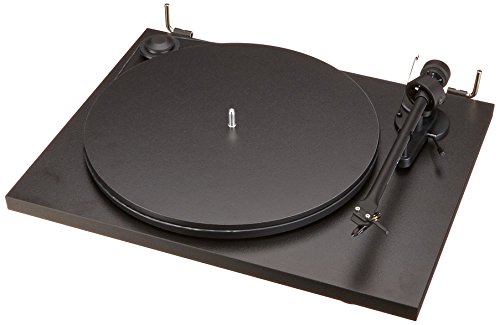
| Spec | Fluance RT82 | Pro-Ject Essential II |
|---|---|---|
| Drive Type | Belt drive | Belt drive |
| Operation | Manual | Manual |
| Built-in Preamp | No (requires a phono input or external preamp) | Yes (switchable) |
| Bluetooth | No | No |
| Speeds | 33-1/3, 45 RPM | 33-1/3, 45 RPM |
| Cartridge | Ortofon OM10 | Ortofon OM5e |
Two Manual Decks, Two Philosophies
Both are belt-drive manual turntables with real tonearms, adjustable counterweights and Ortofon cartridges, which already puts them a class above automatic beginner decks. Fluance built the RT82 around mass and motor control: a thick MDF plinth, isolation feet, a servo-controlled motor with a speed sensor and an S-shaped tonearm. Pro-Ject built the Essential II around simplicity and low resonance: a slim, light plinth, a straight 8.6 inch aluminum tonearm and, on the version compared here, a built-in phono preamp and USB output.
Sound Quality
The RT82 has the edge in three places. Its heavier plinth and feet reject footfall and speaker vibration better, so bass is cleaner on a less-than-ideal shelf. Its speed sensor keeps pitch steadier over a side. And the Ortofon OM10 is a step above the OM5e on the Essential II, with a finer stylus that pulls more detail from the groove and tracks demanding passages with less distortion.
The Essential II is no slouch. Its low-mass design and well-made tonearm give a quick, open sound that many listeners enjoy, and its built-in phono stage is competent, better than most of the preamps built into automatic decks. Fitted with an OM10 stylus, which is a direct upgrade, it closes much of the gap. Out of the box, though, the RT82 is the more refined listen.
Setup and Everyday Use
Setup is similar: fit the platter and belt, balance the arm, set tracking force and anti-skate. The RT82 has an anti-skate dial; the Essential II uses a weight on a thread, which is fiddlier. The RT82 changes speed with a switch; the Essential II requires moving the belt between pulley steps by hand.
In daily use the RT82 adds auto-stop, which halts the platter at the end of a side so you can leave the room. The Essential II keeps spinning until you lift the arm. The RT82 includes a dust cover; the Essential II version compared here does not, and a cover is an extra purchase worth making.
Preamp, USB and Connections
This is where the Essential II pulls ahead. Its built-in phono preamp switches off if you prefer an external one, so it works with any receiver, amplifier or powered speaker without extra boxes. The USB output sends the preamplified signal to a computer for recording records to files, a feature almost nothing else in this price range offers.
The RT82 has RCA outputs and a ground wire and nothing else. You need a phono input or a separate phono preamp, which adds cost unless your amplifier already has one. For a buyer with powered speakers and no receiver, the Essential II is the simpler purchase.
Cartridge and Upgrades
Both use the Ortofon OM family. The RT82 ships with the OM10; the Essential II with the OM5e. The OM family shares a body, so an Essential II owner can fit the OM10 stylus, or go further to the OM20 or OM30, and so can an RT82 owner. Both tonearms have standard headshell mounts for other cartridges. In upgrade terms they are equal; the RT82 simply starts one rung higher.
Build and Placement
The RT82 is the heavier deck and prefers a solid surface, where its mass works for it. The Essential II is light and easier to move, and its minimalist plinth looks more modern on a shelf. Both are well finished for the price, but the Fluance's wood veneer and feet give it a more substantial feel, and the included cover keeps it that way.
Isolation, Noise and Placement in a Real Room
A turntable's biggest enemy in most homes is vibration from the floor and from the speakers, and the two decks handle it differently. The RT82's heavy plinth and rubber isolation feet absorb more of it, so on a wooden floor beside a pair of bookshelf speakers it skips less and keeps bass cleaner at higher volume. The Essential II's light plinth is more sensitive to footfall and to being placed near a speaker; it rewards a wall shelf or a heavy sideboard.
Motor noise is low on both, and the RT82's servo control adds no audible hum. The Essential II's belt change between 33 and 45 is manual, which is a minor annoyance if your collection mixes LPs and singles. Neither deck has a built-in Bluetooth transmitter, so wireless speakers need an external transmitter on either; the Essential II's line output makes that simpler because no separate phono stage is needed first.
Who Should Buy Which
Buy the RT82 if you already own a phono input, want the best playback at this price and value auto-stop and a dust cover. Buy the Essential II if you have powered speakers or a receiver without a phono input, want to digitize your collection over USB, or prefer the lighter, minimalist design. Either deck is a sound long-term base; the Essential II simply needs fewer extras on day one, and the RT82 rewards you more once the extras are in place.
Fluance RT82
Pros
- Balanced, detailed sound
- Adjustable counterweight and anti-skate
- Solid build quality
- Upgradeable Ortofon cartridge out of the box
Cons
- Manual operation only
- No Bluetooth
- Needs a phono input or external preamp
Pro-Ject Essential II
Pros
- True audiophile entry point
- Quality Ortofon cartridge included
- USB output for digitizing records
- Minimalist, low-resonance design
Cons
- Manual operation only
- No dust cover included
- No Bluetooth
Who Should Buy Each
Fluance RT82
- You want RT85-level detail without the RT85 price
- You are comfortable with manual operation
- You want a cartridge you can upgrade later
Pro-Ject Essential II
- You want authentic hi-fi sound on a tight budget
- You already own a receiver or external phono preamp you can switch to
- You want to digitize records via USB
Quick Decision Guide
| If you want a built-in preamp and nothing else to buy | Choose Pro-Ject Essential II |
| If you want to record records to a computer over USB | Choose Pro-Ject Essential II |
| If you want the heavier build, speed sensor and better cartridge | Choose Fluance RT82 |
| If you want auto-stop and a dust cover included | Choose Fluance RT82 |
| If you have powered speakers and no receiver | Choose Pro-Ject Essential II |
FAQ
About This Comparison
Mandrillis Team
The Mandrillis editorial team researches and compares audio and music gear using manufacturer documentation, verified specs and real buyer feedback, so you can make a confident purchase without wading through marketing claims.
Read our full research methodology.
We may earn a commission at no extra cost to you.