Ibanez SR300E vs Jackson JS2 Concert Bass
Quick Verdict
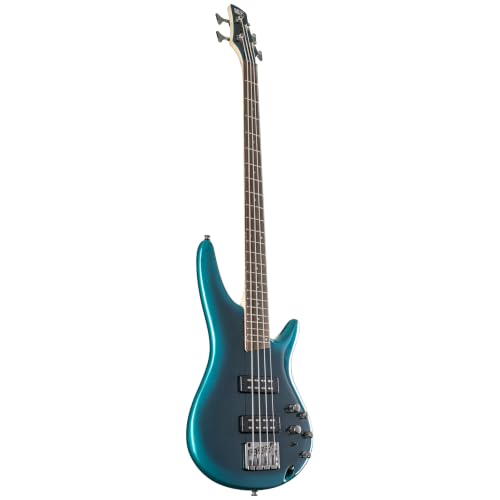
The Ibanez SR300E and Jackson JS2 Concert Bass are both lower midrange four string basses with dual humbucking pickups and an overall score of 76. The Jackson provides more published specifications, including a 34 inch scale, graphite reinforced maple neck, 12 to 16 inch compound radius amaranth fingerboard with 24 jumbo frets, high mass bridge, and sealed tuners. The Ibanez offers a nyatoh body, maple and walnut neck, jatoba fingerboard, and a Cerulean Aura Burst finish, but omits scale length, hardware, and control details. Choose the Jackson if you need known scale and extended fret access or a rock oriented look. Choose the Ibanez if you prefer the slim contoured SR body and burst finish and can accept missing specs.

| Spec | Ibanez SR300E | Jackson JS2 Concert Bass |
|---|---|---|
| Body | Nyatoh body | Poplar concert body |
| Neck and fingerboard | Maple/walnut neck with jatoba fingerboard | Bolt-on one piece maple neck with graphite reinforcement and scarf joint, 12 to 16 inch compound radius amaranth fingerboard with 24 jumbo frets and pearloid sharkfin inlays |
| Scale length | Not published in listing | 34 inches |
| Strings | 4-string (gauge and material not published in listing) | Not published in listing |
| Pickups | 2 humbucking pickups | Jackson covered high-output humbucking pickups |
| Controls | Not published in listing | Not published in listing |
| Bridge | Not published in listing | Jackson high mass bridge |
| Tuners | Not published in listing | Jackson sealed die-cast tuners |
| Finish | Cerulean Aura Burst | Satin Black |
| Included accessories | Not published in listing | Case not included |
Body, Neck and Playability
The Ibanez SR300E uses a nyatoh body and a maple and walnut neck with a jatoba fingerboard. The listing describes the SR body shape as slim and contoured, which typically supports comfortable seated and standing play. However, the listing does not publish the scale length, nut width, or fret count for the SR300E, so players cannot confirm fret spacing or upper register access from the supplied information. The playability score for the Ibanez is 23 out of 30, indicating a strong on paper profile that still leaves key measurements unknown.
The Jackson JS2 Concert Bass has a poplar concert body and a bolt on one piece maple neck with graphite reinforcement and a scarf joint. Its fingerboard is amaranth with a 12 to 16 inch compound radius and 24 jumbo frets. The scale length is published as 34 inches, which is a familiar standard for many bass players. The compound radius is designed to support comfortable chording near the nut and flatter bending up high, and the 24 jumbo frets extend the upper range compared to many traditional basses. The playability score is also 23 out of 30.
For players who need a known scale length and extended fret access, the Jackson offers more published specifics. The Ibanez relies on its SR body contour and maple and walnut neck for comfort, but the missing scale length makes direct comparison impossible. Without scale length, nut width, and fret count for the Ibanez, buyers must rely on assumptions or request more details from the seller. Both basses score the same in playability, but the Jackson provides a more complete playability picture from the listing.
Pickups and Tone
The Ibanez SR300E is equipped with two humbucking pickups. The listing does not specify the exact model, magnet type, output level, or active versus passive operation. Dual humbucking pickups generally aim for a full and noise resistant tone, and the Ibanez tone score is 20 out of 25. The dual humbucker layout is common on modern basses for contemporary styles such as rock, funk, and metal, but without control details the tone shaping range is unknown.
The Jackson JS2 Concert Bass uses Jackson covered high output humbucking pickups. The listing says high output, which suggests a more aggressive and louder signal into an amplifier. The tone score for the Jackson is 19 out of 25, one point below the Ibanez. The Jackson pickups are covered, which may affect the look and magnetic field, but the listing does not publish active or passive electronics or the control layout. Both basses omit control specifics, so neither can be evaluated for equalization or pickup blending options.
On paper, the Ibanez edge in tone comes from its slightly higher score and dual humbucking configuration, but without output or control data the comparison is limited. The Jackson high output pickups may appeal more to rock and metal players who want a hotter signal. Neither listing describes pickup height adjustment or string spacing at the pickups, so tone versatility cannot be confirmed. Buyers who need a specific control scheme, such as a master volume, blend, and active EQ, will not find that information in either listing.
Hardware and Electronics
The Ibanez SR300E listing omits the bridge, tuners, and control specifications. This is a significant gap because the bridge affects intonation, string height, and sustain, while tuners affect tuning stability. The hardware and electronics score for the Ibanez is 7 out of 10, which suggests the components are acceptable but not fully documented. Without knowing the bridge type, buyers cannot compare it to the Jackson high mass bridge or to other basses in this price range.
The Jackson JS2 Concert Bass lists a Jackson high mass bridge and Jackson sealed die cast tuners. The high mass bridge is designed to add sustain and transfer string vibration to the body, while sealed die cast tuners are typically stable and low maintenance. The Jackson also scores 7 out of 10 in hardware and electronics. The Jackson listing does not publish the control layout, so the electronic hardware beyond the pickups remains unknown. The bridge and tuner specifications give the Jackson a clear advantage in documented hardware.
Because the Ibanez omits all hardware details, it is impossible to compare bridge mass, tuner type, or control components directly. The Jackson provides more transparency about its bridge and tuners, which may give buyers confidence in the platform. Neither listing mentions strap buttons, output jack type, or shielding, so those details remain unknown. In hardware and electronics, the Jackson has an edge simply because it publishes part of its hardware while the Ibanez publishes none.
Build Quality and Finish
The Ibanez SR300E has a nyatoh body, a maple and walnut neck, and a jatoba fingerboard. Nyatoh is a wood that appears in modern basses as a stable and relatively lightweight option, and the maple and walnut neck is a multi piece construction on paper. The finish is Cerulean Aura Burst, a blue to dark burst that gives the bass a distinctive appearance. The build and materials score is 11 out of 15. The listing does not state the neck joint type, fret count, or weight, so some build quality details are missing.
The Jackson JS2 Concert Bass has a poplar concert body and a bolt on one piece maple neck with graphite reinforcement and a scarf joint. The graphite reinforcement is intended to improve neck stability under temperature and humidity changes. The fingerboard is amaranth with a 12 to 16 inch compound radius and 24 jumbo frets with pearloid sharkfin inlays. The finish is Satin Black. The Jackson also scores 11 out of 15 in build and materials. The satin black finish and sharkfin inlays give it a metal oriented look.
The Jackson listing provides more build details, including the neck joint, graphite reinforcement, scarf joint, and fret count. The Ibanez listing does not mention neck reinforcement or joint type, which makes its build quality less transparent. Both basses score the same in build and materials, but the Jackson offers a more complete specification sheet. The Ibanez Cerulean Aura Burst finish may appeal to players who want a colorful bass, while the Jackson Satin Black is understated. Neither listing states the country of origin or includes a weight specification.
Setup Out of the Box
Neither the Ibanez SR300E nor the Jackson JS2 Concert Bass listing describes the factory setup. The Ibanez listing does not mention string action, neck relief, intonation, or included setup tools. The Jackson listing also omits setup specifications, though it includes a high mass bridge that should allow standard intonation and string height adjustments. Case not included is listed for the Jackson, but that is an accessory rather than a setup detail.
Setup quality out of the box can vary widely, and without a published factory setup standard, buyers cannot know what to expect. The Jackson's 34 inch scale length and high mass bridge suggest it can be set up for common string gauges, but the listing does not state the string gauge itself. The Ibanez does not publish scale length or bridge type, so even basic setup expectations are less clear. Both basses would likely benefit from a professional setup after purchase, but that is not stated in the listings.
For players who want to adjust their own instrument, the Jackson offers more published hardware details, such as the high mass bridge and sealed tuners, which imply standard adjustment points. The Ibanez lacks any bridge or tuner information, so it is impossible to confirm whether it uses a standard adjustable bridge. Since neither listing includes a case, gig bag, or tools, buyers should plan to purchase those separately if needed. The setup out of the box section is a wash, with the Jackson slightly ahead on published adjustability.
Daily Use and Practice
For daily practice, scale length, neck profile, and weight matter. The Jackson has a 34 inch scale length, a compound radius fingerboard, and 24 jumbo frets, which can make it comfortable for long sessions and easy access to the upper register. The Ibanez has a slim contoured SR body style, but the listing does not publish its scale length or weight, so comfort claims cannot be fully verified. Both basses have a lower midrange price, but no gig bag or case is included in either listing, so transporting them to practice requires a separate purchase.
The Jackson's satin black finish may be less prone to visible fingerprints than a glossy burst finish, but the listing does not state whether the Ibanez Cerulean Aura Burst is gloss or satin. The Ibanez nyatoh body and maple and walnut neck suggest a stable foundation, but without a weight spec, it is hard to compare shoulder strain. The Jackson's graphite reinforced neck is a plus for daily use because it may resist changes due to temperature and humidity, making it easier to keep in tune.
For seated practice, both basses should work, but the Ibanez contoured body may hug the player, while the Jackson's 24 frets allow more notes without shifting. The Ibanez does not publish fret count, so upper fret access is unknown. The Jackson high mass bridge and sealed tuners should hold tuning reasonably well during practice, but again, no string gauge is given. Overall, the Jackson provides more concrete daily use information, while the Ibanez relies on its body shape and known Ibanez design language.
Versatility and Styles
The Ibanez SR300E is marketed toward modern styles with a slim body and dual humbucking pickups. Its best for field lists players seeking a lower midrange 4 string bass with a contoured body and dual humbucking pickups for modern styles. The burst finish adds visual versatility, but without control details, it is hard to say how many tones the bass can produce. The Ibanez versatility score is 7 out of 10.
The Jackson JS2 Concert Bass is aimed at rock oriented players, with high output humbuckers, a compound radius fingerboard, and 24 jumbo frets. Its best for field lists players who want a modern rock oriented lower mid range bass with 24 frets, high output humbuckers, and a satin black finish. The Jackson versatility score is also 7 out of 10. The 24 frets and high output pickups make it appealing for metal and hard rock, but the missing control layout limits confirmation of tonal range.
Both basses lean modern rather than vintage. The Ibanez may be slightly more versatile for clean or funk styles because of its SR body heritage and dual humbuckers, but that is speculative without control specs. The Jackson's high output pickups and 24 frets point toward aggressive styles, though it could likely handle clean tones with the right amplifier settings. Neither bass has a published active preamp or coil split option, so versatility is primarily from the pickup configuration and playability features. Buyers who need vintage single coil tones should look elsewhere for both models.
The Deciding Question
The core decision between these two basses comes down to what the buyer needs to know before purchasing. The Jackson listing publishes its scale length, neck construction, fingerboard radius, fret count, bridge type, and tuner type. The Ibanez listing omits scale length, bridge, tuners, control layout, and fret count. If a buyer cannot tolerate missing specifications, the Jackson is the safer choice because it answers more of those questions.
On the other hand, if the buyer trusts the Ibanez SR series reputation for comfortable contoured bodies and modern dual humbucker tones, the Ibanez may still appeal. The Ibanez has a more colorful finish and a tone score one point higher. The deciding question might be: do you need a known 34 inch scale and extended 24 fret access, or do you prefer a slim contoured body and are willing to accept unknown scale and hardware details?
Another deciding factor is style. The Jackson's satin black and sharkfin inlays signal a metal and rock aesthetic, while the Ibanez Cerulean Aura Burst is more visually versatile. Both basses score 76 overall, so the choice is not about objective quality but about which set of published specs and visual identity matches the player's priorities. The missing information on the Ibanez is the biggest risk, while the Jackson's missing control layout is less critical if the pickups and hardware are already known.
Who Should Buy Which
Buy the Ibanez SR300E if you want a lower midrange four string bass with a nyatoh body, maple and walnut neck, jatoba fingerboard, and dual humbucking pickups in a Cerulean Aura Burst finish. You should be comfortable with the listing not publishing scale length, bridge, tuners, controls, and fret count. This bass suits players who like the slim contoured SR body shape for modern styles and do not need a case or setup details included.
Buy the Jackson JS2 Concert Bass if you want a rock oriented lower midrange bass with a poplar body, graphite reinforced maple neck, compound radius amaranth fingerboard, 24 jumbo frets, high output humbuckers, high mass bridge, and sealed die cast tuners. The satin black finish and sharkfin inlays give it a metal look. This bass suits players who value published scale length and hardware specs and do not need a case.
If you are between these two, consider which unknowns you can live with. The Ibanez has a tone score of 20 to the Jackson's 19, but the Jackson has more published playability and hardware details. Both are lower midrange basses with similar overall scores, so the final choice is personal. Players who need a known 34 inch scale and 24 frets should choose the Jackson, while players who prioritize a contoured body and a burst finish may prefer the Ibanez.
Ibanez SR300E
Pros
- Modern dual humbucking pickup configuration
- Slim contoured SR body style on paper
- Nyatoh body and maple/walnut neck offer a stable foundation
- Lower midrange price tier with recognizable Ibanez design
- Cerulean Aura Burst finish adds visual appeal
Cons
- Listing omits bridge, tuners and control specs
- Scale length not published so fret spacing is unknown
- No included setup or accessory details
- Tonewood and pickup response cannot be confirmed from the listing alone
- Nut width is unknown
Jackson JS2 Concert Bass
Pros
- Modern compound radius fingerboard with 24 jumbo frets
- High output humbucking pickups on paper
- High mass bridge and sealed die cast tuners
- Satin black finish with pearloid sharkfin inlays
- 34 inch scale length is familiar to most bassists
- Lower mid-range price tier
Cons
- Listing does not publish control layout or active passive electronics
- String count and gauge are not specified
- No case or gig bag included
- Single satin black finish in this listing
- No weight specification published
Who Should Buy Each
Ibanez SR300E
- Beginner and intermediate bassists who want an affordable Ibanez SR-style instrument
- Players who prefer a modern, contoured body shape and slim neck profile
- Musicians who want a dual humbucker pickup configuration for fuller, quieter operation
- Buyers who value a distinctive Cerulean Aura Burst finish at a lower midrange price
Jackson JS2 Concert Bass
- Rock, hard rock, and metal bassists on a lower mid-range budget
- Players who want 24 jumbo frets and a compound radius fingerboard
- Buyers who prefer a stealth satin black look with sharkfin inlays
- Those who already own a traditional bass and want a modern second instrument
Quick Decision Guide
| If you need a known 34 inch scale length before buying | Choose Jackson JS2 Concert Bass |
| If you want a high mass bridge and sealed die cast tuners listed | Choose Jackson JS2 Concert Bass |
| If you want a 12 to 16 inch compound radius fingerboard with 24 jumbo frets | Choose Jackson JS2 Concert Bass |
| If you prefer a slim contoured SR body style and a Cerulean Aura Burst finish | Choose Ibanez SR300E |
| If you are comfortable with unpublished scale length, bridge, and tuner specs | Choose Ibanez SR300E |
FAQ
About This Comparison
Mandrillis Team
The Mandrillis editorial team researches and compares audio and music gear using manufacturer documentation, verified specs and real buyer feedback, so you can make a confident purchase without wading through marketing claims.
Read our full research methodology.
We may earn a commission at no extra cost to you.