JBL Bar 700MK2 vs Klipsch RP-440D-SB
Quick Verdict
The JBL Bar 700MK2 is the better choice for most buyers who want an immersive TV sound upgrade without running rear speaker wires. It includes detachable wireless surrounds, a 10 inch wireless subwoofer, 780W max power, Dolby Atmos and DTS Virtual:X, plus Wi-Fi and Bluetooth streaming, though HDMI eARC and app details are not published. The Klipsch RP-440D-SB suits a narrower buyer who already owns an AV receiver and subwoofer and wants a slim passive on wall front speaker with Klipsch horn loaded tweeter. It lacks published channel count, bass, power, and connectivity, so it cannot be considered a complete soundbar system. Choose JBL for all-in-one home theater, Klipsch only for existing component setups.

| Spec | JBL Bar 700MK2 | Klipsch RP-440D-SB |
|---|---|---|
| Channels | 7.1 | Not published in listing |
| Drivers | 10-inch wireless subwoofer driver; soundbar and surround driver array not published in listing | 1 inch titanium dome LTS tweeter (full driver complement not published) |
| Power | 780W max | Not published in listing |
| Subwoofer | Wireless 10 inch subwoofer included | Not published in listing |
| Dolby Atmos and DTS | Dolby Atmos and DTS Virtual:X | Not published in listing |
| HDMI eARC and inputs | Not published in listing | Not published in listing |
| Wireless and streaming | Wi-Fi and Bluetooth streaming, wireless subwoofer, detachable wireless surround speakers | Not published in listing |
| Dimensions | Not published in listing | Not published in listing |
| Remote and app | Not published in listing | Not published in listing |
| Included accessories | Wireless subwoofer and detachable surround speakers included; remote and cables not published in listing | Not published in listing |
| Type | Soundbar with wireless subwoofer and detachable surround speakers | N/A |
| Power or sensitivity | 780 watts max | N/A |
| Frequency response | Not published in listing | N/A |
| Inputs and connectivity | Bluetooth and Wi-Fi confirmed; HDMI, optical and USB details not published in listing | N/A |
| Bluetooth and streaming | Bluetooth, Wi-Fi | N/A |
| Weight | Not published in listing | N/A |
| Finish | Black | N/A |
Sound Quality
The JBL Bar 700MK2 earns 25 out of 30 points for sound quality, while the Klipsch RP-440D-SB earns 21 out of 30. The JBL listing specifies 7.1 channels, 780W max power, MultiBeam 3.0 wide soundstage, and PureVoice 2.0 dialogue enhancement. The Klipsch listing only names a 1 inch titanium dome LTS tweeter and does not publish the full driver complement or power output. That makes the JBL a more complete on paper performer.
Klipsch does promote a horn loaded titanium dome tweeter for clear, efficient highs, which may appeal to listeners who like detailed treble. However the absence of woofer size, channel count, and power handling in the listing means the midrange and bass performance cannot be evaluated from supplied facts. The JBL also does not disclose individual driver sizes, but its detachable wireless surrounds and 10 inch subwoofer reveal a more complete system.
In practical terms, the JBL should deliver a wider soundstage with dedicated rear channels, while the Klipsch is likely a passive front speaker bar. The JBL includes PureVoice 2.0 for clearer dialogue, but the Klipsch listing does not mention any dialogue enhancement. Buyers who prioritize known power and channel count will find the JBL easier to compare against other soundbars.
Surround, Atmos and Audio Formats
The JBL Bar 700MK2 supports Dolby Atmos and DTS Virtual:X, which gives it a clear advantage in immersive audio formats. Its detachable wireless surround speakers provide real rear channel effects without cables. The Klipsch RP-440D-SB listing does not publish any Dolby Atmos or DTS support, and its surround score is only 5 out of 15 compared to 12 out of 15 for the JBL.
Without published Atmos or DTS decoding, the Klipsch cannot be considered a self contained object based audio solution. It may work as a passive bar connected to an AV receiver that decodes formats, but the listing does not state this. The JBL also adds DTS Virtual:X for virtual height and surround cues from a single bar, even if the detachable speakers are not used.
For modern streaming and Blu ray content with Atmos tracks, the JBL is the only option that clearly supports those formats from the supplied facts. Klipsch buyers would need external processing and possibly additional speakers, adding cost and complexity. The JBL's surround capabilities are more complete and easier to set up for typical living rooms.
Subwoofer and Bass
The JBL Bar 700MK2 includes a wireless 10 inch subwoofer as part of the package, and the system has a 780W max power rating. Klipsch does not list a subwoofer, bass driver, or power handling in its supplied facts. This is a major difference for buyers who want deep bass out of the box.
A 10 inch wireless subwoofer should produce substantial low frequency output for movies and music, and the JBL's detachable surrounds free up space near the seating area. The Klipsch RP-440D-SB offers no published low frequency driver information, so its bass performance cannot be assessed from the listing. It likely requires a separate powered subwoofer connected to an AV receiver.
The JBL's subwoofer is wireless, so it can be placed in a corner or behind furniture without a long cable run to the bar. Klipsch gives no such flexibility because no subwoofer is listed. If bass impact is a priority, the JBL Bar 700MK2 is the safer choice based on published specs.
Connectivity and TV Setup
The JBL Bar 700MK2 lists Wi-Fi and Bluetooth streaming, a wireless subwoofer, and detachable wireless surround speakers, but its HDMI eARC and input details are not published. That creates a question about how to connect the bar to a TV for the highest quality audio. Klipsch does not publish any HDMI eARC, optical, or wireless inputs at all, making its TV connection method unclear.
The JBL is clearly a self powered soundbar with built in amplification, but the missing HDMI information means buyers should verify if it includes eARC or optical before purchase. The Klipsch is described as a slim on wall speaker bar, and its cons state that it likely requires an external AV receiver and subwoofer. This suggests a passive design requiring speaker wire, not a simple single cable to a TV.
For a typical TV setup, the JBL should be easier to install because it bundles wireless surrounds and a subwoofer, and it has Wi-Fi and Bluetooth for streaming. Klipsch owners will need an existing receiver and speaker cables, adding complexity. The JBL's connectivity score of 11 out of 15 reflects solid wireless options despite missing HDMI details, while the Klipsch scores 6 out of 15 due to the near total omission of inputs.
Features, Apps and Voice Control
The JBL Bar 700MK2 includes PureVoice 2.0 dialogue enhancement and MultiBeam 3.0 wide soundstage as specific audio features. It also lists Wi-Fi and Bluetooth streaming, which often enables app control, but the listing does not publish remote or app details. Klipsch does not list any app, voice control, or room correction features, and its cons confirm no such features are listed.
Neither model has confirmed voice assistant integration from the supplied facts. The JBL has a Wi-Fi streaming platform that could support a mobile app, but the listing does not state this. Klipsch is a passive speaker bar, so it would rely entirely on external source components for any smart features.
For buyers who want a feature rich soundbar with dialogue enhancement and wide sound processing, the JBL is stronger. Klipsch offers only its horn loaded tweeter design and mounting flexibility, with no software features published. The JBL scores 11 out of 15 for features and apps, while the Klipsch scores 6 out of 15, reflecting that gap.
Design and Fit Under a TV
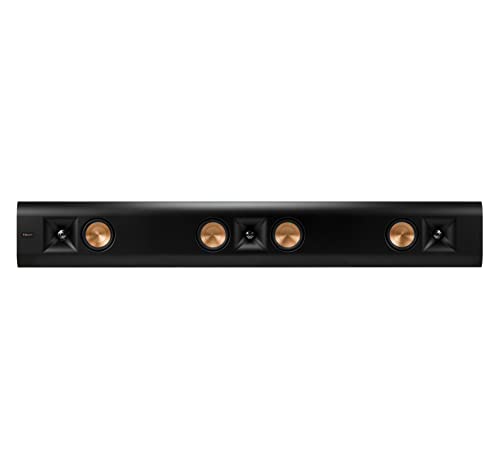
The JBL Bar 700MK2 does not publish dimensions or weight, so its physical fit under a TV is unknown. It consists of a main soundbar, two detachable wireless surround speakers, and a 10 inch wireless subwoofer, so it requires space for multiple components. The Klipsch RP-440D-SB is described as a slim on wall profile designed to match flat panel TVs, with horizontal and vertical mounting flexibility and a matte black finish.
Klipsch earns 12 out of 15 for design and TV fit, slightly higher than the JBL's 11 out of 15. The Klipsch's slim profile and mounting options make it easier to place under a wall mounted TV or on furniture without blocking the screen. The JBL may sit in front of a TV, but without published height, buyers cannot confirm if it will block the bottom edge of the screen.
The detachable wireless surrounds on the JBL require AC power, so they are not truly wireless, but they eliminate speaker wire runs. Klipsch has no surrounds, so it is just a front bar. For a clean, low profile installation matched to a TV, Klipsch has a clear design advantage on paper, though its exact dimensions are also not published.
Who Should Buy It
The JBL Bar 700MK2 is best for buyers who want a mid range Dolby Atmos soundbar with wireless surround speakers and a dedicated subwoofer without running rear speaker wires. It suits living rooms where AC outlets are available near the seating area for the detachable surrounds and subwoofer. Buyers who prioritize movie immersion and deep bass over compact dimensions will find it appealing.
The Klipsch RP-440D-SB is best for a narrow buyer who already owns an AV receiver and a separate powered subwoofer and wants a slim passive front speaker bar. It fits a custom installation or a simple front stage upgrade where the receiver handles amplification and processing. Buyers who like the Klipsch Reference Premiere design language and horn loaded treble will appreciate it.
The JBL is also a good option for someone upgrading from TV speakers who wants a mostly complete system in one box, even if HDMI details are missing. Klipsch is not for plug and play users, but it may suit a home theater hobbyist who wants a clean on wall front channel with efficient highs.
The Deciding Question
The central question for this comparison is whether you need a self powered soundbar with wireless surrounds and a subwoofer out of the box, or whether you already have an AV receiver and subwoofer and only need a slim passive front speaker bar. The JBL Bar 700MK2 answers the first need, and the Klipsch RP-440D-SB answers the second.
If you choose the JBL path, you get Dolby Atmos, DTS Virtual:X, 7.1 channels, 780W max, a 10 inch wireless subwoofer, and Wi-Fi and Bluetooth streaming. You accept that HDMI eARC, dimensions, and app control are not confirmed in the listing. If you choose Klipsch, you accept much thinner specifications and the need for external amplification and bass.
The JBL scores 78 overall, while the Klipsch scores 60, mainly because of the Klipsch's many unpublished specs and lack of built in connectivity. That gap does not mean the Klipsch sounds bad, but it is harder to recommend without known power, channel count, and bass. The deciding factor is existing gear and how much setup you are willing to do.
Who Should Buy Which
Buy the JBL Bar 700MK2 if you want a single purchase that includes a soundbar, detachable wireless surrounds, and a 10 inch wireless subwoofer with Dolby Atmos and DTS Virtual:X. It is the better choice for movie and TV audio in a typical living room where you can place surrounds near the couch and do not want speaker cables.
Buy the Klipsch RP-440D-SB only if you already have an AV receiver, speaker wire, and a separate powered subwoofer, and you want a slim on wall front bar with a horn loaded titanium tweeter and matte black finish. Do not buy it expecting built in decoding, streaming, or plug and play TV connection, because the listing does not confirm any of those.
If you need a complete home theater soundbar that you can connect directly to a TV with wireless surround and bass, the JBL is the only practical choice from these two. If your priority is a clean front stage that blends with your TV and you enjoy Klipsch treble, the RP-440D-SB may be suitable, but verify its passive design and missing specs before purchase.
JBL Bar 700MK2
Pros
- Detachable wireless surround speakers enable true rear channels without running wires
- 780W max power with 10-inch wireless subwoofer for strong bass
- Dolby Atmos and DTS Virtual:X support for object-based and virtual height effects
- MultiBeam 3.0 widens soundstage for off-axis seating
- PureVoice 2.0 improves dialogue clarity
- Bluetooth and Wi-Fi streaming built in
Cons
- Full driver array and frequency response not published, making sonics hard to assess on paper
- No published dimensions or weight, so room fit is uncertain
- HDMI inputs and format support not fully detailed in listing
- Setup requires AC power for detachable surrounds, not fully battery wireless
Klipsch RP-440D-SB
Pros
- Horn loaded titanium dome tweeter for clear, efficient highs
- Slim on wall profile designed to match flat panel TVs
- Horizontal and vertical mounting flexibility
- Matte black finish resists visible smudges and blends in
- Klipsch Reference Premiere design language
Cons
- Listing omits channel count, woofer size, and power handling
- No HDMI eARC, optical, or wireless inputs are described
- No subwoofer or bass driver details are provided
- No app, voice control, or room correction features listed
- Likely requires an external AV receiver and subwoofer for full sound
Who Should Buy Each
JBL Bar 700MK2
- Movie fans wanting a simple 7.1-channel surround effect
- Apartment dwellers who can accommodate a 10-inch wireless sub
- Bluetooth and Wi-Fi streamers looking for a single soundbar system
- Viewers who prioritize dialogue clarity in action films
Klipsch RP-440D-SB
- Home theater owners who already have an AV receiver and speaker wire runs
- Shoppers who want a low profile on wall speaker bar with horn loaded highs
- Klipsch fans looking for a matching Reference Premiere front stage
- Those who prefer a discrete front speaker bar over bulky bookshelf speakers
Quick Decision Guide
| If you want Dolby Atmos and wireless surround speakers without rear cables | Choose JBL Bar 700MK2 |
| If you already own an AV receiver and subwoofer and need a slim passive front bar | Choose Klipsch RP-440D-SB |
| If you need built-in streaming, a dedicated subwoofer, and high max power | Choose JBL Bar 700MK2 |
| If you need a slim on wall design with vertical and horizontal mounting | Choose Klipsch RP-440D-SB |
| If you need a published channel count and power rating for comparison | Choose JBL Bar 700MK2 |
FAQ
About This Comparison
Mandrillis Team
The Mandrillis editorial team researches and compares audio and music gear using manufacturer documentation, verified specs and real buyer feedback, so you can make a confident purchase without wading through marketing claims.
Read our full research methodology.
We may earn a commission at no extra cost to you.