Klipsch Flexus CORE 100 vs Samsung HW-B630F
Quick Verdict
The Klipsch Flexus CORE 100 suits buyers who want Dolby Atmos processing and built-in bass in a single 2.1 bar without a separate subwoofer. Its dual 4 inch built in subwoofers and expandable design are appealing, but the listing omits HDMI eARC, app, and remote details. The Samsung HW-B630F is better for clear dialogue and easy setup, thanks to a dedicated center channel, DTS Virtual:X, a wireless subwoofer, and Samsung TV remote support. Choose Klipsch for all-in-one bass and Atmos branding. Choose Samsung for practical dialogue clarity and a bundled wireless sub. Both lack published connectivity specs, so verify HDMI eARC if you need it.
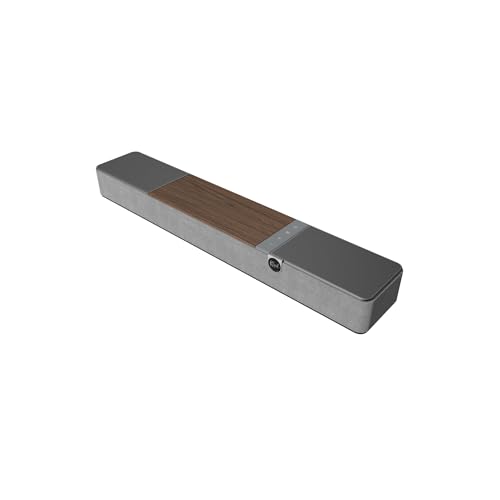

| Spec | Klipsch Flexus CORE 100 | Samsung HW-B630F |
|---|---|---|
| Channels | 2.1 | 3.1 |
| Drivers | Two 2.25-inch ceramic drivers and dual 4-inch built-in subwoofers | Dedicated center channel driver plus left and right channels, specific size and total driver count not published in listing |
| Power | Not published in listing | Not published in listing |
| Subwoofer | Dual 4-inch built-in subwoofers | Wireless subwoofer included, size and amplifier power not published in listing |
| Dolby Atmos and DTS | Dolby Atmos processing, DTS not published in listing | DTS Virtual:X, no Dolby Atmos mentioned in listing |
| HDMI eARC and inputs | Not published in listing | Not published in listing |
| Wireless and streaming | Bluetooth | Bluetooth with seamless switching between two paired devices |
| Dimensions | 28-inch width, height and depth not published in listing | Not published in listing |
| Remote and app | Not published in listing | Samsung TV remote control support, companion app not mentioned in listing |
| Included accessories | Not published in listing | Wireless subwoofer, remote control |
Sound Quality
The Klipsch Flexus CORE 100 scores 26 out of 30 for sound quality, while the Samsung HW-B630F scores 22 out of 30. Klipsch uses two 2.25-inch ceramic drivers and dual 4-inch built-in subwoofers. The ceramic drivers likely provide crisp mids and highs, while the built-in subwoofers handle low end without an external box. Samsung uses a dedicated center channel driver plus left and right channels, but specific size and total driver count are not published in the listing.
Samsung's dedicated center channel improves dialogue clarity, which is a common weakness in TV audio. Klipsch does not list a dedicated center driver, relying on its left and right channels for a phantom center image. This may make Samsung the stronger pick for voice-heavy content like news or dramas. However, Klipsch's dual built-in subwoofers suggest fuller bass without a separate module, while Samsung relies on its included wireless subwoofer.
Both soundbars do not publish power output, so maximum loudness cannot be compared from the listings. The four point gap in sound quality score favors Klipsch on paper, but the center channel difference may matter more for dialogue intelligibility. If you watch a lot of TV and movies with speech, Samsung's design has a clear advantage. If you want balanced sound with integrated low end, Klipsch looks more appealing.
Surround, Atmos and Audio Formats
Klipsch supports Dolby Atmos processing despite its 2.1 channel design. This means Atmos is virtualized rather than delivered through discrete height or surround speakers. The listing does not mention DTS support for the Klipsch. Samsung supports DTS Virtual:X, which creates virtual surround from a 3.1 channel layout without rear speakers. Samsung does not mention Dolby Atmos in its listing.
Both models score 11 out of 15 in surround and audio formats. Klipsch offers the familiar Dolby Atmos brand for buyers who want that format, even if virtual. Samsung offers DTS Virtual:X, which is another virtual surround technology. Neither model includes discrete rear speakers or height channels in the box.
Klipsch can be expanded with Flexus Surrounds, which may allow discrete surround later, but the listing does not specify if those are sold separately. Samsung does not mention rear speaker expansion in its listing. If you want Dolby Atmos processing now, Klipsch is the only option here. If you prefer DTS Virtual:X or do not need Atmos, Samsung fits.
Subwoofer and Bass
Klipsch has dual 4-inch built-in subwoofers inside the soundbar. This design eliminates a separate subwoofer box, which can save space and reduce cable clutter. The listing does not publish amplifier power for those built-in subwoofers. Samsung includes a wireless subwoofer in the box, but its size and amplifier power are not published in the listing.
A separate wireless subwoofer on the Samsung can be placed anywhere in the room for more flexible bass response. Klipsch's built-in subwoofers may produce decent low end for a compact bar, but their placement is fixed inside the soundbar. Without published power or frequency response, direct bass output comparison is not possible from the listings.
Buyers who prefer a clean all-in-one setup may appreciate Klipsch's built-in bass. Buyers who want the option to position a subwoofer for maximum impact may prefer Samsung's included wireless module. Klipsch can also be expanded with an optional external Flexus subwoofer, but that is not included. Samsung does not mention an option to add a second subwoofer.
Connectivity and TV Setup
Both listings do not publish HDMI eARC or input details. This is a significant gap because HDMI eARC is often needed for high quality audio from a TV. Neither model specifies optical or auxiliary inputs, though those are common on soundbars. Buyers who require confirmed eARC support should be cautious with both.
Both models include Bluetooth for wireless streaming. Samsung's Bluetooth includes seamless switching between two paired devices, which is convenient for households with multiple phones or tablets. Klipsch lists Bluetooth streaming from phones and tablets but does not mention multipoint switching. Samsung also supports Samsung TV remote control, which simplifies TV setup by allowing the existing TV remote to control the soundbar.
Klipsch does not publish remote or app information, so its setup process is unclear. Samsung includes a remote control and supports Samsung TV remote integration, which may make initial setup easier, especially for Samsung TV owners. Neither model lists Wi-Fi, AirPlay, or Chromecast, so streaming is limited to Bluetooth. Both listings lack enough connectivity detail for buyers who need specific ports confirmed.
Features, Apps and Voice Control
Klipsch's main extra feature is expandability with Flexus Surrounds and Flexus Subwoofers. The listing does not mention a companion app or any voice control support. Bluetooth streaming is the primary wireless feature. Klipsch does not list Wi-Fi, AirPlay, or Chromecast, and no smart assistant integration is mentioned.
Samsung includes a Game mode with crosstalk noise cancellation, which can be useful for gaming. Bluetooth multipoint switching is another practical feature. Samsung supports Samsung TV remote control, reducing the need for a separate remote. No companion app is mentioned in the Samsung listing, and no voice assistant support is listed.
Neither soundbar advertises built-in voice control like Alexa or Google Assistant. If you want smart speaker functionality, neither model confirms that feature. Klipsch focuses on future surround expansion, while Samsung focuses on daily convenience features like multipoint and Game mode. The lack of Wi-Fi on both means AirPlay and Chromecast are not available.
Design and Fit Under a TV
Klipsch has a published width of 28 inches, but height and depth are not published. This makes it hard to know if it will fit under a TV with a low stand. Samsung does not publish any dimensions in the listing, so fit under a TV is even harder to judge. Width is a critical factor for matching a TV stand, and only Klipsch provides that measurement.
Klipsch's built-in subwoofers may add thickness or depth to the bar compared to a typical slim soundbar, but the listing does not state height or depth. Samsung's soundbar likely has a slim profile, but without dimensions, that cannot be confirmed. Samsung's separate wireless subwoofer adds a second component that needs floor or furniture space.
If you have a narrow media stand, Klipsch's 28 inch width is a useful data point. For Samsung, the listing does not state width, so you cannot plan placement before purchase. Both bars lack complete dimension specs, which is a drawback for buyers with tight furniture arrangements. The Klipsch width is the only concrete design measurement available.
Who Should Buy It
Klipsch Flexus CORE 100 suits budget-minded buyers who want the Klipsch brand, Dolby Atmos processing, and built-in bass without a separate subwoofer. It also fits those who plan to expand later with Flexus Surrounds or Subwoofers. If you want a compact, single-unit soundbar with brand recognition, the Klipsch is a candidate.
Samsung HW-B630F suits buyers who want clear dialogue from a dedicated center channel, virtual surround via DTS Virtual:X, and a wireless subwoofer included. It is especially practical for Samsung TV owners who can use the TV remote to control the soundbar. If you prioritize easy setup and gaming features like Game mode, Samsung is a strong choice.
Both are budget-focused soundbars with incomplete published specifications. Buyers who absolutely need confirmed HDMI eARC, Wi-Fi, or voice control should look elsewhere or contact the manufacturer. Those who can accept unknown connectivity details may find either model appealing based on the features that are listed.
The Deciding Question
The core decision comes down to built-in bass with Dolby Atmos versus dedicated center channel with wireless subwoofer. Do you want an all-in-one Klipsch bar with virtual Atmos and no separate subwoofer, or a Samsung bar with clearer dialogue and an external wireless sub that you can place anywhere? That answer will steer the choice.
Consider your current TV setup. If you own a Samsung TV, the HW-B630F's remote integration is a real convenience, and the dedicated center channel may improve dialogue for everyday viewing. If you have limited space and want one bar with built-in low end, the Klipsch's dual 4-inch subwoofers are appealing, but the listing does not confirm how low they reach.
Also weigh the importance of future expansion. Klipsch can be expanded with Flexus Surrounds and Subwoofers, which may add discrete channels later. Samsung does not mention rear speaker expansion, so its virtual surround stays virtual. If you might want true surround down the line, Klipsch offers a path, though the cost of those add-ons is not published.
Who Should Buy Which
Choose the Klipsch Flexus CORE 100 if you want Dolby Atmos processing in a compact 2.1 bar with built-in dual subwoofers, and you do not want a separate subwoofer box. It is also the pick if you value the Klipsch name and the option to add Flexus surround speakers and subwoofers later. You must be comfortable with unknown HDMI eARC, app, and remote details.
Choose the Samsung HW-B630F if you want a 3.1 channel bar with a dedicated center channel for clear dialogue, DTS Virtual:X for virtual surround, and an included wireless subwoofer. It is the better choice for Samsung TV owners who can use the TV remote, and for gamers who want Game mode. You must accept that the listing does not publish HDMI eARC or dimensions.
If neither model confirms the connectivity you need, neither may be right. But between the two, Klipsch leans toward all-in-one bass and Atmos branding, while Samsung leans toward dialogue clarity and convenient remote control. Both are budget options with clear strengths and clear gaps in published specifications.
Klipsch Flexus CORE 100
Pros
- Well-known Klipsch brand with Onkyo collaboration
- Dolby Atmos processing despite 2.1 channel design
- Built-in dual 4-inch subwoofers for bass without external module
- Expandable with Flexus Surrounds and Flexus Subwoofers
- Bluetooth streaming from phones and tablets
- Budget price tier lowers entry cost
Cons
- Listing does not publish HDMI eARC or input details
- No Wi-Fi, AirPlay, or Chromecast mentioned in the listing
- No remote or app information published
- 2.1 channels mean Atmos is virtualized, not true discrete surround
- No external subwoofer included despite built-in subs
Samsung HW-B630F
Pros
- Dedicated center channel improves dialogue clarity
- DTS Virtual:X creates virtual surround without rear speakers
- Wireless subwoofer adds rumbling bass
- Bluetooth multipoint switching between two devices
- Samsung TV remote integration reduces clutter
- Game mode with crosstalk noise cancellation
Cons
- HDMI eARC, optical and auxiliary input details not published
- No Dolby Atmos decoding listed
- No Wi-Fi, Chromecast or AirPlay mentioned
- Limited published specifications for drivers, power and dimensions
- Virtual surround not as precise as discrete rear speakers
Who Should Buy Each
Klipsch Flexus CORE 100
- Shoppers who trust the Klipsch brand and want a lower-priced entry point
- People with limited space who do not want an external subwoofer cabinet
- Users who primarily stream music via Bluetooth from a phone or tablet
- Those who might later expand with Klipsch Flexus wireless surrounds and subwoofers
Samsung HW-B630F
- Samsung TV owners who want one-remote control
- Dialogue-heavy movie and show viewers
- Small to medium rooms where virtual surround beats no surround
- Gamers who want crosstalk cancellation
Quick Decision Guide
| If you prefer Dolby Atmos processing and built-in bass without a separate subwoofer | Choose Klipsch Flexus CORE 100 |
| If you want a dedicated center channel and a wireless subwoofer included | Choose Samsung HW-B630F |
| If you own a Samsung TV and want to use your existing TV remote | Choose Samsung HW-B630F |
| If you plan to add rear surround speakers later using an expandable system | Choose Klipsch Flexus CORE 100 |
| If you want Game mode and seamless Bluetooth switching between two devices | Choose Samsung HW-B630F |
FAQ
About This Comparison
Mandrillis Team
The Mandrillis editorial team researches and compares audio and music gear using manufacturer documentation, verified specs and real buyer feedback, so you can make a confident purchase without wading through marketing claims.
Read our full research methodology.
We may earn a commission at no extra cost to you.