Line 6 Spider V 20 MkII vs Joyo Jackman II BanTamp XL
Quick Verdict
For players who want huge tone variety in a single practice amp, the Line 6 Spider V 20 MkII is the better buy. Its 16 presets and free app unlock more than 200 amp and effect models. For players who already own a speaker cabinet and pedals, the Joyo Jackman II BanTamp XL offers a tube flavored head with two channels, an effects loop, and Bluetooth streaming. The Line 6 is more self contained, while the Joyo is a platform for pedal users. Choose based on whether you prefer digital modeling convenience or analog preamp simplicity.

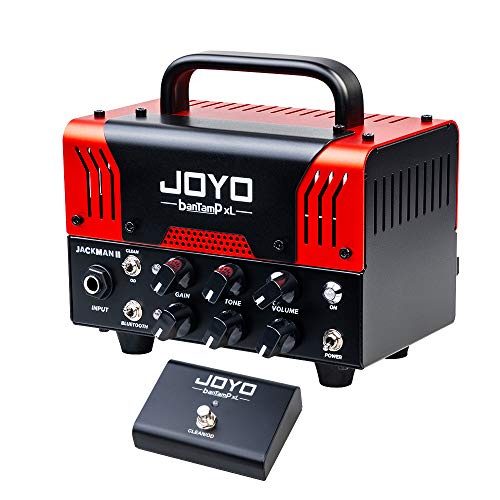
| Spec | Line 6 Spider V 20 MkII | Joyo Jackman II BanTamp XL |
|---|---|---|
| Power output | Not published in listing | 20 watts |
| Speaker | Not published in listing | No built-in speaker; external speaker cabinet required |
| Amp models or channels | 16 presets; 200+ amps and effects via Spider V Remote app | 2 channels: clean and distortion, each with volume, gain, and tone |
| Effects | 3 simultaneous effects plus independent reverb; built in tuner and tap tempo | No built-in effects; effects loop provided for external pedals |
| Inputs and outputs | Not published in listing | Instrument input, effects loop send and return, headphone output, footswitch input for channel switching |
| Headphone and line out | Not published in listing | Headphone output with cabinet speaker emulation |
| Bluetooth and app | Spider V Remote app for Mac, PC, iOS and Android; edit and record | Bluetooth streaming for backing tracks; no app listed |
| Weight | Not published in listing | Not published in listing |
| Dimensions | Not published in listing | Not published in listing |
| Included accessories | Not published in listing | Not published in listing; channel switching footswitch mentioned as a feature |
Amp Models and Tone
The Line 6 Spider V 20 MkII is built around digital amp modeling, offering 16 onboard presets for immediate access to common tones. Through the free Spider V Remote app, players can explore more than 200 amp and effect models, which covers a huge range of genres. This flexibility means you can go from a clean Fender style tone to a high gain metal sound without changing amps. The app runs on Mac, PC, iOS, and Android, so you can edit tones on nearly any device.
The Joyo Jackman II BanTamp XL takes an analog hybrid approach with a 12AX7 preamp tube and two channels, clean and distortion. Each channel has its own volume, gain, and tone controls, giving simple but effective tone shaping. There are no amp models or presets, so the range is deliberately narrow. The tube is intended to add harmonic richness and a more organic feel than a typical solid state practice amp.
In direct comparison, the Line 6 wins on variety and preset recall, while the Joyo wins on raw preamp character. If you want to replicate specific amplifier sounds, the Line 6 is the clear choice. If you prefer a straightforward two channel foundation that responds well to playing dynamics, the Joyo is more appropriate. Both approaches are valid, but they suit very different players.
Effects and Features
The Line 6 Spider V 20 MkII includes three simultaneous effects plus an independent reverb, which allows you to combine modulation, delay, and reverb in one signal chain. A built in tuner and tap tempo are included for convenience during practice and performance. The Spider V Remote app expands the effect library far beyond the onboard choices, though the listing does not list every type. Overall, the Line 6 is a self contained effects platform.
The Joyo Jackman II BanTamp XL has no built in effects at all. Instead, it provides an effects loop with send and return jacks, which is essential for integrating time based and modulation pedals. This design favors players who already own a pedalboard and prefer analog or boutique effects. There is no app, USB connection, or preset storage on the Joyo, so all tone shaping is done with hardware.
The difference is stark. The Line 6 gives you a large set of digital effects out of the box, while the Joyo assumes you will supply your own pedals. For beginners or players who want simplicity, the Line 6 is more convenient. For pedal enthusiasts, the Joyo's effects loop is a better fit because it places pedals after the preamp, where they typically sound best.
Power, Speaker and Volume
The Joyo Jackman II BanTamp XL is rated at 20 watts, but it has no built in speaker. You must connect an external speaker cabinet, so the actual volume depends on the cabinet's efficiency and impedance. The listing does not state the speaker output impedance or the type of speaker connection used. Buyers should verify these details before purchasing a cabinet.
The Line 6 Spider V 20 MkII does not publish its power output or speaker size in the listing. Without that information, it is impossible to compare maximum volume directly with the Joyo. The product name suggests a compact practice amp, but the listing's cons note that it may not be loud enough for stage use. Until specs are published, treat the Line 6 as a home practice unit.
For home use, the Line 6 likely functions as a single self contained unit, while the Joyo requires a separate cabinet. For players who already own a cab, the Joyo's 20 watts can work for low volume gigs and rehearsals. The Joyo's headphone output with cabinet emulation provides a silent practice option, which the Line 6 may have but does not confirm. The Line 6's lack of published power output is a significant gap.
Build and Portability
Neither listing provides weight or dimensions, so exact portability cannot be assessed from the specs. The Joyo is described as a compact mini head, which suggests it is designed for pedalboards and desktops. Its lack of a built in speaker reduces size and weight compared with a combo, but you still need to carry a speaker cabinet. For a grab and go practice session, the head and cab combination may be less convenient.
The Line 6 is likely a combo style amp, but the listing does not confirm whether it has a built in speaker or what size it is. Without physical specs, it is hard to say how easy the Line 6 is to move. However, combo amps are usually a single cabinet that can be carried in one hand. If the Line 6 is a small combo, it would be very portable for home use.
In general, a mini head will be smaller and lighter than most combos, but the requirement for an external cab adds a second piece of gear. If portability means a single item to carry, the Line 6 may be more convenient if it is indeed a combo. Until both manufacturers publish weight and dimensions, no firm conclusion can be drawn. Buyers who prioritize portability should request those specs before deciding.
Connectivity and Apps
The Line 6 Spider V 20 MkII offers the Spider V Remote app for Mac, PC, iOS, and Android. This app provides deep editing of amp and effect models and recording functions, turning the amp into a computer based tone lab. The listing does not state physical input and output options, so connections like USB, aux in, or headphone out remain unknown. That missing information makes it hard to plan a full connection setup.
The Joyo Jackman II BanTamp XL includes Bluetooth streaming for backing tracks, which is useful for practice. It has an instrument input, effects loop send and return, headphone output with cabinet emulation, and a footswitch input for channel switching. There is no app, no USB audio, and no preset storage, so computer editing is not part of the package. The connectivity is simple and hardware focused.
The Line 6 excels at app integration and software editing, which is valuable for tone explorers and home recordists. The Joyo offers straightforward hardware connections and Bluetooth audio streaming but lacks software control. If you want to edit or record on a computer, the Line 6 is the stronger choice. If you prefer streaming backing tracks from a phone and using physical knobs, the Joyo is more direct.
Setup and Daily Use
Setting up the Line 6 will be quick for most users because of the 16 onboard presets and simple front panel controls. The app adds a learning curve but provides extensive editing after you connect to a computer or mobile device. The built in tuner and tap tempo are convenient for daily practice without extra gear. Overall, the Line 6 is ready to play in minutes.
The Joyo requires more initial setup because you need to connect an external speaker cabinet, and you may also want a footswitch for channel switching. The headphone output with cabinet emulation allows silent practice without a cab, which is very convenient. Channel switching is available via a footswitch input, but the listing does not state whether a footswitch is included. You will also need to provide any effects you want, since there are none built in.
On a daily basis, the Line 6 is more turnkey for someone who wants instant access to many sounds. The Joyo demands a bit more planning but rewards players who like physical knobs and their own pedal chain. If you have limited space, the Joyo still requires somewhere to put the head and cab, while the Line 6 may be a single unit. Both can work well, but the Line 6 is simpler for most home users.
Home Practice Versus Stage
For home practice, the Line 6 is designed to provide a wide range of tones at bedroom friendly volumes, assuming its unknown power output is modest. The free app and possible headphone connectivity would support silent practice, but the listing does not confirm a headphone output. Its cons list suggests it may not be loud enough for stage use. So the Line 6 is best considered a practice and recording tool.
The Joyo Jackman II BanTamp XL at 20 watts can serve for low volume gigs when paired with an efficient speaker cabinet. The headphone output with cabinet emulation is explicitly stated, making silent practice easy. However, carrying a head and cab to a rehearsal or gig is more involved than carrying a single combo. For a small stage, the Joyo can work if you already have a cabinet.
Neither amp is a high power stage monster. The Joyo has a clearer path to small stage use because its 20 watts are specified and it can drive a cab, though you need a cab. The Line 6 is best treated as a home practice unit unless its output and speaker are later confirmed. For home use, both can work, but the Line 6 is simpler out of the box.
The Deciding Question
The key question is whether you want a vast library of modeled tones and built in effects in one box, or a simple tube flavored head that relies on your existing cabinet and pedalboard. The Line 6 chooses digital convenience and app integration. The Joyo chooses analog purity and pedal friendly architecture. Your answer to that question will drive the decision.
If you do not own a speaker cabinet or a collection of pedals, the Line 6 is less expensive in practice because it includes everything you need except possibly a guitar and cable. The Joyo's price may be lower, but the total cost rises when you add a cabinet and pedals. The Line 6's 16 presets and 200 plus models mean you may not need any pedals at all. That makes it a strong value for beginners.
Conversely, if you already have a cabinet you like and a pedalboard you trust, the Joyo integrates cleanly and gives you a 12AX7 preamp stage. The effects loop is placed correctly for time based effects. The Bluetooth streaming is a bonus for practice. So the decision comes down to your existing gear and your preference for modeling versus analog.
Who Should Buy Which
Choose the Line 6 Spider V 20 MkII if you are a beginner or home player who wants maximum tonal variety without buying extra equipment. Its 16 presets and app library cover nearly any genre, and the built in tuner and tap tempo simplify practice. It is also a good choice for recording on a computer via the app. This amp is best for players who value convenience and digital flexibility.
Choose the Joyo Jackman II BanTamp XL if you already own a speaker cabinet and a pedalboard, or if you want a compact tube preamp head for low volume gigs. The 12AX7 tube, two independent channels, and effects loop make it a solid platform for pedal users. The Bluetooth streaming and headphone output add modern convenience. This head is best for players who value analog tone and hardware simplicity.
Avoid the Line 6 if you need known power and stage volume, because those specs are not published and the amp may not be loud enough for gigs. Avoid the Joyo if you want an all in one amp with built in effects and speaker, because it requires external gear. Both are budget friendly options, but they serve opposite needs. Choosing the wrong one will lead to extra purchases or disappointment.
Line 6 Spider V 20 MkII
Pros
- 200+ amp and effect models through free app
- 16 onboard presets for quick sounds
- Independent reverb and three simultaneous effects
- Built in tuner and tap tempo
- App editing and recording on Mac, PC, iOS and Android
- Classic speaker mode for enhanced feel
Cons
- Power output and speaker size not published
- No stated Bluetooth audio streaming
- Physical input and output options unknown
- Weight and dimensions not published
- May not be loud enough for stage use
Joyo Jackman II BanTamp XL
Pros
- Hybrid 12AX7 preamp tube adds harmonic richness
- Two independent channels with dedicated volume, gain, and tone
- Bluetooth streaming for backing tracks
- Headphone output with cabinet emulation for silent practice
- Compact mini head format for pedalboards and desktops
- Effects loop for time-based and modulation pedals
Cons
- No built-in speaker, requires an external cabinet
- No built-in effects beyond the effects loop
- No app, USB, or preset storage
- Weight and dimensions not published
- Speaker output impedance and connection details not listed
Who Should Buy Each
Line 6 Spider V 20 MkII
- Beginners who want a simple practice amp with built in effects
- Bedroom players who like experimenting with many amp models
- Home recording hobbyists who can use the app to edit and record
- Guitarists who want a grab and go amp for practice
Joyo Jackman II BanTamp XL
- Players with an existing speaker cabinet
- Home recording guitarists needing a headphone output
- Pedalboard users seeking clean and mid-gain platforms
- Bluetooth jam track practitioners
Quick Decision Guide
| If you want hundreds of amp and effect models without buying pedals | Choose Line 6 Spider V 20 MkII |
| If you already own a speaker cabinet and a pedalboard | Choose Joyo Jackman II BanTamp XL |
| If you need a built-in tuner and tap tempo in one unit | Choose Line 6 Spider V 20 MkII |
| If you need Bluetooth streaming for backing tracks | Choose Joyo Jackman II BanTamp XL |
| If you want app-based deep editing and recording on computer or mobile | Choose Line 6 Spider V 20 MkII |
FAQ
About This Comparison
Mandrillis Team
The Mandrillis editorial team researches and compares audio and music gear using manufacturer documentation, verified specs and real buyer feedback, so you can make a confident purchase without wading through marketing claims.
Read our full research methodology.
We may earn a commission at no extra cost to you.