Martin D-15M vs Washburn WCG55CE
Quick Verdict
The Martin D-15M is the better choice for a buyer who wants a verified all solid mahogany dreadnought with a natural finish and does not need electronics. The Washburn WCG55CE suits a player looking for a cutaway grand auditorium with koa tonewood and a stated seated comfort advantage. Both listings omit neck dimensions, scale length, nut width, electronics, and tuner details, so neither can be fully confirmed for playability or amplified use. The Martin's solid wood specification is stronger, while the Washburn's shape and stated versatility favor comfortable, varied playing. Inspect either guitar before purchase if those unpublished specs matter to you.
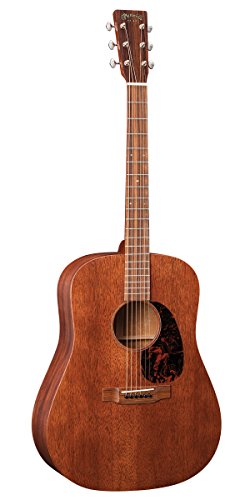

| Spec | Martin D-15M | Washburn WCG55CE |
|---|---|---|
| Body shape | Dreadnought | Cutaway Grand Auditorium |
| Top | Solid genuine mahogany | Koa |
| Back and sides | Solid genuine mahogany | Koa |
| Neck and fingerboard | Not published in listing | Not published in listing |
| Scale length | Not published in listing | Not published in listing |
| Nut width | Not published in listing | Not published in listing |
| Electronics | Not published in listing | Not published in listing |
| Tuners | Not published in listing | Not published in listing |
| Finish | Natural | Not published in listing |
| Included accessories | Not published in listing | Not published in listing |
Body, Neck and Playability
The Martin D-15M has a dreadnought body with a solid genuine mahogany top, back, and sides, and a natural finish. The listing does not publish neck and fingerboard materials, scale length, nut width, or tuner details. The playability score is 24 out of 30, but without those dimensions, a buyer cannot verify how the neck will feel. The classic dreadnought shape is a factual part of the listing, but it is not accompanied by measurement data.
The Washburn WCG55CE has a cutaway grand auditorium body with koa on the top, back, and sides. The listing does not publish neck and fingerboard, scale length, nut width, or tuner details. Its playability score is also 24 out of 30. The listing states that the cutaway grand auditorium body supports seated comfort, which is an advantage for players who practice while sitting.
Both guitars share the same playability score, but the missing specifications make direct comparison difficult. The Martin uses a traditional dreadnought platform, while the Washburn uses a more compact grand auditorium with a cutaway. Without nut width and scale length numbers, players should not assume that either neck will suit their hands. The published facts favor the Washburn for stated seated comfort, but the Martin's dreadnought remains a known classic shape.
Tone and Projection
The Martin D-15M combines a solid genuine mahogany top, back, and sides in a dreadnought body. The listing's verdict says this configuration points to a warm and focused voice often associated with all mahogany instruments. The tone score is 23 out of 25. Projection is not directly stated in the listing, so the dreadnought's loudness cannot be confirmed from the supplied facts.
The Washburn WCG55CE uses koa for the top, back, and sides. The listing's pros describe koa tonewood as often balanced and clear, and the verdict adds that koa has a reputation for balanced tone with clear highs. Its tone score is 20 out of 25. The grand auditorium shape is listed as versatile for strumming and fingerpicking, but the listing does not quote a projection figure or volume level.
On paper, the Martin earns a higher tone score, and its all solid mahogany construction is fully stated, while the Washburn's koa construction does not state whether the wood is solid or laminate. That unknown affects how a buyer should interpret the tone descriptions. The Martin's warm and focused description contrasts with the Washburn's balanced and clear description. Neither listing provides frequency measurements, so these remain qualitative characterizations.
Hardware and Electronics
The Martin D-15M listing does not publish any electronics. The specifications field for electronics says not published, and the cons list says no electronics listed. The hardware and electronics score is 8 out of 10, but the listing does not specify tuners or any onboard preamp. This means the guitar appears to be a purely acoustic instrument based on the available information.
The Washburn WCG55CE listing also does not publish electronics or tuner details. The model name includes CE, which often suggests cutaway electric, but the listing does not confirm that, so it cannot be assumed. The hardware and electronics score is 6 out of 10. The cons list notes that electronics and tuner details are missing from the listing.
Because both guitars have unpublished electronics and tuner specifications, a player who needs to plug into an amplifier cannot determine compatibility from these listings alone. The Martin has a higher hardware and electronics score, but the basis for that score is not explained by the visible specs. Buyers should ask the seller for exact electronics and hardware details before purchase if amplified performance matters.
Build Quality and Finish
The Martin D-15M has a build and materials score of 14 out of 15. Its top, back, and sides are described as solid genuine mahogany, which is a clear and specific material claim. The finish is listed as natural, and the pros mention bookmatched wood as stated. These details support a straightforward traditional build approach.
The Washburn WCG55CE has a build and materials score of 9 out of 15. Its top, back, and sides are listed as koa, but the listing does not state whether the koa is solid or laminate. The finish type and build details are not published. This lack of clarity limits how confidently a buyer can assess the guitar's long term durability and material quality.
The contrast is significant. Martin publishes solid genuine mahogany for all three main wood components and a natural finish, while Washburn leaves the koa construction and finish unpublished. On build quality, the Martin listing offers more verifiable facts. The Washburn's koa may be attractive, but the absence of solid versus laminate information is a material gap.
Setup Out of the Box
The Martin D-15M listing does not include any information about factory setup, action height, string gauge, or included accessories. The cons list says included accessories are not stated. Without a published setup specification, a buyer cannot know if the guitar arrives with low action or requires adjustment.
The Washburn WCG55CE listing also does not publish setup details, included accessories, or out of the box action measurements. The pros and cons do not mention setup at all. The best_for statement says players who want a cutaway grand auditorium acoustic with koa tonewood and do not need onboard electronics may choose it, but that does not address setup.
Because both listings are silent on setup, the section cannot compare factory adjustments. A player who orders either guitar should be prepared to evaluate neck relief, action, and string condition after delivery. This is a common practice for acoustics, but the listings themselves give no guarantees. The absence of setup data means the out of the box experience is unknown for both models.
Daily Use and Practice
For daily practice, the Washburn WCG55CE has a stated advantage in seated comfort because its listing says the cutaway grand auditorium body supports seated comfort. The Martin D-15M listing does not make any comfort claim. The Martin's dreadnought shape is classic, but without nut width or scale length, a player cannot predict how it will feel during long sessions.
Neither guitar lists an included case or gig bag, so daily transport and storage accessories are unknown. The Martin and Washburn listings both have included accessories as not published. That means a buyer may need to purchase a case separately. The absence of a case does not affect playability, but it matters for daily movement and protection.
Both models are acoustic guitars with no confirmed electronics, so practice will likely be unamplified unless external microphones are used. The Washburn's cutaway allows easier access to upper frets, but the listing does not state the exact number of frets or neck joint type. The Martin's dreadnought may offer a larger body, but its physical dimensions are not published. Overall, the Washburn has a slight stated advantage for seated practice, but both lack key data.
Versatility and Styles
The Washburn WCG55CE listing explicitly states that the grand auditorium shape is versatile for strumming and fingerpicking. Its koa tonewood is described as balanced and clear, which can work across styles. The pros mention a visually striking natural look, which may appeal to players who want a distinctive appearance for different settings.
The Martin D-15M listing does not make explicit style versatility claims beyond the dreadnought body shape. The all solid mahogany construction is described as warm and focused, which many players associate with roots, blues, and singer songwriter material, but the listing does not list those genres. The pros mention the classic dreadnought body shape, but no style recommendations are given.
If versatility is judged only from the supplied facts, the Washburn has a clearer statement of being versatile for strumming and fingerpicking. The Martin's dreadnought and mahogany combo suggests a traditional tonal character, but without electronics or published neck specs, its adaptability is less explicit. Buyers who play a wide range of fingerstyle and light strumming may find the Washburn listing more directly aligned, while traditional dreadnought fans may favor the Martin.
The Deciding Question
The core decision comes down to whether a buyer prioritizes verified all solid mahogany construction or a cutaway grand auditorium with koa and stated seated comfort. The Martin D-15M gives a clear material spec: solid genuine mahogany top, back, and sides, plus a natural finish. The Washburn WCG55CE gives a different body shape and koa tonewood, but its construction is not fully clarified.
A second deciding factor is the buyer's need for published specifications. Both listings omit neck dimensions, scale length, nut width, tuner details, electronics, and included accessories. That means neither guitar can be fully assessed on paper for playability or stage readiness. A buyer who needs those specs must contact the seller or inspect the guitar before purchase.
Finally, the buyer should consider the intended use. If the guitar will mostly be played unplugged and the player values a traditional all mahogany dreadnought, the Martin is the stronger candidate based on the listing. If the player wants a comfortable cutaway grand auditorium with a stated versatility claim and does not mind unknown koa construction, the Washburn fits better. The decision is not about one being universally better, but about which set of published facts matches the buyer's needs.
Who Should Buy Which
Buy the Martin D-15M if you want an all solid genuine mahogany dreadnought with a natural finish and you do not need onboard electronics. The listing makes the solid wood construction clear, and the dreadnought body is a traditional choice. You should be willing to inspect the guitar in person or contact the seller for neck dimensions, because those numbers are not published.
Buy the Washburn WCG55CE if you want a cutaway grand auditorium acoustic with koa on the top, back, and sides, and you value a stated seated comfort benefit. Its listing describes koa as balanced and clear, and the shape is listed as versatile for strumming and fingerpicking. You should accept that the listing does not state whether the koa is solid or laminate, nor does it publish neck specs or electronics.
Avoid either model if you require verified electronics, specific nut width and scale length, or comprehensive hardware details before buying. Both listings leave those areas unpublished. If you can try the guitars in person, you may resolve many of these unknowns. On paper, the Martin offers more build certainty, while the Washburn offers a more explicitly comfortable and versatile body shape.
Martin D-15M
Pros
- All solid genuine mahogany construction
- Classic dreadnought body shape
- Natural finish shown in listing
- Upper mid-range price tier
- Martin brand heritage
- Bookmatched wood as stated
Cons
- No electronics listed
- Neck dimensions not published
- Tuner hardware not specified
- Included accessories not stated
- Scale length and nut width unknown
Washburn WCG55CE
Pros
- Cutaway grand auditorium body supports seated comfort
- Koa top, back, and sides give a visually striking natural look
- Koa tonewood is often described as balanced and clear
- Upper mid-range pricing for a koa acoustic
- Grand auditorium shape is versatile for strumming and fingerpicking
Cons
- Listing does not state if the koa is solid or laminate
- No neck, nut width, or scale length specifications published
- Electronics and tuner details are missing from the listing
- No included accessories are listed
- Finish type and build details are not published
Who Should Buy Each
Martin D-15M
- Fingerstyle players who like warm mahogany tone
- Fans of traditional Martin dreadnoughts
- Acoustic players wanting an all solid wood guitar
- Buyers who value a simple natural finish and are willing to verify details
Washburn WCG55CE
- Acoustic players who like the look of koa
- Strummers and fingerstyle players who want a grand auditorium body
- Buyers comfortable confirming missing specifications with the seller
- Those seeking an upper mid-range koa acoustic without built in electronics
Quick Decision Guide
| If you want an all solid genuine mahogany top, back, and sides with a stated natural finish | Choose Martin D-15M |
| If you want a cutaway grand auditorium body that the listing says supports seated comfort | Choose Washburn WCG55CE |
| If you prefer koa tonewood described as balanced and clear | Choose Washburn WCG55CE |
| If you want a classic dreadnought body shape | Choose Martin D-15M |
| If you need published solid wood construction details | Choose Martin D-15M |
FAQ
About This Comparison
Mandrillis Team
The Mandrillis editorial team researches and compares audio and music gear using manufacturer documentation, verified specs and real buyer feedback, so you can make a confident purchase without wading through marketing claims.
Read our full research methodology.
We may earn a commission at no extra cost to you.