Roland FP-40 vs Yamaha DGX-670
Quick Verdict
Choose the Roland FP-40 if you want a portable digital piano with a superior key action, the new Piano Reality engine, and Wi-Fi app integration. Its PHA-4 Standard action with escapement and triple sensors clearly outclasses the Yamaha's GHS action for serious piano practice. Choose the Yamaha DGX-670 if you want a full arranger keyboard with 630 voices, 263 accompaniment styles, a color display, microphone input, USB audio recording, and Bluetooth audio. The Yamaha is a songwriting and entertainment hub, but its entry level action is the trade off.

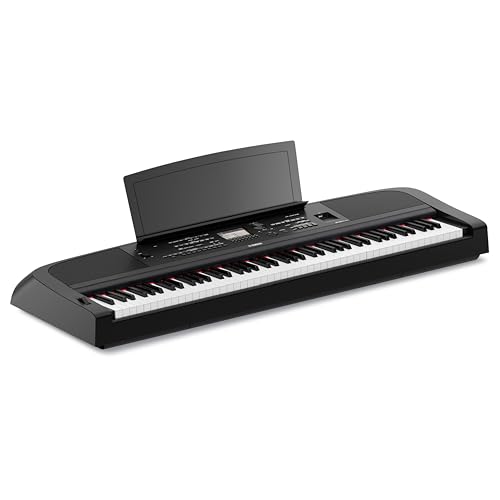
| Spec | Roland FP-40 | Yamaha DGX-670 |
|---|---|---|
| Key Action | PHA-4 Standard with escapement, Ivory Feel and triple sensors | GHS (Graded Hammer Standard) |
| Sound Engine | Roland Piano Reality | Yamaha CFX stereo sample |
| Voices | Not published in listing | 630 |
| Polyphony | Not published in listing | 256 notes |
| Speakers | Newly engineered stereo system | Built-in stereo |
| Bluetooth | Not published in listing | Audio |
| USB | USB | USB audio and MIDI; USB flash-drive recording |
| Pedals | Sustain pedal input | Sustain footswitch included; LP-1B triple pedal optional |
| Weight | 40.6 lb (18.4 kg) per listing | Not published for the piano alone |
| Form Factor | Portable with built-in Wi-Fi | Portable arranger piano with color display |
Key Action
The Roland FP-40 uses the PHA-4 Standard action with escapement, Ivory Feel and triple sensors. This is a proven design that earns a score of 28 out of 30 in the supplied breakdown, the highest subscore on either instrument. The triple sensors and escapement contribute to faster repetition and a more realistic feel when playing softly or quickly. The ivory texture helps prevent finger slip during long practice sessions.
The Yamaha DGX-670 uses the GHS action, which is Yamaha's entry level Graded Hammer Standard. It scores 23 out of 30, reflecting a simpler weighted action without the extra refinements found on the Roland. The GHS action provides a graded weight from bottom to top, but it does not include escapement or a triple sensor system. For a player who prioritizes classical or jazz technique, the Roland's action is clearly more advanced.
Both actions are fully weighted and suitable for learning piano, but the difference in feel is significant. The Roland's PHA-4 Standard has been widely used across many Roland models and is known for durability and realism. The Yamaha's GHS is a cost effective entry action that gets the job done but will not satisfy a demanding pianist. The score gap of five points on key action is the largest single category difference in this comparison.
Piano Sound and Speakers
Both pianos score 22 out of 25 for piano sound, so the supplied ratings consider them equal in this category. The Roland FP-40 uses the Piano Reality engine, which according to the listing reproduces natural decay, resonance and tonal color. This suggests a detailed and expressive sound that responds to how the player presses the keys. The engine is new for Roland and is a step beyond prior generation sound engines.
The Yamaha DGX-670 uses the Yamaha CFX stereo sample, a well known grand piano sample that is bright and clear. The listing does not provide additional details about resonance modeling or string resonance for the Yamaha. The Roland's sound engine is described in more qualitative terms, while the Yamaha's sound is tied to a specific sample set. Without in-person testing, we cannot say which sounds more authentic, but both are rated equally.
For speakers, the Roland has a newly engineered stereo system with more low-end depth, according to the listing. This is a redesign that improves the bass response, which is often weak on portable digital pianos. The Yamaha has built-in stereo speakers, but the listing does not publish size, power output, or any bass enhancement details. The Roland's speaker description gives a slight impression of better low frequency performance, but the Yamaha's speakers are also adequate for home use.
Features and Modes
The Yamaha DGX-670 is the clear winner in features, scoring a perfect 15 out of 15. It offers 630 voices and 263 accompaniment styles, which turn the keyboard into a full arranger instrument. A color display makes navigation easier, and the arranger workflow lets you play with auto accompaniment in many genres. These features are far beyond what the Roland offers as a pure digital piano.
The Roland FP-40 scores 12 out of 15 for features. It includes Wi-Fi, which the listing states is Roland's first piano with Wi-Fi, enabling over-the-air updates and the Piano Sphere app. The app likely provides additional sounds, practice tools, and settings, but the listing does not specify the voice count or polyphony. The Roland does not list any arranger styles, microphone input, or vocal effects.
For a player who wants a piano plus a backing band, a songwriting tool, and vocal processing, the Yamaha is the obvious choice. The Roland is focused on the piano experience with modern app integration rather than a full arranger. The mode differences are significant: the DGX-670 can function as a complete home entertainment keyboard with a real piano at its core, while the FP-40 is a digital piano that benefits from wireless updates.
Build, Design and Portability
Both instruments score 8 out of 10 for build and portability, indicating comparable trade offs. The Roland FP-40 weighs 40.6 lb (18.4 kg) per the listing, which is heavier than the FP-30X according to the cons. This weight is manageable for occasional transport but not ideal for frequent gigging. The listing describes it as a portable form factor with built-in Wi-Fi.
The Yamaha DGX-670 does not publish its weight for the piano alone, which is a significant omission for those who need to move it. The cons describe it as heavy and deep for a portable, implying that it is not as easy to carry as a slim stage piano. Its color display and arranger controls likely add bulk and depth compared to the simpler Roland.
Portability is aided by both being portable form factors, but the Yamaha's depth and unspecified weight make direct comparison difficult. The Roland's concrete weight of 40.6 lb is a useful reference, though it is still not a lightweight. Build quality details like cabinet materials or chassis design are not provided for either model, so we can only compare the published facts.
Connectivity
The Yamaha DGX-670 earns a perfect 10 out of 10 for connectivity, which is the highest possible score in that category. It offers Bluetooth audio, USB audio and MIDI, USB flash-drive recording, a microphone input, and it includes a sustain footswitch with an optional LP-1B triple pedal. This is a very complete set of connections for home recording, audio playback from a phone, and live vocal use.
The Roland FP-40 scores 8 out of 10 for connectivity. The listing states it has USB and a sustain pedal input, but Bluetooth is not published. It also has Wi-Fi, which the Yamaha does not list. The Roland's Wi-Fi is used for over-the-air updates and the Piano Sphere app, which is a distinct advantage for firmware and content management.
For connecting to a computer or mobile device for recording and playback, the Yamaha's USB audio and MIDI plus Bluetooth audio are more versatile and clearly specified. The Roland's USB connection is not detailed beyond the port name, so we cannot confirm if it supports audio and MIDI over USB. The Yamaha's microphone input is a major connectivity extra that the Roland does not list. If streaming backing tracks wirelessly is important, the Yamaha is the better choice.
Setup and Accessories
Setup for both is portable, but included accessories differ. The Yamaha includes a sustain footswitch in the box, and an optional LP-1B triple pedal is available as an upgrade. The Roland lists a sustain pedal input, but the listing does not state that a pedal is included. This means a Yamaha buyer can play immediately with sustain, while a Roland buyer may need to purchase a pedal separately.
The Roland's Wi-Fi setup involves connecting to a network for over-the-air updates and using the Piano Sphere app. The app may simplify sound selection and settings, but the listing does not describe the physical controls beyond the sustain pedal input. The Yamaha includes a color display that likely makes navigating its 630 voices and 263 styles easier, though the cons note deep menus for a pure pianist.
Accessories like power adapters, music rests, or stands are not listed for either model. We cannot assume what comes in the box beyond the stated items. The Yamaha's included sustain footswitch is a concrete advantage for immediate playing, while the Roland's app ecosystem is an advantage for software updates but not a physical accessory. The optional triple pedal for the Yamaha adds another layer of setup flexibility.
Daily Use
For a practice routine focused on classical or jazz piano, the Roland FP-40 provides a more refined playing experience. Its PHA-4 Standard action with triple sensors and escapement encourages proper technique, and the Piano Reality engine responds with natural decay and resonance. The sustain pedal input allows use of a pedal if the player owns one. The lack of published polyphony and voice count may not matter for solo practice.
For a songwriter or hobbyist who wants styles, recording, and vocal features, the Yamaha DGX-670 is more engaging daily. The 630 voices, 263 accompaniment styles, microphone input with vocal effects, and USB audio recording make it a creative hub. The color display helps navigate these features, but the deep menus can slow a pure pianist. Bluetooth audio allows playing along with tracks from a phone wirelessly.
Both can serve as home instruments, but the interaction differs. The Roland is a focused digital piano with modern app updates, suitable for daily practice without distractions. The Yamaha is a full arranger with a piano core, encouraging experimentation with backing tracks and vocal performance. The Yamaha's Bluetooth audio is a daily convenience, while the Roland's Wi-Fi app may provide similar content, but the listing does not confirm Bluetooth audio streaming.
The Deciding Question
The deciding question is whether you want the best key action or the most features. If key action and piano realism are your top priority, the Roland FP-40 wins with PHA-4 Standard and Piano Reality, despite missing some published specs like voice count and polyphony. If you want an arranger with a huge voice library, styles, microphone input and recording, the Yamaha DGX-670 is the better choice.
The overall scores are close: 84 for the Roland and 83 for the Yamaha. That one point difference is not significant on its own; the decision should come from your specific use case. The Roland's key action advantage is much larger than the Yamaha's feature advantage, but the Yamaha has a perfect connectivity score and published polyphony.
The Yamaha has clear connectivity and polyphony advantages, but its GHS action is entry level. The Roland has a proven action but unknown voice count and polyphony. If you can accept the missing specs and do not need arranger features, the Roland is strong. If you need a do-everything instrument with vocal and recording capabilities, the Yamaha is the one.
Who Should Buy Which
Choose the Roland FP-40 if you are a piano-focused player who wants the PHA-4 Standard action with escapement and triple sensors, the Piano Reality engine, Wi-Fi updates and the Piano Sphere app. This is for someone who wants a portable digital piano with strong action and does not need arranger features, microphone input or a color display.
Choose the Yamaha DGX-670 if you want one keyboard that is a piano, a backing band and a songwriting tool. It suits players who will use 630 voices, 263 accompaniment styles, the color display, USB audio recording, Bluetooth audio and a microphone input. The GHS action is acceptable for casual playing and composition, but not as refined as the Roland's.
Avoid the Roland if you need documented voice count, polyphony or Bluetooth, or if you want the lightest Roland portable. Avoid the Yamaha if you only play piano and want a better action for the money. Both are portable, but the Yamaha is heavier and deeper, and the Roland is heavier than the FP-30X. The choice is clear based on your priorities.
Roland FP-40
Pros
- PHA-4 Standard action with escapement and triple sensors
- Piano Reality engine reproduces natural decay, resonance and tonal color
- Roland's first piano with Wi-Fi for over-the-air updates and the Piano Sphere app
- Redesigned speaker system with more low-end depth
Cons
- Polyphony, voice count and Bluetooth not stated on the listing
- Heavier than the FP-30X
- New model with a short track record
Yamaha DGX-670
Pros
- 630 voices and 263 accompaniment styles with the CFX grand on top
- Color display and a full arranger workflow
- Microphone input with vocal effects and USB audio recording
- 256-note polyphony and Bluetooth audio
Cons
- GHS is Yamaha's entry action
- Heavy and deep for a portable
- Menus run deep for a pure pianist
Who Should Buy Each
Roland FP-40
- You want Roland's current Piano Reality engine rather than SuperNATURAL
- Over-the-air updates and the Piano Sphere app appeal to you
- You want a clean, simple panel with the PHA-4 keys
Yamaha DGX-670
- You sing while you play and want a mic input with effects
- You use styles and backing tracks for practice or performance
- You want Yamaha's CFX sample with a huge voice library
Quick Decision Guide
| If you want the most realistic piano key action | Choose Roland FP-40 |
| If you need hundreds of voices, styles and a full arranger | Choose Yamaha DGX-670 |
| If you want USB audio recording, Bluetooth audio and a microphone input | Choose Yamaha DGX-670 |
| If you prefer Wi-Fi updates and a piano-focused app | Choose Roland FP-40 |
| If you are a pure pianist who does not need arranger features | Choose Roland FP-40 |
FAQ
About This Comparison
Mandrillis Team
The Mandrillis editorial team researches and compares audio and music gear using manufacturer documentation, verified specs and real buyer feedback, so you can make a confident purchase without wading through marketing claims.
Read our full research methodology.
We may earn a commission at no extra cost to you.