Roland JC-40 Jazz Chorus vs Fender Tone Master FR-12
Quick Verdict
The Roland JC-40 Jazz Chorus suits players who want a self-contained stereo clean combo with iconic chorus, vibrato, distortion, and reverb, plus a stereo effects loop. The Fender Tone Master FR-12 suits modeler users who need a high-headroom powered full range flat response cabinet with a 12 inch speaker, dedicated high frequency driver, and active EQ. Choose the JC-40 for a traditional pedal-friendly amp. Choose the FR-12 if you already use an amp simulator and need neutral, powerful stage monitoring. Confirm all connectivity, weight, and headphone details before buying either unit.

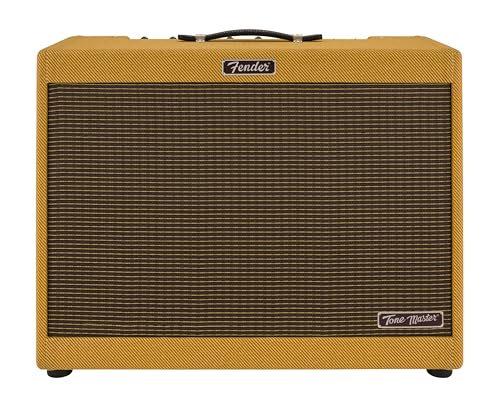
| Spec | Roland JC-40 Jazz Chorus | Fender Tone Master FR-12 |
|---|---|---|
| Power output | 40 watts stereo | 1,000 Watt Class D Power Amp |
| Speaker | Dual 10-inch speakers | 12 inch Special Design Speaker and 1 inch Wide Dispersion High Frequency Driver |
| Amp models or channels | Not published in listing | Not published in listing |
| Effects | Dimensional Space Chorus, vibrato, distortion, reverb | Not published in listing |
| Inputs and outputs | Stereo input, stereo effects loop, footswitch control | Not published in listing |
| Headphone and line out | Not published in listing | Not published in listing |
| Bluetooth and app | Not published in listing | Not published in listing |
| Weight | Not published in listing | Not published in listing |
| Dimensions | Not published in listing | Not published in listing |
| Included accessories | Not published in listing | Not published in listing |
Amp Models and Tone
The Roland JC-40 Jazz Chorus does not publish any amp models or digital speaker emulation in its listing. Its core identity is the Roland JC clean tone, an iconic clean sound that has long been associated with the Jazz Chorus series. The listing highlights the Dimensional Space Chorus as a signature effect that shapes the amp's voice. The tone score in the supplied breakdown is 26 out of 30, which reflects the strength of this focused clean platform rather than versatility.
The Fender Tone Master FR-12 does not list any amp models or channels in the published specifications. It is described as a powered full range flat response cabinet, which means it is designed to reproduce the sound of an external modeler or amp simulator without adding its own guitar amp coloration. The listing does not state any traditional guitar amp voicings. Its tone score is 24 out of 30, lower than the Roland but still strong for its intended neutral role.
Direct comparison of tone depends on what the player feeds into each unit. The JC-40 produces a recognizable clean guitar voice with chorus that works on its own as a guitar amplifier. The FR-12 remains neutral and relies on an external device for tone shaping. Players who want a built-in clean amp tone should lean toward the Roland, while those who already have a modeler may prefer the Fender.
Effects and Features
The Roland JC-40 includes several onboard effects: Dimensional Space Chorus, vibrato, distortion, and reverb. These are controlled directly from the amplifier or via a footswitch control, which the listing mentions as a feature. The effect set is modest but covers common needs for clean and textured tones. The effects score is 13 out of 20 in the supplied breakdown.
The Fender Tone Master FR-12 listing does not publish any effects. It does include a three band active EQ and a high frequency cut, which are tools for adjusting the frequency response rather than modulation or time based effects. The listing also mentions integrated tilt back legs, which are a practical feature for stage monitoring. The effects score is 16 out of 20, higher than the Roland, even though no traditional effects are listed.
This difference in scores may seem counterintuitive, but the Fender's EQ and tilt back legs are counted as features in the supplied breakdown. The Roland has actual sound effects like chorus and reverb, which are more useful for players without a pedalboard. The Fender offers no onboard effects, so any chorus, delay, or reverb must come from an external modeler or pedal.
Power, Speaker and Volume
The Roland JC-40 delivers 40 watts of stereo power, which means 20 watts per side through dual 10 inch speakers. The listing calls it a compact combo, but the actual volume level will depend on speaker efficiency and the venue. The power and speaker score is 12 out of 15 in the supplied breakdown. The dual 10 inch speakers provide a stereo image that is rare in this size class.
The Fender Tone Master FR-12 has a 1,000 watt Class D power amp, which is significantly higher than the Roland. It uses a 12 inch special design speaker and a separate 1 inch wide dispersion high frequency driver. This full range design is intended to handle the output of a modeler with clarity and headroom. The power and speaker score is 14 out of 15, which reflects the high wattage and dedicated high frequency driver.
Neither listing publishes maximum sound pressure level or decibel output, so volume cannot be compared directly from specifications alone. However, the wattage difference suggests the Fender has far more headroom for clean stage volume. The Roland offers a stereo speaker configuration that may be more appealing for home practice and recording, while the Fender is built for high output monitoring.
Build and Portability
Neither the Roland JC-40 nor the Fender Tone Master FR-12 lists weight or dimensions in the supplied specifications. This makes a direct portability comparison impossible from the published data. The Roland is described in its pros as a compact combo with dual 10 inch speakers, but no actual size or weight is given. The build and portability score for the Roland is 9 out of 10.
The Fender Tone Master FR-12 has a build and portability score of 8 out of 10, slightly lower than the Roland. The listing does not state whether the cabinet is made of plywood, MDF, or another material, and no handle type is mentioned. Integrated tilt back legs are listed as a feature, which suggests some thought was given to floor monitoring, but this does not tell us how heavy the unit is.
Buyers who need to carry these amps to rehearsals or gigs should confirm weight and dimensions from other sources for both units. The Roland's compact description may indicate easier portability, but without numbers that is not certain. The Fender's larger 12 inch speaker and high wattage amplifier may suggest a heavier cabinet, but again the listing does not state it.
Connectivity and Apps
The Roland JC-40 lists stereo input, a stereo effects loop, and footswitch control as connectivity features. Headphone output and line output are not published in the listing, nor is Bluetooth or app support. The connectivity score is 10 out of 15 in the supplied breakdown. The stereo input makes it easy to connect a stereo pedalboard or modeler.
The Fender Tone Master FR-12 does not publish any input or output details in the listing. There is no mention of Bluetooth, app support, headphone output, or line output. The connectivity score is 8 out of 15, lower than the Roland. This absence of published connectivity is a significant limitation for buyers who need to know what cables and gear will work.
Based on published specifications, the Roland has a clearer connectivity picture for integrating with a pedalboard or recording setup. The Fender likely has input for a modeler and possibly an output, but none of that is confirmed in the provided listing. Anyone considering the Fender should verify the exact input types and output options before purchase.
Setup and Daily Use
The Roland JC-40 is a self-contained guitar amplifier, so daily use can be as simple as plugging in a guitar and turning on the amp. The onboard chorus, vibrato, distortion, and reverb mean a player can get a usable sound without any external pedals. A footswitch can control the onboard effects, which is handy for live use. The stereo effects loop allows additional pedals to be placed after the preamp.
The Fender Tone Master FR-12 is not a self-contained traditional guitar amp according to the published listing. It requires an external modeler or amp simulator to provide guitar amp tone, since the listing does not publish any amp models or channels. Once connected, the three band active EQ and high frequency cut allow the user to adjust the cabinet's response to the room. The tilt back legs make it easier to use as a floor monitor.
For everyday practice, the Roland may be more convenient because it needs fewer pieces of gear. The Fender requires a modeler and cables, but it rewards that setup with powerful full range sound and flexible EQ. Both lack published headphone outputs, so silent practice may require additional equipment for either unit.
Home Practice Versus Stage
The Roland JC-40 is well suited to home practice, recording, and smaller gigs, according to the supplied best_for field. Its 40 watt stereo output is not the most powerful option for large stages, but the dual 10 inch speakers can fill a room for moderate volume use. The stereo effects loop makes it easy to integrate with a home recording interface or pedalboard.
The Fender Tone Master FR-12 is aimed at players who need stage monitoring for a modeler or amp simulator. The 1,000 watt Class D amp and 12 inch speaker with high frequency driver can produce substantial clean output. The tilt back legs are specifically designed for floor monitoring on stage. It may be overkill for a small home practice space, but the listing does not state a minimum volume or power scaling.
For small gigs and home use, the Roland's self-contained nature and stereo sound are strong advantages. For louder stage environments with a modeler based rig, the Fender's high wattage and full range design are more appropriate. Neither listing publishes maximum decibel levels, so venue suitability must be judged from experience or additional research.
The Deciding Question
The central question is whether you need a guitar amplifier with a specific clean voice and onboard effects, or a neutral powered cabinet for an external modeler. The Roland JC-40 provides a signature clean tone and chorus sound that works as a traditional amp. The Fender FR-12 provides high power full range reproduction but no guitar amp tone of its own.
If you already own a modeler, amp simulator, or pedalboard with amp modeling, the Fender may be the more practical choice because it simply amplifies that sound without adding coloration. If you want to plug in a guitar and get a famous clean tone with chorus and reverb immediately, the Roland is the more direct solution. The supplied scores are close: 80 for the Roland and 79 for the Fender, so neither is a clear winner overall.
Unpublished details such as weight, dimensions, exact connectivity, and headphone outputs complicate the decision. Buyers should confirm those specifics before choosing, because they can affect daily use more than the headline features. The decision ultimately comes down to whether you want a self-contained amp or a high-headroom FRFR cabinet.
Who Should Buy Which
Choose the Roland JC-40 Jazz Chorus if you want a pedal-friendly stereo clean amp for practice, recording, and smaller gigs. It is best for players who appreciate the Roland JC clean tone and Dimensional Space Chorus and want built-in vibrato, distortion, and reverb. Avoid it if you need built-in amp modeling, Bluetooth streaming, or a listed headphone output.
Choose the Fender Tone Master FR-12 if you already use a modeler or amp simulator and need a powered full range flat response cabinet. It is best for players who need high wattage, a 12 inch speaker, a dedicated high frequency driver, and active EQ for stage monitoring. Avoid it if you need a self-contained modeling amp with onboard effects or published connectivity details.
Both units occupy a mid-range price tier according to the supplied verdicts, but the JC-40 is a traditional amplifier while the FR-12 is a specialized monitoring cabinet. The Roland rewards players who want a classic clean sound in a compact stereo combo. The Fender rewards players who already have their tone elsewhere and just need powerful, neutral amplification.
Roland JC-40 Jazz Chorus
Pros
- Iconic Roland JC clean tone with Dimensional Space Chorus
- True stereo input for modelers and stereo pedals
- Stereo effects loop expands rig options
- Built-in vibrato, distortion, and reverb
- Dual 10-inch speakers in a compact combo
- Footswitch control for onboard effects
Cons
- No amp models or digital speaker emulation
- No headphone or line output listed
- No Bluetooth or app connectivity listed
- Weight and dimensions not published
- Included accessories not specified
Fender Tone Master FR-12
Pros
- High 1,000 watt Class D output
- Dedicated 12 inch full range speaker
- Separate 1 inch high frequency driver
- Three band active EQ with high frequency cut
- Integrated tilt back legs for monitoring
- Mid range price for a powered flat response cabinet
Cons
- Amp models and channels are not published
- No listed effects, Bluetooth, or app support
- Weight and dimensions are not published
- Input and output details are missing
- Not a self contained traditional guitar amp without an external modeler
Who Should Buy Each
Roland JC-40 Jazz Chorus
- Stereo rig users with modelers or stereo effect pedals
- Jazz, clean, and ambient players wanting the JC chorus sound
- Pedalboard users who want an uncolored clean platform
- Performers needing a compact stereo combo for small venues
Fender Tone Master FR-12
- Players using floor modelers or amp simulators
- Musicians needing a stage monitor style cabinet
- Buyers wanting high wattage solid state power
- Those who value simple active EQ over deep menus
Quick Decision Guide
| If you already use a modeler or amp simulator and need a powered full range flat response cabinet | Choose Fender Tone Master FR-12 |
| If you want a self-contained stereo clean combo with onboard chorus, vibrato, distortion, and reverb | Choose Roland JC-40 Jazz Chorus |
| If you need a stereo effects loop and footswitch control for a pedalboard | Choose Roland JC-40 Jazz Chorus |
| If you need high wattage Class D power and a dedicated high frequency driver for wide dispersion | Choose Fender Tone Master FR-12 |
| If you prefer integrated tilt back legs and a three band active EQ for stage monitoring | Choose Fender Tone Master FR-12 |
FAQ
About This Comparison
Mandrillis Team
The Mandrillis editorial team researches and compares audio and music gear using manufacturer documentation, verified specs and real buyer feedback, so you can make a confident purchase without wading through marketing claims.
Read our full research methodology.
We may earn a commission at no extra cost to you.