Roland RP701 vs Casio Privia PX-S5000
Quick Verdict
For a family or home player who wants a complete furniture piano with a display, 324 sounds, USB recording and three built-in pedals, choose the Roland RP701. For a performing musician or space-conscious player who wants a flagship Hamburg grand tone, hybrid spruce-sided keys and a 25.4 pound portable body with line outputs, choose the Casio PX-S5000. Both score 86 overall, but the Roland wins on features and home integration, while the Casio wins on piano sound, portability and value. The RP701 is the better home console; the PX-S5000 is the better portable stage and practice slab.

| Spec | Roland RP701 | Casio Privia PX-S5000 |
|---|---|---|
| Key Action | PHA-4 Standard with escapement and Ivory Feel | Smart Hybrid Hammer Action with spruce key sides |
| Sound Engine | Roland SuperNATURAL Piano | Casio AiR with Hamburg grand |
| Voices | 324 | 23 |
| Polyphony | 256 notes | 192 notes |
| Speakers | 2 x 12 W | 2 x 8 W, redesigned stereo |
| Bluetooth | Audio and MIDI | Audio and MIDI via included WU-BT10 adapter |
| USB | USB MIDI; USB flash-drive recording | USB to Host; USB-A audio recording and playback |
| Pedals | 3 pedals built in, progressive damper | Sustain pedal included; SP-34 triple pedal optional |
| Weight | 101 lb (46 kg) | 25.4 lb (11.5 kg) |
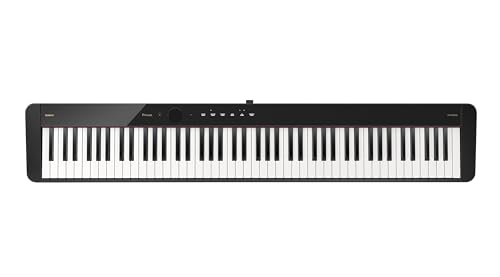
| Form Factor | Furniture console with sliding key cover and display | Ultra-slim portable with hybrid keys |
Key Action
The Roland RP701 uses the PHA-4 Standard action with escapement and Ivory Feel. The Casio Privia PX-S5000 uses Casio's Smart Hybrid Hammer Action with spruce key sides. In the supplied scores, the Roland action earns 28 out of 30 and the Casio action earns 27. Both are graded hammer actions, but the Roland includes escapement simulation and a progressive damper pedal as part of the console, while the Casio lists hybrid keys with spruce sides and does not state whether escapement is simulated.
The practical difference is the cabinet. The Roland action sits inside a 101 pound furniture console with three built-in pedals, so the playing position is fixed and the pedal response is always progressive. The Casio action sits inside a 25.4 pound slab with only a sustain pedal included, and the SP-34 triple pedal is an optional extra. For a pianist who needs proper una corda and sostenuto pedals, the Roland is ready out of the box, while the Casio requires an additional purchase.
Piano Sound and Speakers
Roland uses the SuperNATURAL Piano engine with 256-note polyphony and 324 voices. Casio uses the AiR sound engine with a Hamburg grand sample and 192-note polyphony across 23 voices. The piano sound score is 21 for Roland and 23 for Casio, which suggests the Hamburg grand sample in the Casio is a slightly stronger core piano tone, even though the Roland offers far more sounds.
The speaker output is modest on both. The Roland has 2 x 12 W speakers, while the Casio has 2 x 8 W speakers. The product listing calls the Roland speakers only 2 x 12 W for a furniture console and notes the Casio speakers are the same as the lower-cost PX-S1100. Neither is likely to fill a large room without external amplification, but the Roland has more rated power on paper.
Features and Modes
The Roland RP701 includes 324 tones, a display, and audio recording to USB flash drive. The Casio PX-S5000 includes 23 tones and USB audio recording and playback, but the listing does not mention an onboard display. The feature score is 14 for Roland and 11 for Casio, which reflects the Roland's larger sound library and practice tools like built-in songs.
Both pianos support Bluetooth audio and MIDI. The Roland has Bluetooth built in, while the Casio includes the WU-BT10 adapter in the box, so both are wireless ready. The Casio adds two quarter-inch outputs and two headphone jacks, which the Roland listing does not specify. This gives the Casio an edge for live performance and dual-headphone practice, even though it offers fewer internal sounds.
Build, Design and Portability
The Roland RP701 is a furniture console with a sliding key cover and display, weighing 101 pounds. The Casio Privia PX-S5000 is an ultra-slim portable with hybrid keys, weighing 25.4 pounds and measuring 232 mm deep. The build and portability score is 9 for Roland and 10 for Casio, which reflects the Casio's advantage in weight, depth, and travel readiness.
The Roland's cabinet is more substantial than the RP107, according to the listing, which gives it a more furniture-like presence at home. The Casio's slim body can sit on a table, a stand, or in a gig bag, and it includes a sustain pedal with the SP-34 triple pedal as an optional accessory. The Roland has three pedals built in, so there is no separate pedal unit to position or connect.
Connectivity
Connectivity is a tie at 10 out of 10 for both models, but the details differ. The Roland RP701 has Bluetooth audio and MIDI built in, USB MIDI, and USB flash-drive recording. The Casio PX-S5000 has Bluetooth audio and MIDI via the included WU-BT10 adapter, USB to Host, and USB-A audio recording and playback. Both can record audio without a computer, but the Roland uses a USB flash drive and the Casio uses the USB-A port.
The Casio also includes two quarter-inch outputs, which are not mentioned for the Roland. These outputs let you connect directly to a PA system, powered speakers, or an audio interface. The Casio also has two headphone jacks, while the Roland listing does not state the number of headphone jacks. For silent practice with a teacher, the Casio's dual headphone jacks are a practical advantage.
Setup and Accessories
The Roland RP701 is a heavy console at 101 pounds, so setup may require two people and a fixed location, though the listing does not describe assembly steps. The Casio PX-S5000 is a 25.4 pound portable, so it can be placed on a table or optional stand and moved easily. The Roland includes three built-in pedals, while the Casio includes only a sustain pedal and lists the SP-34 triple pedal as an optional extra.
Both units include Bluetooth connectivity. The Roland has it built in, and the Casio includes the WU-BT10 adapter. The Casio also includes the sustain pedal, which the Roland does not need because its pedals are part of the console. The Roland's sliding key cover is an included accessory that protects the keys, while the Casio would need a separate cover or case.
Daily Use
At home, the Roland RP701 works as a family piano. The display makes it easy to select from 324 sounds, the built-in songs support practice, and the USB flash-drive recording lets parents review a child's playing. The 101 pound cabinet stays in place, the sliding cover keeps dust off the keys, and the three built-in pedals are always in the right position. The 2 x 12 W speakers are adequate for a small room but not for a large space.
The Casio PX-S5000 fits a different daily rhythm. It is light enough to move from a shelf to a stand or into a car, and its two headphone jacks let two people practice silently at once. The Hamburg grand sample and hybrid keys reward focused piano practice, but the 23 voices limit experimentation. The two quarter-inch outputs and USB audio recording make it easy to capture ideas or send a signal to a mixer, which suits performers.
The Deciding Question
The deciding question is whether you need a fixed furniture console with a display and a huge sound library, or a slim portable with a flagship grand tone and strong outputs. The Roland RP701 is the better home piano for a family that wants built-in pedals, a sliding key cover, and 324 sounds. The Casio PX-S5000 is the better portable piano for a player who wants a Hamburg grand, hybrid spruce-sided keys, and a lightweight body.
Both models earn an overall score of 86, so neither is objectively better overall. The Roland wins in key action by one point and features by three points, while the Casio wins in piano sound by two points, build and portability by one point, and value by one point. Your available space, mobility needs, and interest in sounds versus core piano tone should drive the choice.
Who Should Buy Which
Buy the Roland RP701 if you want a furniture console with three built-in pedals, a progressive damper, a sliding key cover, a display, 324 voices, USB flash-drive recording, and Bluetooth built in. It is best for families, students who want a variety of sounds, and homes where the piano stays in one room. Its heavy cabinet and modest speaker wattage are its main limitations.
Buy the Casio Privia PX-S5000 if you want a 25.4 pound portable with Smart Hybrid Hammer Action, spruce key sides, a Hamburg grand sample through the AiR engine, 192-note polyphony, two headphone jacks, two quarter-inch outputs, USB audio recording, and included Bluetooth. It is best for performing musicians, apartment dwellers, and anyone who prioritizes piano tone, action, and portability over a large sound library.
Roland RP701
Pros
- 324 tones, a display and audio recording to USB
- PHA-4 Standard action with escapement and progressive damper
- Bluetooth audio and MIDI built in
- More substantial cabinet than the RP107
Cons
- Speakers are only 2 x 12 W for a furniture console
- PHA-4 Standard rather than the PHA-50 of the HP series
- Heavy at 101 pounds
Casio Privia PX-S5000
Pros
- Hybrid keys with spruce sides in a 232 mm deep, 25 pound case
- Hamburg grand sample with the AiR engine
- Two quarter-inch outputs, two headphone jacks and USB audio recording
- Bluetooth adapter included
Cons
- Only 23 tones
- Speakers are the same 2 x 8 W as the PX-S1100
- Priced close to the Roland FP-60X
Who Should Buy Each
Roland RP701
- You want one console that covers piano, keyboard sounds and recording
- A display and USB recording matter for lessons and practice review
- You want three pedals, Bluetooth and a sliding cover in a furniture cabinet
Casio Privia PX-S5000
- You love the PX-S1100's size but want a more substantial, wooden-sided action
- The Hamburg grand tone is the sound you want
- You record to a USB stick and gig with real outputs
Quick Decision Guide
| If you want a furniture console with built-in pedals and a sliding key cover | Choose Roland RP701 |
| If you need a lightweight portable piano for gigs or small spaces | Choose Casio Privia PX-S5000 |
| If you want the largest sound library and a built-in display | Choose Roland RP701 |
| If you prioritize the best piano sound engine and portability over extra voices | Choose Casio Privia PX-S5000 |
| If you need line outputs and two headphone jacks for stage and silent practice | Choose Casio Privia PX-S5000 |
FAQ
About This Comparison
Mandrillis Team
The Mandrillis editorial team researches and compares audio and music gear using manufacturer documentation, verified specs and real buyer feedback, so you can make a confident purchase without wading through marketing claims.
Read our full research methodology.
We may earn a commission at no extra cost to you.