Roland TD713 vs Yamaha DTX10K-X
Quick Verdict
Choose the Roland TD713 if you want Roland's newest flagship V-Drums module with a digital snare and kick pad built alongside DW, even though several hardware numbers remain unpublished. Choose the Yamaha DTX10K-X if you want a wood shell electronic kit with Yamaha's TCS pad feel, studio recorded sounds, and the individual outputs a touring or recording drummer needs. The Roland scores 90 against the Yamaha's 88, both premium kits aimed at serious players. The Yamaha publishes more connectivity detail, including individual outputs and AUX inputs, while the Roland leaves most of its hardware specification unconfirmed. Choose the Roland for the newest Roland engine, choose the Yamaha for a wood shell feel built for live mixing.

| Spec | Roland TD713 | Yamaha DTX10K-X |
|---|---|---|
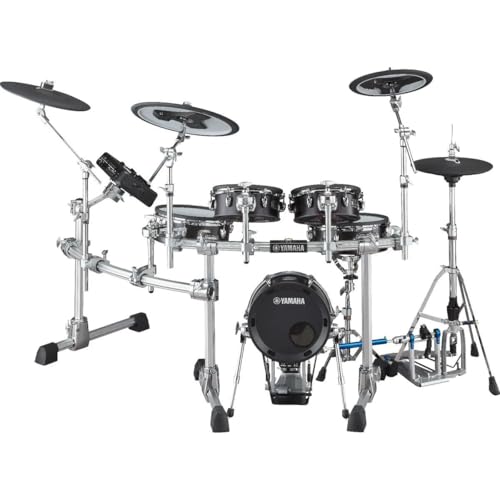
| Pad type | Newly developed digital snare and kick pads with Roland's latest pad technologies; head material and sizes not published in listing | Yamaha TCS pads on wood shells built and finished at Yamaha acoustic drum factories; pad sizes not published in listing |
| Number of pads | Six-piece kit; cymbal count not published in listing | Not published in listing; sold as a bundle of 4 items |
| Module and kits | V71 module with an expandable, all-new multi-sampled sound library created with DW; kit and instrument counts not published in listing | Module not named in listing; Ambience, Comp and Effect Kit Modifier knobs and LED rotary faders; kit and voice counts not published in listing |
| Kick pedal and pad | Newly developed digital kick pad; pedal inclusion not published in listing | Not published in listing |
| Hi-hat type | Not published in listing | Not published in listing |
| Cymbal pads | Not published in listing | Not published in listing |
| Connectivity | Not published in listing | Individual outputs, AUX inputs suited to PA monitor return, USB port for sending and receiving audio with computers and smart devices |
| Practice features | Not published in listing | Not published in listing |
| Footprint | Not published in listing | Wood shell kit; dimensions not published in listing |
| Included accessories | DW Soundworks software instrument through a Roland Cloud Ultimate membership; hardware accessories not published in listing | Bundle of 4 items; contents not itemized in listing |
Pads, Feel and Response
The Roland TD713 scores 28 out of 30 for pad feel and response, built around newly developed digital snare and kick pads with Roland's latest pad technologies, though exact head material and sizes are not published. The Yamaha DTX10K-X scores 27 out of 30, built on TCS pads mounted on real wood shells finished at Yamaha's acoustic drum factories.
Pad sizes are not published for either kit in this comparison, which is an unusual gap for two premium products at this price tier. The Yamaha's wood shell construction is a distinctive detail that the listing highlights directly, since it ties the electronic pad to an acoustic shell build process rather than a standard mesh or rubber surface.
Drummers who want a feel closer to acoustic shells beneath an electronic trigger may lean toward the Yamaha's wood shell approach. Drummers chasing Roland's latest pad engineering may still prefer the TD713, even without full published sizing.
Drum Module and Sounds
The Roland TD713 scores 24 out of 25 for sounds and module, powered by the V71 module with an expandable, all new multi sampled sound library created with DW. The listing does not name specific kit or instrument counts, and the bundled DW Soundworks software instrument requires a Roland Cloud Ultimate membership.
The Yamaha DTX10K-X scores 23 out of 25, though its module is not named in the listing at all. It instead highlights studio recorded sounds with real room ambience and a control surface built around Ambience, Comp, and Effect Kit Modifier knobs plus LED rotary faders for fast sound shaping.
Both listings leave real gaps around named modules and exact kit counts, which makes it hard to compare raw sound library size directly. The Roland leans on its DW collaboration for credibility, while the Yamaha leans on studio recorded ambience and quick physical sound shaping controls to make its case instead.
Kick, Hi-Hat and Cymbal Pads
The Roland TD713 does not publish hi-hat type, cymbal pads, or pedal inclusion, leaving its six piece kit without confirmed specifics in this category. Only the newly developed digital kick pad is named directly.
The Yamaha DTX10K-X is equally quiet here, since pad sizes, kick pedal, hi-hat type, and cymbal pads are all not published in the listing, which instead describes the kit as a bundle of four items without itemizing them. That leaves a genuine gap for a buyer trying to picture the full kit layout.
Neither kit gives a clear picture of its kick, hi-hat, or cymbal hardware in this comparison, which is unusual for products at a premium price. Buyers should treat both listings as incomplete here and confirm the exact pad sizes, pedal inclusion, and cymbal count directly with the manufacturer before purchasing.
Practice Tools and Features
The Roland TD713 scores 13 out of 15 for features and practice tools, relying on its bundled DW Soundworks software instrument rather than a stated lesson feature. The Yamaha DTX10K-X scores 12 out of 15, with no practice feature published either, instead emphasizing its Kit Modifier knobs and LED rotary faders for live sound shaping.
Neither listing bundles a lesson library or song catalog in this comparison, which sets both apart from some competing kits that include structured practice content. The value proposition for both instead rests on sound quality and physical control rather than guided learning.
A drummer who wants bundled lessons will not find that feature in either the Roland or the Yamaha listing here. Both instead ask a buyer to value sound engine depth and live control over a built in teaching tool.
Build, Rack and Footprint
The Roland TD713 scores 9 out of 10 for build and rack, a six piece electronic configuration with no published footprint or hardware accessory list. The Yamaha DTX10K-X scores 9 out of 10 as well, built around real wood shells that the listing says need more room than a compact rack kit.
Neither listing publishes exact dimensions or weight for either kit, which makes planning a dedicated space harder than it should be at this price tier. The Yamaha's wood shell construction does suggest a bulkier footprint than an all mesh kit would carry.
Drummers with limited space should treat both kits as needing more than a quick measurement before committing to a room or a corner of a studio. The Yamaha's wood shells in particular point toward a setup closer to a full acoustic kit's footprint than a compact mesh based practice kit.
Connectivity and Recording
The Yamaha DTX10K-X scores 9 out of 10 for connectivity, ahead of the Roland TD713, which does not publish any connectivity details at all in its listing. The Yamaha lists individual outputs, AUX inputs suited to PA monitor return, and a USB port for sending and receiving audio with computers and smart devices.
That individual output design matters for a drummer who needs to send separate signals to a monitor engineer on stage, a use case the Yamaha's listing addresses directly. The Roland's silence on connectivity leaves recording and live mixing plans entirely unconfirmed.
For a touring or gigging drummer who needs confirmed stage connectivity, the Yamaha is the clearly better documented choice here. For a buyer focused purely on sound engine reputation, the Roland's connectivity gap may matter less.
Setup and Daily Use
Setting up the Roland TD713 means assembling a six piece kit around its digital pads and V71 module, with rack type and accessories left unconfirmed by the listing. Daily use centers on exploring the expandable, DW created sound library.
Setting up the Yamaha DTX10K-X means working with real wood shells that need more floor space, plus wiring individual outputs and AUX inputs if the kit is used on stage. Daily use benefits from the Kit Modifier knobs and LED rotary faders, which the listing says make live adjustments quick and visible.
Both kits ask for some planning before daily use, the Roland because of unpublished hardware details and the Yamaha because of its larger wood shell footprint. Once set up, the Yamaha's quick visual controls may suit a working drummer better than a kit built mainly around studio sound exploration.
The Deciding Question
The deciding question is whether you are chasing Roland's newest sound engine or a wood shell feel built for live mixing. The Roland TD713 offers an all new V71 module and DW collaboration, but the listing confirms very little about its physical hardware.
The Yamaha DTX10K-X answers the second need directly, with real wood shells, studio recorded ambience, and individual outputs plus AUX inputs that a gigging drummer can actually use on stage. Its Kit Modifier knobs and LED rotary faders also make live sound shaping faster than digging through a module's menus.
Budget sits at a similar premium tier for both, so the real question is sound engine reputation versus confirmed stage connectivity. Studio focused buyers may lean toward the Roland, while working drummers who mix live may lean toward the Yamaha.
Who Should Buy Which
Buy the Roland TD713 if you want Roland's newest flagship V-Drums engine with digital pads built alongside DW, and you are comfortable confirming hi-hat, cymbal, and connectivity details separately. It suits a drummer chasing the latest Roland sound over a fully documented spec sheet.
Buy the Yamaha DTX10K-X if you want a wood shell electronic kit with TCS pad feel, studio recorded sounds, and individual outputs plus AUX inputs for live mixing and monitor use. It suits a working drummer who treats the kit as a stage and studio instrument rather than a home practice tool.
With scores of 90 and 88, both are strong premium kits, and the gap between them matters less than their different priorities. Choose the Roland for sound engine reputation, choose the Yamaha for confirmed stage ready connectivity.
Roland TD713
Pros
- Flagship V71 module with an expandable, multi-sampled library
- Newly developed digital snare and digital kick pads
- Six-piece configuration gives a larger drum count than most kits
- DW collaboration points to a studio-grade acoustic sound set
- DW Soundworks software bridges the kit to computer-based playing
Cons
- Listing does not publish pad sizes, cymbal count or hi-hat type
- Connectivity and practice features are not stated
- Software instrument depends on a Roland Cloud Ultimate membership
- Premium tier price with few confirmed hardware details
Yamaha DTX10K-X
Pros
- TCS pads on real wood shells from Yamaha's acoustic drum factories
- Studio-recorded sounds with real-room ambience
- Ambience, Comp and Effect Kit Modifier knobs for fast sound shaping
- LED rotary faders make live adjustments quick and visible
- Individual outputs and AUX inputs suit stage and monitor use
- USB audio in both directions with computers and smart devices
Cons
- Module is not named and kit counts are not published
- Pad sizes, cymbals and hi-hat type are not listed
- Bundle contents are not itemized
- Wood shells need more room than a compact rack kit
Who Should Buy Each
Roland TD713
- Professional and semi-professional drummers upgrading to a top-tier V-Drums kit
- Studio owners who want a six-piece kit that doubles as a controller for software drums
- Players who value digital snare and kick triggering over a lower pad count
- Drummers already invested in the Roland Cloud ecosystem
Yamaha DTX10K-X
- Gigging drummers who need individual outputs and monitor return inputs
- Players who prefer silicone TCS heads over mesh
- Studio users who want USB audio in both directions
- Drummers who want an acoustic-style wood shell kit
Quick Decision Guide
| If you want Roland's newest flagship V-Drums module and digital pads | Choose Roland TD713 |
| If you want a wood shell kit with individual outputs for live mixing | Choose Yamaha DTX10K-X |
| If you need confirmed AUX inputs and USB audio for stage use | Choose Yamaha DTX10K-X |
| If you are already invested in Roland Cloud and DW collaboration sounds | Choose Roland TD713 |
| If you want quick physical sound shaping with Kit Modifier knobs | Choose Yamaha DTX10K-X |
FAQ
About This Comparison
Mandrillis Team
The Mandrillis editorial team researches and compares audio and music gear using manufacturer documentation, verified specs and real buyer feedback, so you can make a confident purchase without wading through marketing claims.
Read our full research methodology.
We may earn a commission at no extra cost to you.