Samsung HW-Q800H vs Sony Bar 6 3.1.2ch
Quick Verdict
Choose the Samsung HW-Q800H if you prioritize a 5.1.2 channel layout with side and up firing drivers, built in Alexa, Googlecast, AirPlay 2, and Q Symphony with compatible Samsung TVs. Choose the Sony Bar 6 3.1.2ch if you want a dedicated center channel for clear dialogue, confirmed DTS:X support, and a published 160mm wireless subwoofer driver, especially with a Sony BRAVIA TV. Both models earn the same overall score of 78. The Samsung offers broader streaming and voice control, while the Sony offers clearer published driver details for the front speakers and subwoofer. The Samsung's wireless Dolby Atmos and Q Symphony may suit Samsung TV owners, while the Sony's DTS:X and dedicated center may suit dialogue-focused listeners.
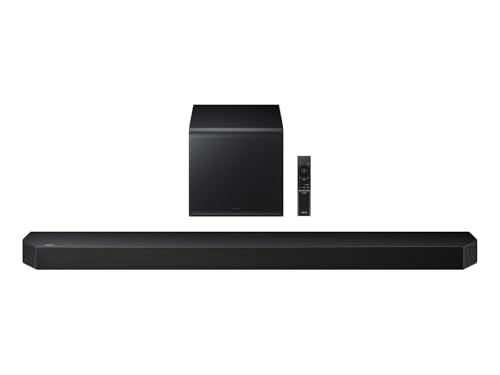

| Spec | Samsung HW-Q800H | Sony Bar 6 3.1.2ch |
|---|---|---|
| Channels | 5.1.2 | 3.1.2ch |
| Drivers | Side firing and up firing drivers, exact sizes not published in listing | Three front-firing speakers, dual up-firing speakers, wireless subwoofer with 160mm driver |
| Power | Not published in listing | Not published in listing |
| Subwoofer | Wireless compact subwoofer, driver size and amplifier wattage not published in listing | Wireless, included; 160mm speaker unit |
| Dolby Atmos and DTS | Dolby Atmos with wireless support, DTS support not published in listing | Dolby Atmos and DTS:X support |
| HDMI eARC and inputs | Not published in listing, wireless Dolby Atmos mentioned with or without HDMI cable | Not published in listing |
| Wireless and streaming | Alexa built in, Googlecast, AirPlay 2, Q Symphony, SpaceFit Sound Pro | Bluetooth; BRAVIA Connect app control |
| Dimensions | Not published in listing | Not published in listing |
| Remote and app | Not published in listing, smart integration control described | BRAVIA Connect app; physical remote not stated in listing |
| Included accessories | Not published in listing | Wireless subwoofer; other accessories not published |
Sound Quality
Published channel counts show a clear difference between these two soundbars. The Samsung HW-Q800H lists a 5.1.2 configuration with side firing and up firing drivers, suggesting a wider front and side soundfield. The Sony Bar 6 lists a 3.1.2 configuration with three front firing speakers and dual up firing drivers, including a dedicated center channel. Exact driver sizes are not published for the Samsung, while the Sony listing does not publish sizes for the front or up firing drivers beyond the subwoofer.
The Sony's dedicated center channel may give it an edge for dialogue clarity in movie and TV content. The Samsung's additional side firing drivers may produce a broader front stage, but without published driver details, that advantage is harder to verify. Neither listing publishes amplifier power, so volume headroom and total output cannot be compared. The Samsung's higher channel count does not automatically mean better sound, because driver quality and tuning are not published, while the Sony's dedicated center is a known design choice for vocals.
The sound quality category scores are close, with the Sony at 25 and Samsung at 24 out of 30. This small difference reflects the Sony's dedicated center channel advantage, but the Samsung's 5.1.2 layout may still appeal to those who want side presence.
Surround, Atmos and Audio Formats
Both bars support Dolby Atmos. The Samsung listing calls out wireless Dolby Atmos support without an HDMI cable, which is uncommon and may help in setups where running HDMI is difficult. The Sony listing confirms Dolby Atmos and DTS:X support, while DTS support is not published for the Samsung.
The Samsung has a 5.1.2 layout with side firing drivers, while the Sony has a 3.1.2 layout with no side or rear surround drivers in the published specs. Surround performance will depend on the room and content, and neither listing publishes enough detail for a direct acoustic comparison. The Samsung's side firing drivers could provide more lateral envelopment than the Sony's front-only plus up-firing approach. However, the Sony's confirmed DTS:X support adds format flexibility that the Samsung does not currently list.
Scores in this category are close, with the Sony at 12 and the Samsung at 11 out of 15. Neither bar includes separate rear speakers in the published specs, so both rely on up firing and, in the Samsung's case, side firing drivers for height and width effects.
Subwoofer and Bass
Both soundbars include a wireless subwoofer. The Sony listing specifies a 160mm driver in its included subwoofer, which gives a concrete indication of the low frequency driver size. The Samsung listing describes only a compact wireless subwoofer and does not publish the driver size or amplifier wattage. That makes direct bass output comparison difficult based on the listings alone.
The Sony's 160mm driver is a meaningful published detail for buyers who care about subwoofer scale. Neither listing publishes total power or frequency response, so bass depth and loudness cannot be rated objectively. Both subwoofers are wireless and included, and bass quality also depends on placement and room modes, which the listings do not address. Home theater users who want a known driver size in the sub may lean toward the Sony, while those who prioritize a compact subwoofer may find the Samsung appealing despite missing specs.
Connectivity and TV Setup
HDMI eARC and input details are not published in either listing. The Samsung listing mentions wireless Dolby Atmos with or without an HDMI cable, which implies some flexibility in TV connection. The Sony listing does not publish HDMI eARC or input specs, and its Atmos and DTS:X support likely requires a compatible connection, but that is not stated. Buyers who need confirmed HDMI ports or eARC should check both product pages or owner materials before purchase.
Wireless networking differs clearly. The Samsung lists built in Alexa, Googlecast, and AirPlay 2, giving several streaming and voice options, while the Sony listing mentions Bluetooth only with no Wi-Fi, AirPlay, or Chromecast. The Sony does list BRAVIA Connect app control and BRAVIA TV menu integration for Sony owners. The Samsung's AirPlay 2 and Googlecast support can be useful for iPhone and Android users, while the Sony's Bluetooth works only for basic direct streaming, and connectivity scores are close at 11 and 10 out of 15.
Features, Apps and Voice Control
The Samsung HW-Q800H offers a broader smart feature set on paper. It includes built in Alexa, Googlecast, AirPlay 2, Q Symphony, and SpaceFit Sound Pro automatic room calibration. SpaceFit Sound Pro may help tune output to the room without manual effort. Q Symphony works with compatible Samsung TVs to combine TV speakers with the bar, while the Sony Bar 6 does not list any built in voice assistant or room calibration feature.
Sony's features center on the BRAVIA Connect app and BRAVIA TV menu integration, which can make setup and control easier for Sony TV owners. The Sony also includes Bluetooth streaming for direct phone or tablet audio, but it lacks the multi platform casting and voice assistant support that Samsung lists. Samsung's SpaceFit Sound Pro is a notable advantage for users who prefer set and forget calibration. Both models score 12 out of 15 in this category, but the Samsung appeals to users who want voice and AirPlay, while the Sony appeals to those already in the BRAVIA ecosystem.
Design and Fit Under a TV
Neither listing publishes full dimensions, so physical size and fit under a TV cannot be verified from these specifications. The Samsung HW-Q800H has a 5.1.2 channel layout with side firing drivers, which may require more width for the side reflections to work well, but that is not confirmed by measurements. The Sony Bar 6 has a 3.1.2 layout with three front firing speakers, which may fit differently, but again no dimensions are provided.
The Samsung subwoofer is described as compact, which may help with placement in small rooms. The Sony subwoofer includes a 160mm driver, but its cabinet dimensions are not published. Without height and width figures, buyers cannot know if either bar will block a TV's IR sensor or sit too tall in front of a television. Sony's design score is slightly higher at 12 compared to the Samsung's 11, but without published dimensions the fit under a specific TV cannot be guaranteed for either.
Who Should Buy It
The Samsung HW-Q800H should appeal to Samsung TV owners who want a 5.1.2 soundbar with side and up firing drivers, wireless Dolby Atmos, Q Symphony, SpaceFit Sound Pro, and built in Alexa, Googlecast, and AirPlay 2. It is also a fit for people who want voice control and multi platform casting without adding separate devices. Buyers with a Samsung TV and an interest in automatic room calibration may find the Samsung well matched.
The Sony Bar 6 3.1.2ch should appeal to Sony BRAVIA TV owners who want a dedicated center channel for clearer dialogue, confirmed DTS:X support, and an included wireless subwoofer with a published 160mm driver. Its BRAVIA Connect app and TV menu integration are convenient for Sony households. Buyers who do not need Wi-Fi or voice assistants and who value a known subwoofer driver may prefer the Sony. Both models are mid range, and each fits its own TV ecosystem best.
The Deciding Question
The main decision is between ecosystem integration and published specifications. Do you want a Samsung bar with 5.1.2 side and up firing channels, built in Alexa, Googlecast, AirPlay 2, and Q Symphony for Samsung TVs? Or do you want a Sony bar with a dedicated center channel, confirmed DTS:X, and a known 160mm subwoofer driver for a BRAVIA TV?
If your priority is broad streaming and voice features plus a wider channel count, the Samsung fits better. If your priority is dialogue clarity and confirmed DTS:X with a published sub driver, the Sony is more appealing. Both bars earn the same overall score of 78, so the choice depends on which published strengths matter more to your setup. Since HDMI eARC and dimensions are not published for either model, these factors should be verified separately if they affect your decision.
Who Should Buy Which
Buy the Samsung HW-Q800H if you own a compatible Samsung TV, want Q Symphony and SpaceFit, need built in Alexa, Googlecast, or AirPlay 2, or want a 5.1.2 layout with side and up firing drivers. Wireless Dolby Atmos without an HDMI cable is another Samsung advantage.
Buy the Sony Bar 6 3.1.2ch if you own a Sony BRAVIA TV, want BRAVIA menu integration, value a dedicated center channel for clear dialogue, or need confirmed DTS:X support. The published 160mm subwoofer driver is a concrete spec for bass minded buyers. Avoid either model if you need full HDMI, power, or dimension details, because both listings omit those specifics.
Samsung HW-Q800H
Pros
- 5.1.2 channel layout with side and up firing drivers
- Wireless Dolby Atmos support without an HDMI cable
- Compact wireless subwoofer for deep bass without clutter
- SpaceFit Sound Pro automatic room calibration
- Q Symphony with compatible Samsung TVs
- Built in Alexa, Googlecast and AirPlay 2
Cons
- Listing does not publish driver sizes, amplifier power or dimensions
- DTS support and HDMI eARC inputs are not specified
- No mention of included remote control or app details
- Some smart features may require a compatible Samsung TV or ecosystem
Sony Bar 6 3.1.2ch
Pros
- Dedicated center channel for clear dialogue
- Dolby Atmos and DTS:X with up-firing drivers
- Included wireless subwoofer
- Bluetooth streaming and BRAVIA Connect app
- BRAVIA TV menu integration for Sony TVs
Cons
- HDMI eARC and input details not published
- No published power output or dimensions
- Physical remote not listed
- No Wi-Fi, AirPlay, or Chromecast mentioned
- No voice assistant support confirmed
Who Should Buy Each
Samsung HW-Q800H
- Samsung TV owners wanting Q Symphony integration
- Movie and TV fans who want Atmos height effects without satellite speakers
- Buyers who prefer automatic room tuning over manual setup
- Users invested in Alexa, Google Cast or AirPlay 2 voice control
Sony Bar 6 3.1.2ch
- Sony BRAVIA TV owners who want menu based control
- Movie and TV watchers who struggle to hear dialogue
- Buyers who want a simple Atmos upgrade without rear speakers
- Music listeners who want Bluetooth streaming
Quick Decision Guide
| If you own a Samsung TV and want Q Symphony and SpaceFit calibration | Choose Samsung HW-Q800H |
| If you own a Sony BRAVIA TV and want TV menu integration and a dedicated center channel | Choose Sony Bar 6 3.1.2ch |
| If you need built in Alexa, Googlecast, or AirPlay 2 for voice and multi room streaming | Choose Samsung HW-Q800H |
| If you need confirmed DTS:X support and a published 160mm subwoofer driver | Choose Sony Bar 6 3.1.2ch |
| If you want a 5.1.2 channel layout with side and up firing drivers and wireless Dolby Atmos | Choose Samsung HW-Q800H |
FAQ
About This Comparison
Mandrillis Team
The Mandrillis editorial team researches and compares audio and music gear using manufacturer documentation, verified specs and real buyer feedback, so you can make a confident purchase without wading through marketing claims.
Read our full research methodology.
We may earn a commission at no extra cost to you.