Schiit Magni Unity Preamp vs Marshall Milton ANC Headphones
Quick Verdict
Choose the Schiit Magni Unity Preamp if you want a wired desktop headphone amplifier and preamp with a built in USB DAC. Its fully discrete current-feedback design, three gain levels including negative gain for sensitive IEMs, and preamp outputs for powered monitors make it a focused tool for a home listening desk. Choose the Marshall Milton ANC Headphones if you need portable wireless listening with adaptive noise cancelling and long battery life. The Marshall offers 50 hours of ANC playback, a foldable design, and spatial audio at a budget price. Schiit requires 115V AC power and has no Bluetooth; Marshall lacks published driver and codec details. Buy the Schiit for stationary wired use, the Marshall for travel.

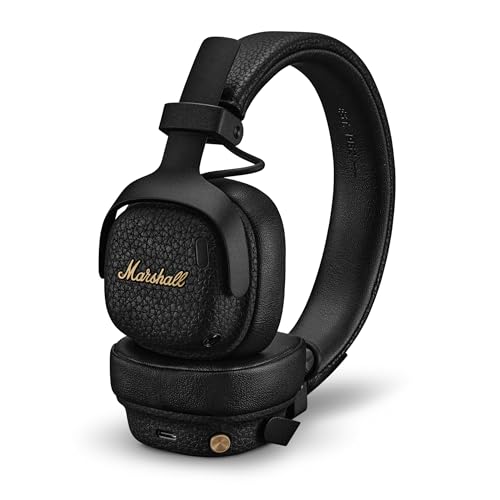
| Spec | Schiit Magni Unity Preamp | Marshall Milton ANC Headphones |
|---|---|---|
| Type | Desktop headphone amplifier and preamp with USB DAC | On-ear wireless headphones |
| Driver | Not published in listing | Not published in listing |
| Noise cancelling | Not applicable | Adaptive ANC and transparency mode |
| Bluetooth and codecs | No Bluetooth, USB-C input | Bluetooth wireless, codecs not published |
| Battery life | Not applicable, AC powered (115VAC only) | 50 hours with ANC, 80 hours without ANC |
| Wired option | Single-ended headphone output, preamp outputs, USB-C input | Not published in listing |
| Controls and app | Three gain levels, custom potentiometer, no app | Not published in listing |
| Water resistance | Not applicable | Not published in listing |
| Weight | Not published in listing | Not published in listing |
| Included accessories | Not published in listing | Not published in listing |
Sound Quality
The Schiit Magni Unity Preamp scores 26 out of 30 for sound quality, while the Marshall Milton ANC Headphones score 23 out of 30. Schiit uses a fully discrete current-feedback topology, which is a specific amplifier design that often aims for clean, high current output. Marshall does not publish driver details for its on-ear headphones, so the sound signature cannot be assessed from the listing alone.
Schiit offers three gain levels, including a negative gain setting that helps sensitive in-ear monitors avoid hiss or overly loud volume. This gain control is a concrete feature for managing different headphone sensitivities. Marshall includes a spatial audio feature, which suggests some processing of the soundstage, but the listing does not explain how it works or what codecs it supports.
Without driver types for either product, a direct sound quality comparison relies on published architecture and features. Schiit's discrete design and gain options give it a more transparent on paper advantage for wired critical listening. Marshall's wireless nature and unspecified codecs make its sound quality more dependent on the source device and Bluetooth connection.
Comfort and Fit
The Schiit Magni Unity Preamp is a desktop component, so it is not worn on the head. Its comfort score of 14 out of 20 likely reflects how easy it is to use on a desk rather than physical headband comfort. The Marshall Milton ANC Headphones are on-ear wireless headphones with a foldable design, and they score 15 out of 20 for comfort. On-ear designs rest on the ears, which may cause pressure over long sessions, but the listing does not state pad material or clamping force.
Neither product lists a weight, so a direct comfort comparison based on mass is not possible. Marshall's foldable design makes it easier to pack and carry, which is a practical comfort benefit for travel. Schiit requires AC power and desk space, and its dimensions are not published, so desk comfort depends on your setup.
For long listening sessions, the on-ear Marshall may become less comfortable for some users, but without ear cushion details this remains unknown. Schiit avoids physical contact entirely, so it is comfortable in the sense that you can use your preferred headphones or speakers. Both products leave some comfort specifics unpublished in the listing.
Noise Control and Features
The Marshall Milton ANC Headphones include adaptive noise cancelling and a transparency mode. The Schiit Magni Unity Preamp has no noise cancelling or transparency features at all, since it is a wired desktop amplifier and preamp. Schiit scores 13 out of 15 for features and noise control, while Marshall scores 12 out of 15.
Schiit offers a built in Mesh DAC with USB-C input, three gain levels, and preamp outputs for powered monitors. Marshall offers adaptive ANC, transparency mode, spatial audio, and a foldable travel design. Schiit does not have an app for control, and Marshall's controls and app are not published in the listing.
The feature sets serve different purposes. Schiit gives analog and digital control for a wired desktop system, while Marshall gives wireless travel features. Schiit has no wireless input and no battery, but its preamp outputs let you connect powered speakers. Marshall has no preamp outputs or USB DAC, making it purely a headphone device.
Battery, Bluetooth and Connectivity
The Marshall Milton ANC Headphones are Bluetooth wireless and list 50 hours of battery life with ANC on and 80 hours with ANC off. The Schiit Magni Unity Preamp has no Bluetooth, no battery, and requires 115V AC power only. Schiit scores 8 out of 15 for battery and connectivity, while Marshall scores 14 out of 15.
Schiit uses a USB-C input for digital audio from a computer or other source, and it outputs to headphones via a single-ended jack or to powered monitors via preamp outputs. Marshall's Bluetooth codecs are not published in the listing, so wireless sound quality cannot be verified. Marshall does not list a wired option for when the battery is depleted.
For portable use, the Marshall clearly wins with its long battery and wireless connection. For a stationary desktop setup, Schiit's wired connection is stable and does not depend on battery charge. However, Schiit's 115VAC requirement means it cannot be used in 220 to 240 volt countries without a converter, while Marshall's battery makes it usable anywhere with appropriate charging.
Build, Design and Portability
The Schiit Magni Unity Preamp scores 9 out of 10 for build and portability, and the Marshall Milton ANC Headphones score 7 out of 10. Schiit is made in the USA and includes a three year warranty, which suggests confidence in build quality. Marshall is foldable for travel, but the listing does not state its materials or weight.
Schiit's dimensions and weight are not published, but it is a desktop unit that stays in one place. Marshall's foldable design makes it portable and easy to store in a bag. Marshall has no water resistance rating, and Schiit's water resistance is not applicable because it is not a wearable device.
Portability is a clear difference. Schiit requires an AC outlet and a wired source, so it is not designed to be moved often. Marshall is built for travel with long battery life and adaptive ANC. Schiit's three year warranty is a real advantage for a stationary product, while Marshall's lower build score may reflect the compromises of a foldable design.
Call Quality and Daily Use
Neither product listing states a built in microphone, so call quality cannot be assessed from the published information. The Schiit Magni Unity Preamp is a preamp and headphone amplifier, not a headset, so it has no call features at all. The Marshall Milton ANC Headphones are wireless headphones, but no microphone details are provided in the listing.
Daily use for the Schiit means sitting at a desk with AC power, connecting a USB-C cable from a computer, and using the volume and gain controls to drive wired headphones or powered monitors. It cannot be used while walking or commuting. The Marshall is designed for daily travel use with adaptive ANC, transparency mode, and long battery life.
If phone calls are a priority, neither product is clearly positioned as a headset, so an external microphone would be needed for the Schiit, and the Marshall's microphone performance is unknown. For pure audio playback, the Schiit is best in a fixed location, while the Marshall is best on the go.
Who Should Buy It
Buy the Schiit Magni Unity Preamp if you have a wired desktop audio setup with passive headphones and powered monitors. It works well for budget minded listeners who want a discrete amplifier design, a built in USB DAC, and preamp outputs without extra clutter. You must live in a 115V region and have access to an AC outlet.
Buy the Marshall Milton ANC Headphones if you want wireless on-ear headphones with adaptive noise cancelling for travel. The 50 hour ANC battery life and foldable design are practical for long trips. It is a good choice for budget listeners who do not need a separate amplifier or preamp.
Avoid the Schiit if you need Bluetooth, battery portability, or use 220 to 240 volt power. Avoid the Marshall if you require detailed driver specifications, specific Bluetooth codecs, or a confirmed wired backup option.
The Deciding Question
The central question is whether you need a stationary wired desktop amplifier or a portable wireless headphone with noise cancelling. The Schiit Magni Unity Preamp offers no battery and no Bluetooth, but it provides gain control, a USB DAC, and preamp outputs. The Marshall Milton ANC offers no preamp outputs or USB DAC, but it gives wireless ANC and long battery life.
If your listening happens at a desk with AC power and you value precise gain control and the ability to drive both headphones and powered speakers, the Schiit is the better tool. If you move between places and need to reduce background noise, the Marshall is the practical pick.
The trade off is wired audio flexibility versus wireless convenience. Neither listing publishes driver details, but the Schiit's discrete current-feedback design and three gain levels are more transparent on paper than the Marshall's unspecified driver and codec situation.
Who Should Buy Which
Choose the Schiit Magni Unity Preamp for a desktop stereo or headphone system where you can connect a computer or other source via USB-C and need preamp outputs for powered monitors. The three gain levels help with both full size headphones and sensitive IEMs. Made in USA and a three year warranty add long term value.
Choose the Marshall Milton ANC Headphones for budget travel use where long battery life, adaptive ANC, and a foldable design matter. Spatial audio adds a listening feature, though its exact implementation is not described. It is best for wireless listeners who do not need an amplifier or preamp.
If you are outside the 115V region or need to use headphones away from an AC outlet, avoid the Schiit. If you need a confirmed wired option or specific codec support, the Marshall listing leaves those unanswered, so verify before buying.
Schiit Magni Unity Preamp
Pros
- Fully discrete current-feedback topology
- Three gain levels including negative gain for IEMs
- Internal Mesh DAC with USB-C input
- Preamp outputs for powered monitors
- Made in USA with three year warranty
- Budget price tier
Cons
- No Bluetooth or wireless input
- AC powered only, no battery portability
- Single-ended output only, no balanced connection
- 115VAC only, not for 220 to 240 volt countries
- Weight and dimensions not published
Marshall Milton ANC Headphones
Pros
- Long battery life
- Adaptive ANC and transparency mode
- Foldable travel design
- Soundstage spatial audio feature
- Budget price
Cons
- Driver details not published
- Bluetooth codecs not stated
- No water resistance rating
- No wired option mentioned
- Weight and materials unknown
Who Should Buy Each
Schiit Magni Unity Preamp
- Desktop headphone users with wired headphones and IEMs
- Anyone adding a USB DAC and preamp to a computer setup
- Listeners who want a USA made budget amplifier with a long warranty
Marshall Milton ANC Headphones
- Commuters who want long battery and ANC
- Travelers needing foldable on-ear headphones
- Marshall fans on a budget
- Buyers who value spatial audio processing
Quick Decision Guide
| If you need a desktop amplifier and preamp with USB DAC for wired headphones and powered monitors | Choose Schiit Magni Unity Preamp |
| If you want wireless on-ear headphones with adaptive ANC and long battery life for travel | Choose Marshall Milton ANC Headphones |
| If you use sensitive IEMs and need negative gain to prevent hiss or overly loud volume | Choose Schiit Magni Unity Preamp |
| If you listen while moving or in noisy places and cannot be tied to an AC outlet | Choose Marshall Milton ANC Headphones |
| If you prefer a made in USA product with a three year warranty over an unverified portable design | Choose Schiit Magni Unity Preamp |
FAQ
About This Comparison
Mandrillis Team
The Mandrillis editorial team researches and compares audio and music gear using manufacturer documentation, verified specs and real buyer feedback, so you can make a confident purchase without wading through marketing claims.
Read our full research methodology.
We may earn a commission at no extra cost to you.