Seagull M6 vs Guild BT-258E Deluxe
Quick Verdict
The Seagull M6 suits players who want a Canadian made standard six string acoustic electric with an onboard EQ and included gig bag, and who can accept missing body, wood, and neck specifications. The Guild BT-258E Deluxe suits players who want a jumbo eight string baritone with a solid spruce top, rosewood back and sides, and a Fishman GT-1 pickup system, and who are comfortable with a niche tuning and large body. Both are mid range guitars with the same build score and similar electronics score. Choose the Seagull for conventional playing, and choose the Guild for deep baritone textures and octave shimmer.

| Spec | Seagull M6 | Guild BT-258E Deluxe |
|---|---|---|
| Body shape | Not published in listing | Jumbo |
| Top | Not published in listing | Solid spruce |
| Back and sides | Not published in listing | Rosewood |
| Neck and fingerboard | Not published in listing | Not published in listing |
| Scale length | Not published in listing | Not published in listing |
| Nut width | Not published in listing | Not published in listing |
| Electronics | Listing title indicates CH EQ, no further details published | Fishman GT-1 pickup system |
| Tuners | Not published in listing | Not published in listing |
| Finish | Ruby Red, type not specified | Glossed polyurethane |
| Included accessories | Gig bag included per listing title | Not published in listing |
Body, Neck and Playability
The Seagull M6 listing does not publish its body shape, neck and fingerboard materials, scale length, or nut width. That absence makes it impossible to assess the neck profile and overall playability from the listing alone. The listing title includes the letters CH EQ, which may point to a cutaway body and onboard EQ, but the listing facts do not expand on that abbreviation. Seagull is known as a Canadian builder with a reputation for comfortable necks, but that general brand heritage cannot replace specific measurements. Players who need to know nut width before buying will be left without an answer.
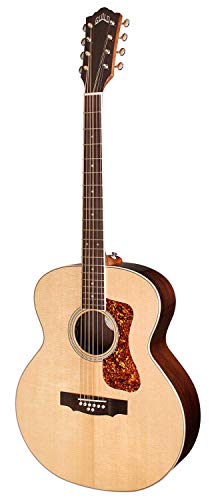
The Guild BT-258E Deluxe publishes a jumbo body shape, which is a large, deep body that can feel bulky for smaller players or those who prefer a compact instrument. The listing does not publish the neck and fingerboard materials, scale length, or nut width, so precise string spacing and reach are unknown. A jumbo body typically provides a wide lower bout, which affects how the guitar sits against the player's torso. Without neck dimensions, both guitars share a similar missing spec problem, but the Guild at least identifies its body size. The Seagull M6 may be a smaller body, but that is not stated in the listing.
Tone and Projection
The Seagull M6 has no published tonewoods or body shape, so its tonal character cannot be predicted from the listing. The provided tone score is 20 out of 25, which is solid but not outstanding. The listing includes a Ruby Red finish but no information about the top wood, back and sides, or bracing. Seagull guitars often have a balanced voice, but that is not stated here. Without the wood recipe, shoppers cannot know if the M6 leans bright, warm, or mid focused.
The Guild BT-258E Deluxe offers far more tonal information. It pairs a solid spruce top with rosewood back and sides in a jumbo body, a combination that typically favors deep lows and clear highs. The eight string layout adds two octave strings to the standard baritone tuning, which the listing describes as adding a harp like layer to the low register. The pressed back construction contributes to full low end according to the supplied pros. The tone score is 22 out of 25, two points above the Seagull.
Projection is not comparable on paper because the Seagull M6 does not list its body volume or tonewoods. The Guild's jumbo body and solid spruce top suggest strong projection, while the Seagull's projection remains unknown. Players who need a loud, room filling baritone voice have a much clearer path with the Guild.
Hardware and Electronics
The Seagull M6 listing title indicates CH EQ, which suggests an onboard equalizer, but no further details are published about the pickup type, preamp, or controls. The hardware and electronics score is 8 out of 10, which is respectable but not fully explained. Tuners are not specified, so stability cannot be evaluated. The included gig bag is a practical addition for transport and storage. Overall, the Seagull offers an apparently functional plug in system, but the lack of a named pickup is a gap.
The Guild BT-258E Deluxe names the Fishman GT-1 pickup system, a known under saddle system that provides a straightforward amplified tone. The hardware and electronics score is also 8 out of 10, matching the Seagull. Tuner brand and included accessories are not published in the Guild listing. The Fishman name gives some confidence, but the lack of tuner details means tuning stability is uncertain. Both guitars have equal scores in this category, but the Guild has the advantage of a recognized component.
Build Quality and Finish
The Seagull M6 is made in Canada, and the listing includes a distinctive Ruby Red finish. The type of finish, such as polyurethane or nitrocellulose, is not specified. Body and neck materials are not published, so build quality cannot be inspected from the listing. Seagull brand heritage is a positive, but the absence of materials makes it hard to compare directly. The build and materials score is 12 out of 15, which is identical to the Guild.
The Guild BT-258E Deluxe lists a solid spruce top, rosewood back and sides, and a gloss polyurethane finish. The body and neck are bound according to the pros, though the neck and fingerboard woods are not published. The pressed back construction is stated as a design feature that contributes to low end response. The build and materials score is also 12 out of 15, so both guitars are rated the same in this category. Guild provides more construction details, but still leaves neck wood and fingerboard unstated.
Setup Out of the Box
Neither listing provides information about factory setup, action height, or string gauge. The Seagull M6 has no setup details published, so a buyer cannot know if it arrives with low action or needs adjustment. Gig bag inclusion suggests some care in packaging, but setup quality is unknown. Players who cannot adjust a truss rod or saddle may need to budget for a professional setup, though the listing does not address this.
The Guild BT-258E Deluxe also omits setup details, including scale length, nut width, and action measurements. Because it is an eight string baritone, the setup is more specialized and may require different string heights and truss rod tension than a standard six string. The listing does not mention included tools or setup instructions. Buyers of either model should assume that a setup check may be required, especially for the Guild if they are new to baritone eight string instruments.
Daily Use and Practice
The Seagull M6 is positioned as a standard acoustic electric with an onboard EQ and a included gig bag, which makes it a practical choice for regular practice and transport. The missing nut width and scale length mean that hand comfort is uncertain, but the guitar does not introduce an unusual tuning or string count. A player who wants to sit down and work through standard songs will likely find the Seagull familiar, assuming the neck feels comfortable. The Ruby Red finish and Canadian build may add a sense of pride in ownership.
The Guild BT-258E Deluxe is a more specialized instrument for daily use. The jumbo body is large and may be cumbersome during long practice sessions, particularly for smaller players. The eight string baritone tuning is not a standard E to E setup, so practice material must be adapted or transposed. The Fishman GT-1 system allows plugging in for quiet practice with headphones through an amplifier, but the listing does not state if a headphone output exists. For daily practice on conventional songs, the Seagull M6 is the safer default, while the Guild rewards players committed to the baritone voice.
Versatility and Styles
The Seagull M6 scores 8 out of 10 for versatility. As a standard six string acoustic electric with a suggested cutaway and onboard EQ, it can cover a wide range of styles from strumming to fingerstyle, provided the playability is acceptable. The Ruby Red finish does not affect sound, but it may appeal visually. The unknown tonewoods are the main limit to predicting genre fit, but the score suggests the manufacturer sees it as a flexible instrument.
The Guild BT-258E Deluxe scores 6 out of 10 for versatility, a lower number that reflects its niche tuning and eight string layout. It is built for deep baritone textures and shimmering octave layers, which suit ambient, folk, and experimental styles but not standard pop or rock arrangements. The jumbo body and solid spruce top also favor projection over subtlety. A player who only needs baritone and octave sounds will find it versatile within that world, but it is not a general purpose acoustic.
The Deciding Question
The central choice is between a conventional six string acoustic electric with missing specifications and a specialized eight string baritone jumbo with documented tonewoods and electronics. The Seagull M6 asks the buyer to trust the brand and accept that body shape, woods, and neck dimensions are not published. The Guild BT-258E Deluxe asks the buyer to accept a niche tuning and large body, while still omitting neck dimensions and tuner details. Both are mid range instruments with the same build score and similar electronics score.
If you need a guitar for standard tuning and everyday songs, the Seagull M6 is the more logical pick, despite its information gaps. If you specifically want a baritone eight string with a solid spruce top and rosewood back and sides, the Guild BT-258E Deluxe is the only choice between these two. The deciding factor is not the overall score, which is close, but the intended musical use. A buyer who prioritizes known tonewoods will lean Guild, while a buyer who prioritizes a conventional format will lean Seagull.
Who Should Buy Which
Buy the Seagull M6 if you want a Canadian made acoustic electric with a gig bag at a mid range price and you plan to play standard six string music. You should be comfortable with missing specification details, including body shape, tonewoods, scale length, and nut width. The onboard EQ suggested by the listing offers a simple route to amplification, and the Ruby Red finish gives the guitar a distinctive look. This is a reasonable choice for a working player who can try the guitar in person or accept the unknowns.
Buy the Guild BT-258E Deluxe if you are drawn to a deep baritone voice with octave shimmer and you want a jumbo body with a solid spruce top and rosewood back and sides. The Fishman GT-1 pickup system is a known component, and the gloss polyurethane finish suggests a durable, polished instrument. You should be prepared for the large body, the eight string baritone tuning, and the lack of published neck dimensions and included accessories. This guitar suits sonic explorers more than traditionalists.
Seagull M6
Pros
- Made in Canada
- Listing title suggests onboard EQ
- Gig bag included
- Distinctive Ruby Red finish
- Mid-range price tier
- Seagull brand heritage
Cons
- No published tonewoods or body shape
- No published scale length or nut width
- Pickup and preamp details not listed
- No tuner or hardware specifications
- Limited setup information
Guild BT-258E Deluxe
Pros
- Solid spruce top with rosewood back and sides
- Large jumbo body projects deep baritone lows
- Eight strings add octave sparkle to standard baritone tuning
- Fishman GT-1 pickup system included
- Gloss polyurethane finish and bound body and neck
- Pressed back construction contributes to full low end
Cons
- Neck and fingerboard materials are not published
- Scale length and nut width are not stated in the listing
- Tuner brand and included accessories are not listed
- Baritone eight string tuning is a niche setup
- Large jumbo body may be cumbersome for smaller players
Who Should Buy Each
Seagull M6
- Mid-range acoustic players who want electronics
- Fans of Seagull and Canadian builds
- Players who want a gig bag included
- Those who like a limited edition Ruby Red finish
Guild BT-258E Deluxe
- Singer songwriters who want low end support under vocals
- Ensemble players who need a baritone voice that sits below standard guitars
- Baritone fans who want the extra sparkle of octave strings
- Players who want solid spruce and rosewood tone in a jumbo platform
Quick Decision Guide
| If you want a standard six string acoustic electric for everyday songs and standard tuning | Choose Seagull M6 |
| If you want a deep baritone voice with octave shimmer from eight strings | Choose Guild BT-258E Deluxe |
| If you want a known solid spruce top and rosewood back and sides | Choose Guild BT-258E Deluxe |
| If you value Canadian build and an included gig bag at a mid range price | Choose Seagull M6 |
| If you prefer a named pickup system over an unspecified onboard EQ | Choose Guild BT-258E Deluxe |
FAQ
About This Comparison
Mandrillis Team
The Mandrillis editorial team researches and compares audio and music gear using manufacturer documentation, verified specs and real buyer feedback, so you can make a confident purchase without wading through marketing claims.
Read our full research methodology.
We may earn a commission at no extra cost to you.