Sennheiser AMBEO vs Klipsch FLEXUS-200-SOUNDBAR 3.1.2
Quick Verdict
The Sennheiser AMBEO is the better choice for a clean one piece soundbar with confirmed Dolby Atmos, DTS:X, and streaming features. Its 5.1.4 layout and 30Hz bass claim make it attractive for smaller rooms or minimal setups. The Klipsch FLEXUS-200-SOUNDBAR 3.1.2 is for buyers who want maximum physical bass and discrete surrounds, with dual 10 inch wireless subwoofers and a horn loaded center. However, the Klipsch listing does not confirm Atmos or DTS support, and both models hide HDMI eARC details. Choose Sennheiser for confirmed formats and built-in streaming. Choose Klipsch for a room shaking bundle if you can verify its connectivity and codecs.
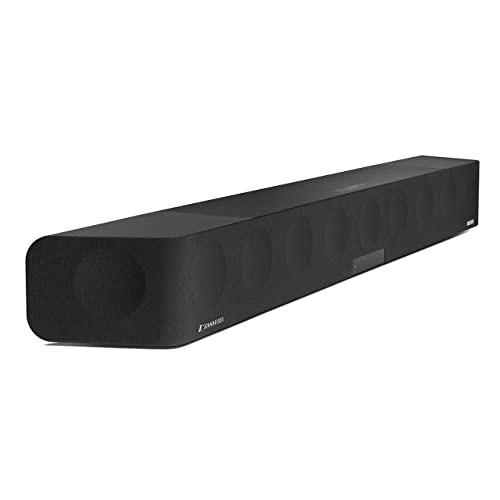

| Spec | Sennheiser AMBEO | Klipsch FLEXUS-200-SOUNDBAR 3.1.2 |
|---|---|---|
| Channels | 5.1.4 | 3.1.2 soundbar; bundle adds two surround speakers and two subwoofers, total channel count not explicitly published |
| Drivers | Five dedicated tweeters described; total driver count and bass driver size not published in listing | Dual upfiring drivers, horn loaded center channel, built-in dual subwoofers in soundbar; 3 inch full range drivers in Flexus Surround speakers; 10 inch drivers in each subwoofer |
| Power | Not published in listing | 80 watts RMS per 10 inch subwoofer (listing); total system power and soundbar amplification not published |
| Subwoofer | No included external subwoofer; internal bass with 30Hz claim; mono subwoofer pre-out for optional wired Sennheiser Ambeo Subwoofer | Two Klipsch FLEXUS-10-SUB wireless subwoofers with 10 inch drivers and quick wireless connect |
| Dolby Atmos and DTS | Dolby Atmos, DTS:X, MPEG-H | Not published in listing; 3.1.2 layout and upfiring drivers suggest Atmos height support but codec support is unconfirmed |
| HDMI eARC and inputs | Not published in listing | Not published in listing |
| Wireless and streaming | Wi-Fi, Bluetooth, Chromecast built-in, AirPlay 2, Spotify Connect, Tidal Connect | Quick wireless connect for subwoofers; other wireless or streaming protocols not published |
| Dimensions | Not published in listing | Not published in listing |
| Remote and app | Remote control included; companion app not specified in listing | Not published in listing |
| Included accessories | Calibration microphone, remote control, owner's manual | Bundle includes soundbar, two wireless subwoofers, two surround speakers; cables, remote and other accessories not stated |
Sound Quality
The Sennheiser AMBEO earns a 29 out of 30 for sound quality based on the product listing. Its 5.1.4 channel layout suggests a broad soundstage with dedicated height and surround effects from one enclosure. The listing describes five dedicated tweeters for studio grade treble and precise midrange, although total driver count and bass driver size are not published. A 30Hz low frequency claim points to serious bass from an internal design.
The Klipsch FLEXUS-200-SOUNDBAR 3.1.2 scores 25 out of 30 for sound quality. It uses a 3.1.2 soundbar layout with dual upfiring drivers and a horn loaded center channel for clear dialogue. The soundbar also has built-in dual subwoofers, which is an unusual and potentially impactful design choice. The listing does not state total system power or soundbar amplification, only that each separate subwoofer is rated at 80 watts RMS.
On paper the Sennheiser has the higher sound quality score and a more explicit multi channel claim. The Klipsch packs more physical bass drivers into the system, but its overall score is lower. Buyers who value refined treble and a calibrated room response may lean toward Sennheiser, while those who want horn based dynamics may prefer Klipsch. However, both models leave some driver and power specifications unpublished.
Surround, Atmos and Audio Formats
The Sennheiser AMBEO explicitly supports Dolby Atmos, DTS:X, and MPEG-H according to the listing. It also includes an integrated upmix for stereo and 5.1 content, which helps create a pseudo surround field from older audio. These format details are a major advantage for home theater buyers who want modern object based audio.
The Klipsch FLEXUS-200 does not list Dolby Atmos or DTS support in the product data. Its 3.1.2 layout and upfiring drivers strongly suggest Atmos height capability, but codec support is unconfirmed in the listing. The bundle adds two separate surround speakers, which in hardware terms can create real rear channel separation. Without format confirmation, though, you cannot be sure how well those speakers will receive immersive codecs.
The comparison comes down to confirmed codecs versus confirmed hardware. Sennheiser tells you exactly which formats it decodes, but relies on virtual and upfiring drivers from one bar. Klipsch gives you discrete surrounds and upfiring drivers, but the listing does not say whether it decodes Dolby Atmos or DTS:X. That unknown is significant for a 3.1.2 system with height drivers.
Subwoofer and Bass
The Sennheiser AMBEO has no included external subwoofer. Instead it relies on internal bass with a 30Hz claim, which is impressive for a single soundbar. The listing also notes a mono subwoofer pre-out for an optional wired Sennheiser Ambeo Subwoofer. That subwoofer connection is wired only, not wireless, so placement flexibility is limited.
The Klipsch FLEXUS-200 bundle includes two Klipsch FLEXUS-10-SUB wireless subwoofers. Each subwoofer has a 10 inch driver and is rated at 80 watts RMS. The listing says the subwoofers use quick wireless connect, which makes placement easier around a room. Two 10 inch subwoofers can deliver deep, room filling bass for movies and music.
If you want true sub bass and physical impact, the Klipsch system has a clear hardware advantage with dual 10 inch wireless subs. The Sennheiser claims 30Hz from its internal design, but that cannot match the output of two dedicated 10 inch drivers. The tradeoff is that Klipsch requires space for two subwoofers, while Sennheiser remains a one piece solution. Buyers who prefer a clean setup without subwoofer boxes may still prefer the Sennheiser.
Connectivity and TV Setup
The Sennheiser AMBEO listing does not publish HDMI eARC or input details. That is a serious gap for TV setup, because eARC is often needed for lossless Dolby Atmos from a TV. The listing does confirm strong wireless connectivity: Wi-Fi, Bluetooth, Chromecast built-in, AirPlay 2, Spotify Connect, and Tidal Connect. Those streaming options make the bar useful even without a TV.
The Klipsch FLEXUS-200 also does not publish HDMI eARC or input specs. It only lists quick wireless connect for the subwoofers, with no other wireless or streaming protocols published. This means you cannot confirm how to connect the soundbar to a TV for Atmos or high resolution audio. Buyers must check the manufacturer page or retailer listing for missing HDMI details.
Both models share the same unknown HDMI eARC and input situation, which is frustrating for comparison. The Sennheiser at least offers a full suite of wireless streaming options for music and casting. The Klipsch relies on its wireless subwoofer connection but gives no published Bluetooth, Wi-Fi, or app streaming details. If TV connectivity is your top priority, neither listing provides enough information to make a confident choice.
Features, Apps and Voice Control
The Sennheiser AMBEO includes a remote control and a calibration microphone in the box. The listing says the room calibration is tuned with Fraunhofer technology, which is a notable feature for matching the bar to a room. However, the companion app is not specified in the listing, and voice assistant support is also not mentioned. So you get hardware based calibration but no confirmed app ecosystem.
The Klipsch FLEXUS-200 listing does not publish remote, app, or voice control details. There is no mention of a calibration microphone or room correction feature. This is a significant blind spot for buyers who expect modern app setup and control. Without published app or voice support, you may be limited to whatever remote comes in the box, but even that is not stated.
The Sennheiser has a clearer feature story with its remote, calibration mic, and Fraunhofer tuned room correction. Its app and voice assistant remain unknown, so the feature set is not complete. The Klipsch is even less documented, with zero information on remote, app, voice control, or calibration. Buyers who rely on app based control should approach the Klipsch with caution.
Design and Fit Under a TV
The Sennheiser AMBEO listing does not publish physical dimensions. Without length, height, or depth you cannot confirm if it will fit under a particular TV or on a media stand. The product is described as a single premium soundbar, so it is likely a wide bar that may block an IR sensor on some TVs. The lack of dimensions is a real drawback for pre purchase planning.
The Klipsch FLEXUS-200 listing also does not publish soundbar dimensions. However, the bundle includes two large 10 inch subwoofers and two separate surround speakers, so the total footprint is considerable. Those subwoofers each need floor space somewhere in the room, and the surrounds need stands or wall mounts. The listing does not state dimensions for any component.
Both bars fail to publish dimensions, which makes direct comparison on TV fit impossible. The Klipsch system is inherently more intrusive because it has two subwoofers and surround speakers, even if the bar itself is average sized. The Sennheiser is a single enclosure, so the potential fit issue is limited to the bar itself. If you want a simple, less cluttered installation, the Sennheiser has fewer components, but you still should confirm its size before buying.
Who Should Buy It
The Sennheiser AMBEO is best for buyers who want a single premium soundbar with confirmed Dolby Atmos, DTS:X, claimed deep 30Hz bass, and broad wireless streaming. It suits people who do not want to place a separate subwoofer or surround speakers around the room. The Fraunhofer room calibration also adds appeal for those with tricky acoustic spaces.
The Klipsch FLEXUS-200-SOUNDBAR 3.1.2 is best for buyers who want a high impact home theater bundle without an AV receiver. Two wireless 10 inch subwoofers and separate surround speakers promise a room filling movie experience. The horn loaded center channel suggests a focus on clear dialogue. It suits larger rooms where subwoofer floor space is not an issue.
Both products target different buyer profiles. The Sennheiser is a more elegant all in one solution for format conscious streamers. The Klipsch is a brute force multi speaker system for bass lovers. However, both listings omit critical HDMI details, so every buyer should confirm connectivity before purchasing either model.
The Deciding Question
Ask yourself whether you want a one piece immersive soundbar with confirmed object based formats, or a multi speaker system with dual subwoofers and discrete surrounds. The Sennheiser offers Dolby Atmos, DTS:X, and MPEG-H support plus streaming, but its bass is internal and its optional subwoofer is wired only. The Klipsch offers two wireless 10 inch subwoofers and separate surround speakers for greater physical impact.
The second question is how much you trust unpublished specifications. Both products fail to list HDMI eARC and input details, which are essential for modern TV audio. The Klipsch also does not confirm Atmos or DTS decoding, while the Sennheiser does. If you cannot verify the Klipsch codec support, the Sennheiser is the safer format choice.
Finally, consider the room and visual footprint. The Sennheiser is a single bar with no extra boxes, though its dimensions are unknown. The Klipsch requires floor space for two subwoofers and placement for surround speakers. If you want a clean minimal installation, choose the Sennheiser. If you have a dedicated media room and want physical bass, the Klipsch is more compelling on paper.
Who Should Buy Which
Buy the Sennheiser AMBEO if you want a single soundbar with confirmed Dolby Atmos, DTS:X, and MPEG-H support. It is the right choice for streaming music and movies over Wi-Fi, Bluetooth, Chromecast, AirPlay 2, Spotify Connect, and Tidal Connect. You should also prefer it if you do not want to place separate subwoofers or surround speakers in your room.
Buy the Klipsch FLEXUS-200-SOUNDBAR 3.1.2 if you want dual 10 inch wireless subwoofers and separate surround speakers for a true home theater feel. Choose it only if you can confirm from the manufacturer that it decodes the audio formats you need and has the HDMI eARC or input you require. It is ideal for larger rooms where floor space for subwoofers is not a problem.
If neither model publishes enough information for your specific TV, you may need to look at other soundbars. The Sennheiser is the safer bet for confirmed formats and streaming. The Klipsch is the bolder bet for bass and discrete surrounds. Always verify the missing HDMI specs before making a final purchase decision.
Sennheiser AMBEO
Pros
- 5.1.4 channel layout with Dolby Atmos, DTS:X, and MPEG-H support
- Deep 30Hz bass claim without an external subwoofer
- Room calibration tuned with Fraunhofer technology
- Integrated upmix for stereo and 5.1 content
- Strong wireless streaming: Wi-Fi, Bluetooth, Chromecast, AirPlay 2, Spotify Connect, Tidal Connect
- Five dedicated tweeters described for studio-grade treble and precise midrange
Cons
- No included external subwoofer
- Optional Sennheiser Ambeo Subwoofer is wired only, not wireless
- HDMI eARC and input details are not published in the listing
- Power output and physical dimensions are not published in the listing
- Companion app and voice assistant support are not specified in the listing
Klipsch FLEXUS-200-SOUNDBAR 3.1.2
Pros
- Large dual 10 inch wireless subwoofers for deep bass
- Upfiring drivers and horn loaded center channel for clear height and dialogue
- Separate surround speakers create a more immersive rear soundstage
- Klipsch and Onkyo brand partnership suggests broad tuning expertise
- Quick wireless subwoofer connection for flexible placement
- Upper mid-range price for a full system with two subs and surrounds
Cons
- HDMI eARC and input specs not published
- Dolby Atmos and DTS support not explicitly listed
- No remote, app or voice control details provided
- Two large subwoofers require considerable floor space
- Physical dimensions of the soundbar are not published
Who Should Buy Each
Sennheiser AMBEO
- Buyers who want a one-piece premium Atmos and DTS:X soundbar
- Listeners who prioritize room calibration and upmixing of legacy content
- Streaming households that use Chromecast, AirPlay 2, Spotify Connect, or Tidal Connect
- Buyers comfortable with upper mid-range pricing and optional wired subwoofer expansion
Klipsch FLEXUS-200-SOUNDBAR 3.1.2
- Home theater fans wanting bass heavy movie sound
- Large room owners who can place two subwoofers and surrounds
- Klipsch and Onkyo brand enthusiasts
- Users with a separate streaming device or TV that handles HDMI switching
Quick Decision Guide
| If you want confirmed Dolby Atmos and DTS:X support from a single soundbar | Choose Sennheiser AMBEO |
| If you want dual wireless subwoofers and separate surround speakers without an AV receiver | Choose Klipsch FLEXUS-200-SOUNDBAR 3.1.2 |
| If you need built-in streaming like Chromecast, AirPlay 2, Spotify Connect, and Tidal Connect | Choose Sennheiser AMBEO |
| If you want a compact setup with no separate subwoofer or surround speakers | Choose Sennheiser AMBEO |
| If you prioritize deep bass from two 10 inch subwoofers over a minimal design | Choose Klipsch FLEXUS-200-SOUNDBAR 3.1.2 |
FAQ
About This Comparison
Mandrillis Team
The Mandrillis editorial team researches and compares audio and music gear using manufacturer documentation, verified specs and real buyer feedback, so you can make a confident purchase without wading through marketing claims.
Read our full research methodology.
We may earn a commission at no extra cost to you.