Sonicake 41-Inch Solid Spruce Acoustic vs Cort Earth70-MH
Quick Verdict
The Sonicake 41-Inch Solid Spruce Acoustic offers a solid spruce top, mahogany back and sides, a listed okoume neck and rosewood fingerboard, and a sunburst finish, with an overall score of 76. It is the better choice for beginners who want a bright, balanced tone and can accept unknown scale length and nut width. The Cort Earth70-MH offers a solid mahogany top, mahogany back and sides, a dreadnought body, and an open pore finish, scoring 71. It suits players seeking a warm, midrange focused all mahogany acoustic. Neither has electronics or a cutaway. If you want a slightly more transparent spec sheet and a classic spruce top, choose the Sonicake. If you prefer a dreadnought with all mahogany warmth, choose the Cort. Both require a possible setup.
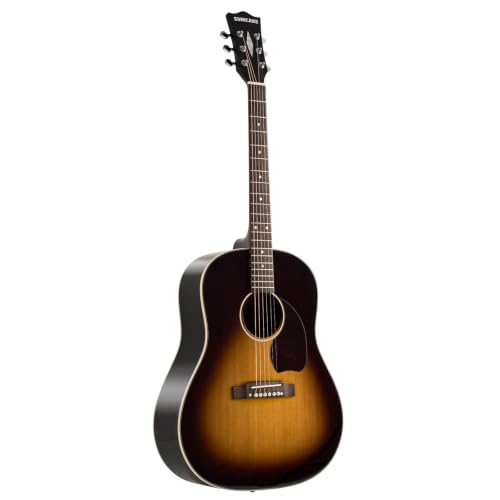

| Spec | Sonicake 41-Inch Solid Spruce Acoustic | Cort Earth70-MH |
|---|---|---|
| Body shape | Not published in listing | Dreadnought |
| Top | Solid spruce | Solid Mahogany |
| Back and sides | Mahogany | Mahogany |
| Neck and fingerboard | African okoume neck, rosewood fingerboard | Not published in listing |
| Scale length | Not published in listing | Not published in listing |
| Nut width | Not published in listing | Not published in listing |
| Electronics | Not published in listing | Not published in listing |
| Tuners | Stable tuning pegs, brand not published | Not published in listing |
| Finish | Sunburst | Open pore finish |
| Included accessories | Not published in listing | Not published in listing |
Body, Neck and Playability
The Sonicake listing does not publish a body shape, but it does state a solid spruce top and mahogany back and sides. The Cort Earth70-MH has a known dreadnought body shape with a solid mahogany top and mahogany back and sides. The Cort's dreadnought shape suggests a larger, fuller body, while the Sonicake body remains undefined. Body shape affects comfort and projection, so the Cort has a slight informational advantage.
The Sonicake lists an African okoume neck and a rosewood fingerboard, described as C shaped. The Cort listing does not publish neck wood or fingerboard material. Without neck specifications, it is impossible to compare the feel of the two guitars. However, the Sonicake does provide at least some neck information, which is more than the Cort provides.
Both guitars omit scale length and nut width in their listings. These dimensions are critical for string spacing and overall playability. The Sonicake playability score is 22 out of 30, while the Cort scores 21 out of 30, a very small difference. Because of the missing dimensions, both instruments should be evaluated in person if possible.
Tone and Projection
The Sonicake combines a solid spruce top with mahogany back and sides. This combination typically yields a clear, balanced tone with warm low end and articulate highs. The solid spruce top is a desirable feature at a budget price and is listed as a pro. The Cort Earth70-MH uses a solid mahogany top with mahogany back and sides, an all mahogany construction that is known for a warm, midrange focused voice.
The Cort's dreadnought body shape is associated with strong projection on paper, and that shape is confirmed in the listing. The Sonicake body shape is not published, so projection cannot be compared directly. Both guitars have strong tone scores, with the Sonicake earning 20 out of 25 and the Cort earning 19 out of 25.
The Cort's open pore finish is listed as a pro that may allow more natural wood resonance. The Sonicake does not mention any finish-related tonal effect beyond the sunburst color. Players who want a brighter, more articulate tone may prefer the Sonicake's spruce top. Players who want a warmer, midrange heavy sound may prefer the Cort's all mahogany design.
Hardware and Electronics
Neither guitar lists electronics or an onboard pickup. Both are purely acoustic instruments and are not designed for direct amplification without an external microphone or aftermarket pickup. The Sonicake lists stable tuning pegs, but the brand and gear ratio are not published. The Cort Earth70-MH does not publish any tuner information at all.
The hardware and electronics score for the Sonicake is 7 out of 10, while the Cort scores 6 out of 10. These scores are modest because of the absence of electronics and the limited hardware details. The Sonicake's mention of stable tuning pegs gives a small informational advantage, but without brand or ratio, durability and precision remain unverified.
For players who need a pickup for live performance or recording, neither guitar is suitable as described. Both are best used for practice, lessons, or acoustic settings where an external microphone can be used. The lack of electronics keeps the design simple but limits versatility.
Build Quality and Finish
The Sonicake has a sunburst finish over a solid spruce top and mahogany back and sides. The listing does not specify whether the back and sides are solid or laminate. The Cort Earth70-MH has an open pore finish, which is listed as a pro for allowing more natural wood resonance. Its back and sides are mahogany but not confirmed as solid wood.
The Sonicake's use of an African okoume neck and rosewood fingerboard is specified, while the Cort does not publish neck or fingerboard materials. This gives the Sonicake an edge in transparency. The Cort's dreadnought shape, vintage type ABS rosette, and scooped bridge add traditional visual appeal. Both guitars are budget priced, so build quality will likely be adequate but not premium.
The Sonicake build and materials score is 11 out of 15, while the Cort scores 10 out of 15. The small difference may reflect the Sonicake's more detailed neck and fingerboard information. Neither guitar includes a case or accessories in the listing, which is common for budget instruments.
Setup Out of the Box
Neither listing publishes setup specifications such as string height, neck relief, or action. This makes it impossible to describe the out of box playability with confidence. The Sonicake listing does not include setup details, and its included accessories are not published. The Cort listing also does not publish setup details, and its cons note that no included accessories such as case, strap, or picks are listed.
The lack of setup information is common in budget acoustic guitars. The Sonicake's listed C shaped neck may contribute to comfortable play, but without nut width and scale length, the exact feel is unknown. The Cort has no neck shape or material published, so even less is known. Players who are sensitive to action and neck profile should try these guitars in person if possible.
Since neither guitar includes a case or accessories in the listing, buyers will need to budget for a gig bag, strap, picks, and possibly a professional setup. The value score for Sonicake is 9 out of 10 and for Cort is 8 out of 10, but that value assumes the guitar is playable after a possible setup.
Daily Use and Practice
For daily practice, both guitars are straightforward acoustic instruments without electronics or cutaways. The Sonicake pros include a straightforward acoustic design for practice, and the Cort pros include a simple acoustic-only design that keeps the guitar lightweight and straightforward. This means neither has knobs, batteries, or cables to manage, making them easy to pick up and play.
The dreadnought body of the Cort may be physically larger, which could be less comfortable for smaller players during extended practice, but the listing does not provide dimensions. The Sonicake body shape is not published, so comfort cannot be assessed. The Sonicake lists an African okoume neck and rosewood fingerboard, which are common in budget acoustics and often feel smooth. The Cort does not list neck wood, so no comfort claim can be made.
The Sonicake's sunburst finish is cosmetic and does not affect daily use. The Cort's open pore finish may feel different under the arm and could show wear from frequent handling, but it also may provide a more natural feel. Both are quiet enough for home practice but may not be heard over other instruments without amplification.
Versatility and Styles
Neither guitar has electronics or a cutaway, which limits versatility for stage and high-fret access. The Sonicake's solid spruce top with mahogany back and sides is a common combination that should work for strumming, flatpicking, and fingerstyle on paper. The Cort's all mahogany construction is often associated with blues, folk, and roots music because of its warm, midrange emphasis. Both have the same versatility score of 7 out of 10.
The Sonicake's sunburst finish and solid spruce top give it a traditional look and sound that suits many genres. The Cort's dreadnought shape provides strong projection for ensemble playing, but without electronics, it may be drowned out in a full band. The Cort's vintage type ABS rosette and scooped bridge add a retro aesthetic that may appeal to traditional players. The Sonicake does not mention any decorative rosette or bridge style beyond the sunburst.
For players who want to plug in or play leads above the 14th fret, neither is ideal. The Sonicake has no pickup and no cutaway. The Cort has no cutaway and no pickup. Both are best for acoustic rhythm and basic fingerpicking in a practice or small acoustic setting. The Sonicake's crisp spruce top may handle brighter styles, while the Cort's mahogany tone may suit warmer, bluesier material.
The Deciding Question
The deciding question for most buyers is whether you want a bright, open solid spruce top guitar or a warmer all mahogany dreadnought. The Sonicake offers a solid spruce top, mahogany back and sides, a listed okoume neck and rosewood fingerboard, and a classic sunburst finish. The Cort Earth70-MH offers a solid mahogany top, mahogany back and sides, a dreadnought body, and an open pore finish that may enhance natural resonance. Both omit electronics and key dimensions.
On paper, the Sonicake has a higher overall score, 76 compared to 71 for the Cort. The Sonicake's edge comes from slightly higher build and materials, hardware, and value scores, and from publishing more neck and fingerboard information. However the Cort's dreadnought shape is a known advantage for projection, and its all mahogany tone is distinct. The Sonicake's body shape is not published, which is a meaningful unknown.
Ultimately, the decision should come down to tone preference and comfort. If you prefer a traditional spruce top with a sunburst look and slightly more published specs, the Sonicake is the safer choice on paper. If you prefer a warm, midrange focused all mahogany sound and a classic dreadnought body, the Cort Earth70-MH is worth considering, especially if you can inspect the neck and setup in person.
Who Should Buy Which
Choose the Sonicake 41-Inch Solid Spruce Acoustic if you are a beginner or student who wants a budget guitar with a solid spruce top, mahogany back and sides, and a classic sunburst finish. It is a good fit for daily practice and for players who prefer a brighter, balanced tone. The listed okoume neck and rosewood fingerboard are a plus, but you must be comfortable with unknown scale length and nut width. This guitar is not for stage use without external amplification.
Choose the Cort Earth70-MH if you specifically want a budget all mahogany dreadnought with a warm, midrange focused voice. Its solid mahogany top, mahogany back and sides, and open pore finish are rare at this price tier. The dreadnought shape should provide strong projection. However, the listing does not publish neck, fingerboard, tuner, scale length, or nut width, so you must be willing to evaluate the guitar in person or accept those unknowns. It is not a cutaway or an electric acoustic.
If you need onboard electronics, a cutaway, precise dimensions, or included accessories, neither guitar is suitable as listed. Buyers who value spec transparency will find the Sonicake slightly more informative, especially with its neck wood and fingerboard material. Ultimately, both are straightforward acoustic guitars designed for practice and simple playing, and the choice depends on tonal taste and body shape preference.
Sonicake 41-Inch Solid Spruce Acoustic
Pros
- Solid spruce top at a budget price tier
- Mahogany back and sides for warm projection on paper
- C shaped okoume neck and rosewood fingerboard listed
- Classic sunburst finish
- Straightforward acoustic design for practice
Cons
- Scale length and nut width not published
- No electronics or pickup listed
- Hardware brand and gear ratio not stated
- Included accessories and setup details unknown
Cort Earth70-MH
Pros
- Solid mahogany top at a budget price tier
- All mahogany body offers a warm, midrange focused voice
- Open pore finish may allow more natural wood resonance
- Dreadnought body shape provides strong projection on paper
- Vintage type ABS rosette and scooped bridge add traditional visual appeal
- Simple acoustic-only design keeps the guitar lightweight and straightforward
Cons
- Neck, fingerboard, tuner, and scale length specifications are not published
- No electronics or cutaway shown in the listing
- Open pore finish may absorb oils and show wear more than gloss
- No included accessories such as case, strap, or picks are listed
- Back and sides are not confirmed as solid wood
Who Should Buy Each
Sonicake 41-Inch Solid Spruce Acoustic
- New learners who want a full size acoustic with a solid top
- Players who prefer the warmth of mahogany back and sides on paper
- Buyers looking for a sunburst acoustic at a budget price tier
- Those who already own basic setup tools or plan a professional setup
Cort Earth70-MH
- Beginner and intermediate players on a budget
- Fingerstyle and folk musicians who prefer mahogany warmth
- Players who want a simple, no frills acoustic dreadnought
- Buyers who value a solid top over cosmetic extras
Quick Decision Guide
| If you are a beginner wanting a solid spruce top with a classic sunburst and can accept unknown dimensions | Choose Sonicake 41-Inch Solid Spruce Acoustic |
| If you prefer a warm, midrange focused all mahogany tone from a known dreadnought body | Choose Cort Earth70-MH |
| If you value more published specifications like neck wood and fingerboard material | Choose Sonicake 41-Inch Solid Spruce Acoustic |
| If you prefer an open pore finish that may allow natural wood resonance | Choose Cort Earth70-MH |
| If you want a slightly higher overall score and better value rating on paper | Choose Sonicake 41-Inch Solid Spruce Acoustic |
FAQ
About This Comparison
Mandrillis Team
The Mandrillis editorial team researches and compares audio and music gear using manufacturer documentation, verified specs and real buyer feedback, so you can make a confident purchase without wading through marketing claims.
Read our full research methodology.
We may earn a commission at no extra cost to you.