Squier Classic Vibe 50s Stratocaster vs Squier Affinity Jazzmaster
Quick Verdict
For players who want a vintage-inspired lower mid-range Stratocaster, the Squier Classic Vibe 50s Stratocaster is the stronger choice. It offers Fender-designed alnico single-coil pickups, a Fiesta Red finish, vintage-tint gloss neck, maple fingerboard, and nickel-plated hardware, earning a score of 78. The Squier Affinity Jazzmaster is nearly as good with a 77. It gives you a thin and lightweight poplar body, slim C-shaped maple neck, sealed die-cast tuners, two Squier single-coil Jazzmaster pickups, and simple 3-way switching in Metallic Black. Choose the Classic Vibe if vintage Strat tone and looks matter most. Choose the Affinity if you prefer a lighter offset body and a slimmer neck. Both listings omit several key specs, so confirm missing details before buying.
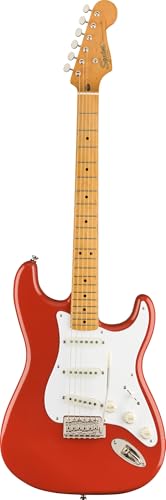

| Spec | Squier Classic Vibe 50s Stratocaster | Squier Affinity Jazzmaster |
|---|---|---|
| Body | Not published in listing | Thin and lightweight poplar |
| Neck and fingerboard | Maple fingerboard with vintage-tint gloss neck finish | Maple neck with slim C-shaped profile, fingerboard material not published in listing |
| Scale length | Not published in listing | Not published in listing |
| Frets | Not published in listing | Not published in listing |
| Pickups | Fender-Designed alnico single-coil pickups | Two Squier single-coil Jazzmaster pickups |
| Controls | Not published in listing | 3-way switching, further control details not published in listing |
| Bridge | Not published in listing | Not published in listing |
| Tuners | Not published in listing | Sealed die-cast tuning machines with split shafts |
| Finish | Fiesta Red body, vintage-tint gloss neck | Metallic Black |
| Included accessories | Not published in listing | Not published in listing |
Body, Neck and Playability
The Squier Classic Vibe 50s Stratocaster does not publish its body material in the listing. The Squier Affinity Jazzmaster lists a thin and lightweight poplar body. This means the Affinity gives you a known body wood, while the Classic Vibe leaves that detail open. For necks, the Classic Vibe has a maple fingerboard with a vintage-tint gloss neck finish. The Affinity has a maple neck with a slim C-shaped profile, but its fingerboard material is not published.
Playability scores are close: the Classic Vibe earns 24 out of 30, and the Affinity earns 23 out of 30. These scores suggest both guitars are quite playable. The Classic Vibe's gloss neck finish may feel smooth but sticky for some players, while the Affinity's slim C shape may suit those with smaller hands. However, the listings do not provide scale length or fret counts for either model, so players cannot compare string tension or fret spacing from these pages.
Because the Classic Vibe body material is unknown, you cannot assess its weight or resonance from the listing. The Affinity's thin poplar body is specifically described as lightweight, which may appeal to players who stand for long practice sessions. Both listings omit neck joint type and fret size. Overall, the Affinity publishes more about the body, while the Classic Vibe publishes more about the fingerboard and neck finish.
Pickups and Tone
The Squier Classic Vibe 50s Stratocaster uses Fender-designed alnico single-coil pickups. These pickups are intended to produce classic Stratocaster tone, typically bright and clear. The listing does not publish control details such as number of tone knobs or switch positions. The tone score for this guitar is 20 out of 25. Single coils usually produce hum under high gain, and the Classic Vibe listing notes this as a likely issue.
The Squier Affinity Jazzmaster has two Squier single-coil Jazzmaster pickups. Jazzmaster pickups are known for a wider, brighter voice, but the listing gives no further output or construction details. Its tone score is 19 out of 25, just one point behind the Classic Vibe. Both guitars use single-coil pickups, so neither offers hum-canceling pickups. This is relevant for players who use high-gain distortion or play near electronic interference.
Neither listing provides control layouts beyond the Affinity's mention of a 3-way switch. The Classic Vibe does not list any switch or knob details in the specs section. Without full control descriptions, it is difficult to compare tonal flexibility. On paper, both instruments are better suited to clean and edge-of-breakup sounds than to modern metal. The pickup type is the main published tonal difference.
Hardware and Electronics
The Squier Classic Vibe 50s Stratocaster has a hardware and electronics score of 8 out of 10. The listing's specs omit bridge type, tuners, and control layout. However, the pros list mentions nickel-plated hardware, which suggests at least some metal components have that finish. No tuner type is given, so tuning stability cannot be assessed from the page.
The Squier Affinity Jazzmaster scores 7 out of 10 for hardware and electronics. It lists sealed die-cast tuning machines with split shafts, which are a practical feature for string changes and tuning stability. The bridge type is not published, and the control layout beyond the 3-way switch is not detailed. This leaves the vibrato or hardtail question unanswered.
Neither listing confirms whether a vibrato bridge is included. A Stratocaster often has a vibrato, but the Classic Vibe page does not state this. A Jazzmaster also often has a vibrato, but the Affinity page does not state this. Do not assume bridge type. Both guitars list no included accessories, so no strap, cable, or tools are mentioned. These gaps make direct hardware comparison incomplete.
Build Quality and Finish
Build and materials scores are 11 out of 15 for the Squier Classic Vibe 50s Stratocaster and 12 out of 15 for the Squier Affinity Jazzmaster. This is a one point difference, essentially a tie. The Classic Vibe features a Fiesta Red body and vintage-tint gloss neck finish. The Affinity features a Metallic Black finish, a thin poplar body, and a maple neck.
The Classic Vibe gets nickel-plated hardware and period-inspired styling, which add to its visual appeal. The Affinity's sealed die-cast tuners and slim C neck shape suggest functional attention to the player experience. Neither listing gives details on finish thickness, neck joint type, or fret material. Those details are not available for comparison.
Both are lower mid-range instruments built to a price point. The Affinity has a slight edge in the published build score, but that may come from listing the poplar body material, which the Classic Vibe lacks. If published body wood matters to you, the Affinity has a clear advantage. If you value a named finish and nickel-plated hardware, the Classic Vibe presents a stronger stylistic package.
Setup Out of the Box
Neither listing describes a factory setup. There is no mention of action height, intonation, or pickup height specifications. Because we do not have in-person testing data, we cannot say how either guitar arrives from the box. The listings also do not mention any included setup tools or documentation.
The Squier Affinity Jazzmaster lists sealed die-cast tuning machines, which may help the guitar stay in tune early on, but this does not guarantee a good setup. The Classic Vibe lists nickel-plated hardware, which is a finish detail rather than a setup quality indicator. Both guitars may need adjustment after purchase.
Players should expect to check neck relief, string height, and intonation themselves or have a technician do it. No product page states whether the guitar is inspected before shipping. If you want a ready to play instrument out of the box, you must verify that with the seller. The published scores do not include any setup evaluation.
Daily Use and Practice
For daily practice, the Squier Affinity Jazzmaster has a thin and lightweight poplar body. This may reduce fatigue during long playing sessions. The Classic Vibe body weight is unknown, so no comfort comparison can be made on weight alone. The Classic Vibe's vintage-tint gloss neck may feel different from the Affinity's slim C shape, but no in-person data exists.
Both listings are silent on included accessories. Neither mentions a strap, cable, gig bag, or picks. Players will need to budget for those items separately. The Classic Vibe listing does state right-hand orientation only, while the Affinity listing does not mention orientation. This may be a factor for left-handed players.
The sealed die-cast tuners on the Affinity are a practical daily feature, especially for quick string changes. The Classic Vibe tuner type is not published. Both guitars use single-coil pickups, which can pick up electrical hum from lights or computers. This is a daily use consideration for home practice and recording.
Versatility and Styles
Both guitars score 8 out of 10 for versatility. The Classic Vibe's Fender-designed alnico single coils are associated with classic Strat tones, suitable for clean rhythm, blues, and edge-of-breakup rock. The Affinity's two Squier single-coil Jazzmaster pickups are also single coil, generally bright and clear, but the listing gives no output specs.
The Classic Vibe's Fiesta Red finish and 1950s styling suggest period rock, country, and pop. The Affinity's Metallic Black finish and offset body shape may draw players in alternative, indie, and surf styles. These are reasonable associations based on appearance and pickup type, but the listings do not specify genre limitations.
Neither guitar has hum-canceling pickups, so high-gain metal is not a listed strength. The Affinity's 3-way switching allows simple voice changes, but the Classic Vibe's switch details are not published. Both offer moderate versatility for single-coil fans. The main published difference is pickup type and body shape.
The Deciding Question
The deciding question is whether you prioritize a known body wood and slim neck or a vintage-inspired Stratocaster package. The Squier Affinity Jazzmaster publishes a thin lightweight poplar body and a slim C-shaped maple neck. The Squier Classic Vibe 50s Stratocaster publishes a Fiesta Red finish, vintage-tint gloss neck, maple fingerboard, and Fender-designed alnico single-coil pickups.
Overall scores are 78 for the Classic Vibe and 77 for the Affinity. This one point spread is not a meaningful tiebreaker. Both have significant gaps in published specs. You must decide based on the features that are actually listed and verify missing details elsewhere if they matter to you.
If you want a guitar that lists a light body and a slim neck, the Affinity has those published features. If you want classic Stratocaster looks and pickups, the Classic Vibe signals that clearly. Neither guitar is objectively better. The right choice depends on which set of known characteristics aligns with your playing needs.
Who Should Buy Which
Choose the Squier Classic Vibe 50s Stratocaster if you are a right-handed player who wants a vintage-inspired lower mid-range guitar with Fender-designed alnico single-coil pickups, a Fiesta Red body, vintage-tint gloss neck, maple fingerboard, and nickel-plated hardware. Its tone score of 20 and playability score of 24 make it a strong value on paper.
Choose the Squier Affinity Jazzmaster if you want a thin and lightweight poplar body, slim C-shaped maple neck, sealed die-cast tuners, and two Squier single-coil Jazzmaster pickups with simple 3-way switching. Its build score of 12 beats the Classic Vibe's 11 by one point, and its Metallic Black finish offers a different look.
Avoid either model if you require a complete spec sheet, a left-handed option, hum-canceling pickups, or included accessories. Both listings leave key details unpublished. If you can verify the missing specs with the seller or manufacturer, both guitars offer reasonable lower mid-range value.
Squier Classic Vibe 50s Stratocaster
Pros
- Classic 1950s Stratocaster styling
- Fender-designed alnico single-coil pickups
- Vintage-tint gloss neck finish
- Nickel-plated hardware
- Eye-catching Fiesta Red finish
- Lower mid-range price tier
Cons
- Listing omits key specs like body wood, scale length, and frets
- No included accessories listed
- Single-coil hum likely under high gain
- Right-hand orientation only
- Electronics layout not specified
Squier Affinity Jazzmaster
Pros
- Thin and lightweight poplar body
- Slim C-shaped maple neck
- Sealed die-cast tuning machines with split shafts
- Two Squier single-coil Jazzmaster pickups
- 3-way switching for simple voice changes
- Lower mid-range price tier
Cons
- Scale length not published in listing
- Fingerboard material not published
- Bridge type and vibrato status not specified
- Control layout beyond 3-way switch not detailed
- Included accessories not listed
Who Should Buy Each
Squier Classic Vibe 50s Stratocaster
- Right-handed guitarists seeking a 1950s-style Stratocaster
- Beginners and intermediates wanting a lower mid-range Fender-designed instrument
- Players who like Fiesta Red and vintage-tint gloss neck aesthetics
- Musicians who prefer alnico single-coil sparkle and clarity
Squier Affinity Jazzmaster
- Beginners wanting a recognizable Fender offset
- Intermediate players seeking a budget mod platform
- Indie and alternative players who favor clean single-coil tones
- Players who prefer lightweight solid bodies
Quick Decision Guide
| If you want a vintage Stratocaster look with Fender-designed alnico single coils and a Fiesta Red finish | Choose Squier Classic Vibe 50s Stratocaster |
| If you want a lightweight offset body with a slim C-shaped neck | Choose Squier Affinity Jazzmaster |
| If you need the body wood to be published in the listing | Choose Squier Affinity Jazzmaster |
| If you want a known fingerboard material listed as maple | Choose Squier Classic Vibe 50s Stratocaster |
| If you want sealed die-cast tuning machines with split shafts | Choose Squier Affinity Jazzmaster |
FAQ
About This Comparison
Mandrillis Team
The Mandrillis editorial team researches and compares audio and music gear using manufacturer documentation, verified specs and real buyer feedback, so you can make a confident purchase without wading through marketing claims.
Read our full research methodology.
We may earn a commission at no extra cost to you.