Squier Classic Vibe 60s Jazz Bass vs Squier Affinity Active Jazz Bass
Quick Verdict
Choose the Classic Vibe if you want a vintage-inspired passive Jazz Bass with a period-correct finish and Fender-designed alnico pickups. Choose the Affinity Active if you want an onboard EQ, a slim C neck, and a thin lightweight body at a lower price. The Classic Vibe scores slightly higher overall, but the Affinity offers more modern tone shaping. Buyers who prioritize traditional looks and passive tone should pick the Classic Vibe. Buyers who want active flexibility and easier weight should pick the Affinity.

| Spec | Squier Classic Vibe 60s Jazz Bass | Squier Affinity Active Jazz Bass |
|---|---|---|
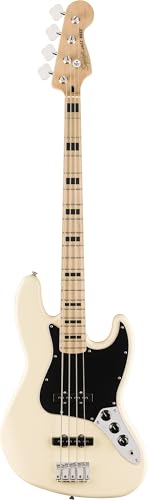
| Body | Not published in listing | Thin and lightweight body; body wood not published in listing |
| Neck and fingerboard | Laurel fingerboard, vintage-tinted gloss neck finish (neck wood not published) | Slim C-shaped neck with block inlays; maple fingerboard; neck wood not published in listing |
| Scale length | Not published in listing | Not published in listing |
| Strings | Not published in listing | Not published in listing |
| Pickups | Fender-Designed alnico pickups | Squier Noiseless pickups; pickup count and type not published in listing |
| Controls | Not published in listing | Active 9-volt preamp with volume, blend, and bass/treble boost/cut controls |
| Bridge | Not published in listing | 4-saddle bass bridge |
| Tuners | Not published in listing | Not published in listing |
| Finish | Daphne Blue | Olympic White |
| Included accessories | Not published in listing | Not published in listing |
Body, Neck and Playability
The Classic Vibe listing does not state the body wood or body shape. It does confirm a laurel fingerboard and a vintage-tinted gloss neck finish. The neck wood itself is not published. Gloss neck finishes can feel sticky to some players, which is noted as a possible drawback.
The Affinity listing states a thin and lightweight body, but the body wood is not published. It has a slim C-shaped neck with block inlays and a maple fingerboard. The neck wood is not published either. The slim C shape and thinner body suggest a potentially more comfortable fit for players who prefer lighter instruments.
Playability scores are close. The Classic Vibe earns 23 out of 30, while the Affinity earns 21 out of 30. Neither listing provides scale length or string details. The Affinity gives more published detail about neck shape and body weight, while the Classic Vibe relies on its vintage-tinted gloss neck as a main feature.
Pickups and Tone
The Classic Vibe uses Fender-Designed alnico pickups. The listing describes a classic passive voice for this model. Alnico pickups are often associated with warm, traditional Jazz Bass tones, but the listing does not provide specific output or tonal measurements. The tone score is 20 out of 25.
The Affinity uses Squier Noiseless pickups, though the pickup count and specific type are not published. It includes an active 9-volt preamp with volume, blend, and bass/treble boost/cut controls. This onboard EQ provides more immediate tone shaping than a passive setup. The tone score is 18 out of 25.
The core difference is passive versus active. The Classic Vibe offers a simpler, battery-free signal path with alnico pickups. The Affinity offers Noiseless pickups and an active preamp that requires a 9-volt battery. Buyers who want traditional passive tone may prefer the Classic Vibe, while those who like onboard EQ may prefer the Affinity.
Hardware and Electronics
The Classic Vibe listing does not state the control layout, bridge type, or tuner details. The pros list mentions nickel-plated hardware, which suggests a vintage-style hardware package. However, without specific bridge and tuner specs, direct hardware assessment is limited. The hardware and electronics score is 7 out of 10.
The Affinity listing specifies a 4-saddle bass bridge and an active preamp with volume, blend, and bass/treble controls. Tuner details are not published. The active preamp adds a battery compartment requirement, which is a maintenance consideration. The hardware and electronics score is also 7 out of 10.
Both models score equally on hardware and electronics in their provided breakdowns. The Affinity publishes more electronic information, while the Classic Vibe offers only a mention of nickel-plated hardware. Buyers who want a confirmed active preamp and bridge spec will find more clarity with the Affinity, but the Classic Vibe still carries a similar score.
Build Quality and Finish
The Classic Vibe comes in a Daphne Blue finish with a vintage-tinted gloss neck. The listing describes nickel-plated hardware as part of its pros. Body wood and scale length are not published, which makes a full build quality assessment difficult. The build and materials score is 12 out of 15.
The Affinity comes in Olympic White with a thin and lightweight body. The body wood is not published, and no hardware finish is listed. The Affinity build and materials score is 9 out of 15, which is lower than the Classic Vibe. The published thin body is a notable positive, but missing wood details limit the overall picture.
The Classic Vibe appears to edge out the Affinity on build and materials based on the provided scores. The Daphne Blue finish and nickel-plated hardware create a cohesive vintage aesthetic. The Affinity offers a clean Olympic White finish and lightweight construction, but the listing provides fewer material details that would strengthen its build credibility.
Setup Out of the Box
Neither listing describes the setup out of the box for the Classic Vibe. There is no mention of factory string height, neck relief, or intonation. Buyers should not assume a particular setup is included.
The Affinity listing also does not describe setup out of the box. Its cons list explicitly says setup out of the box is not described. This is common for budget instruments, but it means both models may need a professional setup after purchase.
Because both listings omit setup information, no direct comparison is possible. Buyers who want a ready-to-play instrument may need to plan for a setup regardless of which model they choose. The lack of detail is not a differentiator between the two.
Daily Use and Practice
The Classic Vibe has a gloss neck finish that some players may find sticky, especially during longer practice sessions. The listing does not state the overall weight, so daily comfort is uncertain. The Daphne Blue finish is visually striking, which may inspire regular practice.
The Affinity is described as thin and lightweight, which can be more comfortable for standing or long sessions. The slim C-shaped neck is designed for easier fretting. However, the active preamp means you need to keep a 9-volt battery on hand, and a dead battery will silence the output until replaced.
For daily practice, the Affinity has a published weight advantage and a slim neck, but it has a battery dependency. The Classic Vibe may feel heavier or stickier to some players, but it has no battery requirement. The choice depends on whether you prefer passive reliability or lighter weight with active electronics.
Versatility and Styles
Both models receive a versatility score of 8 out of 10 in their breakdowns. The Classic Vibe uses Fender-designed alnico pickups and a passive circuit, which often suits classic rock, funk, soul, and blues. The vintage aesthetic also fits period-correct styles.
The Affinity adds an active preamp with bass and treble boost/cut, which allows for more dramatic tone shaping. This can be useful for modern rock, slap, or any style needing cut or boost on the fly. The Noiseless pickups may also reduce unwanted hum, though the listing does not detail the technology.
Despite the equal versatility scores, the two models serve different needs. The Classic Vibe is for players who want a straightforward vintage Jazz Bass sound. The Affinity is for players who want active EQ control within a Jazz Bass platform. Both can work across many styles, but the toolset differs.
The Deciding Question
The core question is whether you prefer a vintage-inspired passive bass or a modern active bass with a lighter body. The Classic Vibe offers Fender-designed alnico pickups, a Daphne Blue finish, and a classic passive voice. The Affinity offers a thin lightweight body, slim C neck, Noiseless pickups, and an active preamp with EQ.
The Classic Vibe has a higher overall score of 78 versus 72 for the Affinity. That difference comes mainly from build and materials and tone scores. However, the Affinity has a published lightweight body and active features that some players value more than a higher total score.
If you want the most traditional Jazz Bass experience with no battery, the Classic Vibe is the answer. If you want onboard tone shaping and a confirmed slim neck, the Affinity makes more sense. Both have missing specs, so trust in the brand and the listed features becomes the deciding factor.
Who Should Buy Which
Buy the Classic Vibe if you want a vintage-inspired Jazz Bass with a period-correct Daphne Blue finish, laurel fingerboard, and Fender-designed alnico pickups. It suits players who prefer a passive signal path and traditional looks. Avoid it if you need a left-handed option or full published specs.
Buy the Affinity Active if you want an affordable active Jazz Bass with a slim C neck, maple fingerboard, thin lightweight body, and onboard EQ. It suits players who use active electronics and want a lighter instrument. Avoid it if you dislike battery changes or need complete specs.
Both are positioned for beginner and intermediate players, but they lead different directions. The Classic Vibe leans into heritage and simplicity. The Affinity leans into modern convenience and active flexibility. Your choice should match your style priorities and tolerance for missing specification details.
Squier Classic Vibe 60s Jazz Bass
Pros
- Fender-designed alnico pickups
- Iconic Daphne Blue finish
- Vintage-tinted gloss neck finish
- Nickel-plated hardware
- Mid-range price tier
- Beginner-friendly positioning
Cons
- Several key specifications not listed
- No left-handed option mentioned
- Gloss neck finish may feel sticky to some players
- No included accessories noted
- Control layout not confirmed
Squier Affinity Active Jazz Bass
Pros
- Lightweight thin body described in the listing
- Slim C-shaped neck with maple fingerboard
- Active preamp with bass and treble controls
- Squier Noiseless pickups
- Classic Olympic White finish
- Lower mid-range price tier
Cons
- Several key specs are not published in the listing
- Tuner quality and ratio are unknown
- No included accessories listed
- Active preamp requires 9-volt battery
- Setup out of the box is not described
Who Should Buy Each
Squier Classic Vibe 60s Jazz Bass
- Beginner bassists who want a recognizable platform
- Intermediate players seeking a vintage-style instrument
- Fans of Daphne Blue and 1960s Fender aesthetics
- Budget-conscious buyers who want Fender-designed pickups
Squier Affinity Active Jazz Bass
- Beginning bassists who want active electronics at a lower mid-range price
- Players who prefer a slim C neck and maple fingerboard
- Home recording musicians who want noiseless pickups
- Budget-minded buyers who like the Jazz Bass control layout
Quick Decision Guide
| If you want a passive vintage-inspired Jazz Bass with a classic finish | Choose Squier Classic Vibe 60s Jazz Bass |
| If you want an active preamp with bass and treble boost/cut controls | Choose Squier Affinity Active Jazz Bass |
| If you want a thin lightweight body and slim C-shaped neck | Choose Squier Affinity Active Jazz Bass |
| If you want Fender-designed alnico pickups and a Daphne Blue finish | Choose Squier Classic Vibe 60s Jazz Bass |
| If you want to avoid battery dependency and prefer no onboard preamp | Choose Squier Classic Vibe 60s Jazz Bass |
FAQ
About This Comparison
Mandrillis Team
The Mandrillis editorial team researches and compares audio and music gear using manufacturer documentation, verified specs and real buyer feedback, so you can make a confident purchase without wading through marketing claims.
Read our full research methodology.
We may earn a commission at no extra cost to you.