Squier Mini Jazzmaster vs Squier Stratocaster Pack
Quick Verdict
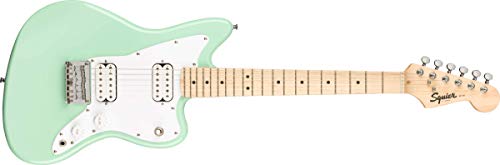
The Squier Mini Jazzmaster scores slightly higher than the Squier Stratocaster Pack, 68 to 65. Choose the Mini Jazzmaster if you want known dual humbucking pickups, a hardtail bridge, sealed tuners, and a simple, lightweight guitar for practice. Its Surf Green finish and maple fingerboard are clear. Choose the Stratocaster Pack if you prefer the classic Daphne Blue Strat look, a slim C neck, and a vintage-style tremolo, and you are willing to accept unknown pickup and tuner details. Both listings miss scale length, body wood, and setup info. The Mini Jazzmaster is better for players who need documented basics, while the Stratocaster Pack suits those who value style and tremolo over full specs.

| Spec | Squier Mini Jazzmaster | Squier Stratocaster Pack |
|---|---|---|
| Body | Thin and lightweight body; material not published in listing | Thin lightweight body, material not published in listing |
| Neck and fingerboard | Maple fingerboard; neck material not published in listing | Slim C-shaped neck profile, fingerboard material not published in listing |
| Scale length | Not published in listing | Not published in listing |
| Frets | Not published in listing | Not published in listing |
| Pickups | Dual humbucking pickups | Not published in listing |
| Controls | Not published in listing | Not published in listing |
| Bridge | Hardtail bridge | Vintage-style synchronized tremolo with removable screw-in arm |
| Tuners | Sealed die-cast tuning machines | Not published in listing |
| Finish | Surf Green | Daphne Blue |
| Included accessories | Not published in listing; 2-year warranty noted in listing title | Not published in listing |
Body, Neck and Playability
The Squier Mini Jazzmaster and the Squier Stratocaster Pack both publish thin, lightweight bodies. The Mini Jazzmaster lists a thin and lightweight body, and its material is not published in the listing. The Stratocaster Pack also has a thin lightweight body, and its material is also not published in the listing. This shared description suggests that both guitars are designed for comfort during longer practice sessions or for smaller players.
For the neck, the Mini Jazzmaster specifies a maple fingerboard, but the neck material itself is not published. The Stratocaster Pack has a slim C-shaped neck profile, but its fingerboard material is not published. The Mini Jazzmaster does not state a neck profile, so the Stratocaster Pack has one more documented playability feature in its neck shape. The Mini Jazzmaster's maple fingerboard is a known surface, but without neck wood or construction details, direct comparison is limited.
Scale length and fret details are not published for either model. The Mini Jazzmaster is called Mini, and its cons note a short scale may not suit all players. The Stratocaster Pack does not state scale length, so it could be full scale, but that is not confirmed. Both models score 22 out of 30 for playability, reflecting similar stated comfort features but missing key specifications.
Pickups and Tone
The Squier Mini Jazzmaster has a clear pickup advantage on paper: it publishes dual humbucking pickups. The pros describe these as thick, low-noise tones. That configuration typically suits players who want a fuller, humbucker-driven sound without the hum associated with single coils. The tone and pickups score for the Mini Jazzmaster is 17 out of 25.
The Squier Stratocaster Pack does not publish its pickup type or configuration. The listing leaves the pickup and electronics type unknown, as noted in the cons. This makes it impossible to describe the Stratocaster Pack's fundamental voice, output, or noise character. The tone and pickups score for that model is 15 out of 25, which is lower because less information is provided.
While the Mini Jazzmaster's humbuckers are documented, the listing does not state the control layout, pickup brand, or output level. The Stratocaster Pack also has no published control details. So both guitars leave the user without full knowledge of how the pickups are wired or what adjustments are possible. The Mini Jazzmaster simply offers more published information about the type of pickup.
Hardware and Electronics
The Mini Jazzmaster uses a hardtail bridge and sealed die-cast tuning machines. These are both published in the specs. The hardtail bridge is a simple design that simplifies tuning and string changes, as listed in the pros. The sealed die-cast tuners are also noted for stable tuning. The hardware and electronics score for the Mini Jazzmaster is 7 out of 10.
The Stratocaster Pack has a vintage-style synchronized tremolo with a removable screw-in arm. The tuners for this model are not published in the listing. The tremolo adds expressive capability but also introduces potential tuning stability considerations. Because the tuners are unknown, the overall hardware and electronics score for the Stratocaster Pack is slightly lower at 6 out of 10.
Neither listing publishes the control layout, switch configuration, or output jack details. Both guitars have basic electronics that are not fully specified. The Mini Jazzmaster has the advantage of documenting its tuning machines, while the Stratocaster Pack documents its bridge type. Buyers who want a tremolo will prefer the Stratocaster Pack, while those who want simplicity will lean toward the Mini Jazzmaster.
Build Quality and Finish
The Mini Jazzmaster is listed with a Surf Green finish and a maple fingerboard. The Stratocaster Pack is listed with a Daphne Blue finish. These are the only stated finish and material details. The body materials are not published for either model, and the neck materials are also not published beyond the fingerboard on the Mini Jazzmaster and the shape on the Stratocaster Pack.
Both instruments come from Squier, which is a budget brand under the Fender umbrella. The Mini Jazzmaster pros include Fender-designed budget instrument, while the Stratocaster Pack pros do not repeat that phrase but benefit from the same brand reputation. Without published tonewoods or construction methods, build quality cannot be directly compared from the listings alone.
The build and materials score is 11 out of 15 for the Mini Jazzmaster and 10 out of 15 for the Stratocaster Pack. These scores are close, reflecting that both guitars are basic budget instruments with limited published material details. The finish colors are attractive but do not tell the buyer about durability, fret work, or long-term reliability.
Setup Out of the Box
Neither product listing includes details about setup out of the box. There is no mention of string height, action, intonation, or a factory setup checklist. The Squier Mini Jazzmaster does not list any setup information, and its cons do not specifically flag this, but the absence is notable.
The Squier Stratocaster Pack cons explicitly say No setup details provided. That makes the lack of information part of the listed negatives for that model. Buyers of either guitar should expect to perform their own adjustments or take the instrument to a technician after purchase, as the listings do not promise a ready-to-play setup.
Since this comparison is based on published facts only, there is no way to know if either guitar arrives well adjusted. The playability score of 22 for both suggests that the stated comfort features may be undermined by an unknown setup. Buyers should factor in the possible cost or time of a professional setup when considering either model.
Daily Use and Practice
The Mini Jazzmaster is described as ideal for younger players or beginners who want a lightweight, Fender-designed electric guitar with a simple hardtail layout. The hardtail bridge simplifies tuning and string changes, as listed in the pros. The thin and lightweight body also supports comfortable practice sessions. These features make the Mini Jazzmaster a low-friction option for daily use.
The Stratocaster Pack is positioned as a good choice for beginners and budget-minded players who want a classic-looking Stratocaster style guitar with a lightweight body and simple tremolo. The vintage-style tremolo adds a fun expressive tool, but it also requires more maintenance than a hardtail if the player uses it often. The slim C-shaped neck profile may help smaller hands with chording comfort.
Both guitars have similar playability scores and thin bodies, so daily practice comfort should be acceptable on either. The Mini Jazzmaster is simpler, while the Stratocaster Pack offers a tremolo arm that may appeal to players who want to experiment with pitch bending. Players who prefer minimal moving parts should choose the Mini Jazzmaster, and those who enjoy tremolo effects should choose the Stratocaster Pack.
Versatility and Styles
The Mini Jazzmaster has dual humbucking pickups, which are generally associated with thicker, low-noise rock and heavier tones. It does not have a tremolo or coil split, as noted in the cons. This limits the guitar's versatility for players who want single-coil sparkle or tremolo warble. The versatility score for the Mini Jazzmaster is 6 out of 10.
The Stratocaster Pack has a vintage-style tremolo, which can add vibrato and pitch effects. However, because its pickup type is unknown, the range of tones cannot be documented. Without pickup information, the Stratocaster Pack's versatility is speculative. The versatility score for that model is also 6 out of 10.
Both guitars are limited to a moderate versatility score because of missing features and unpubished details. The Mini Jazzmaster will likely cover humbucker-driven genres well but not country or funk sounds that rely on single coils and tremolo. The Stratocaster Pack may have more sonic flexibility if it includes single-coil Strat pickups, but that is not confirmed by the listing. Buyers should not expect either to be a do-everything instrument based on the published facts.
The Deciding Question
The deciding question between these two guitars is whether you value a known humbucker configuration and simplified hardware, or a classic Stratocaster tremolo design and neck profile with unknown electronics. The Mini Jazzmaster publishes its pickups and tuners, making it easier to predict its basic sound and tuning behavior. The Stratocaster Pack publishes its neck profile and tremolo, which are strong selling points for Strat fans.
The overall scores are close: 68 for the Mini Jazzmaster and 65 for the Stratocaster Pack. The Mini Jazzmaster gets a slight edge for providing more specific hardware and pickup facts. The Stratocaster Pack is held back by the total absence of pickup and tuner details. If you need to know what pickups are in the guitar before buying, the Mini Jazzmaster is the safer choice on paper.
At the same time, the Stratocaster Pack offers the iconic Daphne Blue Strat look and a tremolo, which may be more important to some beginners than knowing the pickup type. If you are willing to accept unknown electronics in exchange for a classic style and a whammy bar, the Stratocaster Pack is worth considering. The deciding question ultimately comes down to which set of knowns matters more to you.
Who Should Buy Which
Buy the Squier Mini Jazzmaster if you are a younger player, a smaller-framed beginner, or anyone who wants a lightweight, simple electric guitar with dual humbuckers and a hardtail bridge. Its Surf Green finish and maple fingerboard give it a distinctive look, and the sealed tuners and humbuckers are documented features. This model suits players who want fewer moving parts and thick, low-noise tones.
Buy the Squier Stratocaster Pack if you are a beginner or budget-minded player who wants the classic Stratocaster shape, a Daphne Blue finish, a slim C-shaped neck, and a vintage-style tremolo. The tremolo adds expressive potential, and the lightweight body supports practice. This model is best for players who value the Strat look and are comfortable with unknown pickup and tuner details.
Both models require the buyer to accept some level of missing specification. The Mini Jazzmaster has more published pickup and tuning information, while the Stratocaster Pack has more published neck shape and bridge information. Neither is a premium instrument, but both are budget-oriented Squier models. Your choice should hinge on the features you can see in the listing and how much you need the missing details.
Squier Mini Jazzmaster
Pros
- Lightweight and thin body for comfortable practice
- Dual humbucking pickups for thick, low-noise tones
- Hardtail bridge simplifies tuning and string changes
- Sealed die-cast tuners for stable tuning
- Fender-designed budget instrument
- Surf Green finish with maple fingerboard
Cons
- Key specifications not published in listing
- No tremolo or coil split
- Unknown pickup brand and output
- No included accessories listed
- Short scale may not suit all players
Squier Stratocaster Pack
Pros
- Classic Stratocaster design in Daphne Blue
- Thin lightweight body for comfort
- Slim C-shaped neck profile
- Vintage-style tremolo bridge with removable arm
- Budget-friendly price tier
Cons
- Many specs not published in listing
- Pickup and electronics type unknown
- No included accessories listed
- Hardware quality not specified
- No setup details provided
Who Should Buy Each
Squier Mini Jazzmaster
- Young players or students with smaller hands
- Beginners looking for a budget Fender-style guitar
- Players wanting a lightweight practice or travel guitar
- Fans of humbucker tones in a compact format
Squier Stratocaster Pack
- Beginners looking for an affordable first electric guitar
- Players who want a lightweight, comfortable instrument for long practice sessions
- Fans of the classic Stratocaster body shape and Daphne Blue finish
- Budget-conscious buyers who do not need premium electronics
Quick Decision Guide
| If you want a lightweight guitar for a young beginner with simple operation | Choose Squier Mini Jazzmaster |
| If you want a classic Stratocaster look and a tremolo arm | Choose Squier Stratocaster Pack |
| If you need to know the pickup type before buying | Choose Squier Mini Jazzmaster |
| If you prefer a slim neck profile documented in the listing | Choose Squier Stratocaster Pack |
| If you want a hardtail bridge to simplify string changes | Choose Squier Mini Jazzmaster |
FAQ
About This Comparison
Mandrillis Team
The Mandrillis editorial team researches and compares audio and music gear using manufacturer documentation, verified specs and real buyer feedback, so you can make a confident purchase without wading through marketing claims.
Read our full research methodology.
We may earn a commission at no extra cost to you.