TCL Q75H 5.1.2 vs Klipsch Bar 48
Quick Verdict
Choose the TCL Q75H 5.1.2 if you want a confirmed Dolby Atmos and DTS:X soundbar with a 5.1.2 channel layout, 620 watts of power, and automatic room calibration. Its wireless subwoofer, Ray Danz reflectors, and Bluetooth streaming make it a strong lower mid range pick for simple TV setups. Choose the Klipsch Bar 48 if you prefer the Klipsch brand, a dedicated center channel for dialogue, and a larger 8 inch wireless subwoofer. The Bar 48 lacks published Atmos, DTS, power, and connectivity details, so the TCL is the better documented immersive option.

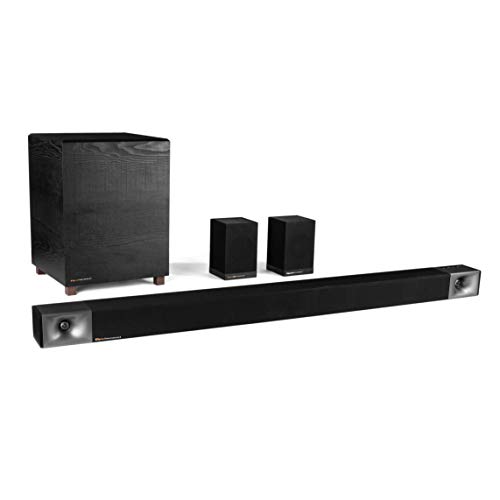
| Spec | TCL Q75H 5.1.2 | Klipsch Bar 48 |
|---|---|---|
| Channels | 5.1.2 | 5.1 per listing title |
| Drivers | Built-in tweeters, center channel, up-firing drivers, Ray Danz acoustic reflectors, and a 6.5 inch subwoofer driver. Exact driver sizes and total count not published in listing. | Not published in listing; mentions dedicated center channel and 8-inch wireless subwoofer driver |
| Power | Up to 620 watts total power | Not published in listing |
| Subwoofer | Wireless subwoofer with 6.5 inch driver and Bass Boost technology | 8-inch wireless subwoofer included |
| Dolby Atmos and DTS | Dolby Atmos and DTS:X supported | Not published in listing |
| HDMI eARC and inputs | Single HDMI cable connection described. eARC support and input count not published in listing. | Not published in listing |
| Wireless and streaming | Bluetooth wireless music streaming. Wi-Fi, AirPlay, Chromecast, and multiroom not mentioned. | Not published in listing beyond wireless subwoofer |
| Dimensions | Not published in listing | Not published in listing |
| Remote and app | Remote control and app control included. App features not detailed. | Not published in listing |
| Included accessories | Remote control included. Other accessories not published in listing. | Not published in listing; listing states an included wireless subwoofer |
Sound Quality
Both models earn 24 out of 30 for sound quality from the listing. The TCL Q75H 5.1.2 has a 5.1.2 channel configuration with built-in tweeters, a center channel, up-firing drivers, and Ray Danz acoustic reflectors. The listing states up to 620 watts total power, which suggests strong headroom. The Klipsch Bar 48 is described as a 5.1 system with a dedicated center channel for dialogue clarity, but its driver sizes and total power are not published.
The TCL advantages include up-firing drivers and Ray Danz reflectors for a wider soundstage. The Klipsch listing highlights a dedicated center channel, but without driver details or power output, direct comparison is limited. Both share a sound quality score of 24, indicating similar overall performance on paper. The Klipsch brand reputation for dynamic sound may appeal to some buyers.
Since exact driver sizes are not published for either model, the comparison rests on confirmed features. The TCL has more detailed driver information, including up-firing elements. The Klipsch Bar 48 does not publish driver count or sizes. Buyers who value transparency may lean toward the TCL.
Surround, Atmos and Audio Formats
The TCL Q75H 5.1.2 supports Dolby Atmos and DTS:X, confirmed in the listing. Its 5.1.2 layout includes up-firing drivers for height effects. These formats provide immersive overhead audio when paired with compatible content. The Klipsch Bar 48 does not state Dolby Atmos or DTS support in the listing.
The Klipsch is titled as a 5.1 system, but the inclusion of surround speakers is unclear from the supplied facts. Without published surround or height channels, its object-based audio capabilities are unknown. The TCL's score of 11 for surround and audio formats is one point higher than the Klipsch's 10. This reflects the confirmed Atmos and DTS:X support on the TCL.
For buyers who prioritize height effects and modern audio formats, the TCL is the clear choice. The Klipsch Bar 48 may still provide a traditional 5.1 surround experience, but the listing does not confirm any upward-firing drivers or height channels. Without this information, shoppers cannot verify Atmos compatibility.
Subwoofer and Bass
The TCL Q75H includes a wireless subwoofer with a 6.5 inch driver and Bass Boost technology. Bass Boost is designed to enhance low frequency output. The Klipsch Bar 48 includes an 8 inch wireless subwoofer, which is larger than the TCL's subwoofer driver. A larger driver can often move more air and produce deeper bass, but actual performance is not stated.
The Klipsch listing also states support for adding a second subwoofer or replacing the included sub. This flexibility may appeal to buyers who want to expand the system later. The TCL listing does not mention adding a second subwoofer or replacing the included one. The TCL's total power of 620 watts likely contributes to its bass output, but the Klipsch subwoofer power is not published.
Without measured bass response, the comparison relies on driver size and features. The Klipsch has a larger subwoofer driver and expansion options, while the TCL offers Bass Boost and higher system power. Buyers focused on low frequency impact may want to verify the subwoofer performance through other sources.
Connectivity and TV Setup
The TCL Q75H is described as using a single HDMI cable connection for TV setup. The listing does not specify whether that HDMI port supports eARC or how many HDMI inputs are present. Bluetooth wireless music streaming is included. The Klipsch Bar 48 does not publish any HDMI details, including eARC support or input count, but its wireless subwoofer connection is confirmed.
Both models lack complete connectivity specifications. The TCL's score of 9 is one point higher than the Klipsch's 8 because the TCL at least confirms a single HDMI cable connection and Bluetooth. The Klipsch listing is silent on all wired connections other than the wireless subwoofer. Buyers with a modern TV may need eARC for lossless audio formats.
Without confirmed eARC, both soundbars may rely on standard ARC or optical connections, but the listing does not state optical ports. The TCL's simple one cable setup may be convenient if HDMI works as expected. Klipsch buyers must ask about connectivity before purchase.
Features, Apps and Voice Control
The TCL Q75H includes Ai Sonic auto room calibration, remote control, and app control. The app features are not detailed in the listing. Bluetooth streaming is confirmed. Voice assistant integration is not mentioned for the TCL. The Klipsch Bar 48 does not describe an app, remote, streaming features, or voice control.
The TCL's Features and Apps score of 11 is three points higher than the Klipsch's 8. This is due to the confirmed auto calibration, remote, app, and Bluetooth. The Klipsch's only confirmed feature beyond basic audio is the ability to add or replace the subwoofer. Buyers who want app customization or room correction should note the TCL advantages.
Neither model mentions Wi-Fi, AirPlay, Chromecast, or multiroom streaming. The TCL's calibration feature is a meaningful advantage for room acoustics. The Klipsch's lack of published features makes it less attractive for tech-forward buyers.
Design and Fit Under a TV
Neither the TCL Q75H 5.1.2 nor the Klipsch Bar 48 publishes dimensions or weight in the listing. This makes it impossible to confirm whether either soundbar will fit under a specific TV stand or wall setup. Both models include a wireless subwoofer that can be placed separately.
Both models score 10 out of 15 for Design and TV Fit, which may reflect the unknown dimensions and basic soundbar form factor. The TCL includes up-firing drivers that may require clearance above the bar for height effects. The Klipsch's dedicated center channel is likely forward-firing and less sensitive to overhead obstructions.
Without published dimensions, buyers should measure their space and compare with retailer or manufacturer data before purchase. The wireless subwoofers simplify placement for both. The lack of physical specs is a shared weakness.
Who Should Buy It
The TCL Q75H 5.1.2 is best for buyers who want an affordable 5.1.2 Atmos soundbar with a wireless subwoofer and automatic room calibration. Its simple one cable HDMI setup and Bluetooth streaming suit users who prioritize convenience. The TCL is a strong option for those who do not need Wi-Fi or multiroom features.
The Klipsch Bar 48 is best for buyers who trust the Klipsch brand and want a lower mid range 5.1 soundbar with a dedicated center channel and larger 8 inch wireless subwoofer. It may appeal to those who prioritize dialogue clarity and bass over object-based formats like Atmos.
Both models are suited to shoppers who can accept missing specification details. Buyers who require confirmed eARC, detailed driver specs, or streaming features should look elsewhere or ask more questions.
The Deciding Question
The central question is whether confirmed Dolby Atmos and DTS:X support matters more than a larger subwoofer and brand reputation. The TCL Q75H delivers a 5.1.2 layout with height channels and modern audio formats. The Klipsch Bar 48 offers an 8 inch wireless sub and dedicated center channel but no published Atmos or DTS support.
If you want an immersive audio experience with overhead effects from a soundbar, the TCL is the safer choice. If you rarely watch Atmos content and prefer a larger subwoofer and Klipsch sound signature, the Bar 48 may be acceptable.
Another deciding factor is specification transparency. The TCL publishes more details about drivers, power, and features, even though some items remain unknown. The Klipsch listing is missing many connectivity and feature specs, making the purchase decision harder.
Who Should Buy Which
Choose the TCL Q75H 5.1.2 if you have a TV with HDMI ARC or eARC and want a simple one cable setup. It is the better pick for Dolby Atmos, DTS:X, and 5.1.2 height effects. Buyers who value auto room calibration and Bluetooth streaming should lean TCL.
Choose the Klipsch Bar 48 if you prefer a dedicated center channel for dialogue and a larger 8 inch wireless subwoofer. It may suit buyers who trust the Klipsch brand and do not need confirmed Atmos or streaming features. The ability to add a second subwoofer is a unique flexibility.
If you cannot verify HDMI eARC or physical dimensions for either model, consider contacting support or seeking additional documentation. The TCL is the more fully featured soundbar on paper, while the Klipsch offers brand cachet and bass size. Buy both only after confirming return policies.
TCL Q75H 5.1.2
Pros
- 5.1.2 configuration with Dolby Atmos and DTS:X
- Up to 620 watts total power
- Wireless subwoofer with 6.5 inch driver and Bass Boost
- Ai Sonic auto room calibration
- Bluetooth streaming with app and remote control
- Ray Danz acoustic reflector technology
Cons
- Exact driver sizes and count not published
- HDMI eARC support and input count unclear
- No Wi-Fi or multiroom streaming mentioned
- No published dimensions or weight
- No voice assistant integration mentioned
Klipsch Bar 48
Pros
- Includes a wireless 8-inch subwoofer
- Dedicated center channel for dialogue clarity
- 5.1 system per listing title
- Klipsch brand reputation for dynamic sound
- Supports adding a second subwoofer or replacing the included sub
Cons
- Most connectivity specs are not published
- No stated HDMI eARC, Atmos, or DTS support
- Surround speaker inclusion is unclear from listing
- No published power or driver details
- App, remote, and streaming features are not described
Who Should Buy Each
TCL Q75H 5.1.2
- TV owners upgrading from built-in speakers to immersive surround
- Movie fans wanting Dolby Atmos and DTS:X without many speakers
- Users who prefer app and remote control plus auto calibration
- Buyers who want a wireless subwoofer with bass boost
Klipsch Bar 48
- Someone who trusts the Klipsch sound signature
- A buyer who prioritizes a dedicated center channel
- A person who wants an 8-inch wireless subwoofer included
- A user fine with researching missing specs before purchase
Quick Decision Guide
| If you want confirmed Dolby Atmos and DTS:X support | Choose TCL Q75H 5.1.2 |
| If you want a larger 8 inch wireless subwoofer and the ability to add a second sub | Choose Klipsch Bar 48 |
| If you prefer automatic room calibration and app control | Choose TCL Q75H 5.1.2 |
| If you trust the Klipsch brand and prioritize dialogue clarity from a dedicated center channel | Choose Klipsch Bar 48 |
| If you need the most detailed specification sheet of the two | Choose TCL Q75H 5.1.2 |
FAQ
About This Comparison
Mandrillis Team
The Mandrillis editorial team researches and compares audio and music gear using manufacturer documentation, verified specs and real buyer feedback, so you can make a confident purchase without wading through marketing claims.
Read our full research methodology.
We may earn a commission at no extra cost to you.