TCL Q95K 11.1.4 vs JBL Bar 1300XMK2
Quick Verdict
The TCL Q95K 11.1.4 is the better pick for a large room gaming and movie setup that needs wireless rear satellites, high peak power, and confirmed 4K 144Hz HDMI 2.1 passthrough. The JBL Bar 1300XMK2 counters with detachable wireless surrounds, a larger 12 inch subwoofer, and a slightly higher 1570W max output, but its HDMI connectivity details are not published. Choose the TCL if confirmed dual HDMI 2.1 ports and gaming passthrough matter most. Choose the JBL if you prefer a 12 inch subwoofer and portable Bluetooth surrounds. Both listings omit key details such as dimensions, eARC, and app controls, so verify those before purchase.

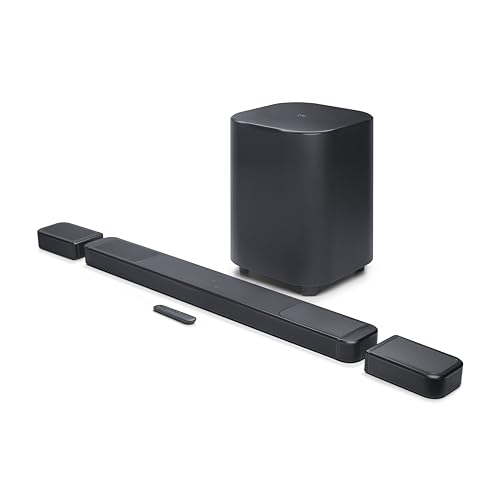
| Spec | TCL Q95K 11.1.4 | JBL Bar 1300XMK2 |
|---|---|---|
| Channels | 11.1.4 (published as true 11.1.4 channel spatial immersion) | 11.1.4 channels |
| Drivers | Not published in listing; subwoofer described as dual-driver 7-inch system | Not published in listing |
| Power | 1,420 watts total peak audio output | 1570W max output |
| Subwoofer | Wireless dual-driver 7-inch subwoofer system | 12-inch wireless subwoofer |
| Dolby Atmos and DTS | Dolby Atmos and DTS:X decoding, plus Dolby Vision HDR passthrough | Dolby Atmos and DTS:X |
| HDMI eARC and inputs | Dual HDMI 2.1 with 4K 144Hz passthrough; eARC support not published in listing | Not published in listing |
| Wireless and streaming | Wireless rear satellites and wireless subwoofer; music streaming services not published in listing | Bluetooth, Wi-Fi streaming |
| Dimensions | Not published in listing | Not published in listing |
| Remote and app | AI Room Calibration mentioned in listing title; remote and app details not published | Not published in listing |
| Included accessories | Not published in listing | Not published in listing |
Sound Quality
The TCL Q95K 11.1.4 has a published peak power of 1,420 watts and an overall sound quality sub-score of 27 out of 30. The listing also states Bang & Olufsen acoustic tuning and beam-forming. The JBL Bar 1300XMK2 lists 1570W max output and has a sound quality sub-score of 25. The JBL listing does not publish driver details or acoustic tuning information.
Both systems claim 11.1.4 channels, but the listings do not specify driver sizes, materials, or continuous power ratings. The TCL peak power number is lower than the JBL max output number, but those are different rating methods and cannot be directly compared. The TCL publishes more acoustic tuning details, while the JBL relies on its channel count and subwoofer size.
Without published driver specifications or continuous power figures for either model, a precise sound quality comparison is limited to what the listings state. The TCL has the higher sub-score in the supplied breakdown, which may reflect the published tuning information. Buyers should treat both peak and max output as marketing numbers, not continuous listening power.
Surround, Atmos and Audio Formats
Both the TCL Q95K 11.1.4 and the JBL Bar 1300XMK2 support Dolby Atmos and DTS:X decoding. Each model is rated 13 out of 15 for surround and audio formats in the supplied breakdown. The TCL listing adds Dolby Vision HDR passthrough, which the JBL listing does not state. That extra video format support can matter for users routing a 4K HDR source through the soundbar.
The TCL uses wireless rear satellites and is described as having a true 11.1.4 channel layout with spatial immersion. The JBL uses detachable rear speakers that create a true 11.1.4 surround field. Neither listing mentions height virtualization formats beyond Dolby Atmos and DTS:X, such as DTS:X Pro or IMAX Enhanced.
The TCL listing mentions AI Room Calibration in the title, which suggests an automated surround tuning process. The JBL listing does not mention any room calibration or acoustic correction feature. Both listings omit details about rear speaker size, placement requirements, or whether the height channels are up-firing drivers in the main bar.
Subwoofer and Bass
The TCL Q95K 11.1.4 includes a wireless dual driver 7 inch subwoofer system. The JBL Bar 1300XMK2 includes a 12 inch wireless subwoofer. The JBL uses a larger single driver, while the TCL uses two smaller drivers in one enclosure. Neither listing publishes amplifier power, crossover frequency, or frequency response for the subwoofer.
The larger 12 inch driver on the JBL may suggest deeper bass extension on paper, but driver excursion, cabinet volume, and tuning are not published. The TCL dual driver design could reduce distortion or provide more even bass output, but that is also not confirmed by the listing. Both subwoofers are wireless, which simplifies placement.
The JBL subwoofer amplifier power and crossover are explicitly listed as not published. The TCL does not state subwoofer amp power either. Buyers who prioritize subwoofer size will note the JBL advantage, while those interested in a dual driver system may prefer the TCL. Direct bass performance cannot be determined from these listings alone.
Connectivity and TV Setup
The TCL Q95K 11.1.4 publishes dual HDMI 2.1 ports with 4K 144Hz passthrough. This is a concrete advantage for gaming consoles and high refresh rate PCs. The JBL Bar 1300XMK2 listing does not publish HDMI eARC or input details at all, leaving its TV connection options unclear.
The TCL listing does not confirm eARC or ARC support, even though it has HDMI 2.1 ports. The JBL listing also does not confirm eARC support. Without eARC confirmation, users cannot be certain about lossless audio return from a TV to the soundbar, which is a common setup path.
For wireless connectivity, the JBL lists Bluetooth and Wi-Fi streaming. The TCL listing does not publish music streaming services or Bluetooth details. The TCL has a connectivity sub-score of 11 versus 7 for the JBL, reflecting the published HDMI 2.1 ports, but both models have important gaps in everyday connection details.
Features, Apps and Voice Control
The TCL Q95K 11.1.4 mentions AI Room Calibration in the listing title, but remote and app details are not published. The JBL Bar 1300XMK2 listing does not specify remote or app features either. Neither model provides published information about a companion app, firmware update process, or equalizer controls.
Voice control is not mentioned for either soundbar. Neither listing states compatibility with any specific voice assistant platform. Buyers who want hands-free control will not find published answers for either model, which is a notable omission in this product tier.
Streaming features are also sparse. The JBL lists Bluetooth and Wi-Fi streaming but does not name specific music services. The TCL does not publish streaming service support at all. Both listings leave app, remote, and voice features largely unspecified, so buyers should confirm these details with the manufacturer before purchase.
Design and Fit Under a TV
Both the TCL Q95K 11.1.4 and the JBL Bar 1300XMK2 are multi piece systems with a main soundbar, rear speakers, and a wireless subwoofer. The TCL calls its rear satellites wireless. The JBL calls its rear speakers detachable and says they have a portable Bluetooth mode. Neither listing publishes dimensions or weight for the main bar, rear speakers, or subwoofer.
The absence of physical dimensions is a significant gap for buyers who need to fit the soundbar under a specific TV or on a media console. Without height, depth, or width, there is no way to know clearance requirements from the listing alone. This affects both models equally.
The supplied design and TV fit sub-scores are 10 for the TCL and 11 for the JBL. That small difference likely reflects JBL's detachable and portable surround design, which adds flexibility. However, the missing physical measurements make it impossible to compare actual fit or build quality from these listings.
Who Should Buy It
The TCL Q95K 11.1.4 is best for buyers wanting a large room 11.1.4 Atmos soundbar with wireless rear satellites, high peak power, and 4K 144Hz gaming passthrough. It also suits gamers who need dual HDMI 2.1 ports and Dolby Vision HDR passthrough.
The JBL Bar 1300XMK2 is best for home theater fans who want true 11.1.4 surround with detachable wireless rear speakers and a large 12 inch subwoofer without a separate receiver. Its portable Bluetooth mode for surrounds adds value for users who may want to move rear speakers to other rooms.
Avoid the TCL if you need published physical dimensions, confirmed eARC, or detailed app and streaming features before purchase. Avoid the JBL if you need full published connectivity specs including HDMI eARC, dimensions, and app control. Both models require verification of these missing details.
The Deciding Question
The deciding question is whether confirmed high refresh rate HDMI passthrough or a larger wireless subwoofer matters more. The TCL publishes dual HDMI 2.1 ports with 4K 144Hz support, while the JBL publishes a 12 inch subwoofer and detachable portable surrounds.
If gaming and high frame rate video passthrough are priorities, the TCL is the only one with published 4K 144Hz HDMI 2.1 support. If deep bass from a larger driver is more important, the JBL has the larger subwoofer on paper. Both are valid priorities for different buyers.
Both models omit critical everyday details such as eARC confirmation, dimensions, remote, and app support. Your final decision should depend on which set of published strengths aligns with your room, your sources, and your willingness to confirm missing specs elsewhere.
Who Should Buy Which
Choose the TCL Q95K 11.1.4 if you have a large room, want wireless rear satellites, need dual HDMI 2.1 with 4K 144Hz passthrough, and are comfortable confirming eARC and dimensions separately. Its 1,420 watts peak and dual driver 7 inch subwoofer support an ambitious home theater with gaming capability.
Choose the JBL Bar 1300XMK2 if you want a 12 inch wireless subwoofer and detachable rear speakers that can be used as portable Bluetooth surrounds. The 1570W max output is slightly higher on paper, and the larger subwoofer may appeal to bass focused buyers. It works well if you do not need published HDMI eARC details from the listing.
If neither set of published gaps is acceptable, wait for more complete listings from the manufacturers. Both systems are strong on channel count and wireless surround design, but the missing connectivity and physical data make a final decision harder than it should be. Verify all unspecified features before buying either model.
TCL Q95K 11.1.4
Pros
- True 11.1.4 channel layout with wireless rear satellites
- High 1,420 watts peak power for large rooms
- Dual HDMI 2.1 with 4K 144Hz passthrough for gaming
- Bang & Olufsen acoustic tuning and beam-forming
- Wireless dual-driver 7-inch subwoofer
- Dolby Atmos, DTS:X, and Dolby Vision passthrough
Cons
- Physical dimensions and weight are not published
- No published eARC or ARC support confirmation
- No published streaming, app, or voice assistant details
- Peak power rating may overstate continuous output
- Remote control contents are not specified
JBL Bar 1300XMK2
Pros
- 11.1.4 channels with true detachable rear surrounds
- 12 inch wireless subwoofer for deep bass
- Dolby Atmos and DTS:X support
- 1570W max output
- Portable Bluetooth mode for surrounds
Cons
- HDMI eARC and input details not published
- No dimensions or weight listed
- Remote and app features not specified
- No voice control mentioned
- Subwoofer amp power and crossover not published
Who Should Buy Each
TCL Q95K 11.1.4
- Home theater users who want true surround with rear height satellites
- Gamers with 4K 144Hz consoles or PCs needing HDMI 2.1 passthrough
- Large room owners who want high peak output and a separate subwoofer
- Buyers who value Bang & Olufsen tuning and precision beam-forming
JBL Bar 1300XMK2
- Movies and TV fans who want physical surround speakers
- Buyers with open living rooms who cannot run rear speaker cables
- Users who want a powerful subwoofer without a separate AV receiver
- Someone who will use the surround speakers as portable Bluetooth speakers
Quick Decision Guide
| If you need dual HDMI 2.1 ports with 4K 144Hz passthrough for gaming | Choose TCL Q95K 11.1.4 |
| If you want a larger 12 inch wireless subwoofer for deeper bass | Choose JBL Bar 1300XMK2 |
| If you prefer detachable rear speakers that also work as portable Bluetooth speakers | Choose JBL Bar 1300XMK2 |
| If you want a published dual driver 7 inch subwoofer with wireless rear satellites | Choose TCL Q95K 11.1.4 |
| If you want the higher overall score and stronger connectivity sub-score in this comparison | Choose TCL Q95K 11.1.4 |
FAQ
About This Comparison
Mandrillis Team
The Mandrillis editorial team researches and compares audio and music gear using manufacturer documentation, verified specs and real buyer feedback, so you can make a confident purchase without wading through marketing claims.
Read our full research methodology.
We may earn a commission at no extra cost to you.