Vox AC30S1 vs Fender Hot Rod Deluxe 30th Anniversary
Quick Verdict
Choose the Vox AC30S1 if you want a focused 30 watt tube combo with a modeled Top Boost circuit, EL84 and 12AX7 tubes, a Celestion VX12, digital reverb, and a published external speaker output. Choose the Fender Hot Rod Deluxe 30th Anniversary if you prefer 40 watts, two 6L6 and three 12AX7 tubes, a Celestion G12M-65 Creamback, spring reverb, and a distinctive western tooled look. Both omit headphone, line out, Bluetooth, and app support. The Vox is the better value for British chime purists; the Fender offers more headroom and cosmetic character.

| Spec | Vox AC30S1 | Fender Hot Rod Deluxe 30th Anniversary |
|---|---|---|
| Power output | 30 watts | 40 watts |
| Speaker | 12 inch Celestion VX12 | Celestion 12-inch G12M-65 Creamback |
| Amp models or channels | Single channel with modeled Top Boost circuitry | Not published in listing |
| Effects | Onboard digital reverb | Spring reverb |
| Inputs and outputs | External speaker output; other inputs and outputs not published | Not published in listing |
| Headphone and line out | Not published in listing | Not published in listing |
| Bluetooth and app | Not published in listing | Not published in listing |
| Weight | Not published in listing | Not published in listing |
| Dimensions | Not published in listing | Not published in listing |
| Included accessories | Not published in listing | Not published in listing |
Amp Models and Tone
The Vox AC30S1 is a single channel tube combo. Its circuit includes a modeled Top Boost design with an EL84 power tube and a 12AX7 preamp tube. The listing describes this as a classic Vox Top Boost voiced tone. It does not include multiple amp models or channels. The amp does not offer channel switching or a second voice.
The Fender Hot Rod Deluxe 30th Anniversary does not publish a channel count. It uses two 6L6 power tubes and three 12AX7 preamp tubes. The listing mentions a modified preamp circuit for clarity when overdriven. This points to a classic Fender clean to overdrive character. The listing does not confirm whether the amp has a bright switch or EQ options.
The speaker complement also differs. The Vox AC30S1 uses a 12 inch Celestion VX12. The Fender uses a Celestion 12 inch G12M-65 Creamback. The Vox targets British chime, while the Fender targets American style cleans. Neither listing provides a full EQ curve or gain stage detail. Both amps are tube driven and designed for specific musical genres.
Effects and Features
The Vox AC30S1 includes one onboard effect, digital reverb. No modulation, delay, or drive effects are listed. There is no published effects loop. External pedals would need to run before the input. The single channel design avoids complex menus.
The Fender Hot Rod Deluxe 30th Anniversary includes spring reverb as its only built in effect. The listing describes the reverb as improved for smoother decay. No other effects or effects loop are published. Like the Vox, it relies on external pedals for additional sounds. The amp does not list a channel switching boost or built in attenuator.
Both amps offer a single ambient effect only. The Vox digital reverb and Fender spring reverb serve practical needs but do not replace a pedalboard. Buyers who want delay, chorus, or drive built in should look elsewhere. Both amplifiers keep the front panel focused on core tone.
Power, Speaker and Volume
The Vox AC30S1 is rated at 30 watts and drives a 12 inch Celestion VX12. The listing does not provide maximum volume or decibel figures. It describes the amp as stage friendly volume, suggesting it can keep up with a band. No power attenuation or low wattage mode is mentioned.
The Fender Hot Rod Deluxe 30th Anniversary is rated at 40 watts, 10 watts more than the Vox. It uses a Celestion 12 inch G12M-65 Creamback speaker. The listing describes the amp for rehearsals and stage use. No specific volume or headroom data is published. Higher wattage does not always mean louder perceived volume, but it often provides more clean headroom.
The higher wattage of the Fender suggests more clean headroom potential. The Vox may reach power amp compression earlier, which can be desirable for edge of breakup tones. The speaker choices also matter: the VX12 is often associated with Vox chime, while the Creamback is known for warm midrange. The speaker efficiency is not published for either model.
Build and Portability
Neither listing publishes weight or dimensions for the Vox AC30S1 or the Fender Hot Rod Deluxe 30th Anniversary. This makes portability difficult to compare from the supplied facts. Both are tube combos, which typically weigh more than solid state amps. Portability claims cannot be verified from the listing.
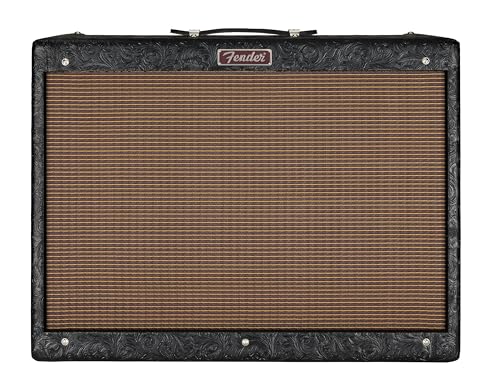
The Fender does list a distinctive cosmetic detail: black western tooled vinyl and a leather handle. The Vox AC30S1 does not mention cabinet covering, handle material, or any visual details. The underlying build materials are not stated for either amp. The cabinet covering on the Vox is not described, so visual comparison is incomplete.
Without weight and dimensions, buyers must contact the manufacturer for portability information. The Vox uses EL84 and 12AX7 tubes, while the Fender uses two 6L6 and three 12AX7 tubes. The Fender's cosmetic details may appeal to some, but build quality cannot be confirmed from the listings. Build quality may depend on unseen factors.
Connectivity and Apps
The Vox AC30S1 lists an external speaker output. Other inputs and outputs are not published. There is no headphone output, line out, effects loop, USB audio, Bluetooth, or app support mentioned. This limits connectivity to an extension cabinet.
The Fender Hot Rod Deluxe 30th Anniversary does not publish any inputs or outputs. There is no mention of a headphone output, line out, external speaker output, Bluetooth, or app support. The listing omits connectivity details entirely, which is a significant gap for recording or silent practice.
On the published facts, the Vox has a slight connectivity advantage because it confirms an external speaker output. The supplied breakdowns reflect this: the Vox connectivity score is 8 out of 15, while the Fender scores 5 out of 15. Neither amp offers modern digital connectivity.
Setup and Daily Use
The Vox AC30S1 has a single channel, which suggests simple daily operation. The only listed feature is digital reverb, so users likely set volume, tone, and reverb. The listing does not detail the exact control panel, but no menus or presets are mentioned. No software or firmware setup is required.
The Fender Hot Rod Deluxe 30th Anniversary does not publish its control layout or channel count. It includes spring reverb and a modified preamp. Without a specific control list, details such as EQ bands or channel switching remain unknown from the listing. Users may need to refer to the manual for exact controls.
Both amps lack headphone outputs and line outs, which impacts home practice and recording. Players may need an external attenuator or load box that is not included. Neither amplifier offers app based preset management or firmware updates. Daily use is likely straightforward but limited to traditional amp controls. That is a limitation for modern players.
Home Practice Versus Stage
The Vox AC30S1 is described as having stage friendly volume and being for authentic Vox chime at stage friendly volume. This wording indicates the amp is intended for live use or band rehearsals. The 30 watt output is still loud, but no low power mode is published. No built in power scaling or attenuator is listed.
The Fender Hot Rod Deluxe 30th Anniversary is described for rehearsals and stage use. Its 40 watt output and Creamback speaker make it a strong candidate for playing with a drummer. There is no published headphone output, line out, or attenuator, so stage volume at home would be challenging. Without a master volume or low power mode, loud stage use may be the default.
For silent home practice, neither amp is ideal based on the listings. Both are traditional tube combos without headphone or recording outputs. The Vox's lower wattage might be marginally more manageable, but 30 watts of tube power is still extremely loud for a bedroom. External volume control would be needed, but none is included.
The Deciding Question
The core decision comes down to tube voicing. The Vox AC30S1 offers a single channel modeled Top Boost circuit with EL84 and 12AX7 tubes, targeting the bright British chime. The Fender uses 6L6 and 12AX7 tubes with a modified preamp for American style cleans and overdrive.
Speaker and power are also deciding factors. The Vox pairs 30 watts with a Celestion VX12, while the Fender pairs 40 watts with a Celestion G12M-65 Creamback. If you need more headroom and a Creamback, the Fender looks stronger on paper. If you want the Top Boost voice and an external speaker output, the Vox has an advantage.
The missing details matter equally. Both listings omit weight, dimensions, and most connectivity. The Fender omits even an external speaker output, while the Vox does not. Neither offers Bluetooth, app control, or headphone output. So the decision hinges on tonal preference and the value of the Vox's published external speaker output.
Who Should Buy Which
Buy the Vox AC30S1 if you want a straightforward tube combo for authentic Vox chime and edge of breakup British tones at stage friendly volume. Its single channel Top Boost modeled circuit, EL84 and 12AX7 tubes, onboard digital reverb, and external speaker output make it a focused choice for players who do not need built in effects or app control.
Buy the Fender Hot Rod Deluxe 30th Anniversary if you want a 40 watt all tube combo with a Celestion G12M-65 Creamback speaker and classic Fender clean to overdrive character for rehearsals and stage use. The improved spring reverb and modified preamp for clarity are appealing. The distinctive black western tooled vinyl and leather handle adds a cosmetic bonus.
Avoid either if you need a lightweight home practice amp with headphone output, built in effects, app connectivity, or published weight and dimensions. The Vox lacks headphone, line out, Bluetooth, and app support in the listing. The Fender omits connectivity details entirely. If silent practice or recording outputs are essential, look elsewhere.
Vox AC30S1
Pros
- Pure tube response from EL84 and 12AX7
- Classic Vox Top Boost modeled voicing
- Quality Celestion VX12 speaker
- Simple single channel layout
- Onboard digital reverb
- External speaker cabinet output
Cons
- No published headphone, line out, Bluetooth, or app support
- Single channel and reverb only limit flexibility
- Listing omits weight, dimensions, and included accessories
- No effects loop or USB audio mentioned
Fender Hot Rod Deluxe 30th Anniversary
Pros
- 40-watt all-tube design with two 6L6 and three 12AX7 tubes
- Celestion 12 inch G12M-65 Creamback speaker for vintage voice
- Modified preamp circuit for clarity when overdriven
- Improved spring reverb for smoother decay
- Distinctive black western tooled vinyl and leather handle
Cons
- Listing omits weight and dimensions
- No published headphone, line out, or effects loop details
- No Bluetooth or app support mentioned
- Single built-in effect only (spring reverb)
Who Should Buy Each
Vox AC30S1
- Players seeking classic Vox Top Boost tone in a grab and go combo
- Guitarists who prefer a simple control set over deep menu editing
- Gigs or rehearsals where 30 watts through a 12 inch speaker is appropriate
- Tube amp traditionalists who want onboard reverb without digital modeling complexity
Fender Hot Rod Deluxe 30th Anniversary
- Guitarists wanting 40-watt tube dynamics
- Players who value a Celestion Creamback speaker
- Musicians needing spring reverb and a vintage western look
- Rehearsal and small to medium stage performers
Quick Decision Guide
| If you want authentic Vox chime and Top Boost modeled circuitry | Choose Vox AC30S1 |
| If you need 40 watts and a Celestion G12M-65 Creamback speaker | Choose Fender Hot Rod Deluxe 30th Anniversary |
| If you require a published external speaker output | Choose Vox AC30S1 |
| If you want a distinctive black western tooled vinyl and leather handle | Choose Fender Hot Rod Deluxe 30th Anniversary |
| If you need headphone output, Bluetooth, or app support | Choose Neither model based on the listings |
FAQ
About This Comparison
Mandrillis Team
The Mandrillis editorial team researches and compares audio and music gear using manufacturer documentation, verified specs and real buyer feedback, so you can make a confident purchase without wading through marketing claims.
Read our full research methodology.
We may earn a commission at no extra cost to you.