Vox VT40X vs Line 6 Catalyst CX 100
Quick Verdict
Choose the Vox VT40X if you need a compact modeling amp for home practice, recording, and moderate rehearsal. Its Valvetronix tube preamp, 40 watts, 10-inch speaker, USB connectivity, headphone jack, and built-in tuner are confirmed in the listing. Choose the Line 6 Catalyst CX 100 if you need a 100-watt 1x12 combo for stage and rehearsal with Helix-derived amp voicings, 24 effects, dual channels, and a dedicated boost. The Vox is the practical home tool, while the Line 6 is the stage-ready workhorse.
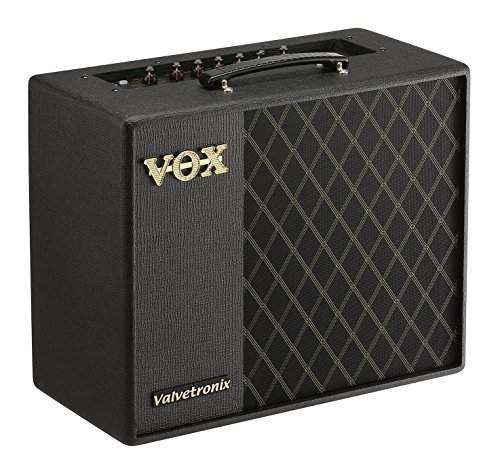

| Spec | Vox VT40X | Line 6 Catalyst CX 100 |
|---|---|---|
| Power output | 40 watts | 100 watts |
| Speaker | 10-inch VOX speaker | 1x12 combo, specific speaker model not published in listing |
| Amp models or channels | Not published in listing | Dual channel with 12 amp voicings derived from Helix processors |
| Effects | Not published in listing | 24 effects derived from Helix processors plus dedicated boost circuit |
| Inputs and outputs | USB connectivity and headphone jack; other inputs and outputs not published | Not published in listing |
| Headphone and line out | Headphone jack included; line out not published | Not published in listing |
| Bluetooth and app | Not published in listing | Not published in listing |
| Weight | Not published in listing | Not published in listing |
| Dimensions | Not published in listing | Not published in listing |
| Included accessories | Not published in listing | Not published in listing; optional LFS2 footswitch mentioned but not listed as included |
Amp Models and Tone
The Vox VT40X uses a Valvetronix tube preamp to deliver tube-like tones, and the listing promises an extensive range of amp models, though it does not publish the exact number. Its tone and amp models score is 25 out of 30. The Line 6 Catalyst CX 100 also scores 25 in this category, with 12 amp voicings derived from Helix processors. Both amps place strong emphasis on authentic amp character.
The Vox's tube preamp suggests a warmer, more organic response that players often associate with traditional Vox sounds. The Line 6's Helix-derived voicings are presented as a dual channel setup, which may provide more immediate switching between two distinct amp tones. Because the Vox listing omits the number of models, buyers cannot directly compare the breadth of amp selection on paper.
For tone flexibility, the Catalyst CX 100 clearly names its 12 amp voicings, while the VT40X leaves that detail unpublished. The Vox relies on its hybrid tube design as the main tonal selling point. The Line 6 relies on the established Helix modeling legacy for its voice. Both should satisfy players seeking classic and modern guitar tones, but the published details favor the Line 6 for transparency.
Effects and Features
The Line 6 Catalyst CX 100 includes 24 effects derived from Helix processors plus a dedicated boost circuit. It also has tap tempo and a tuner button. Its effects and features score is 16 out of 20. The Vox VT40X also scores 16, but the listing does not publish the number or types of effects. It does confirm a built-in tuner and headphone jack.
The Vox listing lists USB connectivity, a headphone jack, and optional VFS2 and VFS5 footswitch compatibility. Those are practical features for recording and silent practice. The Line 6 listing does not confirm headphone output or other connectivity, but its on-board features include the dedicated boost and tap tempo. Both amps provide some form of tuner, though the Vox describes an internal tuner and the Line 6 specifies a tuner button.
When comparing published effect counts, the Catalyst CX 100 is more transparent with 24 named effects. The VT40X may have a comparable suite, but the absence of published numbers makes a direct feature comparison impossible. Both score equally because each offers meaningful functional extras for the price. Players who want a documented effect count will gravitate toward the Line 6.
Power, Speaker and Volume
The Vox VT40X offers 40 watts of power through a 10-inch VOX speaker. Its power and speaker score is 11 out of 15. The Line 6 Catalyst CX 100 offers 100 watts through a 1x12 combo, though the specific speaker model is not published. That extra power and larger speaker give the Line 6 a score of 13.
The 100-watt power section of the Catalyst CX 100 should deliver more clean headroom and stage volume than the Vox's 40-watt circuit. The 1x12 format typically moves more air and provides a broader low-end response than a 10-inch speaker. The Vox is designed for moderate rehearsal and home practice, where lower wattage can be an advantage for volume control.
For live performance, the Line 6 is the clear winner on paper because of the higher wattage and larger speaker. The Vox may still work in smaller venues or with PA support, but its 40 watts will compress sooner at high volume. Buyers who prioritize stage volume without external amplification should consider the Catalyst CX 100.
Build and Portability
The Vox VT40X is described as a compact lightweight design for travel, but the listing does not publish weight or dimensions. Its build and portability score is 8 out of 10. The Line 6 Catalyst CX 100 also does not state weight or dimensions, and scores 7 in this category. Without published numbers, neither amp can be compared precisely for portability.
The Vox's compact design claim suggests it is easier to move than a typical 1x12 combo, but the missing measurements leave that unverified. The Line 6, as a 100-watt 1x12, is likely larger and heavier based on its format, though the listing does not confirm. The Vox's 10-inch speaker and lower wattage should make it more portable in practical use.
Because the Vox lists compact lightweight as a pro and the Line 6 does not make any portability claim, the Vox appears better suited for players who need to carry an amp frequently. Still, the absence of official weight specs from both listings means a final determination requires outside information. For now, the Vox's designation as lightweight gives it a soft edge in this category.
Connectivity and Apps
The Vox VT40X lists USB connectivity for recording to PC, Mac, iOS, and Android. It also includes a headphone jack. Line out is not published. Bluetooth and app support are not mentioned. The Vox connectivity score is 12 out of 15. The Line 6 Catalyst CX 100 does not publish any connectivity details, and no app or Bluetooth is listed. Its connectivity score is 9.
The Vox's USB connectivity is a significant advantage for home recording and direct integration with mobile devices. The headphone jack supports silent practice. The Line 6's missing connectivity information is a notable gap, especially for an amp with Helix-derived processing that could otherwise excel as a digital interface. Without published inputs and outputs, the Catalyst CX 100 appears less versatile for recording and direct connection.
Both amps mention optional footswitch compatibility. The Vox supports VFS2 and VFS5, while the Line 6 mentions an optional LFS2. Neither includes a footswitch. On connectivity, the Vox is the safer choice for buyers who need confirmed USB and headphone options, while the Line 6 may still have similar capabilities but cannot be verified from the listing.
Setup and Daily Use
The Vox VT40X includes a built-in tuner and a headphone jack, which make daily practice simple. USB connectivity allows quick recording without an external interface. The compact lightweight design supports moving the amp between rooms or taking it to a friend's house. Optional footswitches add hands-free control for channel or effect changes.
The Line 6 Catalyst CX 100 has a tuner button and tap tempo, both useful for live and practice settings. Its dual channel operation with 12 amp voicings gives immediate access to two core tones. The dedicated boost circuit can act as a solo or rhythm level lift without adding an external pedal. However, the listing does not confirm headphone output or line out, which may limit quiet practice.
In daily use, the Vox offers a more complete set of confirmed convenience features for home environments. The Line 6's controls are stage oriented, but its lack of published connectivity means players may need to check the physical unit for headphone jacks or direct outs. Both amps are straightforward modeling combos, but the Vox has fewer unknowns for everyday usability.
Home Practice Versus Stage
The Vox VT40X is explicitly best for home practice, recording, and moderate rehearsal. Its 40-watt power section and 10-inch speaker are well matched to bedroom and small studio volumes. The headphone jack and USB connectivity make it a strong desktop or practice room companion. However, on a loud stage, 40 watts may struggle to keep up with a drummer and full band.
The Line 6 Catalyst CX 100 is built for rehearsal, stage, and home use, with 100 watts and a 1x12 speaker. That power reserve means it can stay clean at higher volumes or push more air for distorted rhythm work. The Helix-derived voicings and 24 effects give plenty of tonal range in a live setting. Its larger footprint may be less convenient for a small bedroom, but the listing does not confirm dimensions.
For strictly home practice, the Vox is likely the more practical choice because of its lower wattage, compact design, and confirmed headphone output. For anyone who plays with a band or needs stage volume, the Line 6 Catalyst CX 100 is the stronger candidate. The Vox can still handle moderate rehearsals, but the Line 6 offers more headroom and projection.
The Deciding Question
The core decision between these two amps comes down to what the buyer values more: the Vox's tube-flavored preamp, USB connectivity, and compact size, or the Line 6's 100 watts, 1x12 speaker, and clearly published Helix-derived amp and effects count. The Vox is the more confirmed home and recording tool, while the Line 6 is the more confident stage and rehearsal amp.
The Vox's Valvetronix tube preamp may appeal to players who want a hint of analog warmth in a modeling platform. Its USB and headphone features are concrete, published advantages. The Line 6's Helix heritage and dedicated boost circuit give it a performance edge, especially for players who need two channels and tap tempo on stage.
Both amps have missing specifications, but the nature of those omissions matters. The Vox hides the number of amp models and effects, while the Line 6 hides connectivity, speaker model, weight, and dimensions. Buyers who are comfortable with a traditional modeling amp without app editing may prefer the Line 6. Buyers who need confirmed recording and headphone features may prefer the Vox.
Who Should Buy Which
Buy the Vox VT40X if you want a compact, lightweight modeling combo for home practice and recording. Its 40 watts, 10-inch speaker, Valvetronix tube preamp, built-in tuner, headphone jack, and USB connectivity cover the essentials for a player who spends most time at a desk or in a small rehearsal space. The optional VFS2 and VFS5 footswitches add performance control without changing the core design.
Buy the Line 6 Catalyst CX 100 if you need a 100-watt 1x12 combo that can handle stage and rehearsal volumes. The 12 Helix-derived amp voicings, 24 effects, dedicated boost, dual channel operation, tap tempo, and tuner button make it a strong all round workhorse for live players. Its lack of published connectivity and app support is a trade off, but for a player who mainly uses the amp as a standalone tone machine, that may not matter.
If you are a beginner or bedroom player who wants silent practice and computer recording, the Vox is the more obvious choice because those outputs are confirmed. If you are a gigging guitarist who needs loud, flexible tones without relying on PA support, the Line 6 is the better bet. Both score closely overall, but their strengths point in different directions.
Vox VT40X
Pros
- 40-watt power section with 10-inch speaker
- Valvetronix tube preamp for tube-like tones
- USB connectivity for recording to PC, Mac, iOS, Android
- Built-in tuner and headphone jack
- Compact lightweight design for travel
- Optional VFS2 and VFS5 footswitch compatibility
Cons
- No Bluetooth or dedicated app mentioned
- No exact number of amp models or effects published
- Weight and dimensions not listed
- No line out or dedicated direct out published
- Footswitch not included
Line 6 Catalyst CX 100
Pros
- Helix-derived amp voicings
- 24 built-in effects
- Dual-channel operation
- 100-watt 1x12 combo format
- Dedicated boost circuit
- Tap tempo and tuner button
Cons
- Listing omits speaker model
- Connectivity details not published
- Weight and dimensions not stated
- Footswitch optional, not included
- No app or Bluetooth listed
Who Should Buy Each
Vox VT40X
- Players wanting a lower mid-range modeling combo with USB recording
- Home users who practice with headphones and a built-in tuner
- Guitarists looking for tube-like character without a full tube amp
- Musicians who need a portable, lightweight amp for frequent moves
Line 6 Catalyst CX 100
- Guitarists seeking Helix-derived tones in a simple combo
- Players who want dual-channel amp switching with a boost
- Musicians needing a 100-watt amp for band rehearsals and small gigs
- Line 6 users who prefer physical controls over deep menu editing
Quick Decision Guide
| If you need a compact modeling amp for home practice and recording with confirmed USB and headphone output | Choose Vox VT40X |
| If you need a 100-watt 1x12 combo for stage and rehearsal with Helix-derived amp voicings | Choose Line 6 Catalyst CX 100 |
| If you want a tube-flavored preamp tone in a small, lightweight design | Choose Vox VT40X |
| If you want 24 built-in effects and a dedicated boost circuit for live use | Choose Line 6 Catalyst CX 100 |
| If you need a built-in tuner and headphone jack confirmed in the listing | Choose Vox VT40X |
FAQ
About This Comparison
Mandrillis Team
The Mandrillis editorial team researches and compares audio and music gear using manufacturer documentation, verified specs and real buyer feedback, so you can make a confident purchase without wading through marketing claims.
Read our full research methodology.
We may earn a commission at no extra cost to you.