Drums & Percussion Review
Donner Drum Practice Pad 12 Review: Rim and Snare Buzz on a Budget
The Donner Drum Practice Pad 12 is a black 12 inch silicone pad with a standard-height rim, a detachable 800 ball snare simulator, a stick slot in the hoop, maple sticks and a 40 rudiment sheet. This review reads the published specification to weigh what it offers drummers who already own a stand and where the listing is silent.
Our Verdict
Research Score 75/100The Donner Drum Practice Pad 12 delivers a standard-height rim, a removable 800 ball snare buzz, a quiet silicone surface over compressed wood and a stick slot for a budget price, with maple sticks and a rudiment sheet in the box. On paper that is more than most pads at the tier offer, and it drops into any standard snare basket so an existing stand turns it into a practice snare at playing height. Weight, thickness, stick size and the module housing material are not published, and the buzz should be understood as a learning cue rather than a snare tone. For drummers who already own a stand and want a more informative practice surface, it is an easy recommendation.
Editorial research score based on published specifications and documented features, not a customer rating or lab test.

Donner
Donner Drum Practice Pad 12
Best for: Drummers who already own a snare stand and want a quiet pad with a real rim and an optional snare buzz at a budget price.
Skip it if: You have no stand and are starting from nothing, because Donner's bundled kit with stand and backpack is the better value.
Check Price on AmazonWe may earn a commission at no extra cost to you.
Listing verified: October 2026
Who Should Buy It
Buy it if
- Kit drummers with a spare snare stand who want a pad with a rim
- Apartment players who need to switch between quiet and buzzing modes
- Marching and rudimental students working on rolls
- Teachers who run lessons at a table
Skip it if
- You need a stand and should buy the bundled kit instead
- You want a totally silent pad with no rim
- You expect the buzz to sound like a tuned snare
Key Specifications
| Type | 12 inch marching-style practice pad with detachable snare simulator |
| Size | 12 inch diameter; thickness not published in listing |
| Materials | High-density compressed wood core, silicone playing surface, non-scuff EVA bottom (hoop material not published in listing) |
| Tuning | Not applicable; snare simulator holding 800 steel balls detaches |
| Finish | Black (white also offered) |
| Weight | Not published in listing |
| Included accessories | One pair of maple drumsticks, printout of 40 standard rudiments |
| Made in | Not published in listing |
| Skill level | Beginner to intermediate |
| Notes | Stick slot carved into the hoop; standard-height rim; no stand included |
Overview
The Donner Drum Practice Pad 12 is a budget tier pad that adds two things most inexpensive pads lack: a standard-height rim and a detachable snare simulator. The simulator is a module under the pad holding 800 steel balls, and when the silicone surface is struck the balls rattle to produce a buzz that stands in for snare wires. Both features are aimed at players who want pad practice to feel more like playing a drum.
This is the black version of the pad, sold on its own with a pair of maple sticks and a printed sheet of 40 rudiments. Donner also sells the same pad bundled with a stand and backpack; this product listing is the pad only, which suits drummers who already own a snare stand or who practice with the pad on a table or knee.
The review is built from the published specification and from buyer feedback, not from any session with the pad. Where the specification is silent, that is said rather than guessed. The point is to help a buyer decide between this pad, Donner's bundled kit and a plainer alternative.
Sound and Tone
With the simulator attached, each stroke carries a short, dry buzz that gives a student aural feedback on roll evenness and on the cleanliness of flams and drags. It is not the sound of a tuned snare drum, but it is far more informative than the dull thump of plain rubber. The buzz also makes dynamics audible, since a soft stroke barely stirs the balls and an accent sets them off.
Remove the module and the pad becomes quiet enough for apartment practice, which is where the silicone surface and the compressed wood base earn their keep. Silicone tends to be slightly quieter and a touch softer in rebound than gum rubber, with a feel many players describe as closer to a coated head. That softer feel is easier on the wrists over a long session, though some players prefer the harder bounce of rubber for speed work.
Noise figures are not published, and the surface's exact hardness is not stated. Buyers report the pad as noticeably quieter without the module and as louder than a plain pad with it, which is what the design intends.
Build and Materials
The core is high-density compressed wood, which keeps the playing surface flat and gives the stick a firm return. Silicone covers the top and a non-scuff EVA layer covers the bottom to protect furniture and to stop the pad walking under heavy strokes. The combination is common on better pads and is a step up from a foam disc glued to a plastic base.
The hoop is the distinctive part. It sits at standard rim height, so the geometry of a rimshot or a cross-stick on this pad matches a real snare, and a slot carved into it holds the sticks when the player steps away. Hoop material is not published in the listing.
Thickness, weight and the housing material of the snare module are all unstated. The module is described only as detachable and as containing 800 steel balls, so its durability under daily removal is something only long-term buyers can judge.
Playability and Technique
A 12 inch surface allows practice at the center, the edge and everything between, which is how players learn to control volume and tone on a real drum. The rim opens up rimshots, rim clicks and stick-on-rim accents that flat pads cannot teach. Because the rim is at the right height, the stick travel and hand position match what the player will use on a real snare.
The included maple sticks are lighter than hickory and favor speed over power, which suits pad work. Their size is not published, so players who have settled on a particular model will likely swap them out.
The 40 rudiment printout gives a beginner a daily plan, from single stroke rolls through paradiddles to flam and drag rudiments. The snare buzz helps judge whether each is being played cleanly, which is the kind of feedback a silent pad never gives.
- Standard-height rim matches real snare geometry
- Detachable 800 ball snare simulator
- Silicone surface over compressed wood core
- Stick slot carved into the hoop
- Pair of maple sticks and 40 rudiment sheet included
Versatility and Styles
Kit drummers use pads like this for warm-ups and hand development, marching players for rudimental work, and teachers for quiet lessons. The rim and the buzz make it most useful for the second and third groups, but the first will appreciate it too.
Because the pad is 12 inches, it drops into any standard snare basket, so an existing stand turns it into a practice snare at playing height. On a table or lap it works just as well for silent practice. The EVA base is described as non-scuff rather than non-slip, so a smooth desk may still let the pad drift a little.
It does not replace a kit for coordination work, and the buzz is a cue rather than a tone. Those are inherent limits of any practice pad and not a fault of this one.
Portability and Care
A single 12 inch pad slips into a stick bag pocket or a backpack, and with no stand to carry this is the most portable form of the product. Weight is not published, but a wood-core pad of this size is normally light enough to carry without thought.
Silicone cleans with a damp cloth and should be kept away from oils, which can degrade it over time. Keep the EVA base free of grit, and store the snare module somewhere dry when it is off the pad.
Buyers report the detachable module as easy to fit and remove. That matters if the player switches modes several times a day, for example quiet in the evening and buzzing in the afternoon.
Setup and Daily Use
There is nothing to assemble. Attach or remove the module, set the pad on a stand, table or knee, and play. The stick slot keeps the sticks on the pad between exercises rather than on the floor. A simple metronome on a phone completes the practice station.
A sensible routine alternates between modes: rudiments with the buzz to hear roll quality, then long repetitions in silent mode for endurance. The printed sheet gives the order and saves a beginner from inventing exercises.
Players using a snare basket should check that the pad is seated firmly. A pad with no bottom hoop can rotate under heavy rimshots, and a quarter turn on each basket arm usually settles it.
Who Should Buy It
Drummers who already own a snare stand and want a pad with a real rim are the clearest match. Apartment players who need to switch between quiet practice and more informative practice, and marching or rudimental students working on rolls, will get the same benefit.
Beginners with no stand should consider the bundled kit instead, since buying a stand separately is likely to cost more. Players who want a totally silent pad and do not care about a rim can spend less on a plain rubber disc.
Teachers running lessons at a table will find the stick slot and the removable module practical. The pad can be quiet while they talk and buzzing while the student plays, and the black surface hides the marks of a busy week.
Alternatives Worth Considering
Dedicated marching pads from established percussion brands offer harder surfaces tuned to drumline rebound and, in some cases, a tunable snare response, at a higher price. Serious drumline students may want one of those eventually. For a first year of study, this pad covers the same ground at a fraction of the cost.
A plain gum rubber pad is cheaper and silent but has no rim and no buzz. For a kit drummer who only needs a warm-up surface, that is enough.
Donner's own stand bundle adds a double-braced stand and a backpack. It is the better buy for a beginner starting from nothing, since it costs less than buying the pieces separately and arrives ready to set at playing height.
Verdict
The Donner Drum Practice Pad 12 delivers a rim, a removable snare buzz, a quiet silicone surface and a stick slot for a budget price, with maple sticks and a rudiment sheet included. On paper that is more than most pads at the tier offer.
Weight, thickness, stick size and module housing material are not published, and the buzz should be understood as a cue rather than a snare tone. For drummers who already own a stand and want a more informative practice surface, it is an easy recommendation.
Strengths and Limitations
Strengths
- Standard-height rim matches real snare geometry
- Detachable 800 ball snare simulator for roll feedback
- Quiet silicone surface over a firm compressed wood core
- Stick slot in the hoop keeps sticks on the pad
- Maple sticks and a 40 rudiment sheet included
- Fits any standard snare basket
Limitations
- No stand included
- Weight and thickness are not published
- Stick size and module housing material are not stated
- Buzz is a cue, not a snare tone
How We Scored It
Scores reflect published specifications, documented features and value against the alternatives below. They are editorial research scores, not laboratory measurements.
Alternatives to Consider

Pyle Drum Throne Stool
Home drummers and multi-instrument musicians who want a budget seat with published height and capacity figures that folds flat for storage.
Read the Pyle Drum Throne Stool review →
Ktaxon 5
Owners of a budget five piece kit who need every tom and bass head replaced at once without paying brand name prices.
Read the Ktaxon 5 review →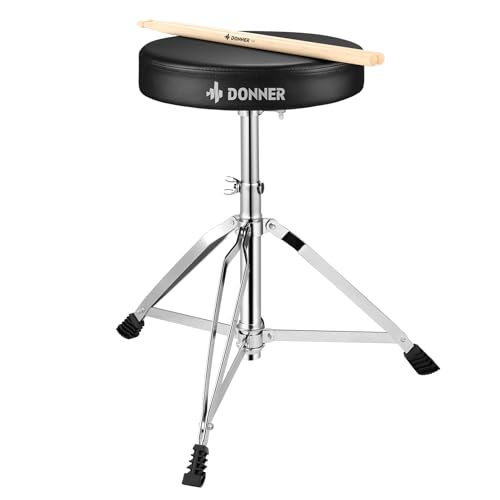
Donner Drum Throne
Beginners and intermediates replacing a starter-kit stool with a sturdier round seat for home practice at a budget price.
Read the Donner Drum Throne review →Questions Buyers Ask
Donner Drum Practice Pad 12
See the current listing, price and included accessories.
About This Review
Mandrillis Team
The Mandrillis editorial team researches and compares audio and music gear using manufacturer documentation, verified specs and real buyer feedback, so you can make a confident purchase without wading through marketing claims.
Read our full research methodology.