Drums & Percussion Review
KORG 16-step Review: A Drum Synth, Not a Playable Kit
The KORG 16-step is a compact digital percussion synthesizer with a 16 step sequencer, not an electronic drum kit or pad. It has no pads, kick pedal, hi hat or cymbals to strike. Buyers searching for a playable drum instrument should look elsewhere, while producers wanting a sequenced drum synth may find real value.
Our Verdict
Research Score 39/100The KORG 16-step does not belong in the same category as a true electronic drum kit or drum pad, and this review scores it accordingly. According to the listing, it is a digital percussion synthesizer built around a six part DSP engine, a 16 step sequencer, a waveguide resonator and pattern tools including Active Step, Slice and two randomize functions. These are genuinely capable features for programming drum sounds, and the compact, portable design with a built in speaker suits a desktop setup well. What it does not offer is anything resembling a struck pad, kick pedal, hi hat or cymbal, so anyone shopping for an instrument to physically play drum parts on should look elsewhere. As a sequenced drum synthesizer for producers, it is a reasonable, honestly featured box.
Editorial research score based on published specifications and documented features, not a customer rating or lab test.

KORG
KORG 16-step
Best for: Electronic musicians and producers who want a compact, sequencer driven drum synthesizer for programming beats, not drummers looking for something to physically play.
Skip it if: You are shopping for an electronic drum kit or pad with pads, a kick pedal or a hi hat to strike and practice on.
Check Price on AmazonWe may earn a commission at no extra cost to you.
Listing verified: November 2026
Who Should Buy It
Buy it if
- Electronic music producers who want a dedicated hardware drum synthesizer
- Sequencer focused musicians who enjoy programming patterns rather than playing pads
- Buyers who specifically want sound design tools like a waveguide resonator and slice function
- Studio or live performers who want a compact, self contained beat making box
Skip it if
- You want a pad or kit that can be struck with sticks or hands
- You need a kick pedal, hi hat pedal or cymbal pads of any kind
- You expect practice or coaching features aimed at developing drumming technique
Key Specifications
| Pad type | Not applicable. The KORG 16-step is a digital percussion synthesizer controlled by a 16 step sequencer and onboard controls, not a struck pad or drum kit |
| Number of pads | Not applicable; no drum pads are described in the listing |
| Module and kits | A six part DSP synth engine generates the drum sounds, shaped by a waveguide resonator for added resonance; the listing does not describe preset kit slots the way a drum module normally would |
| Kick pedal and pad | Not applicable; the listing describes no kick pedal or pad of any kind |
| Hi-hat type | Not applicable; the listing describes no hi hat pedal or pad |
| Cymbal pads | Not applicable; the listing describes no cymbal pads |
| Connectivity | Not published in listing |
| Practice features | Not applicable in the usual sense; the listing instead describes composition and performance tools such as a 16 step sequencer, an Active Step function, a Slice function for intricate rhythms, two randomize functions, a 16 level accent function and a choke function for grouping parts |
| Footprint | Compact and portable, with a built in speaker, according to the listing |
| Included accessories | Not published in listing |
Overview
The KORG 16-step is listed as a digital percussion synthesizer, and that description should be taken literally rather than treated as another way of saying electronic drum kit or pad. According to the listing, it is built around a six part DSP synth engine and a 16 step sequencer rather than any physical pads meant to be struck with sticks or hands.
This review evaluates the KORG 16-step honestly as what the listing actually describes: a compact, self contained drum machine for composing and performing programmed beats, not an instrument a drummer plays directly with technique, dynamics and pad feel. Several of the specification fields and scoring criteria below reflect that mismatch rather than forcing comparisons that do not apply.
Readers specifically looking for a kit or pad to strike, practice rudiments on, or use as a stepping stone toward acoustic drumming should treat this section as a clear signal to look elsewhere in this category. Readers interested in a hardware drum synthesizer for production will find the remaining sections more directly useful. It is worth repeating this distinction plainly, since the word drum in the product name could otherwise lead a shopper to assume some kind of struck pad is involved when none actually is.
Pads, Feel and Response
There is nothing to report here in the way this heading usually applies. The KORG 16-step has no pads of any kind described in the listing, so there is no strike feel, velocity response from hand playing, or rebound characteristic to evaluate.
Sound shaping instead happens through the sequencer and synth engine controls. Parameters are set and adjusted through the unit's interface rather than through dynamic variation in how hard a surface is struck, which is a fundamentally different interaction model from any pad based instrument covered elsewhere in this category.
Buyers who associate the word drum with something they physically strike should understand clearly that the KORG 16-step offers no such surface. Its appeal lies entirely in sound design and sequencing rather than in playing feel. Even touch sensitive controls on similar hardware groove boxes are generally meant for triggering a step or selecting a parameter, not for capturing the kind of dynamic, expressive strike a drummer would deliver to a pad.
Drum Module and Sounds
This is where the KORG 16-step genuinely performs well, according to the listing. A six part DSP synth engine generates drum sounds across multiple parts simultaneously, and a waveguide resonator adds richer, more complex resonances than a simple sample playback engine typically achieves.
Several creative tools support sound variation: an Active Step function lets a player swap in alternate hits for individual steps, a Slice function finely subdivides a step to create drum rolls and intricate rhythmic detail, and two separate randomize functions let a player quickly generate new sonic or pattern ideas.
A 16 level accent function and a choke function for grouping parts round out the sound and pattern design toolkit. Together, these describe a genuinely deep synthesis and sequencing engine, even though none of it is triggered by striking a pad. For a producer specifically shopping for drum sound design depth rather than playing feel, this is a meaningfully more capable engine than a basic sample playback box would offer at a similar price.
Kick, Hi-Hat and Cymbal Pads
None of these exist on the KORG 16-step in the form this heading implies. The listing describes no kick pedal, no hi hat pedal or pad, and no cymbal pads of any kind, because the instrument is not designed to be played that way.
Any kick, hi hat or cymbal style sounds the unit produces come from its six part synth engine and sequencer programming rather than from a foot pedal or hand struck pad. Buyers should treat every other product's equivalent section in this category as the real point of comparison, since this heading simply does not describe how the KORG 16-step works. This is not a shortcoming to be fixed with an accessory purchase, since the entire design philosophy of the instrument does not involve a struck playing surface at any point.
- No kick pedal or pad included or applicable
- No hi hat pedal or pad included or applicable
- No cymbal pads included or applicable
- All drum like sounds are generated through the synth engine and sequencer, not a struck surface
Practice Tools and Features
If this heading is reinterpreted as composition and performance tools rather than physical practice aids, the KORG 16-step has a fair amount to offer according to the listing. The 16 step sequencer forms the backbone, supported by Active Step editing and the Slice function for intricate rhythmic detail.
The two randomize functions and the 16 level accent function both function as creative aids, letting a user push past a static pattern and explore variations quickly without manually programming every change.
None of this, however, is aimed at teaching drumming technique, rudiments or timing on a struck surface. Buyers looking for a metronome, coaching mode or rhythm game aimed at building physical drumming skill will not find any of that described in the listing. The entire practice and feature set here is oriented toward composing and refining a programmed piece of music rather than improving a person's own playing technique on an instrument.
Build, Rack and Footprint
The listing describes the KORG 16-step as compact and portable, with a built in speaker for immediate playback. This fits the general form factor of small hardware groove boxes rather than any kind of drum kit frame or rack.
There is no mention of a stand, rack or mounting hardware, which makes sense given the unit is meant to sit on a desk or table rather than be struck while seated at a kit.
Portability is likely a genuine strength for its actual purpose, letting a producer carry a self contained beat making tool between a studio and a live setup without needing to break down any kit style hardware. That same portability would be irrelevant to a drummer shopping for a kit, which again underlines how different the intended use case is from the rest of this category.
Connectivity and Recording
The listing provided for the KORG 16-step does not state any specific connectivity details such as sync, MIDI or audio output jacks. Rather than guess at standard features found on similar hardware, this review treats connectivity as not published in the listing.
Without confirmed connectivity details, buyers should not assume this unit integrates with a DAW, syncs with other hardware, or records to an external device, since none of that is stated. The built in speaker is the only playback method the listing confirms.
Anyone planning a studio setup around this device should verify connectivity independently before buying, since the listing used for this review does not provide enough detail to confirm it either way. This review deliberately avoids guessing at ports or protocols it cannot confirm, in keeping with the broader principle of only reporting what the listing actually states.
Setup and Daily Use
Setup, based on the listing, should be minimal: a compact, portable unit with a built in speaker suggests power on and play, similar to other small hardware groove boxes.
Daily use will center on programming and refining patterns through the 16 step sequencer, experimenting with the Active Step and Slice functions, and using the randomize tools to generate new ideas quickly, all performed through the unit's own interface rather than through any kind of pad.
This is not an instrument used in the way a drummer practices daily on a kit. It is closer to a composition tool that a producer might return to repeatedly while building tracks. A buyer evaluating daily use should picture sitting at a desk refining patterns rather than standing or sitting at a kit working through stick technique.
Who Should Buy It
The KORG 16-step suits electronic music producers and sequencer focused musicians who want a dedicated, compact drum synthesizer rather than anyone shopping specifically for a drum kit or pad to play.
It also suits buyers who value sound design tools such as a waveguide resonator, slice function and randomize features over physical playing feel, since all of its depth lives in programming and synthesis rather than striking a surface.
It is a clear mismatch for drummers, students or anyone comparing it directly against a struck pad or kit, since nothing about its design supports that use case, and this review scores it accordingly rather than stretching the comparison.
Verdict
The KORG 16-step does not belong in the same category as a true electronic drum kit or drum pad, and this review scores it accordingly. According to the listing, it is a digital percussion synthesizer built around a six part DSP engine, a 16 step sequencer, a waveguide resonator and several pattern tools.
These are genuinely capable features for programming drum sounds, and the compact, portable design with a built in speaker suits a desktop production setup well. What it does not offer is anything resembling a struck pad, kick pedal, hi hat or cymbal.
Anyone shopping for an instrument to physically play drum parts on should not consider this a match. As a sequenced drum synthesizer for producers, it is a reasonable, honestly featured box.
Strengths and Limitations
Strengths
- Genuinely flexible six part DSP synth engine capable of a wide range of drum tones
- 16 step sequencer with Active Step and Slice functions supports intricate rhythm programming
- Built in speaker allows immediate playback without extra gear
- Two randomize functions and a 16 level accent function encourage fast experimentation
- Compact and portable for a dedicated hardware drum machine
Limitations
- This is a drum machine and synthesizer, not an electronic drum kit or pad that can be struck with sticks or hands
- No pads, kick pedal, hi hat or cymbal triggers of any kind are included
- The listing does not describe any connectivity such as sync, MIDI or audio outputs
- Buyers looking for a playable kit will find nothing here to strike or practice technique on
- Not a fit for anyone comparing it directly against pad based practice instruments
How We Scored It
Scores reflect published specifications, documented features and value against the alternatives below. They are editorial research scores, not laboratory measurements.
Alternatives to Consider

Roland TD713
An experienced drummer who wants Roland's newest flagship engine and digital snare and kick pads for studio and stage work and is comfortable confirming the hardware details with the.
Read the Roland TD713 review →
Roland VAD516
A serious drummer who wants an acoustic-looking full-depth shell kit with Roland's digital snare, ride and hi-hat pads and the V51 engine for studio and stage use.
Read the Roland VAD516 review →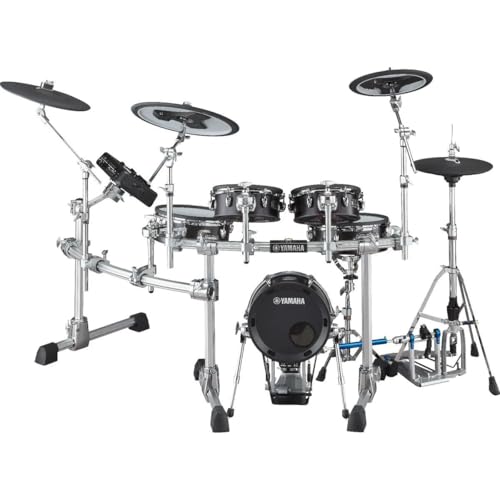
Yamaha DTX10K-X
A working drummer who wants a wood shell electronic kit with Yamaha's TCS feel, studio-recorded sounds and the individual outputs needed for live mixing.
Read the Yamaha DTX10K-X review →Questions Buyers Ask
KORG 16-step
See the current listing, price and included accessories.
About This Review
Mandrillis Team
The Mandrillis editorial team researches and compares audio and music gear using manufacturer documentation, verified specs and real buyer feedback, so you can make a confident purchase without wading through marketing claims.
Read our full research methodology.