Drums & Percussion Review
Pyle Electronic Tabletop Digital Drum Review: Compact and Basic
This Pyle tabletop digital drum set shrinks a full drumset down to a small, battery-capable box with USB MIDI output and a headphone jack for private practice. The listing confirms recording and playback features but leaves pad count, pad material, and pedal detail unstated, so expectations should stay modest.
Our Verdict
Research Score 55/100The Pyle Electronic Tabletop Digital Drum set is built around convenience rather than documented specification. The listing describes a compact unit that resembles a full drum set at a smaller size, runs on an AC adaptor or six C batteries, and connects to a computer over USB as a MIDI controller. A headphone jack supports quiet practice, and onboard controls allow basic recording and editing. What the listing does not provide is any pad count, pad material, kick pedal detail, or preset kit total, which makes it difficult to judge playing feel or sound variety in advance. This is a reasonable pick for a beginner wanting a portable, low-stakes practice box, but not for anyone who needs confirmed specifications before buying.
Editorial research score based on published specifications and documented features, not a customer rating or lab test.

Pyle
Pyle Electronic Tabletop Digital Drum
Best for: Buyers who want a small, battery-capable tabletop drum machine for quiet practice and basic recording rather than a seated, full-size kit.
Skip it if: Drummers who need a documented pad count, a real kick pedal, or rack-mounted cymbals should avoid this listing and look elsewhere.
Check Price on AmazonWe may earn a commission at no extra cost to you.
Listing verified: November 2026
Who Should Buy It
Buy it if
- Beginners who want a compact, low-cost way to experiment with drum sounds
- Buyers who need a battery-powered unit for places without easy outlet access
- People who want to connect a simple MIDI controller to a computer
- Anyone prioritizing headphone-based private practice over seated kit realism
Skip it if
- You need a confirmed pad count and pad material before buying
- You want a real kick pedal and hi-hat pedal, not just a tabletop box
- You expect a large, documented library of preset kits and sounds
Key Specifications
| Pad type | Not published in listing. The feature bullets do not state the pad material or whether the surface is touch sensitive beyond general terms. |
| Number of pads | Not published in listing. The feature bullets describe the unit as resembling an actual drum set at a smaller size but do not give a pad count. |
| Module and kits | A digital drum machine that plays along to pre-recorded drum kits and songs or records a player's own performance. Exact preset kit count and total sound count are not published in the listing. |
| Kick pedal and pad | Not published in listing. No bullet describes a dedicated kick pedal or kick pad for this unit. |
| Hi-hat type | Not published in listing. |
| Cymbal pads | Not published in listing. |
| Connectivity | USB cable connection to Mac or PC that functions as a MIDI controller for computer software, plus a headphone jack for private practice. |
| Practice features | Play along to built-in pre-recorded drum kits and songs, or record original performances through the onboard controls. |
| Footprint | A compact tabletop digital drum set described as a fraction of the size of an actual drum set. Powered by the included AC adaptor or by six C size batteries for portable use. |
| Included accessories | An AC power adaptor is included, per the listing. No drumsticks or stand are mentioned. |
Overview
The Pyle Electronic Tabletop Digital Drum set is described in the listing as a versatile digital drum kit built to resemble, sound, and play like an actual drum set, scaled down to a fraction of the size. It is designed to play along with pre-recorded drum kits and songs or to record a player's own performance directly on the unit.
Like other tabletop electronic drum products, this one trades the layout and feel of a seated kit for a compact box that can sit on a desk or table. The listing frames it around flexibility and portability rather than around a long specification sheet, which is a pattern that shows up again across most of this review.
That pattern matters for how this review is structured. Rather than quoting numbers the listing never provides, each section below works from what is actually confirmed and says plainly where the detail simply is not there.
Pads, Feel and Response
The feature bullets do not state how many pads the unit has, what material they are made from, or whether they recognize multiple velocity levels. The only feel-related claim in the listing is that the unit is built to resemble and play like an actual drum set, which is a broad marketing statement rather than a specification.
Without a published pad count or sensitivity detail, buyers should treat playing feel as an open question rather than a known quantity. On paper, tabletop units in this general class tend to favor light touch over full-arm stick technique, simply because of their compact layout, but that is a general observation rather than a confirmed fact about this specific unit.
Anyone coming from a mesh-head seated kit should expect a different feel here regardless of the exact pad design, since the smaller footprint alone changes how sticks move between surfaces. That adjustment is worth planning for mentally before the unit arrives.
Drum Module and Sounds
According to the listing, the unit functions as a digital drum machine that can play along to pre-recorded drum kits and songs. It can also record a player's own performance, which the listing frames as a creative feature rather than just a playback tool.
The total number of preset kits, the overall sound count, and any effects processing are not published anywhere in the feature bullets. That leaves the sound side of this unit largely undocumented, and buyers interested in a specific kit count should look for that confirmation elsewhere before purchasing.
What is confirmed is that recording and playback both happen on the device itself, through the digital control panel described in the listing. A buyer does not need separate software just to capture a basic performance.
That on-device approach is a meaningful convenience for someone who wants to experiment with sounds without setting up a computer first. It also means the creative ceiling of the unit is tied to whatever the control panel can actually do, which the listing does not break down in granular detail.
Kick, Hi-Hat and Cymbal Pads
No kick pedal, kick pad, hi-hat pedal, or cymbal pad is described anywhere in the feature bullets for this listing. The product is referred to broadly as a drum set that resembles the real thing, without breaking down individual components the way a full kit's specification sheet typically would.
Buyers should not assume this unit includes a floor-mounted kick drum pedal or a stand-mounted hi-hat simply because it is marketed as resembling a drum set. Those specific parts, if present at all, are not confirmed by the listing.
This is the single biggest information gap in the entire listing. A buyer who specifically wants foot-triggered kick and hi-hat input should confirm that capability directly before purchasing, rather than inferring it from the general drum set comparison in the marketing copy.
- Pad count not published in listing
- Kick pedal detail not published in listing
- Hi-hat detail not published in listing
- Cymbal pad detail not published in listing
Practice Tools and Features
The clearest practice-oriented feature in the listing is the ability to play along with built-in pre-recorded drum kits and songs. That gives a beginner something to practice timing against without needing a separate audio source or backing track.
Recording a player's own performance is also described as a core feature, which means a buyer can capture practice sessions or short ideas directly on the unit. The listing frames this as part of the same digital control panel used for general editing, rather than as a separate add-on function.
Together, play-along content and on-device recording cover two of the more useful practice habits for a beginner. Neither requires a documented drum trainer mode or a scored feedback system to be genuinely useful day to day.
A beginner working alone can still build a practice routine around these two features. Switching between following a backing track and recording a short attempt to listen back critically afterward is a simple but effective habit.
Build, Rack and Footprint
This is a tabletop unit rather than a rack-mounted kit, and the listing emphasizes that it resembles a full drum set at a fraction of the actual size. There is no mention of a stand, rack, or boom arms anywhere in the feature bullets.
Portability is one of the stronger points here, since the listing confirms the unit runs on the included AC adaptor or on six C size batteries. That battery option means it can be used in rooms or locations without convenient access to a wall outlet, which is not something a typical seated kit offers.
The absence of a rack also simplifies storage. A tabletop unit like this can be put away in a closet or under a bed between sessions, which is a real advantage for anyone short on dedicated practice space.
Connectivity and Recording
A USB cable connects the unit to a Mac or PC, where it functions as a MIDI controller for computer software. That makes it possible to use the tabletop drum set as an input device for a digital audio workstation, even though it is also a standalone instrument on its own.
A headphone jack is included for private practice, which the listing frames as an alternative to playing out loud for a group. No mention is made of Bluetooth or wireless audio, so every connection described here is wired.
Between the USB MIDI output and the headphone jack, the unit covers both quiet solo practice and basic computer-based recording. Neither connection requires an additional adaptor beyond the cable itself.
For a buyer who already has a laptop set up for recording, this combination means the tabletop unit can slot into an existing workflow. It does not demand an entirely separate recording setup just to be useful.
Setup and Daily Use
Because this is a self-contained tabletop unit, setup should be limited to connecting power, either through the AC adaptor or by loading batteries, and beginning to play. The listing does not describe any complex assembly step, which fits the general tabletop format.
Daily use benefits from the same low-effort setup: a player can sit down, power the unit on, and start practicing with the built-in drum kits and songs almost immediately. The tradeoff, as with any tabletop unit, is that there is little room to customize the physical layout compared with a kit built from separate pads.
Over repeated sessions, that low setup overhead tends to matter more than any single specification. A practice tool that is easy to reach for simply gets used more often than one that requires assembly every time.
Who Should Buy It
This fits a buyer who wants a small, affordable, and portable way to experiment with drum sounds and basic recording, without needing to commit to a full kit or learn a complex setup process. Students, casual hobbyists, and younger beginners are the clearest audience based on what the listing describes.
It is a weaker match for anyone who wants documented specifications before buying, since pad count, pad material, and pedal detail are all absent from the listing. Buyers who need that information to compare against other electronic drum products should look elsewhere or request it directly.
Gift buyers shopping for a young or curious family member may also find the price tier and small footprint appealing. That works best when expectations are set around a casual practice tool rather than a serious instrument.
Verdict
The Pyle Electronic Tabletop Digital Drum set delivers on portability and basic practice features: play-along content, on-device recording, USB MIDI output, and battery operation all check out based on the listing. Those are reasonable building blocks for a beginner's first practice tool.
What holds the score down is the near-total absence of pad, pedal, and sound library detail in the feature bullets. A buyer who wants a confirmed pad count or kit library size will not find it here, and that gap is the main reason this sits toward the lower end of the budget tier rather than higher.
Strengths and Limitations
Strengths
- Tabletop footprint that resembles a full drum set at a fraction of the size
- Runs on AC power or six C batteries for use away from an outlet
- USB MIDI connection works with Mac and PC software
- Headphone jack supports quiet, private practice
- Built-in recording and editing through the onboard control panel
Limitations
- Pad count, pad material, and velocity sensitivity are not published in the listing
- No kick pedal, hi-hat, or cymbal pad detail is given anywhere in the bullets
- Preset kit count and total sound library size are unstated
- No drumsticks or stand are mentioned as included
How We Scored It
Scores reflect published specifications, documented features and value against the alternatives below. They are editorial research scores, not laboratory measurements.
Alternatives to Consider

Roland TD713
An experienced drummer who wants Roland's newest flagship engine and digital snare and kick pads for studio and stage work and is comfortable confirming the hardware details with the.
Read the Roland TD713 review →
Roland VAD516
A serious drummer who wants an acoustic-looking full-depth shell kit with Roland's digital snare, ride and hi-hat pads and the V51 engine for studio and stage use.
Read the Roland VAD516 review →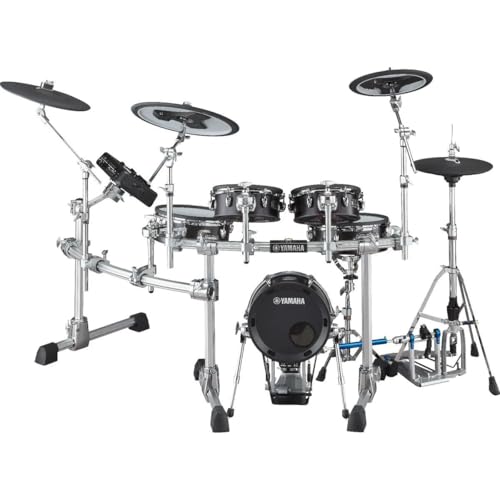
Yamaha DTX10K-X
A working drummer who wants a wood shell electronic kit with Yamaha's TCS feel, studio-recorded sounds and the individual outputs needed for live mixing.
Read the Yamaha DTX10K-X review →Questions Buyers Ask
Pyle Electronic Tabletop Digital Drum
See the current listing, price and included accessories.
About This Review
Mandrillis Team
The Mandrillis editorial team researches and compares audio and music gear using manufacturer documentation, verified specs and real buyer feedback, so you can make a confident purchase without wading through marketing claims.
Read our full research methodology.