Drums & Percussion Review
Pyle Pro Electronic Drum Review: A Budget Tabletop Trainer
This tabletop unit packs seven drum pads, a hi-hat and kick pedal controller, 55 preset kits, and a drum trainer mode into one portable, battery-friendly box. It is built for quiet, beginner-level practice rather than for recreating a full seated kit, and several pad specifications are not published in the listing.
Our Verdict
Research Score 58/100The Pyle Pro Electronic Drum kit is a tabletop practice tool, not a substitute for a full seated electronic kit. The listing describes seven pads, a hi-hat and kick pedal controller, 55 preset kits, and a drum trainer mode, which together cover the basics of learning rhythm. What the listing leaves out matters just as much: pad material, velocity sensitivity, and trigger zone counts are all unstated, so touch response is a guess until a buyer tries it. For a student or traveler who wants a battery-powered box with a USB MIDI output and a built-in song library, this fits the budget tier well. Anyone wanting a seated kit experience with real pedal feel should look elsewhere in the lineup.
Editorial research score based on published specifications and documented features, not a customer rating or lab test.

Pyle
Pyle Pro Electronic Drum
Best for: Buyers who want a portable, battery-friendly tabletop drum trainer for quiet practice rather than a seated, rack-style kit.
Skip it if: Drummers who want a seated kit with a weighted kick pedal, mesh heads, and rack-mounted cymbal pads should avoid this unit.
Check Price on AmazonWe may earn a commission at no extra cost to you.
Listing verified: November 2026
Who Should Buy It
Buy it if
- Beginners who want a low-commitment way to learn basic rhythm and timing
- Students or travelers who need a drum trainer that fits in a bag and runs on batteries
- Buyers who want a large built-in sound library without connecting a computer
- People who want simple USB MIDI input into recording software
Skip it if
- You want realistic mesh-head feel under the sticks
- You want a full-size rack with a real kick drum and boom-mounted cymbals
- You already own a dedicated MIDI pad controller with more trigger zones
Key Specifications
| Pad type | Not published in listing. The listing does not state whether the seven drum pads use a rubber, foam, or mesh playing surface. |
| Number of pads | Seven drum pads plus a separate hi-hat and kick bass drum digital pedal controller, per the listing. |
| Module and kits | 55 preset drum kits plus 10 custom save slots, with more than 300 cymbal and drum sounds and a built-in drum trainer learning mode. |
| Kick pedal and pad | A digital kick bass drum pedal controller is included and built into the tabletop unit. Pedal size, travel, and sensitivity are not published in the listing. |
| Hi-hat type | A hi-hat pedal controller is included. The listing does not state how many hi-hat positions or zones it recognizes. |
| Cymbal pads | Crash and ride cymbal sounds are part of the onboard voice set. The listing does not give separate cymbal pad sizes or zone counts. |
| Connectivity | USB output for a MIDI connection to Mac or PC, an AUX input for backing tracks, and a phone or headphone output jack for amplifiers or headphones. |
| Practice features | Drum trainer learning mode, 55 preset kits with 10 custom slots, and over 300 cymbal and drum sounds for varied practice material. |
| Footprint | A single compact tabletop unit rather than a rack-mounted kit. It runs on the included AC adaptor or on six C batteries for portable use. |
| Included accessories | Drumsticks and an AC power adaptor are included, per the listing. |
Overview
The Pyle Pro Electronic Drum kit, model PTED06, is a tabletop electronic percussion unit built around seven drum pads along with a separate hi-hat and kick bass drum digital pedal controller. The listing positions it as a complete drumset sound source that covers tom-toms, hi-hat, snare, crash, and ride cymbal voices from a single compact box. It is marketed toward both beginners and more experienced players who want a small practice instrument rather than a full seated kit.
Rather than a rack of mesh or rubber pads arranged around a drummer's stool, this is a desktop unit meant to sit on a table or flat surface. The pads, pedal controllers, and sound engine are built into one chassis, which keeps the footprint small and the setup time short. That approach trades the feel of a full kit for portability and a low barrier to entry.
Buyers shopping this category tend to fall into two camps: those replacing an acoustic kit and those starting from zero. This unit is clearly built for the second group, offering an all-in-one box that skips the assembly and space demands of even a compact mesh kit.
Pads, Feel and Response
The listing confirms seven physical drum pads plus hi-hat and kick pedal controllers, but it does not state the playing surface material, pad diameter, or how many velocity layers each pad recognizes. Buyers used to mesh-head kits should not assume a similar bounce or quiet response here, since neither is mentioned anywhere in the product description.
On paper, a tabletop layout with this many pads is aimed more at finger or light stick technique than at full-arm stick work across a seated kit. The digital kick and hi-hat pedal controllers add foot input without requiring a floor-mounted bass drum pad or a tall hi-hat stand, which keeps the whole setup compact but also changes how dynamics translate compared with a standing kit.
Buyers report that tabletop units in this general class reward lighter wrist motion over full-arm strokes, simply because the pads sit close together on a flat surface. Without a published sensitivity spec, it is worth treating any dynamic range claims with caution until the unit is in hand.
Drum Module and Sounds
According to the listing, the onboard module carries 55 preset drum kits with 10 additional custom save slots, and more than 300 individual cymbal and drum sounds in total. That is a sizable library for a budget tabletop unit, giving a learner plenty of tonal variety without needing to edit sounds from scratch.
The sound engine also includes a drum trainer learning mode, described in the listing as built in for beginners and starters. Exact detail on how the trainer grades timing or what feedback it gives is not provided, so buyers should treat it as a practice aid rather than a scored lesson system with documented metrics.
With 10 custom slots layered on top of 55 presets, there is room to save tweaked settings for recurring practice routines. That flexibility is a genuine strength for a unit at this price tier, even without deeper polyphony or effects specifications on record.
Kick, Hi-Hat and Cymbal Pads
The kick bass drum function is delivered through a digital pedal controller rather than a standalone floor pad with a beater, and the hi-hat is handled the same way, through its own pedal controller. Neither pedal's travel distance, resistance, or number of recognized positions is published in the listing.
Crash and ride cymbal sounds are included among the drum kit voices and can be triggered from the pad set. The listing does not break out separate cymbal pad sizes or zone counts the way a full kit's spec sheet typically would.
This arrangement suits players who want foot-triggered kick and hi-hat sounds without needing floor space for a separate bass drum shell. It is consistent with the compact, tabletop intent of the whole unit.
- Seven drum pads for tom, snare, and general voicing
- Separate hi-hat pedal controller
- Separate kick bass drum pedal controller
- Crash and ride cymbal sounds included in the voice set
Practice Tools and Features
Beyond the drum trainer mode, the main practice-oriented feature is the sheer size of the onboard sound library. With 55 preset kits and 10 custom slots to fall back on, a player can switch tones often enough to keep practice sessions from feeling repetitive.
The digital control panel, described in the listing as including an LCD screen and a range of audio configuration controls, allows recording and editing directly on the unit. The listing frames this as a way to create and customize music on the device itself, though it does not specify storage capacity or file formats.
For a beginner working through timing exercises, having both a trainer mode and hundreds of sounds on tap means practice does not have to be limited to a single kit tone. That variety can help sustain motivation over repeated sessions.
Build, Rack and Footprint
There is no rack or stand involved. This is a self-contained tabletop box, and the listing emphasizes portability by noting it can run on the included AC adaptor or on six C batteries, making it usable away from a wall outlet.
Because it skips a rack entirely, setup is essentially plug in or load batteries and play. The tradeoff is that the unit does not replicate the posture, spacing, or ergonomics of a seated kit, and buyers should view the footprint benefit and the posture limitation as two sides of the same design choice.
Battery operation in particular sets this apart from most seated electronic kits, which typically require a wall outlet for the module. That makes the Pyle unit genuinely usable in places a full kit could never go, such as a dorm room or a shared apartment.
Connectivity and Recording
A USB connection lets the unit act as a MIDI controller for desktop software on Mac or PC, which opens the door to using it with a digital audio workstation even though it is primarily a standalone instrument. An AUX input is also included for playing along with other audio sources.
A phone or headphone output jack rounds out the connection options, letting a player route sound to an amplifier for group settings or to headphones for quiet solo practice. The listing does not mention Bluetooth or wireless audio, so all connections here are wired.
For anyone recording short practice clips or basic demo tracks, the combination of USB MIDI out and a direct headphone jack covers the two most common use cases. Neither requires an extra adaptor or interface to get working.
Setup and Daily Use
Day to day, the appeal of this kind of unit is speed: unbox it, connect power, and start playing without assembling a rack or routing cables to separate pads. The included drumsticks mean a buyer does not need to source sticks separately before a first session.
Because everything is integrated into one chassis, moving the unit between rooms or packing it for travel is straightforward compared with breaking down a full kit. The same integration means there is little room for customizing pad placement, so players who want to rearrange their setup have limited options here.
Daily practice sessions benefit from the low setup overhead. A player can sit down, flip a power switch or load batteries, and be playing within a minute or two, which lowers the friction that often keeps a bulkier kit unused.
Who Should Buy It
This fits buyers who want an affordable, portable way to practice rhythm and basic drum patterns without committing to a full kit. Students sharing living space, travelers, and absolute beginners are the clearest audience based on what the listing describes.
It is a weaker fit for anyone who already plays on an acoustic or mesh kit and wants a true practice substitute. The listing simply does not publish the pad feel and sensitivity details that would let a buyer judge how close the response comes to a real kit.
Parents buying a first instrument for a curious child may also find this a sensible entry point. The price tier and compact footprint limit the risk if interest does not stick.
Verdict
The Pyle Pro Electronic Drum kit earns its budget tabletop reputation through practicality rather than realism. Seven pads, two pedal controllers, a large preset library, and a drum trainer mode cover the fundamentals of learning rhythm in a box small enough for a desk or shelf.
What keeps it from scoring higher is the gap in published detail on pad material, sensitivity, and zone counts, which makes it hard to promise a specific feel. Buyers who go in expecting a learning tool rather than a kit replacement are the ones most likely to be satisfied.
For its price tier, the mix of battery operation, a sizable sound library, and USB MIDI output adds up to reasonable value. That value holds provided expectations stay anchored to what a tabletop unit can realistically deliver.
Strengths and Limitations
Strengths
- Compact tabletop design that stores and travels easily
- Runs on AC power or six C batteries, so it is not tied to an outlet
- Large onboard library with 55 preset kits, 10 custom slots, and 300 plus sounds
- Built-in drum trainer mode aimed at beginners
- USB MIDI output lets it double as a basic computer input device
Limitations
- Pad material and velocity sensitivity are not published in the listing
- No stated number of trigger zones for the cymbal or hi-hat pads
- Tabletop layout means no standing kit posture or full-size pedal feel
- Control panel depth beyond basic recording and editing is not detailed
How We Scored It
Scores reflect published specifications, documented features and value against the alternatives below. They are editorial research scores, not laboratory measurements.
Alternatives to Consider

Roland TD713
An experienced drummer who wants Roland's newest flagship engine and digital snare and kick pads for studio and stage work and is comfortable confirming the hardware details with the.
Read the Roland TD713 review →
Roland VAD516
A serious drummer who wants an acoustic-looking full-depth shell kit with Roland's digital snare, ride and hi-hat pads and the V51 engine for studio and stage use.
Read the Roland VAD516 review →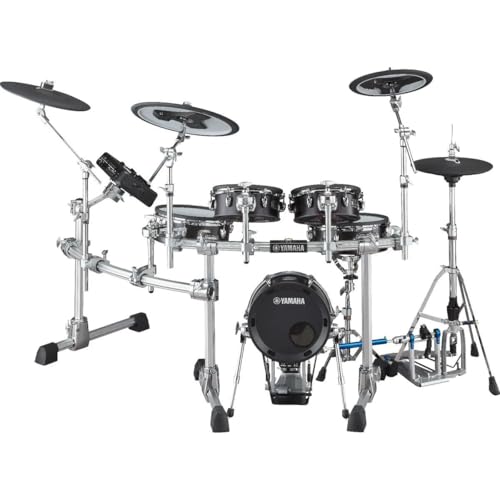
Yamaha DTX10K-X
A working drummer who wants a wood shell electronic kit with Yamaha's TCS feel, studio-recorded sounds and the individual outputs needed for live mixing.
Read the Yamaha DTX10K-X review →Questions Buyers Ask
Pyle Pro Electronic Drum
See the current listing, price and included accessories.
About This Review
Mandrillis Team
The Mandrillis editorial team researches and compares audio and music gear using manufacturer documentation, verified specs and real buyer feedback, so you can make a confident purchase without wading through marketing claims.
Read our full research methodology.