Drums & Percussion Review
Roland OCTAPAD SPD-30 Review: Rugged Multi-Pad Live Percussion
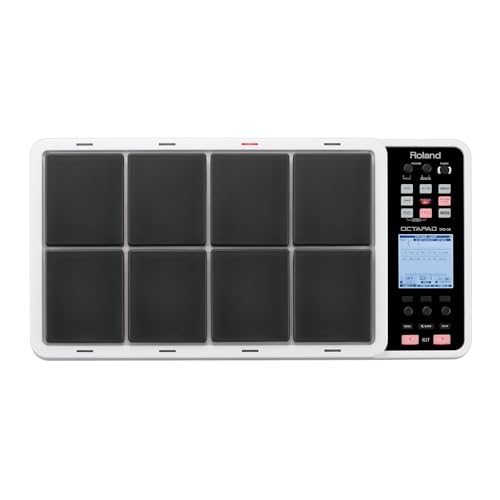
The Roland OCTAPAD SPD-30 is a rugged multi-pad percussion instrument built around pad-sensing technology from the V-Drums line. The listing highlights four dual-trigger inputs, a hi-hat controller input, a Phrase Loop with three overdub layers and USB for MIDI and storage. This review sorts the published facts from the gaps.
Our Verdict
Research Score 78/100The Roland OCTAPAD SPD-30 earns its upper mid-range tier on the strength of its trigger engine and its expandability. Pad sensing borrowed from V-Drums, isolation between pads and four dual-trigger inputs plus a hi-hat controller make it a credible mini kit as well as a percussion surface, and the Phrase Loop with three overdub layers is a genuine performance tool rather than a gimmick. The listing is thin on the sound side, with no kit count, no sound count and no mention of audio outputs, so buyers who care about those details should confirm them first. For live percussionists and hybrid drummers who value durability and triggering accuracy over a published spec sheet, it remains a sensible pick.
Editorial research score based on published specifications and documented features, not a customer rating or lab test.
Roland
Roland OCTAPAD SPD-30
Best for: Gigging percussionists and drummers who want a rugged multi-pad surface that can grow into a mini kit and loop ideas on stage.
Skip it if: You need published sound counts, audio output details and a stand or pedal in the box before committing.
Check Price on AmazonWe may earn a commission at no extra cost to you.
Listing verified: October 2026
Who Should Buy It
Buy it if
- Percussionists adding electronic sounds to a live rig
- Drummers who want a compact pad that expands with external triggers
- Players who build grooves with layered loops
- Hybrid players triggering from acoustic drums
Skip it if
- You want a full kit with pads, kick and hi-hat included
- You need confirmed user-sample import, which the listing does not mention
- You are shopping in the budget tier
Key Specifications
| Pad type | Multi-pad percussion surface using pad-sensing technology developed for V-Drums; pad material not published in listing |
| Number of pads | Not published in listing; the Octapad name denotes an eight-pad surface |
| Module and kits | Self-contained percussion pad with onboard sounds; kit and sound counts not published in listing |
| Kick pedal and pad | Not included; external pads connect through four dual-trigger inputs |
| Hi-hat type | Hi-hat controller input for an external pedal; controller not listed as included |
| Cymbal pads | Not included; external cymbal pads can use the dual-trigger inputs |
| Connectivity | USB for MIDI and memory storage; four dual-trigger inputs; hi-hat controller input; audio outputs not published in listing |
| Practice features | Phrase Loop with real-time recording and up to three overdub layers |
| Footprint | Not published in listing |
| Included accessories | Not published in listing |
Overview
The Roland OCTAPAD SPD-30 is a multi-pad digital percussion instrument aimed at players who want electronic sounds under their sticks without setting up a full kit. The Octapad name carries over from Roland's long-running line of eight-pad controllers, and the listing positions this version as a rugged, road-worthy unit with a large backlit LCD and pad indicator lights for low-light stages.
On paper the strongest claims concern triggering rather than sound. The listing describes the latest pad-sensing technology developed for V-Drums, promising even and accurate response with excellent isolation between pads, which is the central problem any multi-pad instrument has to solve.
What the listing does not provide is just as important for a buyer. There is no published sound count, kit count, output configuration, weight or footprint, so this review treats the SPD-30 as a performance tool whose trigger engine and expansion are documented and whose sound library and physical dimensions are not.
Pads, Feel and Response
Feel on a flat percussion pad comes down to two things: how evenly each pad responds across its surface and how well a hard hit on one pad stays out of its neighbors. The listing addresses both, crediting pad-sensing technology developed for V-Drums with even and accurate triggering and excellent isolation between pads.
Isolation matters more on a multi-pad than on a kit, because the pads share a single chassis and a rimshot-strength hit can travel through the frame. Crosstalk shows up as ghost triggers on adjacent pads, and a unit built for touring has to suppress it without raising thresholds so high that soft playing disappears.
The listing does not state the pad material, the pad dimensions or whether the pads are divided into zones. Buyers who have played earlier Octapads will recognize the format, but anyone expecting mesh or multi-zone heads should note that nothing in the published specification supports that assumption. Pad indicator lights at least confirm visually which pad fired, which helps when learning a new layout in a dark room.
Drum Module and Sounds
Unlike a drum kit that pairs separate pads with a module, the SPD-30 is a single instrument with the brain and the playing surface in one box. The listing leaves the size of that brain undocumented: no number of onboard sounds, no number of preset kits and no list of instrument categories appear in the published data.
That gap is significant for a product in the upper mid-range tier, where buyers typically compare sound libraries directly. General experience with Roland percussion products suggests a mix of acoustic percussion, drum and electronic sounds, but that is context rather than confirmed specification, and the honest position is that the library is unknown from this listing.
The hi-hat controller input does tell us something about the sound engine. A dedicated controller input means the module can interpret pedal position and produce open, closed and foot-chick articulations, which places the SPD-30 above simple sample-trigger boxes that treat every pad the same way.
Kick, Hi-Hat and Cymbal Pads
None of these pads ship with the SPD-30, but the listing makes clear the unit is designed to accept them. Four dual-trigger inputs plus a hi-hat controller input are described as a way to add pads and build a mini kit, or to connect triggers mounted on acoustic drums.
Dual-trigger inputs accept pads with two zones, so a connected snare pad can deliver head and rim sounds, or a cymbal pad can deliver bow and edge, from a single cable. With four such inputs a player could run a kick pad, a snare pad, a hi-hat pad and a crash or ride, which is a workable compact kit for small stages.
The listing does not name compatible pad models, does not say whether choke is supported on connected cymbal pads, and does not identify which hi-hat controllers the input accepts. Those are standard questions for any expansion, and the answers should be confirmed before buying extra pads.
- Four dual-trigger inputs for external pads or acoustic drum triggers
- Dedicated hi-hat controller input for an external pedal
- Mini kit configuration possible with kick, snare, hi-hat and one cymbal
- Compatible pad models and choke support not published in listing
- No kick pedal, stand or pads included per the published data
Practice Tools and Features
The headline feature here is the Phrase Loop. According to the listing it records your playing in real time and lets you overdub up to three layers, which turns the pad into a self-contained groove builder for practice, songwriting or live looping.
For practice, a looper is useful in a specific way: you can lay down a hi-hat or shaker pattern, then play against it to work on independence and time, hearing immediately when a layer drifts. Three overdub layers is enough for a kick, snare and percussion stack without needing a separate loop pedal.
A metronome, play-along songs and a coaching mode are not mentioned in the published data. Players who rely on a built-in click should confirm its presence, because the listing is silent on it even though most instruments in this class include one.
Build, Rack and Footprint
Rugged and road-worthy is the listing's own description, and it fits the way Octapads have historically been used: strapped to a stand at the side of a kit, loaded into a case nightly and hit hard. The large backlit LCD and pad indicator lights are also framed as stage features, for operation in low-light conditions.
Physical specifications are missing from the published data. There is no weight, no width or depth, no stated mounting hardware and no indication of whether a pad stand or clamp is included. Multi-pads of this type are normally mounted on a dedicated stand bought separately, and buyers should budget for one.
Chassis material is likewise unstated. Nothing in the listing says whether the housing is metal or plastic, so the build score here rests on Roland's description of the design intent and the reputation of the line rather than a documented construction detail.
Connectivity and Recording
USB is the one connection the listing describes explicitly, and it serves two purposes: MIDI and memory storage. MIDI over USB means the SPD-30 can drive software instruments or record note data into a digital audio workstation without a separate interface, while memory storage suggests backing up kits and settings to a drive or computer.
Audio outputs are not described, which is an unusual omission for a stage instrument. Most percussion pads offer stereo line outputs and a headphone jack, and some add a mix input for playing along, but none of that is confirmed in the published specification and buyers should check the rear panel before assuming.
The four dual-trigger inputs and the hi-hat controller input count as connectivity too, and they are the clearest documented strength. Traditional five-pin MIDI ports, a footswitch input and any audio sampling capability are not mentioned anywhere in the listing.
Setup and Daily Use
Setting up a multi-pad is faster than assembling a kit: mount the unit on a stand, connect power and outputs, and select a kit. The pad indicator lights and the large backlit display are meant to make that selection obvious on a dim stage, and the combination should reduce the number of wrong-kit moments mid-set.
Daily use benefits from the Phrase Loop in a way that is easy to underestimate. Instead of reaching for a laptop to sketch an idea, a player can record a part, overdub twice and have a working loop in under a minute, which is the kind of workflow that gets used because it is frictionless.
Expansion adds setup time in proportion to how far you take it. Each external pad needs its own cable and trigger calibration, and the hi-hat controller needs its position range learned, so a four-pad mini kit is best configured once at home and saved rather than rebuilt at every gig.
Who Should Buy It
The most natural buyer is a percussionist or drummer who already has a stage setup and wants electronic sounds within reach. The rugged design, low-light operation and trigger isolation are all aimed at this player, and the Phrase Loop adds a creative tool that acoustic percussion cannot replicate.
A second group is the hybrid drummer who wants to trigger samples from acoustic drums. The dual-trigger inputs are described as accepting acoustic drum triggers, so a snare trigger and a kick trigger can run into the SPD-30 while the pads cover everything else.
Beginners looking for a first electronic kit should look elsewhere, since the SPD-30 ships without kick, hi-hat or cymbal pads and costs more than a complete starter kit in a lower tier. Sample-heavy producers who need to load their own audio should also confirm that capability, because the listing does not mention it.
Verdict
Judged on what the listing publishes, the Roland OCTAPAD SPD-30 is a triggering and performance instrument first and a sound library second. V-Drums pad sensing, isolation between pads and a generous set of expansion inputs are documented strengths, and the Phrase Loop gives it a reason to exist alongside a laptop.
The weaknesses are mostly gaps rather than faults: no published sound count, no output list, no weight and no material specification. In the upper mid-range tier those omissions deserve a confirming question to the seller before purchase.
The feel score reflects the documented trigger engine, the sounds score is held back by the undocumented library, and the value score accounts for an instrument that needs a stand and possibly pads to reach its potential. For the live percussionist it was designed for, the trade-offs make sense.
Strengths and Limitations
Strengths
- Pad-sensing technology developed for V-Drums with isolation between pads
- Four dual-trigger inputs plus a hi-hat controller input for a mini kit
- Phrase Loop records in real time and overdubs up to three layers
- USB handles both MIDI and memory storage
- Backlit LCD and pad indicator lights for dark stages
- Rugged, road-worthy design
Limitations
- Sound and kit counts are not published in the listing
- Audio outputs and headphone jack are not stated
- Pad material and footprint are not published
- Upper mid-range tier for a pad that ships without pedals or stands
How We Scored It
Scores reflect published specifications, documented features and value against the alternatives below. They are editorial research scores, not laboratory measurements.
Alternatives to Consider

Donner Beat Max Electronic Drum
Intermediate home drummers who want large mesh pads, big chokeable cymbals and a touch-screen module with serious practice and recording tools.
Read the Donner Beat Max Electronic Drum review →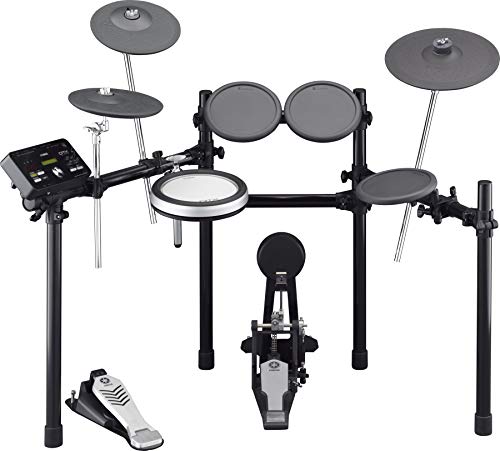
Yamaha DTX522K
Intermediate drummers who want a three-zone silicone snare and expressive cymbals from a major brand at an upper mid-range price.
Read the Yamaha DTX522K review →
Roland TD-07KV2
Beginners and returning drummers who want a complete nine-pad kit with Bluetooth, USB recording and built-in coaching from an established V-Drums line.
Read the Roland TD-07KV2 review →Questions Buyers Ask
Roland OCTAPAD SPD-30
See the current listing, price and included accessories.
About This Review
Mandrillis Team
The Mandrillis editorial team researches and compares audio and music gear using manufacturer documentation, verified specs and real buyer feedback, so you can make a confident purchase without wading through marketing claims.
Read our full research methodology.