Drums & Percussion Review
Yamaha DTX 6 Review: Strong Name, Thin Listing Data
The Yamaha DTX 6 arrives with a strong family reputation and a listing that says almost nothing. The product page promises real studio sounds, customizable options and exceptional playability, but publishes no pad count, module details or connectivity. This review explains what those claims usually mean and what a buyer must confirm before paying upper mid-range money.
Our Verdict
Research Score 70/100The Yamaha DTX 6 sits in an awkward spot for a research review. The family name carries weight among intermediate drummers, and the listing's three claims, real studio sounds, customizable options and exceptional playability, line up with what the series is known for. Yet the listing itself publishes nothing a careful buyer can check: no pad count, no pad material, no module name, no kit count, no connectivity and no accessory list. The score of 70 reflects that gap rather than a judgment on the kit's quality. If the seller confirms a silicone or mesh pad configuration, a named module and USB connectivity, the kit becomes a credible upper mid-range choice. Until then, treat the listing as a placeholder and verify before ordering.
Editorial research score based on published specifications and documented features, not a customer rating or lab test.

Yamaha
Yamaha DTX 6
Best for: Drummers who already know the Yamaha DTX 6 series from other sources and want a mid-tier kit from an established brand.
Skip it if: You need every specification confirmed in the listing before you commit to an upper mid-range purchase.
Check Price on AmazonWe may earn a commission at no extra cost to you.
Listing verified: October 2026
Who Should Buy It
Buy it if
- Intermediate drummers stepping up from an entry-level rubber pad kit
- Players who value a major brand's sound library and support
- Home studio owners who want studio-style acoustic kit sounds
- Buyers willing to confirm the configuration with the seller before ordering
Skip it if
- You want a full published spec sheet in the listing
- You are on a strict budget and need a lower tier
- You need a kick pedal and accessories confirmed in the box
Key Specifications
| Pad type | Not published in listing |
| Number of pads | Not published in listing |
| Module and kits | Not published in listing; the listing describes real studio sounds and customizable options |
| Kick pedal and pad | Not published in listing |
| Hi-hat type | Not published in listing |
| Cymbal pads | Not published in listing |
| Connectivity | Not published in listing |
| Practice features | Not published in listing |
| Footprint | Not published in listing |
| Included accessories | Not published in listing |
Overview
Yamaha's DTX 6 series occupies the middle of the company's electronic drum range, above the entry-level kits and below the DTX8 and DTX10 flagships. The Yamaha DTX 6 covered here is the DTX6K2-X configuration, and the listing positions it with three promises: real studio sounds, customizable options and exceptional playability. Those are exactly the attributes a mid-tier buyer wants, which makes the lack of supporting detail frustrating.
The product listing is unusually sparse for an upper mid-range kit. It names the brand, places the product in the electronic drum set category and offers a single marketing sentence. There is no pad list, no module description, no sound count and no mention of connectivity or included hardware.
This review therefore works differently from a review of a fully documented kit. It explains what each listing claim normally means in an electronic kit of this tier, flags the specifications a buyer must confirm elsewhere, and scores the product with the data gap made explicit. Readers who already know the DTX 6 family from a shop floor or a friend's practice room will find the unknowns easier to fill in.
Pads, Feel and Response
Exceptional playability is the listing's headline feel claim, and in a kit at this tier that phrase usually points to pads that rebound naturally and track dynamics from soft ghost notes to full rimshots. The listing does not say whether the snare and toms use mesh heads, silicone surfaces or rubber, and it does not give a single pad diameter. Feel is the most important attribute of any electronic kit, so this omission matters more than any other.
Pad zoning is equally unstated. A mid-tier snare normally offers head, rim and cross-stick articulation, and tom pads often add a rim zone for extra sounds. Nothing in the published text confirms how many zones the Yamaha DTX 6 pads provide or whether the snare supports positional sensing.
Buyers should ask two direct questions before ordering: what material are the snare and tom playing surfaces, and how many zones does each pad trigger. Compared with a reference kit such as the Roland TD-07KV or the Alesis Nitro Max, where pad construction is widely documented, this listing offers no basis for a like-for-like feel comparison. The feel score below is held back for that reason alone.
Drum Module and Sounds
Real studio sounds is the listing's sound claim, and in Yamaha's language that normally describes acoustic drum kits recorded in professional rooms rather than synthesized approximations. The phrase suggests sampled snares, kicks and cymbals with multiple velocity layers, which is what separates a mid-tier module from a budget one. The listing does not name the module, state how many kits are preset or give a total instrument count.
Customizable options is the second sound-related claim. On most modules at this tier that means swapping individual instruments within a kit, tuning and muffling drums, adding room ambience and adjusting effects. Whether the Yamaha DTX 6 module also supports importing user samples or layering two sounds on one pad is not stated anywhere in the published material.
Without a named module it is impossible to judge the sound engine against the Yamaha DTX6K reference or the Roland TD-17KVX. On paper the claim is attractive but unsupported, and the sounds score reflects a promising description that a buyer cannot verify from the listing alone.
Kick, Hi-Hat and Cymbal Pads
Nothing in the listing describes the kick tower, the hi-hat controller or the cymbal pads. A kit at this tier usually ships with a kick pad that accepts a standard bass drum pedal, a hi-hat pad paired with a foot controller, and two or three cymbal pads with choke. Whether the pedal itself is included is a common point of confusion with electronic kits, and the listing gives no answer.
Cymbal zoning also goes unmentioned. Mid-tier ride pads often provide bow, edge and bell triggering, while crashes offer bow and edge with a choke grab. A buyer should confirm the cymbal count, the zoning and whether the hi-hat uses a pad on a stand or a controller pedal with a fixed pad.
- Kick pad type and pedal inclusion: Not published in listing
- Hi-hat controller or stand-mounted pad: Not published in listing
- Number of cymbal pads: Not published in listing
- Cymbal zones and choke support: Not published in listing
- Ride bell triggering: Not published in listing
Practice Tools and Features
Electronic kits earn their keep as practice instruments, and the listing's silence on practice tools is a real gap. Typical features in this class include a metronome with adjustable subdivisions, built-in training modes that score timing accuracy, song playback for play-along and a recorder for reviewing takes. None of these is confirmed for the Yamaha DTX 6.
Companion apps are another area to check. Yamaha has historically supported its kits with mobile apps for kit editing and lesson content, and app-based training is now common across this tier. The Yamaha DTX 6 listing makes no such statement, so app support should be treated as unverified.
The features score credits the general class of product rather than any documented capability. Readers who place a high value on structured practice should confirm a metronome, a training function and an audio input for play-along before purchase.
Build, Rack and Footprint
The rack is unstated. Kits at this tier commonly use a metal rack with clamps for the toms and cymbals, with a separate snare stand or a rack-mounted snare arm. The published text does not say which approach the Yamaha DTX 6 uses, nor whether the rack folds for storage.
Footprint is similarly absent. A five-piece electronic kit with three cymbals typically needs a space comparable to a compact acoustic kit, and apartment drummers also need to consider kick vibration through the floor. Weight, shipped box count and assembly requirements are all missing, so plan space conservatively and expect at least one large carton.
Hardware quality often separates kits that stay in position for their player from ones that drift, since loose clamps let pads rotate under repeated strikes. Without a published rack description, the safest assumption is a conventional metal frame, and buyers should ask whether the snare mounts on the rack or on a separate stand.
Connectivity and Recording
Connectivity determines whether the kit works as a studio instrument or only as a practice tool. Expected ports at this tier include a USB connection for audio and MIDI, a headphone output, a stereo line output, an auxiliary input for a phone or tablet and often a MIDI out. The listing confirms none of them.
Bluetooth is increasingly common for streaming backing tracks from a phone, and several reference kits including the Roland TD-07KV offer it. Whether the Yamaha DTX 6 includes wireless audio or MIDI is not published.
Recording workflow depends entirely on these unknowns. If USB audio is present, the kit can record directly into a computer without an interface; if only MIDI is present, the kit can drive software drum instruments. Confirm the exact ports before counting on either path.
Setup and Daily Use
Assembly instructions, cable count and included documentation are not described. A multi-box shipment is normal for a full kit, and the rack usually arrives in one carton with pads and the module in another. Allow an hour or two for first assembly and expect to spend time on pad sensitivity settings.
Day to day, the appeal of a mid-tier Yamaha kit is usually a module that is quick to navigate and pads that need little adjustment once set. The listing's emphasis on playability supports that expectation without proving it. Throne, sticks and headphones should be assumed to be separate purchases unless the seller states otherwise.
Noise is another daily-use consideration the listing does not address. Mesh and silicone pads are considerably quieter under the stick than rubber, and kick pad noise through a floor is a common complaint in apartments. Ask about the surface material before assuming the kit is neighbor-friendly.
Who Should Buy It
The Yamaha DTX 6 makes sense for an intermediate drummer who already trusts the series and is buying the name as much as the listing. It also suits a home studio owner who wants acoustic-style kit sounds from a major manufacturer and is prepared to confirm the module's recording connections separately.
It is a poor fit for a first-time buyer comparing listings line by line, because there are no lines to compare. Anyone on a tight budget should look at a lower tier, and anyone who needs a pedal, throne and headphones in the box should verify the package contents in writing before committing.
Compared with the Roland TD-07KV, which publishes pad sizes, module kit counts and connectivity in its listing, the Yamaha DTX 6 asks for more trust. That trust may be well placed, but it should be earned by a written specification rather than a brand name.
Verdict
On paper the Yamaha DTX 6 is an attractive mid-tier kit from a brand with a long electronic drum history, and the listing's three claims align with that reputation. In practice the listing gives a reviewer almost nothing to work with, and a buyer should not pay upper mid-range money on a marketing sentence.
The score of 70 is a conservative placeholder that rewards the family's standing while penalizing the missing data. Confirm the pad materials, the module, the connectivity and the box contents, and the kit may well deserve a higher mark.
Strengths and Limitations
Strengths
- Part of a recognized mid-tier electronic kit family from a major drum maker
- Listing promises real studio sounds rather than generic synthesized kits
- Customizable options are highlighted, which usually means kit editing on the module
- Playability is the stated focus, a good sign for a practice and gigging kit
Limitations
- Listing publishes no pad sizes, pad materials or pad count
- No module name, kit count or sound count is stated
- Connectivity, kick hardware and included accessories are all unstated
- Upper mid-range tier with almost no verifiable detail in the listing
How We Scored It
Scores reflect published specifications, documented features and value against the alternatives below. They are editorial research scores, not laboratory measurements.
Alternatives to Consider

Roland SPD-SX PRO
Working drummers and percussionists who trigger backing tracks, loops and one-shots on stage and need individual outputs for front of house.
Read the Roland SPD-SX PRO review →
Roland TD-30
Drummers who already own compatible pads and want a flagship-class brain with physical faders and deep per-pad processing.
Read the Roland TD-30 review →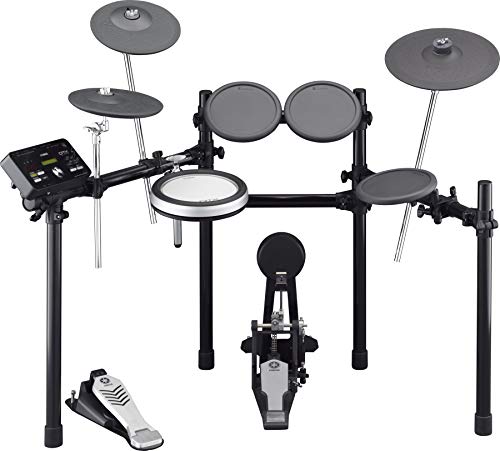
Yamaha DTX522K
Intermediate drummers who want a three-zone silicone snare and expressive cymbals from a major brand at an upper mid-range price.
Read the Yamaha DTX522K review →Questions Buyers Ask
Yamaha DTX 6
See the current listing, price and included accessories.
About This Review
Mandrillis Team
The Mandrillis editorial team researches and compares audio and music gear using manufacturer documentation, verified specs and real buyer feedback, so you can make a confident purchase without wading through marketing claims.
Read our full research methodology.