Drums & Percussion Review
Yamaha DTX522K Review: Silicone Snare, Three-Zone Cymbals
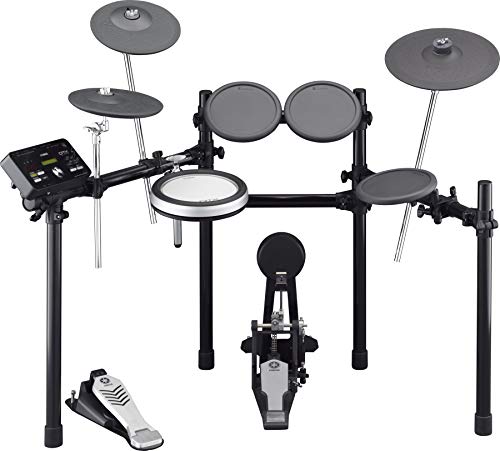
The Yamaha DTX522K pairs an XP80 three-zone textured silicone snare pad with three-zone ride, crash and hi-hat pads and the DTX502 module's 691 sounds. The listing adds free iOS apps for training and customization but omits the kick pedal, tom pad details and connectivity. This review sorts the confirmed strengths from the open questions.
Our Verdict
Research Score 73/100The Yamaha DTX522K earns its place in the upper mid-range on the strength of its snare and cymbals. The XP80 textured silicone snare with three zones and rimshot response is the kind of pad that keeps intermediate players engaged, and three-zone ride, crash and hi-hat pads bring articulation that cheaper kits skip. The DTX502 module's 691 sounds, layering and import options, and 96 ppq recording resolution are solid for the tier, and free iOS apps add training and customization. Against that, the kick pedal is not included, tom pad material and kick pad type are unstated, and the listing never mentions USB or audio connections. The score of 73 reflects a kit with a strong front end and several details a buyer must confirm.
Editorial research score based on published specifications and documented features, not a customer rating or lab test.
Yamaha
Yamaha DTX522K
Best for: Intermediate drummers who want a three-zone silicone snare and expressive cymbals from a major brand at an upper mid-range price.
Skip it if: You want a kick pedal in the box and full connectivity details before you buy.
Check Price on AmazonWe may earn a commission at no extra cost to you.
Listing verified: October 2026
Who Should Buy It
Buy it if
- Players who prioritize snare feel and rimshot articulation
- Drummers who want app-based training and kit editing on an iPad or iPhone
- Students stepping up from a rubber-pad starter kit
- Buyers who already own a bass drum pedal
Skip it if
- You need a kick pedal included
- You want mesh heads on every drum
- You need USB audio recording confirmed in writing
Key Specifications
| Pad type | XP80 3-zone textured silicone snare pad; tom pad type not published in listing |
| Number of pads | Snare plus three cymbal pads confirmed; tom count not published in listing |
| Module and kits | DTX502 module with 691 drum and percussion sounds, layering and import options, 96 ppq note resolution |
| Kick pedal and pad | Kick pedal not included; kick pad type not published in listing |
| Hi-hat type | 3-zone hi-hat cymbal pad; controller type not published in listing |
| Cymbal pads | Ride, crash and hi-hat pads, each with 3 zones of expression |
| Connectivity | Not published in listing; free iOS app support is described |
| Practice features | Training programs via free iOS apps; real-time replace song recording |
| Footprint | Not published in listing |
| Included accessories | Not published in listing; may ship in more than one box |
Overview
The Yamaha DTX522K is a customizable electronic drum kit built around the DTX502 module and the XP80 snare pad, and the listing leads with those two components for good reason. Textured silicone on the snare and three zones on every cymbal pad are features that normally mark the step from beginner kits to serious practice instruments. The kit sits in the upper mid-range tier.
The module provides 691 drum and percussion sounds with layering and import options, and the listing specifies a note resolution of 96 parts per quarter note for its recorder. Free iOS apps handle customization, song importing and training programs, which extends the module's reach onto a phone or tablet.
Two listing details shape expectations: the kick pedal is not included, and the kit may ship in more than one box. The review that follows takes the confirmed specification seriously while flagging the tom pads, kick pad, rack and connectivity as items the listing simply does not describe.
Pads, Feel and Response
The XP80 snare is the centerpiece. The listing describes it as a three-zone textured silicone pad with realistic feel, dynamics and rimshots, and textured silicone is Yamaha's answer to mesh: a surface with controlled rebound and a quiet strike that still registers fine dynamic shading. Three zones mean head, open rim and closed rim or cross-stick sounds are available from the one pad.
Tom pads are not described anywhere in the published material. Kits in this family have historically paired a silicone snare with rubber tom pads, but this review marks the tom surface as unpublished rather than assuming it. Buyers who expect silicone or mesh on every drum should confirm before ordering.
Compared with a reference such as the Alesis Nitro Max, which uses mesh across the kit, the Yamaha DTX522K concentrates its best playing surface on the drum that receives the most attention. For a drummer who spends practice time on snare technique, rudiments and ghost notes, that trade is often the right one. The feel score reflects a strong snare and unknown toms.
Drum Module and Sounds
The DTX502 module carries 691 drum and percussion sounds, enough to cover acoustic kits, electronic kits and world percussion without feeling repetitive. The listing highlights layer and import options, meaning two sounds can be stacked on one pad and user audio can be brought into the module, which is a feature many kits at this tier omit.
Song recording uses what the listing calls real-time replace, where a new pass overwrites the previous take rather than overdubbing on top of it. Note resolution of 96 ppq is fine enough for natural timing capture in the built-in recorder. These are practice-focused recording tools rather than studio multitracking.
The listing does not state the number of preset kits or user kit slots, and it does not describe effects, ambience or EQ options. On paper the sound set is generous and the import capability is a genuine plus, so the sounds score lands in solid mid-tier territory with points held back for the unpublished kit structure.
Kick, Hi-Hat and Cymbal Pads
Cymbals are a published strength. The listing specifies three zones of expression on the ride, crash and hi-hat cymbal pads, which allows bow, edge and additional articulation on each. Three-zone crashes and hi-hats are uncommon below the upper mid-range, and they make cymbal playing far less one-dimensional than single-zone pads.
The hi-hat is described as a cymbal pad with three zones, but the listing does not say whether it uses a controller pedal with a fixed pad or a pad mounted on a real hi-hat stand. That distinction changes how open and closed transitions feel under the foot, so it is worth confirming.
The kick pedal is explicitly not included, and the kick pad itself is not described. A buyer will need a standard bass drum pedal and should confirm whether the kick pad accepts a double pedal if that matters.
- Ride, crash and hi-hat pads: three zones each
- Hi-hat controller or stand type: Not published in listing
- Kick pedal: not included
- Kick pad type and double-pedal support: Not published in listing
- Choke support: Not published in listing
Practice Tools and Features
Free iOS apps are the main practice story in the listing. They provide easy customization, song importing and training programs, moving functions that would otherwise live on a small module screen onto a touch interface. The exact app names and the connection method are not stated.
Onboard, the module's recorder with real-time replace lets a player capture a take and listen back immediately. The listing does not mention a metronome or coach modes directly, though training programs through the app cover similar ground. The features score credits the app ecosystem and import capability.
Song importing deserves a closer look because it turns the kit into a play-along station. A student can load the track they are learning, drum over it through headphones and record the result for a teacher, all without a computer in the room. For many learners that loop matters more than a long list of onboard drills.
Build, Rack and Footprint
The rack, clamps and hardware are not described in the listing. Yamaha kits of this type generally use a steel rack with the module and pads clamped on, but the published data does not specify tube diameter, clamp style or whether a separate snare stand is used.
Footprint and weight are also absent. The note that the kit may ship in more than one box suggests a full-size rack rather than a compact folding frame, so plan floor space similar to a small acoustic kit and allow for the kick pad in front.
Silicone and three-zone cymbal pads are heavier than entry-level rubber pads, so the rack needs to hold its position under repeated strikes. The listing does not describe clamp quality, but buyers who have struggled with drifting pads on budget kits should ask about the mounting hardware before ordering.
Connectivity and Recording
The listing is silent on USB, MIDI, audio outputs, headphone output and auxiliary input. The iOS app support implies some form of connection to a mobile device, and the import option implies a data path into the module, but neither is spelled out.
For recording into a computer, a buyer should confirm whether the DTX502 offers USB MIDI or USB audio. Without that confirmation, assume the kit records only through its own real-time replace recorder and through whatever analog outputs it has.
Headphone practice is the most common use for a kit like this, and a headphone output is almost certain in this class, but the listing does not name one. The same goes for an auxiliary input, which would allow play-along from a phone without the app. Both should be verified before purchase.
Setup and Daily Use
Expect a multi-box delivery and an initial assembly session covering rack, pads, cables and module mounting. Because the kick pedal is not included, have one ready before the first play session. Pad sensitivity on silicone and three-zone cymbals usually benefits from a few minutes of adjustment.
Daily practice on the Yamaha DTX522K centers on the snare and cymbals, with the app handling kit customization and training away from the module panel. Players who prefer deep menu editing on the module itself will find the app approach either liberating or limiting depending on taste.
Headphone practice at night is realistic with a silicone snare, since the surface is quiet under the stick, but the toms and kick pad are unknowns in that respect. Apartment players should ask about tom surface noise and consider a riser or mat under the kick pad to limit vibration through the floor.
Who Should Buy It
This kit suits an intermediate drummer who values snare feel and cymbal expression above all else, and who already owns a bass drum pedal. It also fits students who want app-driven lessons and the ability to import their own songs for play-along.
Skip it if you need mesh on every drum, if a kick pedal must be in the box, or if you require USB audio recording confirmed in writing. Buyers comparing against the Roland TD-07KV or Yamaha DTX6K should weigh the published three-zone cymbals here against the fuller specification sheets elsewhere.
Teachers equipping a lesson room will also find the app-driven training and song import attractive, because students can bring their own tracks on a phone. The missing pedal is less of an issue there, since most teaching rooms already own one.
Verdict
The Yamaha DTX522K brings a genuinely expressive front end, with a three-zone silicone snare and three-zone cymbals that outclass most kits near its tier on articulation. The DTX502 module's 691 sounds, layering and import round out a capable practice instrument.
Missing kick pedal, unpublished tom and kick pad details, and no connectivity statement keep the score at 73. Confirm those gaps and the kit becomes an easy recommendation for snare-focused players.
Against the Alesis Nitro Max on one side and the Yamaha DTX6K on the other, the Yamaha DTX522K occupies a specific niche: a premium snare and expressive cymbals at a tier where most kits spend the money elsewhere. For the right player that focus is exactly the point.
Strengths and Limitations
Strengths
- XP80 three-zone textured silicone snare with rimshot support
- Ride, crash and hi-hat pads each offer three zones
- DTX502 module with 691 sounds plus layering and import
- Free iOS apps for customization, song import and training
- Customizable kit from an established drum maker
Limitations
- Kick pedal is not included
- Tom pad material and kick pad type are not published
- USB, MIDI and audio connections are not stated in the listing
- Rack details and footprint are missing
How We Scored It
Scores reflect published specifications, documented features and value against the alternatives below. They are editorial research scores, not laboratory measurements.
Alternatives to Consider

Roland TD-07KV2
Beginners and returning drummers who want a complete nine-pad kit with Bluetooth, USB recording and built-in coaching from an established V-Drums line.
Read the Roland TD-07KV2 review →
Roland SPD-SX Percussion Sampling Pad
Drummers and percussionists who want a proven stage sampler with generous internal memory and direct USB audio and MIDI to a computer.
Read the Roland SPD-SX Percussion Sampling Pad review →
Yamaha DTX 6
Drummers who already know the Yamaha DTX 6 series from other sources and want a mid-tier kit from an established brand.
Read the Yamaha DTX 6 review →Questions Buyers Ask
Yamaha DTX522K
See the current listing, price and included accessories.
About This Review
Mandrillis Team
The Mandrillis editorial team researches and compares audio and music gear using manufacturer documentation, verified specs and real buyer feedback, so you can make a confident purchase without wading through marketing claims.
Read our full research methodology.