Drums & Percussion Review
Yamaha Grade Direct Drive Double Review: Flagship Speed With Repeatable Settings
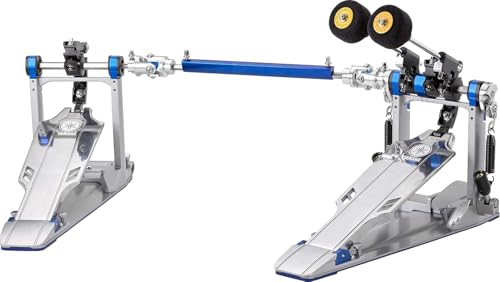
The Yamaha Grade Direct Drive Double is a professional direct drive double pedal with dual-axis angle adjustment, one-handed spring tension and a weighted beater system. This review goes through what the listing publishes, what it leaves out, and which drummers will benefit most from its adjustability.
Our Verdict
Research Score 86/100On paper the Yamaha Grade Direct Drive Double delivers what a flagship double pedal should: a rigid direct drive, a sub-frame built to resist flex, bearings at the spring roller, and a set of adjustments that cover footboard angle, beater angle, spring tension and beater mass. The precision indicators that let a drummer copy settings to a second pedal are a genuinely useful touch. The listing does not publish the weight, the footboard length, the frame material or whether a case and the belt drive are included, and those gaps keep the score from going higher. For an experienced player who already knows the feel they want, it is a strong choice in its price tier.
Editorial research score based on published specifications and documented features, not a customer rating or lab test.
Yamaha
Yamaha Grade Direct Drive Double
Best for: Experienced drummers who want a fast, precise double pedal with every adjustment on hand and repeatable settings across kits.
Skip it if: You are buying your first double pedal or prefer the forgiving, slightly loose feel of a chain drive.
Check Price on AmazonWe may earn a commission at no extra cost to you.
Listing verified: October 2026
Who Should Buy It
Buy it if
- Metal, fusion and gospel drummers who need clean double strokes at high tempos
- Players who own other Yamaha pedals and want a consistent feel across kits
- Session and touring drummers who rebuild their setup often and need repeatable settings
- Drummers who want to tune attack with beater weights rather than swapping beaters
Skip it if
- You want a simple chain drive pedal to learn double bass on
- You need a confirmed weight or a case before you buy
- Your playing never calls for a slave pedal
Key Specifications
| Type | Double bass drum pedal, direct drive, with an optional belt drive mentioned in the listing |
| Size | Not published in listing |
| Materials | Not published in listing (only the aluminum and brass beater weights are named) |
| Tuning | One-handed quick-lock spring tension, dual-axis beater and footboard angle adjustment, independent footboard angle with precision indicators |
| Finish | Not published in listing |
| Weight | Not published in listing |
| Included accessories | 3 gram aluminum and 9 gram brass horseshoe beater weights; case or bag not stated |
| Made in | Not published in listing |
| Skill level | Advanced to professional |
| Notes | Listing model code DFP-9D. Reinforced sub-frame, spring roller with integrated bearings. |
Overview
The Yamaha Grade Direct Drive Double sits at the top of Yamaha's pedal range, a direct drive double pedal aimed at drummers who want speed and control rather than a soft, forgiving feel. The listing frames it as a professional-grade instrument for elite players, and the feature set backs that up with adjustment points that most mid-priced pedals leave out. It is placed in the mid-range price tier, which is unusual for a flagship double pedal and worth noting before anything else.
Direct drive means a rigid link connects the footboard to the beater cam instead of a chain or strap. The result is an immediate response with no slack at the top of the stroke, which is why metal, fusion and gospel players often prefer it. The published description also mentions an optional belt drive, so a player who finds pure direct drive too stiff has a route to a softer feel without buying a different pedal.
What stands out in the published specification is the number of independent adjustments. Footboard angle, beater angle, spring tension and beater mass can each be set separately, and the footboard carries precision indicators so a setup can be copied across several pedals. That matters for touring drummers who keep a backup pedal or who share hardware between a studio kit and a live rig.
Sound and Tone
A bass drum pedal does not make a sound of its own, but it shapes how the beater strikes the head, and the Yamaha Grade Direct Drive Double gives more control over that than most. The Weighted Beater System ships with 3 gram aluminum and 9 gram brass horseshoe weights that attach to the beater. Adding mass to the beater shaft changes the momentum behind each stroke, so the brass weight pushes toward a heavier, punchier attack while the lighter aluminum keeps the stroke quick and nimble.
The listing says the beater-to-rocker shaft spacing was optimized for a balanced, powerful and fluid response. This spacing determines how much leverage the footboard has over the beater, and it is a large part of what drummers mean when they talk about a pedal's feel. Yamaha calls it the signature Yamaha pedal feel, which is marketing language, but the underlying idea that geometry shapes the attack is sound.
The beater head material and shape are not published in the listing, so it is not possible to say whether it ships with a felt, plastic or dual-sided beater. That is a gap worth checking, since the beater face has as much influence on bass drum tone as the drive type does. Players who want a specific attack character should budget for a replacement beater if the stock one does not suit them.
Build and Materials
Yamaha describes a reinforced sub-frame that eliminates flex and withstands aggressive playing. On a double pedal, frame flex shows up as a mushy, inconsistent feel on the slave side, so a rigid base is more than a durability feature. The frame material, the footboard material and the pedal's weight are not published, so those remain open questions.
The spring roller runs on integrated bearings, according to the published specification. Bearings at the spring roller reduce friction where the spring meets the cam, which keeps the return stroke smooth and consistent over long sessions. This is a detail usually reserved for high-end pedals and it points to the build quality the price tier suggests.
The only materials named in the listing are the aluminum and brass used for the beater weights. The finish, the hoop clamp design and the construction of the connecting shaft between the two pedals are not described. Buyers who care about those details will need to look at the full manufacturer documentation, but Yamaha's hardware reputation makes it reasonable to expect solid machining throughout.
Playability and Technique
Direct drive pedals reward players with a light, controlled foot technique, and the Yamaha Grade Direct Drive Double adds adjustments that let that technique be dialed in precisely. The dual-axis adjustment system changes beater and footboard angle at the same time, keeping the two in proportion. The independent footboard angle adjustment then lets the player fine-tune the board on its own.
Spring tension is changed with a one-handed quick-lock system. The published description says it can be done on the fly, which means a drummer can tighten the spring between songs without tools and without disturbing the rest of the setup. Heel-toe and slide technique players tend to change tension more often than others, so this is a practical gain rather than a gimmick.
The horseshoe beater weights add another layer. Swapping from aluminum to brass changes how much effort the stroke needs and how much rebound comes back, which affects double stroke rolls on the bass drum. The footboard length is not described and there is no mention of a longboard option, so players who rely on a specific board shape should confirm that before buying.
- Direct drive with an optional belt drive for a softer feel
- Dual-axis beater and footboard angle adjustment
- Independent footboard angle with precision indicators
- One-handed quick-lock spring tension
- 3 gram aluminum and 9 gram brass horseshoe beater weights
Versatility and Styles
The pedal's natural home is fast, technical music. Extreme metal, progressive rock and fusion players who need clean double strokes at high tempos are the obvious audience, and the direct drive response suits them. The weighted beater options widen the range to heavier rock and funk where a thicker attack is wanted.
Jazz and acoustic players sometimes find direct drive too immediate for feathering the bass drum, and the mention of an optional belt drive is the answer to that. Switching the drive changes the pedal's character enough to cover lighter styles. Whether the belt ships in the box or must be bought separately is not stated.
As a double pedal it also serves single pedal players who want a matching slave for occasional double work. The precision indicators make it simple to match the two sides, or to match the main pedal to a second Yamaha pedal on another kit. That consistency is useful for drummers who teach and move between rooms.
Portability and Care
Weight is not published, and the listing does not mention a carrying case or bag. Double pedals with reinforced sub-frames are rarely light, so drummers who gig often should plan for a dedicated pedal bag. The connecting shaft between the two pedals usually disconnects for transport, though the listing does not describe that mechanism.
Care for a direct drive pedal is straightforward. The bearings at the spring roller should be kept free of dust and the pivot points lightly oiled on a regular schedule. Drummers who use the quick-lock tension system heavily should check that the lock seats fully before each performance.
The finish is not published, so it is unknown whether the pedal has a plated, powder-coated or raw metal surface. Wiping down the frame after each use and storing it dry will protect most finishes. A soft cloth and no abrasive cleaners is the safe approach until the finish is confirmed.
Setup and Daily Use
Initial setup involves clamping the main pedal to the bass drum hoop, placing the slave pedal to the left of the hi-hat and connecting the two with the drive shaft. The listing does not state whether the hoop clamp adjusts for different hoop thicknesses, which matters for drummers using wooden hoops. A quick check of the clamp range is sensible before ordering.
Once mounted, the adjustment sequence runs footboard angle, beater angle, spring tension, then beater weight. The precision indicators on the footboard let a drummer note the settings and recreate them in minutes on another pedal or after a teardown. That repeatability is one of the strongest arguments for this pedal over cheaper models that rely on guesswork.
For everyday playing the one-handed tension lock is the feature likely to get the most use. Drummers who play in several bands with different tempos can shift tension quickly between sets. The weights are a less frequent change but useful when moving between a studio session and a loud stage.
Who Should Buy It
The Yamaha Grade Direct Drive Double is for working drummers who have outgrown entry-level double pedals and want a flagship-level instrument with every adjustment on offer. It suits players who know what footboard angle and spring tension they prefer and want to lock those settings in precisely. The mid-range price tier makes it reachable for serious amateurs as well.
It is also a good match for drummers who own other Yamaha pedals and want a consistent feel across kits. The precision indicators make that consistency achievable without a tape measure. Educators and session players who switch between multiple setups will appreciate that more than most.
Beginners will likely find the number of adjustments overwhelming and may be better served by a simpler chain drive pedal for a first double pedal. Direct drive also tends to expose sloppy technique, so this is not a learning tool. It rewards players who already have control.
Alternatives Worth Considering
The DW 5000 pedal is the long-standing reference in this category and is available in both chain and direct drive versions. It has a reputation for a slightly heavier, more deliberate feel than most direct drive pedals, which some drummers prefer. The Yamaha Grade Direct Drive Double answers with its weighted beater system and the footboard indicators, which the listing presents as distinguishing features.
Other direct drive double pedals from Pearl, Tama and Trick compete at similar price tiers. Each brand has its own geometry and footboard design, and the choice often comes down to which feel sits best under the foot. The Yamaha's optional belt drive gives it a flexibility argument that many pure direct drive pedals cannot match.
Drummers who do not need double work should consider the single pedal version of the same design. Single pedals cost less, weigh less and are simpler to set up, and most of the same adjustment features carry over.
Verdict
On paper the Yamaha Grade Direct Drive Double delivers the adjustments and build features expected of a flagship pedal, and it does so at a mid-range price tier. The weighted beater system, one-handed tension lock and dual-axis adjustment are real functional advantages rather than marketing points. The biggest unknowns are weight, footboard dimensions and whether the belt drive and a case are included.
For an experienced drummer who wants a precise, fast, repeatable double pedal, this is a strong candidate and the score reflects that. Those who need every specification confirmed before buying should seek out the full manufacturer documentation first, then decide.
Strengths and Limitations
Strengths
- Direct drive response with a belt drive option for a softer feel
- Beater weights in two masses let the player tune attack without changing beaters
- One-handed quick-lock spring tension that can be changed between songs
- Footboard precision indicators make settings repeatable across pedals
- Reinforced sub-frame addresses the flex that weakens cheaper double pedals
- Mid-range price tier for a flagship-level feature set
Limitations
- Weight, footboard length and frame material are not published in the listing
- No case or bag is mentioned
- Unclear whether the belt drive ships in the box
- Too many adjustments for a first double pedal
How We Scored It
Scores reflect published specifications, documented features and value against the alternatives below. They are editorial research scores, not laboratory measurements.
Alternatives to Consider

Latin Percussion Giovanni Palladium Conga 11 3/4
Serious congueros who want a professional 11 3/4 inch conga with LP's hand friendly rims as the centerpiece of a set.
Read the Latin Percussion Giovanni Palladium Conga 11 3/4 review →
Yamaha Total Percussion 285
A beginning percussion student who needs bells and a practice pad for school band in one portable package.
Read the Yamaha Total Percussion 285 review →Questions Buyers Ask
Yamaha Grade Direct Drive Double
See the current listing, price and included accessories.
About This Review
Mandrillis Team
The Mandrillis editorial team researches and compares audio and music gear using manufacturer documentation, verified specs and real buyer feedback, so you can make a confident purchase without wading through marketing claims.
Read our full research methodology.