Guitar & Bass Review
Jackson JS22-7 Review: Budget Seven String Solidbody
The Jackson JS22-7 offers a seven string platform with a poplar body, maple neck, amaranth fingerboard and two humbuckers at a lower mid-range price. This review examines what the listing reveals and what remains unspecified for budget extended range players.
Our Verdict
Research Score 70/100The Jackson JS22-7 is a sensible lower mid-range entry point for guitarists curious about seven string instruments. The published specs confirm a poplar body, maple neck, amaranth fingerboard and two humbuckers, but the listing leaves out pickup brand, control layout, fret count, scale length and hardware details. On paper that makes the guitar a known quantity in shape and tonewoods, but an unknown in electronics. Buyers who accept that tradeoff and are willing to perform a basic setup or swap pickups later will find a solid foundation. The hardtail design implied by the HT model name supports drop tunings. We rate it 70 out of 100, with value and playability outweighing the lack of detailed specifications.
Editorial research score based on published specifications and documented features, not a customer rating or lab test.

Jackson
Jackson JS22-7
Best for: Players seeking an affordable entry into seven string electric guitars for modern metal and down tuned playing.
Skip it if: Players who need vintage single coil tones or fully specified hardware and electronics should look elsewhere.
Check Price on AmazonWe may earn a commission at no extra cost to you.
Listing verified: October 2026
Who Should Buy It
Buy it if
- Budget minded metal and djent players
- Guitarists adding a first seven string to a collection
- Practicing musicians needing a spare extended range instrument
- Buyers comfortable with doing their own setup and upgrades
Skip it if
- You require named pickups and detailed hardware specs
- You prefer traditional six string scale lengths and single coil tones
- You want a case or gig bag included from the factory
Key Specifications
| Body | Poplar |
| Neck and fingerboard | Maple neck, amaranth fingerboard |
| Scale length | Not published in listing |
| Frets | Not published in listing |
| Pickups | 2 humbucking pickups (brand and output not published) |
| Controls | Not published in listing |
| Bridge | Not published in listing (model name HT suggests hardtail) |
| Tuners | Not published in listing |
| Finish | Satin Black |
| Included accessories | Not published in listing |
Overview
The Jackson JS22-7 is a lower mid-range seven string solidbody electric guitar aimed at players who want extended range without moving into premium territory. The listing identifies a poplar body, a maple neck and an amaranth fingerboard, with two humbucking pickups and a satin black finish. That combination places the JS22-7 in the entry level of the Jackson Dinky family, where the company's design language meets budget conscious hardware choices.
Because the product listing omits several important details, this review works from the published specifications rather than in-person testing. The scale length, fret count, control layout, bridge type beyond the HT designation, tuner brand and pickup output are not stated. That means the buying decision involves some trust in Jackson's typical entry level quality and a willingness to accept unspecified components.
Body, Neck and Playability
The published body material is poplar, a common budget tonewood that is relatively lightweight and resonant without being overly dense. Poplar offers a balanced platform for a seven string guitar because it does not add excessive heft, which matters when the neck is wider and the body shape is the smaller Dinky profile. The satin black finish on the body should feel smooth and reduce fingerprints during long practice sessions.
The neck is specified as maple, a stable and bright sounding wood often used for bolt on necks in this price range. The fingerboard is amaranth, sometimes called purpleheart or violetwood, which is a dense hardwood that can feel similar to rosewood under the fingers. The listing does not publish the neck profile, fretboard radius or fret size, so players who are picky about neck shape will not have complete information before buying.
Playability on paper is likely to be reasonable thanks to the seven string layout and the Dinky body, which positions the neck comfortably for seated or standing playing. However, without a published scale length or nut width, the actual string tension and finger spread remain unknown. Buyers report that budget seven strings often require a truss rod and action adjustment out of the box to reach their potential.
Pickups and Tone
The guitar comes with two humbucking pickups, but the listing does not name the manufacturer, magnet type or output level. In the Jackson JS series, entry level humbuckers are generally voiced for high gain rock and metal, but that is an educated assumption rather than a published fact. The two pickup configuration suggests a bridge pickup for aggressive rhythm and a neck pickup for smoother leads.
Tone from the JS22-7 will depend heavily on the amplifier and signal chain because the pickup character is not documented. Extended range guitars benefit from pickups that keep the low B string articulate and controlled, especially under heavy distortion. Without knowing the exact voicing, buyers should expect a functional humbucker tone that favors overdriven styles over pristine clean sounds.
The poplar body and maple neck typically produce a balanced midrange with a slight brightness from the maple, which can help a seven string cut through a dense mix. The amaranth fingerboard may roll off a touch of high end compared to maple. Overall, the combination is unlikely to produce vintage single coil sparkle, but should handle modern high gain well enough for practice and entry level recording.
Hardware and Electronics
The listing does not specify the control layout, switch type or pot values, which is common for budget instruments sold with minimal copy. The model name includes HT, which in Jackson's range usually indicates a hardtail bridge rather than a tremolo. A hardtail is a sensible choice for a seven string because it simplifies tuning stability and makes string changes easier.
Tuners are not identified in the listing, so it is impossible to predict tuning stability from the published data alone. The same applies to the nut material and the output jack. These are areas where budget guitars often cut costs, and buyers sometimes upgrade tuning machines or the nut after purchase.
- Hardtail bridge implied by HT in the model name
- Controls and switch type not published
- Tuner brand and nut material not published
- Electronics and pickup wiring not described
- No included accessories listed
Build Quality and Finish
The satin black finish is the only finish option listed, and it gives the guitar a straightforward, stage friendly look. Poplar is a softer wood than mahogany or alder, so it may dent more easily, but the satin finish should hide minor surface wear better than a high gloss. The maple neck is likely finished with a satin or matte coating for comfort, though the listing does not specify.
Build quality on import guitars in this price tier can vary from example to example. The listing does not mention the country of origin, fretwork quality or fret material, so buyers should expect that a basic setup may be needed. The Dinky body shape is well established at Jackson, which helps ensure that the overall geometry is at least familiar to players.
Since the hardware and electronics are unspecified, the long term durability of the bridge saddles, tuning machines and switch cannot be evaluated from the listing. Buyers who plan to keep the guitar for years may want to inspect the frets and hardware in person or budget for aftermarket upgrades.
Setup Out of the Box
The listing does not describe any factory setup procedure, string gauge or action measurements. Budget guitars often arrive with conservative action and may need a truss rod adjustment to suit heavier string gauges used for seven string tunings. The nut slots may also need attention, especially on the low B string, to prevent binding.
Intonation is another area that can be off from the factory, and the unspecified hardtail bridge may or may not offer easy saddle adjustment. Without knowing the bridge design, it is impossible to say how straightforward intonation will be. Buyers report that spending time on a full setup transforms many inexpensive seven strings into reliable instruments.
If the guitar does not include tools or a manual, new players may need to take it to a tech or learn basic setup skills. The reward is a guitar that stays in tune better and feels more comfortable, but that initial time investment should be part of the buying decision.
Daily Use and Practice
For daily practice, the JS22-7 offers the extended low range that many modern metal and rock players need. The poplar body should keep the guitar comfortable on a strap, and the Dinky profile is known for being easy to manage while seated. A seven string neck is wider than a six string, so players moving from a standard guitar may need a short adaptation period.
The satin finish on the body and likely on the neck helps reduce stickiness during long sessions. The absence of a tremolo, if the HT designation is accurate, means fewer tuning headaches when changing strings or switching tunings. The two humbuckers should provide enough output for practice amps and amp modelers without needing a boost pedal.
Because the listing does not publish the scale length, players who plan to tune very low should be aware that shorter scales can require thicker strings to maintain tension. Most seven string guitars in this range use a scale between 25.5 and 26.5 inches, but we cannot confirm the JS22-7's measurement from the listing.
Versatility and Styles
The JS22-7 is clearly aimed at heavy music, including metal, djent, progressive rock and down tuned hardcore. The two humbucker layout provides the thick, compressed tone these styles often demand, and the seventh string opens up low riffs without needing to retune a six string. Cleaner passages will work, but the pickups are unlikely to deliver sparkling country or funk tones.
Players who want a guitar for blues, classic rock or jazz may find the seven string spacing and humbucker voicing less traditional. The extended range can be used for chord melody and lower jazz voicings, but the unspecified pickup character makes it hard to predict how articulate the low strings will be under clean amplification. On paper, the guitar leans toward aggressive styles.
A hardtail bridge, if present, is a good match for alternate tunings because it avoids the tuning instability of a floating tremolo. That makes the JS22-7 a practical option for players who like to experiment with drop A or lower variations. Just keep in mind that the factory setup may not be optimized for very heavy strings.
Who Should Buy It
The Jackson JS22-7 makes the most sense for budget minded guitarists who are curious about seven string instruments and do not want to spend a lot on their first extended range guitar. The known tonewoods and dual humbucker layout provide a solid foundation for modern high gain styles, while the unspecified hardware keeps the price in the lower mid-range tier.
Musicians who already own a primary guitar and need a spare seven string for practice or backup will also find value here. The satin black finish and Dinky body are practical, and the hardtail design implied by the HT name suits drop tunings. Buyers who are comfortable with doing their own setup or swapping pickups later will get the most out of this platform.
On the other hand, players who require a fully detailed spec sheet before purchasing should look elsewhere. The missing information about pickups, controls, scale length and hardware means the guitar is not a safe blind buy for anyone who is picky about those elements.
Verdict
The Jackson JS22-7 is a sensible lower mid-range entry point for guitarists curious about seven string instruments. The published specs confirm a poplar body, maple neck, amaranth fingerboard and two humbuckers, but the listing leaves out pickup brand, control layout, fret count, scale length and hardware details. On paper that makes the guitar a known quantity in shape and tonewoods, but an unknown in electronics.
Buyers who accept that tradeoff and are willing to perform a basic setup or swap pickups later will find a solid foundation. The hardtail design implied by the HT model name supports drop tunings and keeps things simple. We rate it 70 out of 100, with value and playability outweighing the lack of detailed specifications.
Strengths and Limitations
Strengths
- Seven string extended range at a lower mid-range price
- Poplar body is lightweight and balanced
- Maple neck and amaranth fingerboard offer a familiar feel
- Two humbucking pickups suit high gain styles
- HT designation implies a hardtail bridge for tuning stability
- Satin black finish is practical and understated
Limitations
- Pickup brand, output and voicing are not published
- Control layout, switch type and pot values are unspecified
- Fret count, scale length and nut width are missing from the listing
- Tuner quality and long term hardware durability are unknown
- No included accessories such as a case or gig bag are listed
How We Scored It
Scores reflect published specifications, documented features and value against the alternatives below. They are editorial research scores, not laboratory measurements.
Alternatives to Consider

Ibanez GRG121DX
The Ibanez GRG121DX is best for budget focused electric guitarists who want a dual humbucker solidbody with a distinctive dark look and a brand name platform.
Read the Ibanez GRG121DX review →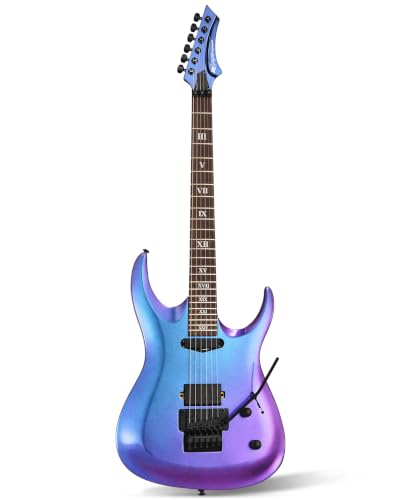
Leo Jaymz Tsunami
Players who want a 24-fret double-locking tremolo guitar with coil splitting at a lower mid-range price.
Read the Leo Jaymz Tsunami review →
Jackson JS22
Players who want a lower mid-range Dinky-style solidbody with dual humbuckers and a tremolo for rock, metal and high-gain practice.
Read the Jackson JS22 review →Questions Buyers Ask
Jackson JS22-7
See the current listing, price and included accessories.
About This Review
Mandrillis Team
The Mandrillis editorial team researches and compares audio and music gear using manufacturer documentation, verified specs and real buyer feedback, so you can make a confident purchase without wading through marketing claims.
Read our full research methodology.