Guitar & Bass Review
Seagull Performer CW Flame Maple Review: North American Cutaway
The Seagull Performer CW Flame Maple is an upper mid-range acoustic listed as made in North America with a select pressure tested top, double action truss rod, tapered headstock, and Tusq nut and saddle. The product listing omits many detailed specifications, so this review focuses on the published features and what they suggest about playability, tuning stability, and intonation.
Our Verdict
Research Score 76/100The Seagull Performer CW Flame Maple presents a compelling package for players who trust Seagull's North American build approach and do not require an exhaustive spec sheet. The published features are meaningful: a select pressure tested top suggests careful wood selection, a double action truss rod allows precise neck relief adjustment, the tapered headstock is designed for tuning stability in open tunings, and the Tusq nut and compensated saddle support accurate intonation. However, the listing leaves significant gaps. Without published tonewoods, dimensions, or electronics details, a buyer cannot assess the guitar's full character from the listing alone. Based on the feature set and Seagull's reputation, this instrument likely delivers dependable acoustic performance at an upper mid-range price. For the right player, it is a sensible choice. For specification-driven buyers, the missing data may be a deal breaker. The score reflects the strong listed components balanced against the lack of detailed information.
Editorial research score based on published specifications and documented features, not a customer rating or lab test.

Seagull
Seagull Performer CW Flame Maple
Best for: Players who trust Seagull's North American build quality and want a cutaway acoustic with quality nut and saddle materials, without needing a full spec sheet.
Skip it if: You require detailed published specifications for tonewoods, dimensions, or onboard electronics before buying.
Check Price on AmazonWe may earn a commission at no extra cost to you.
Listing verified: October 2026
Who Should Buy It
Buy it if
- Musicians who value North American manufacturing
- Players who use open tunings and need stable tuning
- Buyers who prioritize a pressure tested top and Tusq components
- Fans of Seagull's acoustic voice who do not need a detailed spec list
Skip it if
- You need to know the exact top wood and back and side wood before purchase
- You want a guitar with confirmed electronics and a published pickup system
- You expect a hard case or gig bag included in the listing
Key Specifications
| Body shape | Not published in listing |
| Top | Not published in listing |
| Back and sides | Not published in listing |
| Neck and fingerboard | Not published in listing |
| Scale length | Not published in listing |
| Nut width | Not published in listing |
| Electronics | Not published in listing |
| Tuners | Not published in listing |
| Finish | Not published in listing |
| Included accessories | Not published in listing |
Overview
The Seagull Performer CW Flame Maple is an upper mid-range acoustic guitar listed as made in North America. The product listing presents a handful of notable build choices, including a select pressure tested top, a double action truss rod, a tapered headstock, and a Tusq nut and compensated saddle. These features point toward an instrument aimed at players who care about tuning stability, intonation, and reliable neck adjustment.
At the same time, the listing is unusually sparse when it comes to detailed specifications. There is no published information about the top wood species, back and side woods, body dimensions, scale length, nut width, electronics, or finish. That makes it difficult to assess the guitar's exact tonal character from the listing alone. The review below works strictly with the published facts and avoids inventing missing details.
Body, Neck and Playability
The published features most relevant to playability are the double action truss rod, the tapered headstock, and the Tusq nut and compensated saddle. A double action truss rod allows adjustment in both directions, which can help a player or technician dial in a comfortable neck relief. The listing does not state the neck profile, fingerboard material, or nut width, so the actual feel remains unpublished.
The tapered headstock is described as providing precise and stable tuning and being great for open tunings. This design change, compared to a straight headstock, can reduce string binding at the nut and improve pitch return. The Tusq nut and compensated saddle are also playability assets because they are consistent, dense materials that support clean intonation across the fretboard.
Because the listing does not publish the body shape or dimensions, it is impossible to say whether the guitar has a full size dreadnought, concert, or auditorium body. The model name includes the letters CW, which often suggest a cutaway, but the listing does not confirm that. Players who need exact ergonomic details will have to research elsewhere or try the instrument in person.
Tone and Projection
The select pressure tested top is the primary tonal clue in the listing. Pressure testing is a quality control method used by some builders to identify tops that are stable and responsive before the guitar is assembled. A pressure tested top can indicate a more reliable and resonant soundboard, but the listing does not name the wood species, so the voice remains uncertain.
Without knowing whether the top is spruce, cedar, or another wood, and without details on the back and side woods, it is difficult to predict the overall tonal balance. A flame maple back and sides would typically add clarity and note separation, and the model name suggests that material, but the listing does not explicitly confirm it. The Tusq saddle also contributes to a clear, focused fundamental tone.
Projection is not measured or described, but a solid top with careful selection and quality saddle material generally supports good volume and headroom. Still, this is a guitar that a buyer should ideally hear before purchasing, because the listing does not provide enough tonal information for a confident blind buy.
Hardware and Electronics
The hardware and electronics information is limited. The listing mentions a double action truss rod and a tapered headstock as structural and tuning related hardware. It also lists a Tusq nut and compensated saddle, which are precision shaped and contribute to consistent string spacing and intonation.
The model name includes the letters QI, which often point to an onboard preamp or pickup system in the Seagull range. However, the listing does not describe any electronics, controls, or output. Because no pickup type or preamp model is published, this review cannot state whether the guitar is acoustic electric or purely acoustic.
The tuning machines are not listed, so their quality and ratio are unknown. No case, gig bag, or additional accessories are mentioned. That absence is notable for an upper mid-range instrument, where buyers often expect at least a basic gig bag.
- Double action truss rod
- Tapered headstock for tuning stability
- Tusq nut
- Compensated Tusq saddle
- Electronics not published
- Tuners not published
Build Quality and Finish
The strongest build quality signal is the statement that the guitar is made in North America. Seagull has a long standing reputation for producing reliable instruments in Canada, and the listing highlights this as a feature. The select pressure tested top suggests that the soundboard undergoes a quality control step that can reduce the chance of a dead or unstable top.
The finish type, gloss level, and color are not published. The model name includes the phrase flame maple, which often indicates an attractive figured wood veneer or back and sides, but this is not confirmed in the feature bullets. Without finish details, it is hard to know how the guitar will look in person or how the finish will age.
The Tusq nut and compensated saddle are small but meaningful build quality details. They show that the manufacturer did not default to cheap plastic parts. That attention to the nut and saddle is consistent with a guitar positioned in the upper mid-range tier.
Setup Out of the Box
A good setup depends on nut slot depth, saddle height, neck relief, and fret work. The listing does not publish action measurements or describe the factory setup, so the out of box playability is unknown. However, the inclusion of a double action truss rod means that neck relief can be adjusted more easily than on a single action rod.
The Tusq nut and compensated saddle are useful for setup. Tusq is consistent and easy for a technician to file or shim. The compensated saddle shape can help intonation, especially on the wound strings. The tapered headstock may also reduce the need for string trees or excessive downward pressure at the nut.
Because no case or gig bag is listed, buyers should assume the guitar may ship without protection beyond the packaging. It is also not stated whether the guitar includes a setup card, truss rod wrench, or any setup tools. For an upper mid-range instrument, a professional setup after purchase is always a sensible step.
Daily Use and Practice
For daily practice, tuning stability is a major factor, and the tapered headstock is designed specifically for that. Players who change tunings often, such as DADGAD or open G, may find this design helps the strings return to pitch more reliably. The Tusq nut also reduces string binding at the nut, which is a common cause of tuning instability.
The double action truss rod is a practical feature for players who live in changing climates. Seasonal humidity shifts can alter neck relief, and a double action rod allows the neck to be adjusted in either direction as needed. That adds to the guitar's day to day dependability.
The lack of published nut width and body size is a drawback for practice ergonomics. A player with small hands or a preference for a slim neck cannot know from the listing whether this guitar will feel comfortable. In person testing or a clear return policy is recommended.
Versatility and Styles
The tapered headstock is explicitly noted as great for open tunings, which immediately broadens the guitar's stylistic range beyond standard tuning. Fingerstyle players, Celtic and folk musicians, and acoustic blues players often rely on open tunings, so this feature is a meaningful versatility point.
The select pressure tested top suggests a responsive instrument that could handle both strumming and fingerpicking, provided the body shape and top wood cooperate. The Tusq saddle tends to produce a clear, articulate tone that works well for recording and for playing in a band mix, where note definition matters.
However, without confirmed electronics, it is unclear how well this guitar would serve a stage player who needs to plug in. The QI letters in the model name hint at a pickup, but the listing does not publish any output details. Until electronics are confirmed, the guitar is best considered for acoustic use or in person verification.
Who Should Buy It
This guitar should appeal to players who already trust the Seagull brand and want a North American made instrument with quality nut and saddle materials and a stable tuning design. The upper mid-range price is reasonable for a guitar with these features, assuming the build quality lives up to the brand's reputation.
Musicians who use open tunings will appreciate the tapered headstock. Players who like to make their own truss rod adjustments will value the double action design. Buyers who prefer a Tusq nut and saddle over traditional bone or plastic will find that specification attractive.
However, this is not a guitar for someone who needs a complete spec sheet before purchasing. The listing leaves too many questions unanswered for a purely analytical buyer. It is best suited to those who can try the guitar in person or who are comfortable with Seagull's general acoustic character.
Verdict
The Seagull Performer CW Flame Maple is a guitar with several strong published features but a frustrating lack of detailed specifications. The select pressure tested top, double action truss rod, tapered headstock, and Tusq nut and saddle are all meaningful quality markers. They suggest a guitar that will tune well, intonate accurately, and respond reliably over time.
The missing information is significant. Without tonewood details, dimensions, and electronics confirmation, it is impossible to fully evaluate the instrument from the listing. The upper mid-range price demands a certain level of buyer confidence, and that confidence will have to come from brand experience or an in person trial.
The score of 76 reflects a solid set of listed features balanced against the large unknowns. If the guitar plays and sounds as well as the sum of its parts suggests, it could be an excellent value. For now, it is a promising but incomplete picture.
Strengths and Limitations
Strengths
- Made in North America
- Select pressure tested top
- Double action truss rod for neck adjustment
- Tapered headstock improves tuning stability and open tuning use
- Tusq nut and compensated saddle support intonation
Limitations
- Listing omits detailed tonewood specifications
- No published scale length or nut width
- Electronics are not described despite the QI model designation
- No included accessories or case listed
- Upper mid-range price with limited published specs
How We Scored It
Scores reflect published specifications, documented features and value against the alternatives below. They are editorial research scores, not laboratory measurements.
Alternatives to Consider

Taylor GS Mini-e Koa
Players who want a compact, attractive acoustic electric for travel and daily practice with a bundled gig bag.
Read the Taylor GS Mini-e Koa review →
Washburn WCG55CE
Players who want a cutaway grand auditorium acoustic with koa tonewood and do not need onboard electronics.
Read the Washburn WCG55CE review →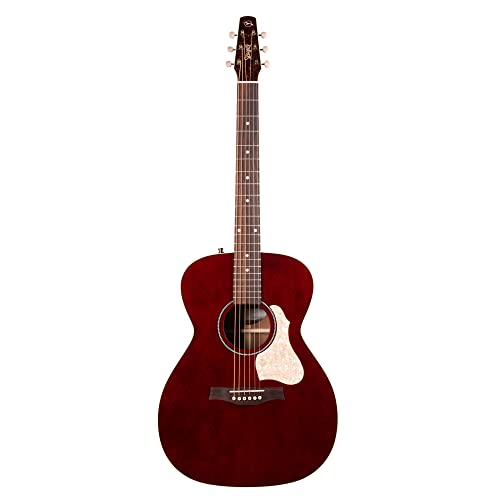
Seagull M6
Players seeking a Canadian made acoustic electric with a gig bag at a mid-range price who can accept missing specification details.
Read the Seagull M6 review →Head-to-Head Comparisons
- Seagull Performer CW Flame Maple vs Epiphone J-45 Standard EC Compare →
Questions Buyers Ask
Seagull Performer CW Flame Maple
See the current listing, price and included accessories.
About This Review
Mandrillis Team
The Mandrillis editorial team researches and compares audio and music gear using manufacturer documentation, verified specs and real buyer feedback, so you can make a confident purchase without wading through marketing claims.
Read our full research methodology.