Guitar & Bass Review
Yamaha THR5 Review: Compact Desktop Modeling Amp
The Yamaha THR5 is a 10 watt desktop guitar amp with battery power, five amp models, and hi fi stereo sound. The listing leaves out speaker size, weight, and connectivity details, but its portable design and VCM modeling make it a strong budget option for home practice and travel.
Our Verdict
Research Score 74/100The Yamaha THR5 delivers a focused desktop practice experience with 10 watts of power, battery portability, and Yamaha VCM modeling for hi fi stereo sound. The listing omits key specs such as speaker size, weight, and connectivity, which makes a full assessment difficult. For home players who value tone quality and a compact footprint, it is a solid budget choice. Players who need stage volume, Bluetooth, or published input and output details should investigate further or consider other modeling amps. On paper, the THR5 earns a score that reflects its strong concept but incomplete listing data.
Editorial research score based on published specifications and documented features, not a customer rating or lab test.
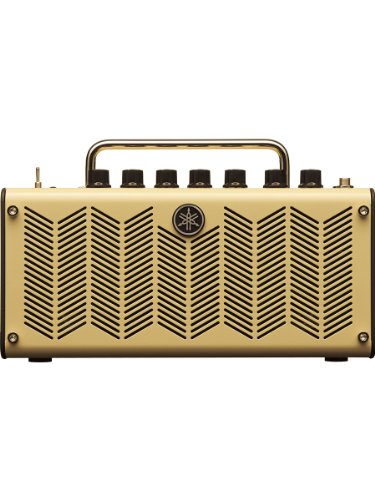
Yamaha
Yamaha THR5
Best for: Home players who want a compact desktop amp with battery power and hi fi stereo sound for low volume practice.
Skip it if: You need a stage amp, Bluetooth connectivity, or published speaker and input output specifications before buying.
Check Price on AmazonWe may earn a commission at no extra cost to you.
Listing verified: October 2026
Who Should Buy It
Buy it if
- Home players who want a compact desktop amp with battery portability
- Guitarists seeking hi fi stereo sound for low volume practice
- Players who value Yamaha VCM modeling and simple operation
- Anyone needing a travel friendly practice amp without a stage focus
Skip it if
- You need a stage or band rehearsal amp with more than 10 watts
- You require Bluetooth audio streaming or app based deep editing
- You need a published speaker size and complete input output list before buying
Key Specifications
| Power output | 10 watts |
| Speaker | Not published in listing |
| Amp models or channels | Five classic amp models (specific names not published) |
| Effects | Range of effects processing (specific effects not published) |
| Inputs and outputs | Not published in listing |
| Headphone and line out | Not published in listing |
| Bluetooth and app | Not published in listing |
| Weight | Not published in listing |
| Dimensions | Not published in listing |
| Included accessories | Not published in listing |
Overview
The Yamaha THR5 is a 10 watt desktop guitar combo amp positioned in the budget price tier. The listing describes it as a lightweight, portable amp that runs on AC power or batteries, making it a convenient option for home practice and travel. Yamaha developed the amp with its AV division to achieve what the listing calls true hi fi stereo sound, which is unusual for a small practice amp.
The feature set centers on five classic amp models and a range of effects processing powered by Yamaha's VCM technology. VCM stands for Virtual Circuitry Modeling, which Yamaha uses to recreate analog circuit behavior in digital form. While the concept is promising, the listing does not specify the names of the amp models or the effects, so the exact tonal range remains unknown from this product page.
Amp Models and Tone
The tone architecture relies on VCM, which on paper should provide more touch sensitivity and realistic breakup than simpler modeling approaches. The listing mentions five classic amp models but does not list them, so buyers cannot confirm whether the set includes clean, crunch, high gain, or specific vintage voicings. This lack of detail makes it hard to compare directly to amps that publish their full model list.
The hi fi stereo design is a key part of the tone equation. Unlike a conventional guitar amp that uses a single full range speaker or a guitar voiced driver, a stereo desktop amp can create a wider soundstage and a more recording like tone. The listing does not reveal the speaker type, but the emphasis on hi fi sound suggests the amp is tuned for clarity and balanced frequency response rather than raw midrange punch.
For players familiar with Yamaha's THR series, the THR5 is likely to deliver polished, studio style tones at low volume. However, without the model list and without in-person testing, this review can only assess the concept. Buyers who need a specific high gain or clean sound should look for more detailed specifications or user demos before committing.
Effects and Features
The listing states that the THR5 includes a range of effects processing, but it does not specify which effects or how many are available. Because the effects are driven by VCM, they are probably integrated with the amp models for natural response, but the absence of a list is a notable gap. Common practice amp effects like reverb, delay, and modulation may be present, but that is not confirmed here.
There is no mention of a tuner, looper, or deep editing features. The amp appears to focus on core amp and effect sounds without app control or Bluetooth. This simplicity may appeal to players who want a plug and play device, but it limits the THR5 compared to modeling amps that offer extensive effect libraries and preset storage accessible from a phone.
Power, Speaker and Volume
The THR5 is rated at 10 watts, which is typical for a desktop practice amp. That power level is enough for home practice and close range listening, but it is not intended for band rehearsal or stage use. The listing does not publish the speaker size, type, or number of drivers, so the actual clean headroom and low end response cannot be calculated from the data provided.
Battery operation adds portability, allowing the amp to be used where AC power is not available. The listing does not state battery life, battery type, or whether the amp automatically switches between power sources. These are practical details that affect daily use, especially for outdoor or travel scenarios.
- 10 watt power rating confirmed by listing title.
- Runs on AC power or batteries for portable use.
- Speaker size, type, and count are not published in the listing.
- Desktop format suits close range stereo listening.
- Volume capability depends on unknown speaker efficiency.
Build and Portability
The listing calls the THR5 lightweight and portable, which aligns with its desktop category and battery power option. However, the exact weight and dimensions are not published in the listing. Without those numbers, buyers cannot verify how easily the amp fits into a backpack or how much desk space it requires.
The build materials are also not stated. A budget desktop amp often uses a plastic or composite chassis to keep weight down, but that is not confirmed. The battery compartment and power supply design are likewise unspecified. For home use, durability is likely adequate, but travelers should confirm the weight and size from the manufacturer before buying.
Portability is a headline feature in the listing, yet the lack of published weight is a persistent problem. A lightweight amp with battery power can be ideal for outdoor practice or small apartments, but the claim is less convincing without a specific mass. The desktop footprint suggests a compact unit, but dimensions would help with planning and comparison.
Connectivity and Apps
The listing does not mention Bluetooth, an app, or any wireless connectivity for the Yamaha THR5. This is a notable omission because many modern practice amps include Bluetooth audio streaming and app based editing. The THR5 appears to be a standalone amp with physical controls only, but the control layout is not described either.
The inputs and outputs are not published in the listing, which is a major gap. Buyers cannot tell whether the amp includes a headphone jack, auxiliary input, USB connection, or line out. Many desktop amps offer headphone out for silent practice and USB for recording, but none of that is confirmed here. This lack of detail makes it hard to evaluate the amp's connectivity score.
Players who need an all in one recording interface or a Bluetooth speaker for jamming along with tracks may be disappointed. The hi fi stereo design suggests that a headphone output, if present, could deliver excellent late night practice tone, but without confirmation it remains speculative. Buyers should verify connectivity from Yamaha's full manual before purchasing.
Setup and Daily Use
The THR5 is designed for simple desktop use. The listing does not describe the control panel, but the core functions are likely amp model selection, tone, effects, and volume. There is no mention of menu diving or complex editing, which would make daily use straightforward: plug in, choose a model, adjust sound, and play.
The battery option simplifies setup in different locations, whether on a desk, a table, or outdoors. The desktop format encourages placing the amp at ear level, which improves stereo imaging. However, the unknown dimensions mean buyers cannot be certain of the footprint. Overall, the amp appears to be a grab and go practice tool rather than a deep tweaker's platform.
Home Practice Versus Stage
The THR5 is explicitly a desktop amp, so its primary role is home practice, recording, and low volume playing. At 10 watts with an unknown speaker, it is not likely to compete with a live drummer or a full band. The feature set, including battery power and hi fi stereo, reinforces the home use orientation.
For apartment dwellers, the THR5 could provide satisfying tones without disturbing neighbors, especially if the stereo soundstage allows lower perceived volume. However, the absence of a confirmed headphone output is a concern for completely silent practice. Players who need a single amp for both home and band settings should consider larger modeling amps with more power and published speaker specs.
Who Should Buy It
The THR5 suits guitarists who practice at home or in small spaces and want compact stereo sound. The battery power option makes it attractive for travel, outdoor practice, or quick sessions away from an outlet. It is not a good fit for players whose main goal is stage volume or jam sessions with a drummer.
Players who appreciate Yamaha's VCM modeling and prefer a simple physical interface will likely enjoy the THR5. The desktop form factor brings the controls within reach and encourages a relaxed playing position. It is a focused tool rather than a feature packed platform, which appeals to those who want to plug in and play without a phone or computer.
Beginners and intermediate players building a home practice corner will find the price point accessible, assuming the missing specs meet their needs. The main risk is buying without knowing the exact amp models, effects, and connectivity. Those who can accept that uncertainty and prioritize portability and stereo tone will find the THR5 a solid budget option.
Verdict
The Yamaha THR5 presents a compelling concept: a 10 watt desktop amp with battery power, hi fi stereo sound, and VCM modeling. The listing focuses on these strengths, positioning the amp as a premium practice tool in a budget tier. However, the absence of key specifications like speaker size, weight, and connectivity makes a complete evaluation difficult.
The score reflects this mix of promising features and missing data. Tone and features receive moderate marks because VCM and effects are described but not enumerated. Power is adequate for desktop use but not for stage. Build cannot be fully scored without weight and materials. Connectivity is low due to the lack of Bluetooth or app mention.
For the right buyer, the THR5 remains an attractive choice. It offers a portable, stereo practice experience without unnecessary complexity. The biggest drawback is the incomplete listing, not a known flaw in the product itself. If Yamaha's full specifications align with the buyer's needs, the THR5 is a worthwhile desktop amp. Those who need certainty should seek a more detailed listing or a different model.
Strengths and Limitations
Strengths
- Compact desktop format with battery power option
- Hi fi stereo sound design for detailed low volume tone
- Yamaha VCM technology for amp and effect modeling
- Five classic amp models cover common practice tones
- Budget price tier for accessible entry
Limitations
- Speaker size, type, and count are not published
- No Bluetooth or app connectivity mentioned in listing
- Input and output details are missing
- No specific amp model names or effect list provided
- Weight and dimensions not published
How We Scored It
Scores reflect published specifications, documented features and value against the alternatives below. They are editorial research scores, not laboratory measurements.
Alternatives to Consider

Ampeg Rocket Bass RB108
Bass players who want a simple, budget Ampeg combo for home practice and headphone use.
Read the Ampeg Rocket Bass RB108 review →
Blackstar Debut 30E
Players who want a simple all-analog practice amp with speaker-emulated output and classic Blackstar tone shaping.
Read the Blackstar Debut 30E review →
Yamaha THR5A
Acoustic and silent guitar players wanting a compact desktop practice amp with microphone simulation and basic recording software.
Read the Yamaha THR5A review →Questions Buyers Ask
Yamaha THR5
See the current listing, price and included accessories.
About This Review
Mandrillis Team
The Mandrillis editorial team researches and compares audio and music gear using manufacturer documentation, verified specs and real buyer feedback, so you can make a confident purchase without wading through marketing claims.
Read our full research methodology.