Instruments Review
Pioneer DDJ-REV1 Review: A Ready-to-Scratch Bundle
The Pioneer DDJ-REV1 bundle pairs a 2-channel scratch controller with 6-inch jog wheels, Lever FX paddles and closed-back headphones. Serato DJ Lite runs with no driver to install, and a built-in soundcard handles audio and mic blending for streaming straight out of the box.
Our Verdict
Research Score 76/100The Pioneer DDJ-REV1 bundle delivers a focused, beginner-friendly scratch setup rather than a feature-stuffed controller. The 6-inch jog wheels and Lever FX paddles give new scratch DJs real tools to build technique, Tracking Scratch and Scratch Bank pads shorten the learning curve, and the bundled headphones mean nothing extra has to be bought before the first session. The built-in soundcard and mixed-mic input also make it workable for streamers who want to MC over a mix from one laptop. What holds the score back is how much the listing leaves unstated: full rear panel connections, power draw and weight are all missing. For a lower mid-range price tier aimed at first scratch gear, that gap is forgivable, and the bundle earns a solid recommendation for beginners and turntablists starting out.
Editorial research score based on published specifications and documented features, not a customer rating or lab test.

Pioneer
Pioneer DDJ-REV1
Best for: Beginners, turntablists and streamers who want a ready-to-scratch two-channel controller with headphones already in the box.
Skip it if: You need more than two channels, want every rear panel input and output confirmed before buying, or already own a dedicated pair of monitoring headphones.
Check Price on AmazonWe may earn a commission at no extra cost to you.
Listing verified: November 2026
Who Should Buy It
Buy it if
- First-time scratch DJs building pattern memory with Tracking Scratch
- Streamers and MCs who want mic blending into the master mix from one laptop
- Buyers who want a controller and headphones bundled in a single purchase
- Serato DJ Lite users who plan to upgrade to Serato DJ Pro later
Skip it if
- You need more than two channels for a complex set
- You already own quality monitoring headphones
- You want every input and output confirmed before buying
Key Specifications
| Type | 2-channel scratch style USB DJ controller, sold as a bundle with closed-back headphones |
| Channels | 2 |
| Jog wheels | 6-inch jog wheels sized to match the platters on pricier scratch controllers, built for cuts, baby scratches and flares |
| Software | Ships ready for free Serato DJ Lite with no driver to install, upgradeable to Serato DJ Pro |
| Pads and effects | Lever FX paddles trigger momentary effect bursts or lock on hands-free; Scratch Bank pads load samples at a tap; Tracking Scratch returns the track to the cue point automatically |
| Inputs and outputs | Front headphone jack for cueing with a 1/4-inch adapter included; full rear panel output list not published in listing |
| Audio interface | Built-in class-compliant soundcard with mixed-mic input for blending voice into the master mix while streaming; channel count and sample rate not published in listing |
| Power | Not published in listing beyond the USB connection used for data and audio |
| Weight | Not published in listing |
| Included accessories | StreamEye Cans50 closed-back headphones, soft headphone bag, 1/4-inch adapter, USB cable |
Overview
The Pioneer DDJ-REV1 is sold here as a bundle: a 2-channel scratch style USB controller packaged with StreamEye Cans50 closed-back headphones, a soft headphone bag, a quarter-inch adapter and a USB cable. The listing frames it as a ready-to-scratch setup aimed at beginners, turntablists and streamers, and the feature list backs that framing with 6-inch jog wheels, Lever FX paddles and a Tracking Scratch mode built specifically for learning.
At a lower mid-range price tier, the pitch is simplicity. The controller is class compliant over USB, so it plugs into a laptop and runs on its own built-in soundcard without a separate audio interface. The headphones drop straight into the front jack, which the listing says gets a buyer mixing in minutes rather than hours of setup.
Several details a shopper would normally want are not in the listing. There is no stated weight, no power specification beyond the USB connection, and no full rundown of the rear panel inputs and outputs. Those gaps run through this review as unanswered questions rather than assumptions.
Decks, Jog Wheels and Performance Controls
The headline performance feature is the pair of 6-inch jog wheels, which the listing says match the surface size found on pricier scratch controllers. A larger jog surface gives a scratching hand more room to work, which matters for the fine motor control behind baby scratches, flares and other cuts that beginners are trying to learn cleanly rather than approximately.
Lever FX paddles sit alongside the jogs and trigger effects two ways: a momentary burst while held, or a locked-on state for hands-free use. That flexibility lets a DJ drop a quick echo stab on a transition or leave a filter running through an entire phrase without tying up a hand that is needed elsewhere on the deck.
Tracking Scratch is built for repetition. The listing describes it as automatically returning the track to the cue point, which turns scratch practice into a loop a beginner can run over and over without constantly re-cueing by hand. Scratch Bank pads add a second layer, loading samples that can be fired at a tap during a routine.
Software and Compatibility
The DDJ-REV1 ships ready for Serato DJ Lite at no extra cost, and the listing specifically notes there is no driver to install, which removes a common first-run headache on Windows machines. Being class compliant means the operating system recognizes the controller's audio functions on its own, so the first session is mostly about opening the software rather than troubleshooting drivers.
For DJs who outgrow the free tier, the listing states the controller upgrades to Serato DJ Pro, keeping the same hardware mapping as a buyer's skills and library grow. That upgrade path matters for anyone buying this as a first controller rather than a permanent one, since switching software later usually means relearning pad and jog behavior from scratch.
Entry controllers built around Serato DJ Lite are common in this price range, and the Hercules DJControl Inpulse 300 is one well-known example of the same general approach: ship the free software, offer a paid upgrade later. The DDJ-REV1's exact feature mapping inside Serato, including how the Lever FX paddles are assigned, is not detailed further in the listing.
Mixer Section, Effects and Audio Quality
As a 2-channel scratch controller, the mixer section is built around the crossfader and the two jog decks rather than a multi-channel club layout, but the listing does not describe crossfader curve adjustment, EQ bands or filter knobs in any detail. What it does confirm is the Lever FX paddle system and the Scratch Bank pads, which function as the controller's main creative tools beyond basic mixing.
Audio quality on this unit runs through the built-in soundcard, which the listing says handles mixing with no external interface required. The same soundcard carries a mixed-mic input that blends a microphone with the master output, a feature specifically aimed at streaming and MCing through a single laptop rather than at club-level sound reinforcement.
Buyers looking for specifics on headroom, EQ range or crossfader curve adjustment will not find them here. Those are reasonable questions for a scratch controller at this tier, and the listing's silence on them should be read as unconfirmed rather than absent.
- 6-inch jog wheels for cuts, baby scratches and flares
- Lever FX paddles with momentary or locked operation
- Tracking Scratch auto-return to cue point
- Scratch Bank sample-triggering pads
- Built-in soundcard with mixed-mic streaming input
- Serato DJ Lite ready, upgradeable to Serato DJ Pro
Build, Design and Portability
The listing does not publish a chassis weight, dimensions or build material for the controller itself, so claims about durability or desk footprint cannot be verified here. What can be said is that a 2-channel scratch unit in this class is typically designed to sit on a desk or a small table rather than to be installed permanently, which fits the beginner and home-practice framing of the product.
The included StreamEye Cans50 headphones get more build detail than the controller does. They use closed-back 2-inch, 50 millimeter drivers across a 15 Hertz to 25 kilohertz range and fold flat, which the listing ties directly to portability for mobile gigs and streaming setups that move between rooms.
A soft headphone bag ships with the bundle, which suggests the headphones are meant to travel rather than stay permanently on a desk. Without a stated weight for the controller, buyers planning to move the whole rig frequently should treat portability as a reasonable assumption rather than a confirmed spec.
Connectivity and Outputs
Connectivity centers on a single USB cable from the controller to a laptop, which the listing says carries both data and audio since the unit is class compliant. That single-cable approach is part of what makes the setup fast for beginners, since there is no separate audio interface to wire in alongside the controller.
On the front panel, a headphone jack accepts the bundled Cans50 cans directly, and a quarter-inch adapter is included for headphones with a larger plug. A built-in mixed-mic input supports blending a microphone into the master output for streaming and MCing.
The full rear panel, including any line inputs, master or booth outputs beyond the USB connection, is not itemized in the listing. Buyers who want to route the controller into an external PA system or booth amplifier should confirm the exact output options before assuming standard RCA or XLR connections are present.
Setup and Daily Use
Getting started follows the path the listing describes: connect the single USB cable, open Serato DJ Lite with no driver installation required, and plug the Cans50 headphones into the front jack. The listing frames this as a setup measured in minutes rather than a lengthy configuration process, which is a reasonable claim for a class compliant controller with bundled software.
Daily practice leans on Tracking Scratch for repetition and the Lever FX paddles for creative transitions, with Scratch Bank pads available for triggering samples mid-routine. That combination supports the kind of repeated, focused practice a beginner needs to build muscle memory on cuts and scratches.
For streamers, the mixed-mic input means a single laptop can carry the music mix and a live voice-over at the same time, which simplifies a setup that would otherwise need a separate mixer or interface just to blend a microphone into the stream.
Who Should Buy It
Beginners, turntablists and streamers are the target buyer the listing itself frames clearly, people who want a ready-to-scratch setup without assembling pieces from different brands. Anyone starting from zero on scratch technique benefits from the combination of larger jog wheels, Tracking Scratch and a included pair of headphones that removes one more purchase decision.
It also suits buyers who specifically want a bundle rather than separate components, since the headphones, cable and adapter are already matched to the controller. That bundling is a real convenience for a first purchase, even though the headphones are not a premium reference pair.
Streamers and MCs who want to blend voice and music from a single laptop have a specific reason to consider this unit over a plain 2-channel controller, since the mixed-mic input is built in rather than requiring extra hardware.
Alternatives Worth Considering
The Hercules DJControl Inpulse 300 is a commonly cited alternative in this general category, also shipping with Serato DJ Lite and aimed at a similar beginner audience, though its own jog wheel size and effect layout differ from what is described here. Buyers comparing the two should weigh jog feel and pad layout rather than assuming identical behavior.
The Numark Mixtrack Pro FX is another entry point that pairs touch-sensitive jogs with a built-in audio interface, giving shoppers a second reference for what a similarly priced 2-channel controller can offer without a bundled headphone set.
For buyers who want to keep the DDJ-REV1 but upgrade their monitoring, a reference-quality pair such as the Audio-Technica ATH-M50x is a common step up from a bundled headphone set once a DJ has decided scratching is a habit worth investing further in.
Verdict
The Pioneer DDJ-REV1 bundle is built to remove friction for a first scratch controller: larger jog wheels, Lever FX paddles, Tracking Scratch for practice, and headphones already included mean a beginner can start building technique the same day the box opens. The built-in soundcard and streaming-friendly mixed-mic input extend its usefulness past pure scratch practice.
The listing's silence on weight, power and the full rear panel keeps this from scoring higher, since those are reasonable questions for any buyer to ask before purchase. None of those gaps change what is confirmed, though, and the confirmed feature set is solid for the price tier.
For beginners, turntablists and streamers who want a bundled, ready-to-scratch setup, this is a sensible lower mid-range recommendation with a clear upgrade path once Serato DJ Lite stops being enough.
Strengths and Limitations
Strengths
- 6-inch jog wheels sized for real scratch technique
- Lever FX paddles for momentary or locked effect bursts
- Tracking Scratch helps beginners build patterns faster
- Built-in soundcard needs no separate audio interface
- Bundle includes closed-back headphones ready to cue
- Ships ready for Serato DJ Lite with an upgrade path to Pro
Limitations
- Full rear panel inputs and outputs not published in listing
- Power supply details not stated
- Weight not published
- Only two channels, so no room for a third deck or line input
- Bundled headphones are an accessory rather than a reference monitoring pair
How We Scored It
Scores reflect published specifications, documented features and value against the alternatives below. They are editorial research scores, not laboratory measurements.
Alternatives to Consider

Denon DJ PRIME 4 G2
Mobile and resident DJs who want a laptop-free four-deck system with stems, zone outputs and built-in lighting control.
Read the Denon DJ PRIME 4 G2 review →
Roland VR-6HD
Corporate, sales and worship teams that need one operator to switch six HDMI sources, mix 28 audio channels and stream from a single compact unit.
Read the Roland VR-6HD review →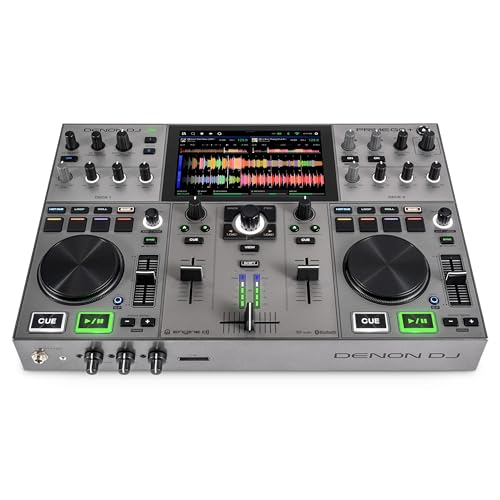
Denon DJ PRIME GO+
Mobile, event and bar DJs who want a laptop-free, battery-powered system with streaming, stems and professional outputs in one portable box.
Read the Denon DJ PRIME GO+ review →Questions Buyers Ask
Pioneer DDJ-REV1
See the current listing, price and included accessories.
About This Review
Mandrillis Team
The Mandrillis editorial team researches and compares audio and music gear using manufacturer documentation, verified specs and real buyer feedback, so you can make a confident purchase without wading through marketing claims.
Read our full research methodology.