Instruments Review
Pioneer DJ DJS-1000 Review: Standalone Sampling Live
The Pioneer DJ DJS-1000 is a standalone DJ sampler with 16 velocity-sensitive pads, a 7 inch touchscreen, a classic step sequencer and PRO DJ LINK sync to CDJs and DJM mixers. This review covers what the listing confirms about live sampling and what it leaves unstated about power and connectivity.
Our Verdict
Research Score 68/100The Pioneer DJ DJS-1000 is a specialist standalone sampler built for DJs and live performers who want to build original patterns and remixes inside an existing booth setup. The listing confirms 16 velocity-sensitive pads, a 7 inch touchscreen, a classic step-sequencer layout and PRO DJ LINK sync to CDJs and DJM mixers, all aimed at tactile, laptop-free performance. Power, weight, inputs and outputs are not published, and there is no DVS or streaming compatibility mentioned, so buyers should treat this as an addition to a booth rather than a replacement for a mixer or deck. It earns 68 out of 100, reflecting strong, specific pad and sync features offset by a thin connectivity picture.
Editorial research score based on published specifications and documented features, not a customer rating or lab test.

Pioneer
Pioneer DJ DJS-1000
Best for: Working DJs and live performers who already have a CDJ and DJM booth setup and want a standalone sampler for building original patterns and live remixes.
Skip it if: You want a single all-in-one DJ controller, or you need confirmed power, weight and connector details before buying.
Check Price on AmazonWe may earn a commission at no extra cost to you.
Listing verified: November 2026
Who Should Buy It
Buy it if
- Club DJs who already run CDJs and a DJM mixer and want live sampling on top
- Live performers who build original patterns and loops as part of a set
- Producers who want a tactile, laptop-free way to sketch drum patterns
- DJs who value tactile pad control over mouse-and-screen sample triggering
Skip it if
- You want a single unit that also plays and mixes full tracks
- You have no CDJs or DJM mixer to sync it with over PRO DJ LINK
- You need every input, output and power spec confirmed before buying
Key Specifications
| Type | Standalone DJ sampler and sequencer, not a controller, mixer or turntable |
| Channels | Not applicable in the traditional DJ mixer sense; the unit syncs into a booth through PRO DJ LINK rather than carrying its own channel mixer |
| Jog wheels | Not applicable; there is no jog wheel, this is a pad-based sampler with a 7 inch touchscreen |
| Software | No computer software is required for standalone use; PRO DJ LINK connects the sampler to compatible CDJs and DJM mixers so samples and sequences stay locked to the set's tempo |
| Pads and effects | 16 velocity-sensitive pads with a classic step-sequencer layout for building and triggering drum patterns and loops live |
| Inputs and outputs | Not published in listing beyond PRO DJ LINK connectivity to CDJs and DJM mixers |
| Audio interface | Not applicable; functions as a standalone performance instrument rather than a computer audio interface |
| Power | Not published in listing |
| Weight | Not published in listing |
| Included accessories | Not published in listing |
Overview
The Pioneer DJ DJS-1000 is a standalone DJ sampler and sequencer, a different kind of product from a controller, mixer or turntable, built for DJs and live performers who want to add original patterns and remixed elements to a set without a laptop. It sits in the upper mid-range price tier and is meant to complement an existing booth rather than replace one.
The listing describes a tactile workflow built around 16 velocity-sensitive pads and a 7 inch touchscreen, a classic step-sequencer layout for programming drum patterns and loops, and PRO DJ LINK connectivity that syncs the sampler's tempo to compatible CDJs and DJM mixers. Those bullets describe a focused tool rather than a full DJ system.
What the listing does not say also matters. Power, weight, detailed inputs and outputs, and included accessories are all left unstated, so buyers planning a rack or flight case around this unit should confirm those figures with the manufacturer before committing.
Decks, Jog Wheels and Performance Controls
There is no jog wheel or deck on this unit, so performance happens through the 16 velocity-sensitive pads and the 7 inch touchscreen instead. The listing describes this combination as fast and tactile for building and triggering patterns, which fits a device meant for drumming out original material live rather than cueing prerecorded tracks.
The classic step-sequencer layout lets a performer program drum patterns and loops on the fly, a workflow closer to a drum machine than to a traditional DJ deck. Velocity sensitivity on the pads means dynamics respond to how hard a pad is struck, which matters for expressive, human-feeling patterns rather than quantized, flat-sounding loops.
None of this replaces a jog wheel for cueing or scratching a track, and the listing does not claim it does. It is a performance surface built specifically for sampling and sequencing, meant to sit alongside a CDJ-and-mixer setup rather than inside one unit.
Software and Compatibility
The DJS-1000 runs standalone, so no computer software is required to use its pads, touchscreen or step sequencer during a set. That laptop-free design is one of its headline features, letting a performer build and trigger patterns directly on the hardware.
Compatibility instead comes through PRO DJ LINK, which the listing says syncs the sampler to compatible CDJs and DJM mixers so that samples and sequences lock to the tempo of the rest of the booth. That is a hardware-level sync protocol rather than a software license, and it only works with Pioneer DJ gear that supports the same link.
There is no mention of DVS, streaming services or third-party software such as rekordbox or Serato in the listing. Buyers who want this sampler to integrate with a different ecosystem should confirm compatibility directly, since PRO DJ LINK is the only sync method the listing describes.
Mixer Section, Effects and Audio Quality
There is no onboard mixer with channel faders or a crossfader on this unit, since it is designed to feed samples into an existing mixer rather than replace one. The listing frames its role as adding live remixes, edits and original elements to a set, which implies the audio itself is generated and triggered here, then blended downstream on a DJM mixer.
Audio quality is not described with any specific figures in the listing, such as sample rate, bit depth or internal effects processing. The emphasis instead is on the tactile and rhythmic side of sampling, namely the 16 velocity-sensitive pads and the step sequencer, rather than on studio-grade audio specifications.
Because the unit depends on PRO DJ LINK to lock tempo with the rest of the booth, overall sound in a set is really a combination of the sampler's triggered audio and whatever processing the connected DJM mixer applies afterward. The listing treats the two as a paired system rather than describing this sampler's output in isolation.
- No onboard channel mixer or crossfader; feeds an external DJM mixer
- 16 velocity-sensitive pads for live sample triggering
- Classic step-sequencer layout for drum patterns and loops
- Audio quality figures such as sample rate not published
- Built for live remix elements rather than full-track mixing
Build, Design and Portability
The listing centers its build description on the 7 inch touchscreen and the 16 velocity-sensitive pads rather than on chassis materials or dimensions. That focus suggests the physical design priority is a fast, responsive playing surface rather than ruggedness claims, though the listing does not rule out a durable build either.
Weight and overall dimensions are not published, so DJs planning rack space or a flight case for touring should confirm those figures separately. The unit is described as fitting into a booth alongside CDJs and a DJM mixer, which implies a compact footprint without confirming exact measurements.
Nothing in the listing suggests the unit folds away or travels differently from other single-piece DJ hardware of similar size. Touring performers who need a confirmed weight for flight cases should treat that as a gap to close with the manufacturer before booking cargo or carry-on space.
Connectivity and Outputs
The one connectivity feature the listing confirms clearly is PRO DJ LINK, which syncs the sampler's tempo to compatible CDJs and DJM mixers so that triggered samples and sequences stay locked to the rest of the set. That is the core of how this unit fits into a booth.
Beyond PRO DJ LINK, the listing does not publish a detailed list of audio inputs, outputs or power requirements. Buyers should assume at minimum some form of audio output to route samples into a mixer, but the exact connector types are not confirmed in the feature bullets.
There is no mention of USB storage for loading or saving patterns, nor of Wi-Fi or Bluetooth connectivity. For a unit built around live performance inside a wired club booth, that omission is less unusual than it would be on a consumer controller, but it still leaves buyers without a full connectivity picture.
Setup and Daily Use
Setting up the DJS-1000 means integrating it into an existing CDJ and DJM booth over PRO DJ LINK, then building or loading patterns on the 16 pads and the touchscreen before a set. The listing frames this as a tool for direct, live performance rather than one that works in isolation.
Daily use likely involves programming or adjusting step-sequenced patterns between sets and triggering them live during a performance, with velocity sensitivity letting a performer vary intensity in real time. Because there is no library of prerecorded tracks to browse, the daily workflow is closer to a drum machine than a DJ deck.
Preparation before a gig would mean building a small bank of patterns and samples in advance, then relying on the pads and touchscreen to trigger and vary them once the set is underway. That is a different kind of preparation from loading playlists onto a USB drive for a standard controller or player.
Who Should Buy It
This sampler makes the most sense for working club DJs and live performers who already run CDJs and a DJM mixer and want to add original, physically triggered elements to their sets. The 16 velocity-sensitive pads, the step sequencer and the PRO DJ LINK sync all point toward that specific, booth-integrated use case.
Producers who want a tactile way to sketch drum patterns outside the studio may also find value here, though they should budget for a full CDJ and mixer setup to get the most from PRO DJ LINK. DJs who just want to play and blend full tracks have no need for this specialist unit.
Buyers who are still building out their first booth should prioritize a controller, a mixer or a set of CDJs before adding a sampler like this one. The DJS-1000 is explicitly an addition to an existing rig rather than a starting point.
Alternatives Worth Considering
DJs who want a single all-in-one unit that plays, mixes and samples together should look at a standalone controller instead. The DJS-1000 is deliberately a single-purpose addition to a booth rather than a complete system on its own.
For DJs who want jog wheel and software-based performance without owning a club rig, a controller such as the Pioneer DJ DDJ-FLX4 or the Hercules DJControl Inpulse 300 offers a more complete, self-contained alternative. Neither one replicates this sampler's dedicated pad and step-sequencer workflow, though.
DJs who already own CDJs and a DJM mixer and specifically want tactile, pad-based sampling have few true alternatives within the same PRO DJ LINK ecosystem. That scarcity is part of what keeps this product in a specialist niche rather than a broadly competitive one.
Verdict
The Pioneer DJ DJS-1000 is a specialist standalone sampler built for DJs and live performers who want to build original patterns and remixes inside an existing booth setup. The listing confirms 16 velocity-sensitive pads, a 7 inch touchscreen, a classic step-sequencer layout and PRO DJ LINK sync to CDJs and DJM mixers, all aimed at tactile, laptop-free performance.
Power, weight, inputs and outputs are not published, and there is no DVS or streaming compatibility mentioned, so buyers should treat this as an addition to a booth rather than a replacement for a mixer or deck. It earns 68 out of 100, reflecting strong, specific pad and sync features offset by a thin connectivity picture.
Strengths and Limitations
Strengths
- Fully standalone sampler and sequencer that needs no laptop in the booth
- 16 velocity-sensitive pads paired with a 7 inch touchscreen for fast, tactile pattern building
- Classic step-sequencer layout for programming drum patterns and loops on the fly
- PRO DJ LINK syncs samples and sequences to the tempo of CDJs and DJM mixers
- Built for live remixing and original performance elements rather than static playback
Limitations
- Inputs, outputs, power and weight are not published in the listing
- No DVS, streaming service or third-party software compatibility is mentioned
- This is a specialist tool that adds to a booth rather than replacing a mixer or deck
- Included accessories and exact connector types are not confirmed
How We Scored It
Scores reflect published specifications, documented features and value against the alternatives below. They are editorial research scores, not laboratory measurements.
Alternatives to Consider

Denon DJ PRIME 4 G2
Mobile and resident DJs who want a laptop-free four-deck system with stems, zone outputs and built-in lighting control.
Read the Denon DJ PRIME 4 G2 review →
Roland VR-6HD
Corporate, sales and worship teams that need one operator to switch six HDMI sources, mix 28 audio channels and stream from a single compact unit.
Read the Roland VR-6HD review →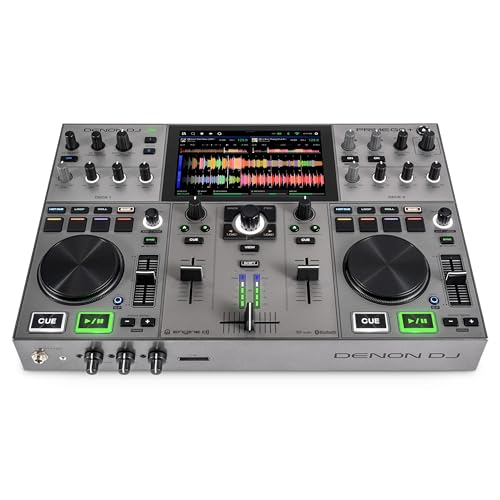
Denon DJ PRIME GO+
Mobile, event and bar DJs who want a laptop-free, battery-powered system with streaming, stems and professional outputs in one portable box.
Read the Denon DJ PRIME GO+ review →Questions Buyers Ask
Pioneer DJ DJS-1000
See the current listing, price and included accessories.
About This Review
Mandrillis Team
The Mandrillis editorial team researches and compares audio and music gear using manufacturer documentation, verified specs and real buyer feedback, so you can make a confident purchase without wading through marketing claims.
Read our full research methodology.