Instruments Review
Pioneer DJ XDJ-1000MK2 DJ Deck Review: Club Deck at Home
The Pioneer DJ XDJ-1000MK2 DJ Deck is a multi-player DJ deck with a 7 inch touchscreen, USB and rekordbox playback, Hot Cues, loops, slip mode, beat sync and PRO DJ LINK connectivity. This review covers what the listing confirms and what it leaves unstated about the jog wheel, power and weight.
Our Verdict
Research Score 63/100The Pioneer DJ XDJ-1000MK2 DJ Deck recreates a club-style CDJ workflow for DJs building a multi-player rig at home or in a small venue. The listing confirms a full-color 7 inch touchscreen with waveforms and Qwerty search, USB and rekordbox playback, Hot Cues, loops, slip mode, beat sync and PRO DJ LINK connectivity for linking multiple players with a DJM mixer. The listing does not describe the jog wheel's size or feel, nor does it publish power, weight or a detailed input and output list, which leaves real gaps for buyers planning a booth around this deck. It earns 63 out of 100, reflecting strong software and workflow features offset by missing hardware detail and the need for a separate mixer.
Editorial research score based on published specifications and documented features, not a customer rating or lab test.

Pioneer
Pioneer DJ XDJ-1000MK2 DJ Deck
Best for: DJs building a club-style multi-player rig at home or in a small venue who want rekordbox and USB playback with Hot Cues, loops and beat sync.
Skip it if: You want an all-in-one controller with a built-in mixer, or you need the jog wheel's exact size and feel confirmed before buying.
Check Price on AmazonWe may earn a commission at no extra cost to you.
Listing verified: November 2026
Who Should Buy It
Buy it if
- DJs assembling a multi-player, PRO DJ LINK club-style setup at home
- Mobile and club DJs who already use rekordbox for library management
- Performers who rely on Hot Cues, loops, slip mode and beat sync
- Buyers upgrading from a single all-in-one controller to a modular CDJ-style rig
Skip it if
- You want one box with a built-in mixer rather than a separate deck and mixer
- You need a confirmed jog wheel size, weight or power rating before buying
- You are not planning to add a DJM mixer or a second player
Key Specifications
| Type | Multi-player DJ deck built around a club-style CDJ workflow, not a controller with its own mixer |
| Channels | Not applicable; a single-deck media player, not a multi-channel mixer |
| Jog wheels | Not published in listing; the feature bullets describe the touchscreen and performance controls but do not detail a jog wheel or platter |
| Software | Plays from a USB drive or connects to rekordbox software; built for a PRO DJ LINK club setup |
| Pads and effects | Hot Cues, loops and slip mode are confirmed; no dedicated performance pad count is described in the listing |
| Inputs and outputs | Not published in listing beyond USB playback and PRO DJ LINK connectivity |
| Audio interface | Not applicable; functions as a source player that still requires a separate mixer |
| Power | Not published in listing |
| Weight | Not published in listing |
| Included accessories | Not published in listing |
Overview
The Pioneer DJ XDJ-1000MK2 DJ Deck is a multi-player DJ deck built to recreate a pro CDJ-style workflow for DJs assembling a club setup at home or in a small venue. It plays tracks and provides performance controls, but it is not a complete system, since it still needs a separate DJM mixer to blend between decks.
The listing centers on a full-color 7 inch touchscreen with waveforms and Qwerty search, playback from a USB drive or a rekordbox connection, and performance features including Hot Cues, loops, slip mode and beat sync. PRO DJ LINK lets multiple players and a mixer connect together for a genuine booth setup.
Several details common to a review of this kind are missing from the listing, including jog wheel size and feel, power requirements, weight and a full input and output list. Buyers who need those figures for a specific build should confirm them with the manufacturer before ordering.
Decks, Jog Wheels and Performance Controls
Jog wheel size and feel are not specifically described for this deck, which is unusual for a CDJ-style player of this type, so this review marks that spec as not published rather than assuming a size or torque figure that is not confirmed anywhere in the feature bullets. What is confirmed is a set of performance features layered on top of whatever platter the deck uses.
Hot Cues let a DJ mark and instantly jump to key points in a track, loops allow repeating a section on the fly, and slip mode keeps the underlying track playing in the background while effects or scratches are applied on top, so the track resumes in the right place. Beat sync is also confirmed, which locks tempo between connected players automatically.
Together, those four features describe a performance toolkit built for precise, confident mixing rather than raw physical deck feel. A DJ moving from a different brand of CDJ-style player should expect a broadly familiar workflow, even though the exact jog wheel specification is left for the manufacturer's own documentation.
Software and Compatibility
The XDJ-1000MK2 plays from two main sources: a USB drive loaded with prepared tracks, or a direct connection to rekordbox software. That dual approach lets a DJ either travel light with just a USB stick or lean on rekordbox's library and preparation tools before a gig.
rekordbox is the named software throughout the listing, and the deck is built around it rather than around Serato or Virtual DJ, neither of which is mentioned. DJs who already manage their library in rekordbox will get the most consistent experience, since Hot Cues, loops and other metadata typically carry over between the software and the hardware.
PRO DJ LINK is the backbone of compatibility with the rest of a booth, letting this deck talk to other players and a DJM mixer so that sync and control work across multiple units. The listing does not mention Wi-Fi streaming services or DVS support, so compatibility here is squarely about rekordbox, USB and PRO DJ LINK.
Mixer Section, Effects and Audio Quality
There is no onboard mixer on this deck, since it is a player rather than a mixer, and the listing is consistent with that by never describing channel faders, a crossfader or EQ knobs. A DJM mixer is needed to actually blend the output of this deck with a second source.
Audio quality specifications, such as a digital-to-analog converter rating or signal-to-noise figure, are not published in the listing. The performance side of audio quality instead comes through features like beat sync and slip mode, which help a DJ keep transitions sounding clean and in time rather than describing raw fidelity numbers.
Because the deck pairs with a DJM mixer rather than mixing on its own, final sound quality in a booth depends on both units together. The listing treats this player purely as the source side of that chain, leaving tone shaping, EQ and crossfading to whichever mixer the DJ connects it to.
- No onboard mixer; requires a separate DJM mixer to blend sources
- Hot Cues, loops, slip mode and beat sync confirmed
- 7 inch touchscreen with waveforms and Qwerty search
- Audio quality figures such as DAC rating not published
- PRO DJ LINK ties multiple players and a mixer together
Build, Design and Portability
Physical build description takes a back seat to the touchscreen and workflow in this listing, so details like chassis material, dimensions and weight are not confirmed. The 7 inch full-color touchscreen with waveforms and Qwerty search is the clearest design centerpiece mentioned, aimed at fast track searching without digging through a phone-style menu.
Because this deck is meant to recreate a pro CDJ setup, buyers should expect a design built for booth use rather than casual transport, even though the listing does not state weight or give portability claims either way. Anyone planning to travel with this deck regularly should confirm size and weight directly with the manufacturer.
There is no mention of a travel case, rack ears or stacking feature in the listing, so mobile DJs who move this deck often should plan their own case solution. Club installs that keep the deck in place will care less about that gap than a touring DJ would.
Connectivity and Outputs
The clearest connectivity feature is PRO DJ LINK, which the listing says connects multiple players and a DJM mixer together for a genuine club-style booth setup. That protocol is central to how this deck is meant to be used, rather than as a standalone unit.
USB playback is the other confirmed connectivity path, letting a DJ load prepared tracks without a laptop in the booth. Beyond those two points, the listing does not publish a detailed list of audio outputs, power requirements or additional ports, so buyers should treat that as unconfirmed rather than assume a specific connector type.
There is no mention of Bluetooth, Wi-Fi streaming or a headphone output for cueing, even though a deck of this class would typically need some way for a DJ to preview tracks before they play out. Buyers should confirm that detail directly rather than assume it from general knowledge of similar club gear.
Setup and Daily Use
Setting up this deck as part of a club-style rig means pairing it with at least one more player and a DJM mixer over PRO DJ LINK, then loading tracks either from a USB drive or through a rekordbox connection. That is a more involved setup than a single all-in-one controller, but it mirrors a real club booth.
Daily use revolves around the touchscreen for browsing and searching tracks, Hot Cues and loops for building transitions, slip mode for keeping timing intact during creative moves, and beat sync for locking tempo between players. DJs coming from rekordbox will find the daily workflow especially familiar.
Over repeated use, the main advantage of this kind of setup is consistency. A club booth built around multiple identical players and a shared mixer behaves the same way every night, which matters for DJs who play the same rooms or travel between venues that already run similar gear.
Who Should Buy It
This deck suits DJs who want to build a genuine multi-player, club-style rig at home or in a small venue, particularly those who already use rekordbox and want USB playback alongside it. Hot Cues, loops, slip mode and beat sync make it a strong fit for DJs who value precise, confident mixing tools.
Buyers upgrading from a single all-in-one controller toward a modular CDJ-style setup are another good match, as are mobile and club DJs who want a deck that pairs naturally with a separate DJM mixer. DJs who want one box with a built-in mixer should look elsewhere.
Anyone who regularly plays venues that already run Pioneer DJ club gear will also benefit. Matching this deck to the same ecosystem via PRO DJ LINK reduces the chance of compatibility surprises on a shared bill with other DJs.
Alternatives Worth Considering
DJs who want a complete, single-box solution rather than a modular deck-and-mixer setup should look at an all-in-one controller such as the Pioneer DJ DDJ-FLX4 or the Pioneer DJ DDJ-REV1. Both of those bundle a mixer and jog wheels into one unit.
DJs who specifically want the feel of real vinyl rather than a touchscreen-driven media player might instead consider a direct-drive turntable paired with a DVS setup. That path trades this deck's rekordbox-centered workflow for a more traditional, physical approach.
For DJs already committed to rekordbox and a multi-player layout, there is no real substitute that offers the same PRO DJ LINK ecosystem fit. That fit is the main reason to stay within this deck's own product family when expanding a booth.
Verdict
The Pioneer DJ XDJ-1000MK2 DJ Deck recreates a club-style CDJ workflow for DJs building a multi-player rig at home or in a small venue. The listing confirms a full-color 7 inch touchscreen with waveforms and Qwerty search, USB and rekordbox playback, Hot Cues, loops, slip mode, beat sync and PRO DJ LINK connectivity for linking multiple players with a DJM mixer.
The listing does not describe the jog wheel's size or feel, nor does it publish power, weight or a detailed input and output list, which leaves real gaps for buyers planning a booth around this deck. It earns 63 out of 100, reflecting strong software and workflow features offset by missing hardware detail and the need for a separate mixer.
Strengths and Limitations
Strengths
- Full-color 7 inch touchscreen with waveforms and Qwerty search for fast track selection
- Plays from USB storage or connects directly to rekordbox for library management
- Hot Cues, loops, slip mode and beat sync for expressive, precise mixing
- PRO DJ LINK connects multiple players and a DJM mixer for a genuine booth setup
- Recreates a pro CDJ-style workflow for home, small venue or club use
Limitations
- Jog wheel feel and size are not described in the listing
- Power, weight and detailed inputs and outputs are not published
- Requires a separate DJM mixer to actually blend between decks
- Included accessories are not confirmed in the listing
How We Scored It
Scores reflect published specifications, documented features and value against the alternatives below. They are editorial research scores, not laboratory measurements.
Alternatives to Consider

Denon DJ PRIME 4 G2
Mobile and resident DJs who want a laptop-free four-deck system with stems, zone outputs and built-in lighting control.
Read the Denon DJ PRIME 4 G2 review →
Roland VR-6HD
Corporate, sales and worship teams that need one operator to switch six HDMI sources, mix 28 audio channels and stream from a single compact unit.
Read the Roland VR-6HD review →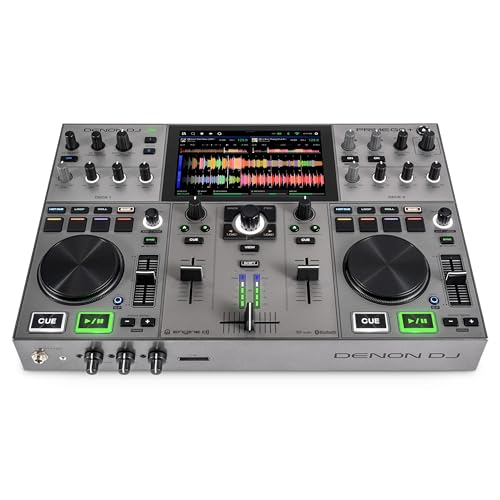
Denon DJ PRIME GO+
Mobile, event and bar DJs who want a laptop-free, battery-powered system with streaming, stems and professional outputs in one portable box.
Read the Denon DJ PRIME GO+ review →Questions Buyers Ask
Pioneer DJ XDJ-1000MK2 DJ Deck
See the current listing, price and included accessories.
About This Review
Mandrillis Team
The Mandrillis editorial team researches and compares audio and music gear using manufacturer documentation, verified specs and real buyer feedback, so you can make a confident purchase without wading through marketing claims.
Read our full research methodology.