Instruments Review
Roland JD-XA 49-Key Review: Analog and Digital Crossover Synth
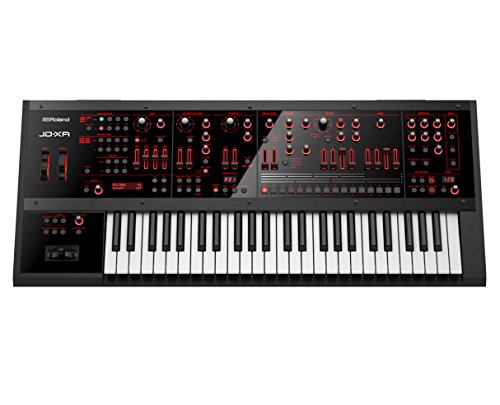
The Roland JD-XA 49-Key is a premium crossover synthesizer with independent analog and digital engines. The listing details a four part discrete analog section with two oscillators, four envelopes and two LFOs per voice, three analog filter types and an Analog Dry Out, but leaves key type, weight and connectivity largely unstated.
Our Verdict
Research Score 77/100The Roland JD-XA 49-Key is a synthesist's instrument, and the published specification reflects that priority. A four part discrete analog engine with two oscillators, four envelopes and two LFOs per voice, paired with 4-Pole, transistor-ladder and multi-mode filters that respond smoothly to knob movement, is a serious analog architecture, and the independent digital engine broadens the palette further. Cross Mod, Ring Mod and OSC Sync working simultaneously and the Analog Dry Out are features aimed squarely at sound designers. The listing is silent on key action, weight, power and most connectivity, and there are no pads or DAW controls. For buyers who want deep synthesis in the premium tier, it is a focused and capable choice.
Editorial research score based on published specifications and documented features, not a customer rating or lab test.
Roland
Roland JD-XA 49-Key
Best for: Synthesists who want genuine discrete analog voices and a digital engine in one 49-key crossover instrument with deep real time filter control.
Skip it if: You need a general purpose workstation, a weighted piano action or a simple controller for software instruments.
Check Price on AmazonWe may earn a commission at no extra cost to you.
Listing verified: October 2026
Who Should Buy It
Buy it if
- Sound designers who want analog oscillators with Cross Mod, Ring Mod and Sync
- Electronic musicians who record raw analog through the Dry Out
- Players who want analog and digital parts layered on one keyboard
- Studio owners looking for a knob driven analog filter section
Skip it if
- You need a published key action type or weight before buying
- Presets and ease of use matter more than synthesis depth
- Your rig needs DAW integration or pads from the keyboard
Key Specifications
| Keys | 49 keys |
| Key type | Not published in listing |
| Pads | Not published in listing |
| Knobs and faders | Dedicated knobs for the analog filter section and synth parameters, exact counts not published in listing |
| DAW integration | Not published in listing |
| Bundled software | Not published in listing |
| Connectivity | Analog Dry Out for raw analog signal output, other ports not published in listing |
| Power | Not published in listing |
| Weight | Not published in listing |
| Included accessories | Not published in listing |
Overview
The Roland JD-XA 49-Key is described in its listing as an analog and digital crossover synthesizer, and that phrase sums up the design. Rather than choosing between a true analog signal path and the flexibility of a digital engine, the JD-XA runs both as independent engines in the same chassis. The analog side is discrete, meaning real analog circuitry per voice rather than modeling, and the digital side sits alongside it for layering or contrast.
The published specification spends most of its words on the analog engine, which is organized as four parts. Each voice carries two oscillators, a filter, an amp, four envelopes split across pitch, filter and amp, and two LFOs. An Analog Dry Out delivers the raw analog signal before any digital processing, which is a feature recording engineers will value.
This review relies on the product listing alone. The listing does not describe the key action, pads, connectivity beyond the Analog Dry Out, power or weight, and those omissions are noted where they matter rather than filled in by assumption.
Keys, Pads and Feel
The JD-XA carries 49 keys, which places it in the four octave class that most performance synths occupy. The listing does not state the action type, so it is not possible from the published data to say whether the keys are synth weighted, semi weighted or whether aftertouch is present. For an instrument this focused on real time modulation, aftertouch would be a meaningful feature, and buyers who rely on it should confirm it before purchase.
Forty nine keys is a sensible compromise for a synthesizer whose four analog parts and digital engine are likely to be split or layered across the keyboard. It leaves room for a bass part in the left hand and a lead or pad in the right while keeping the instrument compact enough for a desk or a crowded stage. Players who need full two handed piano style range will find it limiting.
No pads are published in the listing. The JD-XA is a keyboard synthesizer rather than a groove box, and sample triggering or clip launching is not part of the described feature set. Anyone who wants to sequence drums from pads will need a separate controller.
Knobs, Faders and DAW Integration
The listing highlights the analog filter section's supremely smooth and natural response to knob movements, which tells us the filter is designed to be played from the panel rather than programmed in a menu. That section covers 4-Pole, transistor-ladder and multi-mode filters with low pass, high pass and band pass modes. The exact number of knobs and sliders across the whole panel is not published, so this review cannot describe the full control surface in numbers.
The oscillator section is equally performance oriented. Cross Mod, Ring Mod and OSC Sync can all be engaged simultaneously, which allows metallic, clangorous and aggressive timbres that single modulation modes cannot reach. With two LFOs per voice and a rate range the listing describes as ultra-slow to ultra-fast, the modulation sources span slow evolving drift to audio rate effects.
DAW integration is not published in the listing. There is no mention of a plugin editor, transport controls, USB audio or a control surface mode. The JD-XA should be approached as a hardware sound source, with any computer control features confirmed separately rather than assumed.
Software, Sounds and Features
The analog engine is the centerpiece. Four discrete analog parts each provide two oscillators, a filter, an amp, four envelopes and two LFOs per voice, which is a richer per voice architecture than most compact analog synths offer. The four envelopes are split with two for pitch and one each for filter and amp, giving independent pitch sweeps on each oscillator while the filter and amp follow their own contours.
The filter section offers three characters. A 4-Pole design delivers a steep classic slope, a transistor-ladder type references the warm, slightly saturating behavior associated with vintage ladder filters, and a multi-mode filter adds high pass and band pass options alongside low pass. The listing stresses that the response to knob movement is smooth and natural, which matters when a filter sweep is performed live.
The digital engine is described as independent, but the listing provides no detail on its waveform set, polyphony or effects. Likewise no preset count, sequencer, arpeggiator or bundled software is published. Buyers who want a complete picture of the digital side should seek the full manufacturer specification.
- Four part discrete analog engine with 2 x OSC, Filter, Amp, 4 x Env and 2 x LFO per voice
- 4-Pole, transistor-ladder and multi-mode LPF, HPF and BPF filters
- Cross Mod, Ring Mod and OSC Sync available simultaneously
- LFO rate from ultra-slow to ultra-fast
- Independent digital sound engine alongside the analog section
- Analog Dry Out for raw unprocessed analog signal
Build, Design and Portability
The product listing does not describe the chassis construction, panel materials or finish of the JD-XA. What can be inferred is that a synthesizer with a filter section built around knob response and simultaneous oscillator modulation modes carries a substantial panel, since those functions need physical controls to be useful. The layout itself is not detailed in the published text.
Weight and dimensions are not published. A 49-key instrument with discrete analog circuitry is typically heavier than a comparable digital synth, but this review cannot state a figure. Players who intend to gig with it should confirm the weight and the availability of a fitted case.
Design wise, the JD-XA is clearly intended to be operated from the front panel in real time. The emphasis on smooth knob response and on modulation that can be stacked suggests a control surface built for performance tweaking, which is a different priority from the preset browsing focus of a workstation.
Connectivity and Power
The one connection the listing names is the Analog Dry Out, which provides the raw analog signal before the digital effects and mixing stages. For a studio user this is valuable because it allows the analog voices to be recorded clean or routed through external pedals and outboard while the main outputs carry the processed mix. It also makes the analog section usable as a pure analog instrument in a hybrid setup.
Beyond that, the listing does not describe main outputs, headphone output, MIDI DIN ports, USB, CV or pedal inputs. A premium synthesizer would normally include most of those, but the review can only report what is published. Buyers who need specific routing, such as individual outputs per part, should check the full specification.
Power requirements are not published, so it is unknown from the listing whether the JD-XA uses an internal supply or an external adapter. For a stage instrument that distinction affects how it is packed and powered, and it should be confirmed before committing to a live rig.
Setup and Daily Use
Daily use on the JD-XA is about programming and performing sounds rather than browsing a sound library. The four analog parts can be set up as separate timbres, layered into a thick stack or combined with the digital engine, and the knob driven filter section invites live adjustment. The simultaneous Cross Mod, Ring Mod and OSC Sync options mean a single part can move from a plain sawtooth to a harsh metallic tone with a few switches.
In a studio the Analog Dry Out changes the workflow. A producer can record the analog voices dry to one track and the processed main output to another, then decide later which to use or how to blend them. That flexibility is rare on instruments in this class and makes the JD-XA friendly to outboard processing.
Because the listing does not mention bundled software, an editor or a DAW mode, expect to do all editing from the hardware. The LFO range from ultra-slow to ultra-fast rewards patient experimentation, and players who enjoy building sounds from scratch will find the architecture deep enough to keep returning to.
Who Should Buy It
The JD-XA is for synthesists first. Electronic musicians who want genuine discrete analog oscillators and filters, with the ability to stack Cross Mod, Ring Mod and Sync, are the natural audience. Sound designers who care about the difference between a 4-Pole, a transistor-ladder and a multi-mode filter will understand immediately why those three options matter.
Studio owners who want an analog voice they can record raw through the Dry Out, then process externally, will also find the JD-XA a strong fit. The independent digital engine means the instrument is not limited to analog textures, so it can serve as a broad synth source in a hybrid setup rather than a single purpose module.
It is not the right choice for players who need a weighted piano action, a huge preset library organized for quick recall, pads for finger drumming or deep DAW integration. Those buyers would be paying a premium tier price for synthesis depth they would not use.
Alternatives Worth Considering
Within Roland's own range, the JUNO-D8 covered elsewhere on this site takes the opposite approach, offering a vast ZEN-Core preset library and an 88-note weighted keyboard for gigging rather than discrete analog synthesis. Players who want Roland sounds for live band work are better served there, while those who want to build analog patches should stay with the JD-XA.
Across brands, polyphonic analog synthesizers from Korg, Sequential and Novation offer comparable analog depth, usually without an independent digital engine. Buyers comparing them should weigh per voice architecture, filter options and whether a raw analog output is available, since those are the features that define the JD-XA.
For someone who mainly wants analog style sound in a DAW, a software synth paired with a knob heavy controller such as the Arturia MiniLab 3 or a Novation Launchkey costs a fraction of the price. That path loses the real analog circuitry and the Dry Out but gains total recall and DAW integration that the JD-XA listing does not mention.
Verdict
The Roland JD-XA 49-Key is a specialist instrument with a clear purpose. Its four part discrete analog engine, three analog filter types with smooth knob response, stackable oscillator modulation and Analog Dry Out form a serious synthesis platform, and the independent digital engine widens the sonic range. It is built for players who program sounds rather than browse them.
The published listing leaves many practical questions open, including key action, weight, power, connectivity beyond the Dry Out and the detail of the digital engine. Buyers who confirm those points and who want analog depth in the premium tier will find a rewarding synthesizer. Those who need a workstation, a piano action or a controller should look at other instruments.
Strengths and Limitations
Strengths
- Independent analog and digital sound engines in one instrument
- Four part discrete analog engine with two oscillators and two LFOs per voice
- 4-Pole, transistor-ladder and multi-mode analog filters
- Cross Mod, Ring Mod and OSC Sync usable at the same time
- Analog Dry Out for a raw unprocessed signal
- LFO rate range from ultra-slow to ultra-fast
Limitations
- Key action type, weight and power are not published in the listing
- No pads or DAW transport controls are mentioned
- 49 keys limits two handed playing
- Connectivity beyond the Analog Dry Out is not stated
- Premium tier price for a specialist instrument
How We Scored It
Scores reflect published specifications, documented features and value against the alternatives below. They are editorial research scores, not laboratory measurements.
Alternatives to Consider

Pioneer DJ XDJ-RX3
DJs who want club-standard standalone playback from USB with a large touchscreen and a familiar two-channel layout.
Read the Pioneer DJ XDJ-RX3 review →
Pioneer DJ DDJ-FLX10 4-Channel
Mobile and open-format DJs who want a 4-channel club style controller with live stem separation and lighting control from one unit.
Read the Pioneer DJ DDJ-FLX10 4-Channel review →Questions Buyers Ask
Roland JD-XA 49-Key
See the current listing, price and included accessories.
About This Review
Mandrillis Team
The Mandrillis editorial team researches and compares audio and music gear using manufacturer documentation, verified specs and real buyer feedback, so you can make a confident purchase without wading through marketing claims.
Read our full research methodology.