Instruments Review
Roland JUNO-DS 88-Key Review: The Singer-Keyboardist's Gig Rig
The Roland JUNO-DS 88-Key pairs an 88-note Ivory Feel-G weighted action in a lightweight body with battery operation, a mic input with reverb, vocoder and Auto Pitch, eight Phrase Pads, physical knobs and sliders, an eight-track pattern sequencer and USB audio with DAW control. This research review weighs that published feature set against its age.
Our Verdict
Research Score 75/100The Roland JUNO-DS 88-Key is still one of the most complete performer's keyboards on paper. Its listing documents an 88-note Ivory Feel-G weighted action in a lightweight body, battery operation, a mic input with dedicated reverb, vocoder and Auto Pitch, eight Phrase Pads for backing tracks, physical knobs and sliders, an eight-track pattern sequencer with non-stop recording, a wave expansion slot with free Axial content, WAV import and USB audio with DAW control. The sound set is defined by JUNO-Di lineage rather than a current engine, and polyphony, weight, battery type and outputs are unpublished, which holds the score at 75. For a singing keyboardist at an upper mid-range tier, it remains a well-documented and practical choice.
Editorial research score based on published specifications and documented features, not a customer rating or lab test.

Roland
Roland JUNO-DS 88-Key
Best for: Singer-keyboardists and solo performers who want piano feel, backing tracks, vocal effects and battery power in one lightweight 88-key instrument.
Skip it if: You want the newest Roland engine, deep synthesis or a true hammer action over a lighter weighted feel.
Check Price on AmazonWe may earn a commission at no extra cost to you.
Listing verified: October 2026
Who Should Buy It
Buy it if
- Singer-keyboardists who need a vocal chain built in
- Solo performers and duos who run backing tracks from pads
- Cover band players who want physical controls on a weighted 88
- Buskers and mobile performers who need battery operation
Skip it if
- You want the latest ZEN-Core engine
- You need a documented polyphony figure
- You prefer a heavier hammer action
Key Specifications
| Type | 88-key weighted-action stage synthesizer |
| Synthesis | Roland sample-based engine with the JUNO-Di sound set plus updated pianos, organs and stage sounds; wave expansion slot and WAV sample import |
| Polyphony | Not published in listing |
| Keys or pads | 88-note Ivory Feel-G weighted-action keyboard; eight Phrase Pads |
| Sequencer | Eight-track pattern sequencer with non-stop recording |
| Effects | Dedicated Reverb, Vocoder and Auto Pitch for the mic input; other effects not published in listing |
| Connectivity | Mic input, USB audio/MIDI with DAW Control mode, USB memory for samples and audio songs; other ports not published in listing |
| Power | Battery-powered operation supported; battery type and adapter not published in listing |
| Weight | Not published in listing (described as lightweight) |
| Included accessories | Not published in listing |
Overview
The Roland JUNO-DS 88-Key is the previous generation of Roland's gigging JUNO, and its listing still reads as one of the most complete feature sets for a working keyboardist at its tier. An 88-note Ivory Feel-G weighted-action keyboard in a lightweight body, battery operation, a mic input with vocal effects, phrase pads, a pattern sequencer and USB audio with DAW control are all stated outright.
The JUNO-DS88 was built for the player who sings, triggers backing tracks and needs piano feel without a heavy case, and that brief has not aged. It has since been followed by the ZEN-Core JUNO-D8, so part of this review is about whether the older platform still makes sense when the newer one exists.
This research review is based only on the published listing, which is unusually thorough on features but does not state polyphony, weight, battery type, physical outputs or included accessories. Those gaps are called out where they matter, and nothing here rests on time spent with the instrument.
Sound Engine and Tone
The sound set is described by lineage rather than by engine name: all the sounds from the JUNO-Di, plus newly updated acoustic and electric pianos, additional organs and other stage essentials. That makes it a sample-based stage library tuned for band work rather than a synthesis platform for programming. Buyers who know the JUNO-Di will recognize the categories, and the updated pianos were the headline change at launch.
Two expansion paths are published. A wave expansion slot accepts new waveforms downloaded free from Roland's Axial website, and a sample import function plays user WAV files from the keyboard, so the library can grow with free content and with a player's own material.
The mic input has its own dedicated effects: reverb, a vocoder and Auto Pitch. For a singing keyboardist that means a vocal chain without a separate processor, and the vocoder turns the keyboard into a classic robotic-voice instrument. Polyphony is not published, which is the main unknown for layered piano and pad parts.
in-person Control and Workflow
The Ivory Feel-G keyboard is the defining feature. The listing describes it as providing a weighted-action feel in a lightweight design, which is the compromise a gigging pianist wants: enough resistance for dynamic piano playing, with textured key surfaces, in a body that one person can carry.
Physical knobs and sliders are confirmed for sound manipulation and editing, which is more real-time control than the newer JUNO-D listings describe. Being able to open a filter or adjust an envelope from the panel matters for synth parts and for shaping sounds live without menu diving.
Eight Phrase Pads trigger samples and audio songs stored on USB memory. For a solo performer or a duo that is the backing track system, the sound effect launcher and the intro music player in one row of pads, and keeping the audio on a USB stick means it travels with the keyboard.
Sequencer, Effects and Features
The eight-track pattern sequencer with non-stop recording is a songwriting tool first. Non-stop recording means a player can lay down drums, bass and chords in a continuous loop without stopping to arm each track, which is the fastest way to catch an idea between rehearsals.
Effects beyond the vocal chain are not published, so the specification lists only the dedicated reverb, vocoder and Auto Pitch for the mic input. A stage keyboard of this type carries multi-effects and global reverb and chorus, but the listing does not describe them. The vocal chain is documented because it is the selling point for singers.
Battery-powered operation is a feature in its own right for buskers, outdoor events and venues with poor power. The listing does not state the battery type, count or run time, so confirm those details before planning a battery-only performance.
- Eight-track pattern sequencer with non-stop recording
- Mic input with dedicated reverb, vocoder and Auto Pitch
- Eight Phrase Pads for samples and USB audio songs
- Wave expansion slot with free Axial downloads
- WAV sample import
- Battery-powered operation
Build, Design and Portability
Lightweight is the listing's word for an 88-note weighted-action keyboard, and that is the reason to choose the JUNO-DS88 over a stage piano. No weight figure is published, but the combination of weighted feel and easy transport is the design target, and the battery option extends the portability to places without outlets.
Panel materials, chassis construction and dimensions are not described. The build score credits the lightweight weighted format, the physical controls and the pads, and leaves room for the full specification to add detail. Buyers who gig weekly should confirm the weight and plan a padded case sized for a slim 88.
Players who have carried a conventional hammer-action 88 will notice the difference most. The Ivory Feel-G action is lighter in both senses, in resistance and in mass, and that trade is deliberate.
Connectivity, MIDI and Sync
Documented connections are a mic input, USB audio and MIDI with a DAW Control mode, and USB memory for samples and audio songs. DAW Control mode lets the knobs, sliders and pads operate a software session, which is useful in a home studio where the JUNO-DS88 is also the master keyboard.
Line outputs, headphone jack, five-pin MIDI ports, pedal inputs and the mic connector type are not published. Any gigging keyboard will have line outputs, but the listing does not specify them, so the connectivity score is based on the USB and mic features alone.
MIDI clock for the pattern sequencer is unstated. Players who want the sequencer to lock to a drum machine or DAW should confirm clock handling in the full specification. The DAW Control mode suggests tight USB MIDI integration, but clock is a separate matter.
Setup and Daily Use
Setup follows the gigging brief: power from the adapter or batteries, audio to the PA, a microphone into the mic input, and a USB stick loaded with backing songs and samples for the Phrase Pads. The knobs and sliders give immediate control, and the vocal effects are dedicated rather than buried in a menu.
Daily use for a singer-keyboardist means calling up pianos and organs, launching tracks from the pads and running the voice through reverb or Auto Pitch, all from one instrument. The pattern sequencer adds songwriting between gigs, and the free Axial waveforms add variety over time.
Accessories are not published, so plan for a sustain pedal, stand and case. Battery type and count are also unstated, and the adapter specification should be confirmed for international use. A spare USB stick with the show's audio is cheap insurance.
Who Should Buy It
The JUNO-DS88 suits singer-keyboardists, solo performers and duos who need piano feel, backing tracks, vocal effects and battery operation from one lightweight keyboard. It also suits cover band players who want physical controls and a proven stage library without a flagship budget.
It is less suited to players who want the newest engine and expansion store, to synth programmers who need deep synthesis, and to pianists who want a true hammer action over a lighter weighted feel. Those buyers will be happier with a JUNO-D8, a FANTOM-06 or an RD series piano respectively.
Buyers choosing between this and the newer JUNO-D8 should weigh the DS88's documented vocal effects, phrase pads, knobs and sliders against the D8's ZEN-Core engine, USB-C and higher sound count. For a performer who sings, the older platform still has the stronger published feature list.
Alternatives Worth Considering
The Roland JUNO-D8 is the direct successor with the ZEN-Core engine and USB-C battery power, though its listing does not describe vocal effects, phrase pads or physical controls. The Yamaha MX88 offers a GHS graded action and 128-note polyphony with a 16-track sequencer but no mic input.
For piano-first players, the Roland RD-08 and RD-88 EX offer PHA-4 hammer actions and onboard speakers. For producers, the Roland FANTOM-06 goes much deeper into sampling and sequencing on synth-action keys. Each of those answers a narrower question than the DS88, which tries to cover the whole gig.
Compact synths such as the Korg Minilogue XD and Arturia MicroFreak are not alternatives for a weighted gigging keyboard, but either would complement a JUNO-DS88 for players who want analog or experimental texture.
Verdict
The Roland JUNO-DS 88-Key remains a complete gigging keyboard on paper. It offers an 88-note Ivory Feel-G weighted action in a lightweight body, battery operation, a mic input with reverb, vocoder and Auto Pitch, eight Phrase Pads, physical knobs and sliders, an eight-track pattern sequencer and USB audio with DAW control.
Its age shows in the engine description, which is defined by JUNO-Di lineage rather than a named platform, and the listing leaves polyphony, weight, battery type, outputs and accessories unstated. The score of 75 reflects a strong performer's feature set with an older core.
For a singing keyboardist at an upper mid-range tier, it may still be the better-documented choice over its successor. For everyone else, compare it with the JUNO-D8 and decide based on which published features will actually be used.
Strengths and Limitations
Strengths
- Weighted-action Ivory Feel-G keys in a lightweight body
- Mic input with dedicated reverb, vocoder and Auto Pitch
- Eight Phrase Pads for backing tracks and samples
- Physical knobs and sliders for editing
- Eight-track pattern sequencer with non-stop recording
- Battery-powered operation
Limitations
- Older sound set defined by JUNO-Di lineage
- Polyphony and weight not published
- Battery type and physical outputs unstated
- Succeeded by the ZEN-Core JUNO-D8
How We Scored It
Scores reflect published specifications, documented features and value against the alternatives below. They are editorial research scores, not laboratory measurements.
Alternatives to Consider
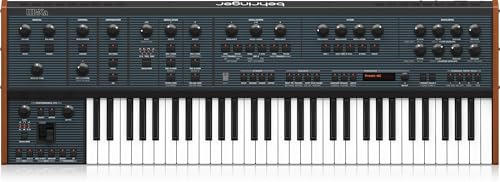
Behringer UB-Xa 16-voice
Synth players and producers who want a large analog voice count for pads, brass and stacked chords and already know how to work around a thin specification.
Read the Behringer UB-Xa 16-voice review →
Roland RD-08
Gigging players who want a Roland stage piano with speakers and everything to start in one purchase
Read the Roland RD-08 review →Questions Buyers Ask
Roland JUNO-DS 88-Key
See the current listing, price and included accessories.
About This Review
Mandrillis Team
The Mandrillis editorial team researches and compares audio and music gear using manufacturer documentation, verified specs and real buyer feedback, so you can make a confident purchase without wading through marketing claims.
Read our full research methodology.