Instruments Review
Roland JUNO-X Programmable Polyphonic Keyboard Review: Modern JUNO on ZEN-Core
The Roland JUNO-X Programmable Polyphonic Keyboard revives the JUNO panel with ZEN-Core power, offering a new JUNO-X Model with Super Saw and Chorus III, authentic JUNO-60 and JUNO-106 Models, XV-5080 sounds, RD-series pianos and a vocoder. An expansion slot, Scenes workflow and two arpeggiators complete a premium tier package.
Our Verdict
Research Score 85/100The Roland JUNO-X Programmable Polyphonic Keyboard is, on paper, a convincing modern JUNO. Three JUNO Models run on the ZEN-Core engine, the new JUNO-X Model adds a Super Saw oscillator, velocity sensitivity and Chorus III, and XV-5080 sounds, RD-series pianos and a vocoder make it a complete gig instrument. A user slot accepts JUPITER-8, JD-800 and Vocal Designer expansions, and ten free Sound Packs come with purchase. The slider panel and Scene workflow keep sound creation immediate. Key count, polyphony, effects detail, connectivity and weight are not published, so confirm those before buying at the premium tier. For JUNO devotees who want modern depth, it is a strong flagship class choice.
Editorial research score based on published specifications and documented features, not a customer rating or lab test.
Roland
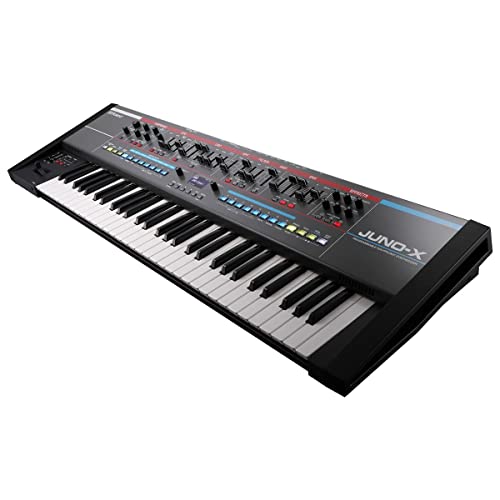
Roland JUNO-X Programmable Polyphonic Keyboard
Best for: A keyboardist who loves the JUNO sound and slider panel but needs modern pianos, a vocoder, velocity response and expandable vintage models in one stage instrument.
Skip it if: You want genuine analog circuits, a deep step sequencer or complete published connectivity before purchase.
Check Price on AmazonWe may earn a commission at no extra cost to you.
Listing verified: October 2026
Who Should Buy It
Buy it if
- Synth pop, indie and worship keyboardists who want JUNO character
- Session players who need pianos and vocoder alongside synth sounds
- Producers who want vintage Roland models without a computer
- Owners who will expand the instrument with additional Model Expansions
Skip it if
- You want voltage controlled analog oscillators and filters
- You need a full pattern sequencer onboard
- You prefer a workstation style panel over sliders
Key Specifications
| Type | Polyphonic keyboard synthesizer |
| Synthesis | ZEN-Core Synthesis System with JUNO-X Model (Super Saw oscillator, velocity sensitivity, Chorus III), JUNO-60 and JUNO-106 Models, XV-5080 sounds, RD-series pianos, vocoder and a user slot for Model Expansions |
| Polyphony | Not published in listing |
| Keys or pads | Keyboard; key count and action not published in listing |
| Sequencer | Traditional arpeggiator and I-Arpeggio; step sequencer not published in listing |
| Effects | Chorus III stated; full effects list not published in listing |
| Connectivity | Not published in listing |
| Power | Not published in listing |
| Weight | Not published in listing |
| Included accessories | 10 free Sound Packs from Roland Cloud; physical accessories not published in listing |
Overview
The Roland JUNO-X Programmable Polyphonic Keyboard revisits one of the most recognizable synth names of the 1980s using the company's current ZEN-Core Synthesis System. The listing describes a newly developed JUNO-X Model with a Super Saw oscillator, velocity sensitivity and a Chorus III effect, alongside authentic Models of the JUNO-60 and JUNO-106.
Beyond the JUNO lineage, the instrument pulls in sounds from the XV-5080, RD-series pianos and Roland's classic vocoder, and it provides a user slot for Model Expansions such as the JUPITER-8, JD-800 and Vocal Designer. Ten free Sound Packs come with purchase through Roland Cloud.
Workflow is built around Scenes and a front panel modeled on historic JUNO layouts, with high-resolution knobs and sliders. The listing does not publish key count, polyphony, connections or weight, so this premium tier review notes those gaps where they matter.
Sound Engine and Tone
ZEN-Core is Roland's current unified engine, capable of running modeled versions of vintage instruments as well as modern sample based sounds. In the Roland JUNO-X Programmable Polyphonic Keyboard it carries three JUNO voices: the new JUNO-X Model and Models of the JUNO-60 and JUNO-106. The originals were known for simple architecture and lush chorus, and the Chorus III effect extends that idea.
The Super Saw oscillator in the JUNO-X Model points toward trance and modern pop stacks that the originals could not produce, and velocity sensitivity adds dynamics the vintage units lacked. The listing does not specify polyphony, so how many of these voices can sound at once is unverified. Chorus III is presented in the listing as part of the new JUNO-X Model rather than as a separate master effect. That placement suggests the chorus is treated as integral to the voice, as it was on the original instruments.
Outside the JUNO sounds, XV-5080 content and RD-series pianos make the keyboard useful for full gigs rather than only synth parts. A vocoder is included for classic processed vocals, and the expansion slot lets buyers add JUPITER-8 or JD-800 Models later. Compared with a Korg Minilogue XD, the breadth here is far wider while analog purity is traded for modeling.
in-person Control and Workflow
The panel is described as inspired by historic JUNO synths, which generally means sliders for envelope, filter and oscillator parameters arranged left to right. The listing emphasizes high-resolution knobs and sliders for precise control, suggesting that fine adjustments translate smoothly rather than stepping audibly.
Scenes form the organizing concept: a Scene stores a complete setup that can be recalled quickly, which the listing calls a fast and intuitive workflow. That suits live players who need to move between songs without rebuilding layers each time. Scene capacity is not published. Players who build complex layered patches will want to confirm how many Scenes can be stored and how quickly they load between songs.
Two arpeggiators are provided, a traditional one and I-Arpeggio, which uses intelligent algorithms to generate phrases in response to what you play. Together with the slider based panel, the result on paper is an instrument that invites instant sound creation. The display type and the keyboard action are not described.
Sequencer, Effects and Features
No step sequencer or pattern recorder appears in the listing, only the two arpeggiators. I-Arpeggio is described as advanced and driven by intelligent algorithms, which in practice means it can generate accompaniment style phrases rather than simple up and down patterns. Linear song recording should be assumed absent until confirmed. For live performers the arpeggiators may cover most needs, but studio users who compose on the instrument should plan to record into a DAW instead.
Chorus III is the one effect named, and it is central to the JUNO sound. A full effects list is not published, although ZEN-Core instruments typically carry a broad suite. The vocoder counts as both a sound source and an effect, depending on how you use it.
The Model Expansion user slot is the most forward looking feature. Loading a JUPITER-8 or JD-800 Model turns the keyboard into a different vintage instrument, and the ten included Sound Packs give new owners immediate variety. Compatibility details and download requirements are not described in the listing.
- JUNO-X, JUNO-60 and JUNO-106 Models on ZEN-Core
- Super Saw oscillator and Chorus III
- XV-5080 sounds, RD-series pianos and vocoder
- Traditional arpeggiator plus I-Arpeggio
- User slot for Model Expansions
- Ten free Sound Packs with purchase
Build, Design and Portability
Physical details are thin in the listing. Key count, keyboard action, chassis material, dimensions and weight are all absent, so buyers should verify them. The design language follows the classic JUNO look according to the published description. The high-resolution sliders are the one physical component the listing describes in detail, which hints at where the design attention went.
High-resolution sliders and knobs generally indicate quality control hardware, which matters on a panel you will be touching constantly. Whether the chassis is metal or plastic and whether the instrument has built in speakers are not stated. Expect to confirm those in person or through the manufacturer.
As a premium tier stage synth, it is likely intended to be moved in a case, but with no weight figure published we will not characterize how portable it is. Treat portability as a question for the manufacturer's full specification rather than something this review can settle.
Connectivity, MIDI and Sync
The product listing does not describe audio outputs, MIDI ports, USB, pedal inputs or Bluetooth. For a premium keyboard that is a notable gap, and this review cannot evaluate how the instrument integrates with a DAW, a mixer or external gear. Pedal support for sustain and expression is also unstated, which matters for anyone using the RD-series pianos in a live set.
The reference to Roland Cloud for Sound Packs and Model Expansions implies some way of transferring content to the keyboard, most likely through a computer connection, but the mechanism is not stated. Confirm the transfer method before assuming convenience.
Sync and clock capabilities for the arpeggiators are likewise unpublished. Players who need tight tempo sync with a drum machine or DAW should check the full specification. The connectivity score reflects missing data rather than a known limitation.
Setup and Daily Use
Initial setup should involve registering the instrument to claim the ten free Sound Packs and exploring the expansion slot. Beyond that, the Scene based workflow means spending time organizing favorite layers and splits into Scenes for quick recall on stage. Because Scenes hold complete setups, a well organized Scene list becomes the set list, so naming and ordering them early saves time later.
Daily use will center on the JUNO panel. Pull a slider, hear the change, store the result in a Scene. For players coming from menu driven workstations this is the appeal: sound design by touch, with modern sounds behind it.
Content management through Roland Cloud adds a software layer to ownership, so expect occasional computer sessions for downloads and updates. The listing does not describe firmware procedures or whether an account is required.
Who Should Buy It
The Roland JUNO-X Programmable Polyphonic Keyboard is for players who love the JUNO sound and panel but need a modern instrument with pianos, vocoder, expansions and velocity response. Synth pop, indie, worship and session keyboardists fit well.
It also suits producers who want one keyboard that covers vintage polysynth modeling and broad workstation sounds without a computer. The expansion slot adds long term value for anyone who will keep adding Models over the years. The vocoder and RD-series pianos also make it a sensible single keyboard for singer-keyboardists who need processed vocals and acoustic piano in one package.
Analog purists who want real voltage controlled circuits should look at a true analog polysynth instead. Buyers who need a full step sequencer or who want every connection confirmed before purchase should wait for complete specifications.
Alternatives Worth Considering
The Korg Minilogue XD gives a real analog polysynth with a digital oscillator at a lower tier, with far fewer sounds and no pianos. It is the choice for analog character over breadth. Its sequencer and compact size suit desktop production more than full gig coverage.
Roland's own JD-Xi offers a compact crossover design with a small analog section, digital sounds and sequencing. It is a budget friendly way into Roland digital sounds without JUNO modeling or the slider panel.
Within the premium tier, other Roland ZEN-Core keyboards offer similar sound libraries with workstation panels rather than the JUNO slider layout. Choose the JUNO-X Programmable Polyphonic Keyboard specifically for its panel and its JUNO Models.
Verdict
On paper the Roland JUNO-X Programmable Polyphonic Keyboard is a convincing modern JUNO: three JUNO Models on ZEN-Core, Super Saw and Chorus III for contemporary stacks, pianos and vocoder for gig coverage, and an expansion slot for the future. The slider panel and Scene workflow keep it immediate. The two arpeggiators and the ten included Sound Packs mean there is plenty to explore before any expansion is purchased.
Key count, polyphony, effects detail, connectivity and weight are not published, so a premium tier purchase should wait on confirmation of those facts. If they match expectations, this is a strong flagship class performance synth for JUNO devotees.
Strengths and Limitations
Strengths
- JUNO-X, JUNO-60 and JUNO-106 Models on ZEN-Core
- Super Saw oscillator and Chorus III for modern stacks
- XV-5080 sounds, RD-series pianos and a vocoder for full gigs
- Panel inspired by historic JUNO synths with high-resolution sliders
- User slot for JUPITER-8, JD-800 and other Model Expansions
- Ten free Sound Packs with purchase
Limitations
- Key count, polyphony and connections are not published
- No step sequencer described, only arpeggiators
- Modeled rather than true analog circuitry
- Content management depends on Roland Cloud
How We Scored It
Scores reflect published specifications, documented features and value against the alternatives below. They are editorial research scores, not laboratory measurements.
Alternatives to Consider

Yamaha 76-Key
A gigging keyboardist who wants analog style, FM and realistic instrument engines with strong macro control in a carryable 76 key package that pairs with a DAW plugin.
Read the Yamaha 76-Key review →
Behringer 32 40-Input 25-Bus
An electronic musician, studio or live engineer who keeps many hardware instruments connected and wants recallable preamps, motorized faders and scene based mixing in one console.
Read the Behringer 32 40-Input 25-Bus review →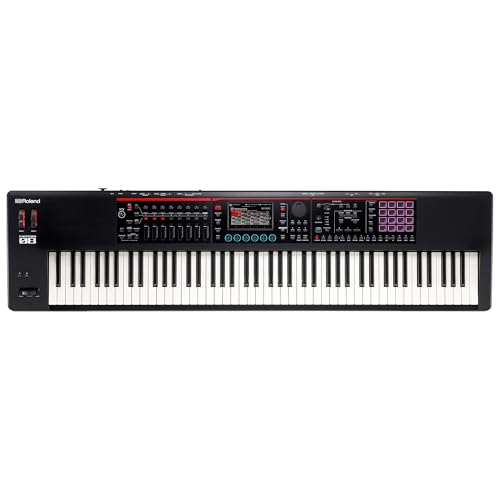
Roland FANTOM-08
A keyboardist who wants weighted piano touch, convincing pianos and organ, a vast sound library and real production tools in one stage ready instrument.
Read the Roland FANTOM-08 review →Questions Buyers Ask
Roland JUNO-X Programmable Polyphonic Keyboard
See the current listing, price and included accessories.
About This Review
Mandrillis Team
The Mandrillis editorial team researches and compares audio and music gear using manufacturer documentation, verified specs and real buyer feedback, so you can make a confident purchase without wading through marketing claims.
Read our full research methodology.