Instruments Review
Roland JUPITER-XM Iconic Synthesizer Review: Pro Connections in 37 Keys
The Roland JUPITER-XM Iconic Synthesizer packs ZEN-Core modeling, more than 4,000 presets, 256 user tones, 90 or more drum kits and an I-Arpeggio system behind 37 keys. Its listing itemizes a professional effects suite and a connection roster with XLR outputs, dual headphone jacks, mic input, full MIDI and USB audio.
Our Verdict
Research Score 85/100On paper the Roland JUPITER-XM Iconic Synthesizer is one of the best documented compact synths in the premium tier. ZEN-Core modeling with various Model sound generators sits behind 4,000 or more presets, 256 user tones and 90 or more drum kits, and I-Arpeggio turns the 37 key board into a performance partner. The effects list is itemized, from four multi-effect systems with 90 types to seven reverbs, four choruses and five delays, and the connection roster includes balanced XLR outputs, dual headphone jacks, a mic input with processing, full size MIDI, USB audio and MIDI and USB memory. Key size, polyphony, weight and the exact Model list are not published, so confirm those before buying. For portable professionals it is compelling.
Editorial research score based on published specifications and documented features, not a customer rating or lab test.
Roland
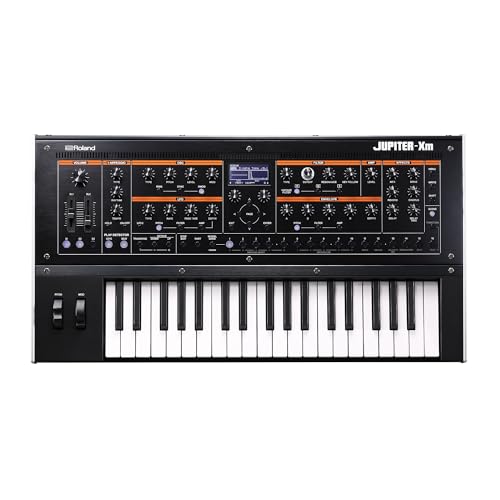
Roland JUPITER-XM Iconic Synthesizer
Best for: A gigging or traveling keyboardist who wants a compact synth with professional balanced outputs, a vast ZEN-Core library, full effects and an intelligent arpeggiator.
Skip it if: You need confirmed full size keys, a deep step sequencer or true analog circuitry.
Check Price on AmazonWe may earn a commission at no extra cost to you.
Listing verified: October 2026
Who Should Buy It
Buy it if
- Keyboardists who travel light but need XLR outputs and full MIDI
- Singer-keyboardists who want a mic input with processing
- Producers who want thousands of Roland sounds on a desktop
- Players who want the JUPITER name in the smallest practical format
Skip it if
- You require full size keys confirmed before purchase
- You compose linear songs onboard and need a sequencer
- You want voltage controlled analog oscillators
Key Specifications
| Type | 37-key portable professional synthesizer |
| Synthesis | ZEN-Core with various Model sound generators; 4,000 or more preset tones, 256 user tones, 90 or more drum kits |
| Polyphony | Not published in listing |
| Keys or pads | 37 keys; key size and action not published in listing |
| Sequencer | I-Arpeggio intelligent arpeggiator; step sequencer not published in listing |
| Effects | Multi-effects 4 systems with 90 types, Part EQ 5 systems, overdrive, reverb 7 types, chorus 4 types, delay 5 types, mic noise suppressor and compressor, master EQ and compressor |
| Connectivity | Main out XLR and 1/4 inch (L/MONO, R), stereo mini headphone jack front and 1/4 inch headphone jack rear, mic input 1/4 inch or XLR, stereo mini aux input, hold pedal and control pedal jacks, MIDI in and out, USB computer port for audio and MIDI, USB memory port, DC in |
| Power | DC in jack; adapter and battery details not published in listing |
| Weight | Not published in listing |
| Included accessories | Not published in listing |
Overview
The Roland JUPITER-XM Iconic Synthesizer is a 37 key portable synthesizer built on ZEN-Core with various Model sound generators, carrying one of Roland's most storied names into a compact format. The listing details a large preset library of 4,000 or more tones, 256 user tones, 90 or more drum kits and an I-Arpeggio system. It sits in the premium tier despite its size.
Where many listings stay vague, this one publishes a full connection roster: balanced XLR and 1/4 inch main outputs, two headphone jacks, a mic input on combined 1/4 inch and XLR, a stereo mini aux input, hold and control pedal jacks, full size MIDI in and out, a USB computer port for audio and MIDI, a USB memory port and a DC input. That is a stage keyboard's rear panel on a desktop sized instrument.
Effects are also itemized, with four multi-effect systems offering 90 types, five part EQ systems, overdrive, seven reverb types, four chorus types, five delay types, mic noise suppression and compression and master EQ and compression. Polyphony, key size and weight are not published, and this review flags those gaps where they matter.
Sound Engine and Tone
ZEN-Core gives the Roland JUPITER-XM Iconic Synthesizer the same modern engine found in the company's larger instruments, and the various Model sound generators recreate vintage Roland instruments within it. The listing does not name which Models are included, so buyers should confirm whether the classic JUPITER model is onboard. General knowledge of the engine suggests both modeled vintage and sample based modern sounds.
With 4,000 or more preset tones and 90 or more drum kits, the library is far larger than a typical compact synth, and the 256 user tone slots allow substantial personal programming. A Korg Minilogue XD or Arturia MicroFreak offers a fraction of this breadth, though each has analog or digital character of its own. Here the appeal is coverage rather than a single signature voice.
The mic input with noise suppression and compression suggests vocal processing capability, and the effects list supports that reading. The listing does not explicitly name a vocoder, so treat that as an inference to verify. Drum kits numbering 90 or more make the instrument a credible rhythm source for the arpeggiator to drive.
in-person Control and Workflow
Thirty seven keys is a compact performance format, suitable for leads, bass and chords in a small footprint. The listing does not say whether the keys are full size or mini, nor whether they carry aftertouch, which matters for how this instrument feels to serious players. Try the keybed before committing if touch is a priority.
I-Arpeggio is the published workflow feature: an intelligent arpeggiator that generates patterns from your playing, extending beyond the traditional up and down modes. On a small keyboard this acts as a performance partner, filling out drums and bass while you play chords or a lead line. It is the main reason a 37 key instrument can carry a solo performance.
Panel controls, display type and the number of knobs are not listed. Roland positions the instrument as a professional portable, so expect a reasonable complement of physical controls, but the listing does not confirm the layout. The hands score reflects a compact keyboard of unknown size and a strong arpeggiator.
Sequencer, Effects and Features
Beyond I-Arpeggio, no step sequencer or pattern recorder is described. The arpeggiator system is sophisticated enough to cover a good deal of accompaniment, but linear song recording should be assumed absent until confirmed. Producers who compose onboard will want to check this.
The effects specification is unusually complete. Four multi-effect systems with 90 types, five part EQ systems, overdrive, seven reverbs, four choruses and five delays cover almost every processing need, and master EQ and compression finish the output. This is a full stage keyboard's effects architecture.
The mic processing chain of noise suppression and compression supports live vocals through the instrument, and the aux input lets a phone or player join the mix. USB memory support adds storage for user content and backups. Together these features make the instrument a small self contained performance hub.
- ZEN-Core with various Model sound generators
- 4,000 or more presets, 256 user tones, 90 or more drum kits
- I-Arpeggio intelligent arpeggiator
- Four multi-effect systems with 90 types
- Seven reverb, four chorus and five delay types
- Mic input with noise suppression and compression
Build, Design and Portability
The listing describes the Roland JUPITER-XM Iconic Synthesizer as portable and professional with a legendary design, but gives no weight or dimensions. Battery operation is not mentioned; only a DC input is listed, so plan on an adapter. Confirm the figure before choosing a bag.
Chassis material is not stated. The presence of balanced XLR outputs and full size MIDI jacks on a 37 key instrument indicates a build intended for professional use rather than desktop only. Those connectors also take up rear panel space, which hints at a reasonably deep chassis.
At this size the instrument fits a backpack style keyboard bag and can sit on top of a larger board. It is the clear choice in the premium tier for players who travel light but want pro connections. The build score reflects a professional specification without a published weight.
Connectivity, MIDI and Sync
Connectivity is the strongest confirmed area. Main outputs on both XLR and 1/4 inch, a front stereo mini headphone jack and a rear 1/4 inch headphone jack, a combined mic input, a stereo mini aux input and two pedal jacks for hold and control cover live needs completely. Few compact synths publish a roster this full.
Full size MIDI in and out connect vintage and modern gear, while the USB computer port handles audio and MIDI with a DAW. A separate USB memory port manages backups and content. This roster matches larger stage keyboards and justifies a full connectivity score.
Clock sync for I-Arpeggio over MIDI is implied by the MIDI ports but not stated. CV connections are not listed, so modular users should plan on a separate converter. Balanced outputs mean long cable runs to a house mixer are not a concern.
Setup and Daily Use
Setup is quick: power through the DC input, choose XLR or 1/4 inch outputs, plug in headphones front or rear, and connect pedals as needed. The USB computer port adds audio interfacing for recording. A singer can add a microphone directly without a separate preamp.
Daily use centers on selecting from the large library, shaping with the effects and letting I-Arpeggio generate accompaniment. The 256 user tones store personal programming for quick recall. With 90 or more drum kits available, building a full arrangement from one instrument is realistic.
Content management runs through USB memory, and firmware updates likely use the same path, although the listing does not describe the procedure. Expect the usual Roland pattern of periodic updates that add Models or features over the instrument's life.
Who Should Buy It
The Roland JUPITER-XM Iconic Synthesizer is for gigging keyboardists, singer-keyboardists and producers who want a compact instrument with pro grade outputs, a vast sound library, full effects and an intelligent arpeggiator. It suits travel, small stages and desktop production equally well.
It also appeals to buyers who want the JUPITER name and Roland modeling in the smallest practical format. The mic input and aux input make it a sensible center for a solo performer who sings and plays.
Players who need full size keys confirmed, a deep step sequencer or genuine analog circuitry should look elsewhere. The premium tier price buys connections and library breadth, not analog character.
Alternatives Worth Considering
The Arturia MicroFreak is a budget tier compact digital synth with a strong sequencer and an unconventional touch keyboard, suited to sound design rather than full gig coverage. It has none of the professional outputs listed here.
The Korg Minilogue XD offers true analog polyphony in a compact keyboard with a sequencer, at a lower tier and with far fewer sounds. It is the choice for analog character over library size.
Roland's JD-Xi provides a budget tier crossover with sequencing, for buyers who want Roland sounds and pattern tools without the premium connections and library. It is the practical step down within the same brand.
Verdict
On paper the Roland JUPITER-XM Iconic Synthesizer is one of the best documented compact synths in its class: ZEN-Core modeling, more than 4,000 presets, an itemized professional effects suite, I-Arpeggio and a connection roster that rivals full size stage keyboards, all behind 37 keys. The listing leaves little doubt about what the rear panel offers.
Key size, polyphony, weight and the exact Model list are not published, so confirm those before buying at the premium tier. For portable professionals who value connections and coverage, it is a compelling package.
Players who prize touch above all should try the keybed first. Everything else about the published specification points to a serious instrument in a small box.
Strengths and Limitations
Strengths
- ZEN-Core engine with various Model sound generators
- 4,000 or more presets, 256 user tones and 90 or more drum kits
- I-Arpeggio intelligent arpeggiator
- Four multi-effect systems with 90 types plus itemized reverb, chorus and delay
- Balanced XLR outputs, full size MIDI and dual headphone jacks
- USB audio and MIDI plus USB memory port
Limitations
- Key size, action and polyphony are not published
- No step sequencer described, only the arpeggiator
- Battery operation not mentioned, only a DC input
- Weight is not published
How We Scored It
Scores reflect published specifications, documented features and value against the alternatives below. They are editorial research scores, not laboratory measurements.
Alternatives to Consider

Yamaha 61-Key
A synth player or producer who wants analog style and FM engines, strong macro control and plugin parity in a portable 61 key keyboard.
Read the Yamaha 61-Key review →
Roland AE-30
A saxophonist or wind player who wants hundreds of acoustic and synth sounds, silent practice, harmony functions and MIDI control through familiar fingering.
Read the Roland AE-30 review →Questions Buyers Ask
Roland JUPITER-XM Iconic Synthesizer
See the current listing, price and included accessories.
About This Review
Mandrillis Team
The Mandrillis editorial team researches and compares audio and music gear using manufacturer documentation, verified specs and real buyer feedback, so you can make a confident purchase without wading through marketing claims.
Read our full research methodology.