Speakers Review
Bluesound Powernode Review: Compact 100 Watt Streaming Amplifier
The Bluesound Powernode is a compact streaming amplifier rated at 100 watts per channel, with HDMI eARC for single cable television audio, access to more than 20 streaming services through the BluOS app, and a bundled BLS RC1 remote. Dimensions, weight and phono support are not published.
Our Verdict
Research Score 75/100The Bluesound Powernode positions itself as a single box solution combining real amplifier power with streaming breadth, and the listing backs that with a specific 100 watt per channel figure alongside HDMI eARC for simple television integration. Access to more than 20 streaming services and a personal music library through the BluOS app, plus a bundled BLS RC1 remote control and a THX AAA headphone output, round out a genuinely complete feature set for a compact amplifier. What is missing is just as worth noting, since no phono input is described, dimensions and weight are not published, and the exact channel count when wirelessly paired for surround is not detailed, so buyers who need those specifics should confirm them directly.
Editorial research score based on published specifications and documented features, not a customer rating or lab test.
Bluesound
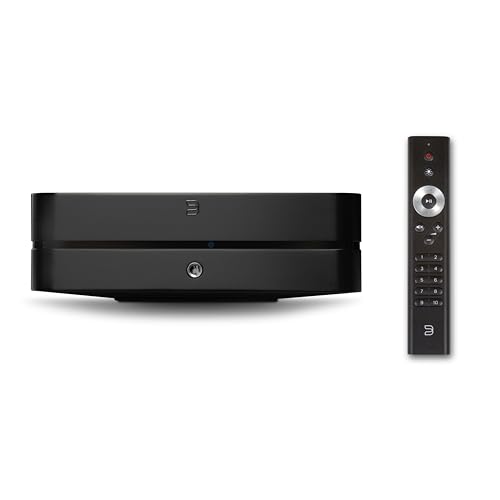
Bluesound Powernode
Best for: Buyers who want a single compact box with real amplifier power, HDMI eARC television integration, and broad streaming service access without running a separate preamp or processor.
Skip it if: Avoid it if you need a phono input, exact dimensions, or a published power rating into a specific impedance before you buy.
Check Price on AmazonWe may earn a commission at no extra cost to you.
Listing verified: October 2026
Who Should Buy It
Buy it if
- Buyers who want one box that both streams and drives speakers with a genuinely stated 100 watt per channel figure
- Households that want HDMI eARC for simple single cable television audio integration
- Listeners who want access to more than 20 streaming services alongside a personal music library through one app
- Buyers who want a bundled physical remote control rather than relying only on an app
Skip it if
- You need a phono input built into the amplifier itself
- You require published dimensions and weight before ordering
- You want an exact surround channel count confirmed rather than a general description of wireless pairing
Key Specifications
| Drive type | Not published in listing |
| Cartridge | Not published in listing |
| Platter | Not published in listing |
| Tonearm | Not published in listing |
| Speeds | Not published in listing |
| Built-in preamp | Not published in listing |
| Bluetooth and USB | Not published in listing |
| Outputs | HDMI eARC, THX AAA headphone output |
| Dimensions and weight | Not published in listing. The listing describes a minimalist footprint without giving exact measurements |
| Included accessories | BLS RC1 remote control is bundled as part of this listing |
| Type | Compact streaming integrated amplifier, bundled with a BLS RC1 remote control |
| Power output | 100 watts per channel, described in the listing as clean and low distortion. No rating into a specific impedance or a bridged configuration is published |
| Channels | 2 channel stereo amplifier as a base configuration. The listing describes wireless surround pairing as a way to expand toward a fuller multi speaker system, though it does not state an exact surround channel count |
| Inputs and outputs | HDMI eARC connection. The listing does not itemize additional analog or digital audio inputs individually |
| HDMI and video | One HDMI eARC connection, described as enabling a single cable connection to a television for audio. No further video pass through features are described |
| Wireless and streaming | Access to more than 20 authorized streaming services including Spotify, Tidal, Qobuz, Apple AirPlay 2 and internet radio, plus a personal music library, all managed through the BluOS app with multi room playback across a home network |
| Phono input | Not published in listing |
| Remote and app | Bundle includes a BLS RC1 remote control, alongside the BluOS app for streaming service access and multi room management |
Overview
The Bluesound Powernode, in its 2025 version, is pitched in the listing as a compact streaming amplifier meant to replace a bulkier receiver setup, combining real speaker driving power with broad streaming access inside one box, bundled here with a BLS RC1 remote control for wireless operation out of the box.
At an upper mid-range price tier, the core idea is simplicity: one cable to the television through HDMI eARC, one app for streaming and multi room management, and a stated 100 watt per channel power figure that puts it ahead of many compact streaming amplifiers on paper.
This is a genuine integrated amplifier rather than a DAC only streamer, meaning it can drive passive speakers directly, which separates it from some other products in the same general Bluesound lineup that depend on an external amplifier. Buyers should also note that the listing treats the remote control and the amplifier as one combined listing, rather than as 2 separately purchasable items.
Power and Sound Quality
The listing states 100 watts per channel, described as clean and low distortion, which on paper is a strong figure for a compact, single box streaming amplifier and should be enough to comfortably fill a typical living room with a reasonably efficient pair of speakers.
No rating into a specific impedance, such as 4 or 6 ohms, or in a bridged configuration is published, so buyers running unusually demanding speaker loads should treat the stated 100 watt figure as a general indicator rather than a complete specification sheet.
The listing also describes wireless surround pairing as a way to expand the system toward a fuller, more immersive setup without running new speaker cable, though it stops short of stating an exact channel count or power figure for that expanded configuration, leaving some detail for a buyer to confirm directly. Because the amplifier handles both streaming and amplification in one chassis, any limitation in the digital front end would show up directly in the final sound, unlike a separates based system where a weak source can sometimes be upgraded independently.
Connectivity and Inputs
The standout connectivity feature described in the listing is HDMI eARC, which lets a buyer run a single cable from the television to the Powernode and send audio back through that same connection, removing the need for separate optical or coaxial audio cabling in many setups.
Beyond that HDMI eARC connection, the listing does not itemize individual analog or digital audio inputs, which is a real gap for anyone trying to plan connections for additional sources like a disc player or a separate streaming box.
Wireless surround pairing is described as a way to connect additional speakers without running new speaker wire, extending the system beyond the base 2 channel configuration, though the listing leaves the specific hardware and channel count for that expansion undefined. Buyers with an existing television that lacks HDMI eARC support should confirm compatibility before assuming the single cable setup described in the listing will work exactly as outlined.
Formats, Processing and Room Correction
Format and processing detail in the listing centers on service access rather than named audio codecs or decoding formats, listing more than 20 authorized streaming services including Spotify, Tidal, Qobuz, Apple AirPlay 2 and internet radio, alongside a personal music library, all pulled together through the BluOS app.
There is no mention of a room correction system in the listing for this particular product, which is a contrast with some other Bluesound products that explicitly reference a Dirac Live option, so buyers specifically wanting acoustic calibration should not assume it is available here.
Multi room listening is described as working across a home network through the BluOS app, letting a buyer play the same or different content in different rooms if additional Bluesound or BluOS compatible components are added later. Buyers who specifically want codec level detail, rather than a simple list of supported streaming services, should look for that information directly, since this listing stops short of naming individual audio formats or bit depths.
- HDMI eARC for single cable television audio
- Access to more than 20 authorized streaming services
- Spotify, Tidal, Qobuz, AirPlay 2 and internet radio support
- Personal music library playback through the BluOS app
- Wireless surround pairing for system expansion
Features, Streaming and Apps
The BluOS app is described as the hub bringing together more than 20 authorized streaming services, internet radio and a personal music library, while also supporting multi room listening across a private home network for buyers who add more compatible components over time.
5 playback presets are mentioned on the touch sensitive glass panel, giving quick, physical access to favorite stations or playlists without needing a phone in hand for every listening session.
The THX AAA headphone output adds a private listening path for late night use, described in the listing as delivering detail and low distortion separate from the main speaker output, which is a genuinely useful inclusion on a compact streaming amplifier. Buyers who want a consistent experience across multiple rooms should also check that any additional speakers they plan to add are confirmed BluOS compatible before purchasing them separately.
Build, Design and Controls
The listing describes a sleek matte finish and a minimalist footprint, aimed at a unit that can sit visibly in a living space rather than needing to be hidden in a cabinet, though exact dimensions are not stated.
A touch sensitive glass panel on the unit itself provides 5 playback presets for quick access, combining a modern physical control surface with the bundled BLS RC1 remote for buyers who prefer a traditional remote instead.
No weight figure or specific material beyond the matte finish is described, so buyers planning exact shelf placement or wall mounting should confirm those physical details directly rather than assume a particular size or weight class. The touch sensitive glass panel is a meaningfully different control surface from a traditional button based front panel, which some buyers will prefer and others may find less tactile during quick adjustments.
Setup and Daily Use
Setup centers on connecting the HDMI eARC cable to a television, joining the unit to a home network, and installing the BluOS app to access streaming services and manage any multi room grouping with other compatible components.
Day to day, the 5 touch panel presets and the bundled BLS RC1 remote should cover most routine listening without opening the app every time, while the app itself remains the tool for browsing the more than 20 supported streaming services and a personal library.
Buyers who add wireless surround speakers later would go through an additional pairing step described generally in the listing, though the specific pairing process and hardware requirements are not detailed beyond the general description of wireless surround pairing. Buyers unfamiliar with the BluOS ecosystem should expect a short learning curve the first time they set up streaming services and multi room groups, even though the listing describes the overall process as straightforward.
Who Should Buy It
This amplifier suits buyers who want one compact box that both streams and genuinely drives speakers, backed by a stated 100 watt per channel figure rather than a vague or unpublished power rating.
It is also a strong fit for households that want a single cable television connection through HDMI eARC, rather than running separate optical or coaxial audio cabling alongside existing HDMI runs.
Buyers who want broad streaming access, more than 20 authorized services plus a personal music library, and multi room playback through one consistent app will find the feature set here genuinely complete for everyday listening. Buyers specifically prioritizing a simple, decluttered living room setup will likely value the single cable HDMI eARC approach described here more than buyers who already have a complex, multi component system.
Alternatives Worth Considering
Buyers who specifically want a dedicated DAC preamp with a more elaborate digital conversion chain, rather than a built in power amplifier, should compare this against the Bluesound Node Icon Streamer, which trades built in amplification for a more audiophile focused front end.
For buyers who want a full multi channel home theater receiver with HDMI switching across multiple sources, a traditional AV receiver such as a Denon AVR-X2900H offers more HDMI inputs and surround channels, at the cost of the Powernode's compact, single cable simplicity.
Anyone who wants acoustic room correction included should look elsewhere, since this particular listing does not describe a Dirac Live or similar calibration option for the Powernode. Buyers should also factor in that neither comparison alternative mentioned here matches this amplifier's exact combination of stated power and single cable television integration, so tradeoffs should be weighed deliberately rather than assumed.
Verdict
As a compact, single box streaming amplifier, the Bluesound Powernode backs up its pitch with a genuinely stated 100 watt per channel power figure, HDMI eARC for simple television integration, and broad access to streaming services and a personal library through the BluOS app.
The gaps are mostly around physical specification and finer detail, since dimensions, weight, individual input counts beyond HDMI eARC, and the exact channel count for wireless surround expansion are not published, leaving some confirmation work for a buyer who wants those specifics nailed down before purchase.
Buyers should judge this amplifier primarily against other compact, single box streaming amplifiers rather than against larger multi channel AV receivers, since the listing's own framing is built around simplicity and a single television connection rather than a full home theater speaker layout.
Strengths and Limitations
Strengths
- 100 watts per channel is a genuinely strong stated power figure for a compact streaming amplifier
- HDMI eARC lets a television connect over a single cable rather than running separate audio wiring
- Access to more than 20 authorized streaming services plus a personal music library through the BluOS app
- THX AAA headphone output adds a dedicated private listening path beyond the main speaker output
- Wireless surround pairing offers a path to a fuller speaker system without running new speaker cable
- Bundled BLS RC1 remote control means physical control is available without opening an app
Limitations
- No published power rating into a specific impedance or in a bridged configuration, only a general per channel figure
- No phono input described, so a turntable would need a separate phono preamp
- Dimensions and weight are not stated in the listing
- Individual analog or digital audio inputs beyond HDMI eARC are not itemized
- Exact surround channel count when wirelessly paired is not detailed
How We Scored It
Scores reflect published specifications, documented features and value against the alternatives below. They are editorial research scores, not laboratory measurements.
Alternatives to Consider
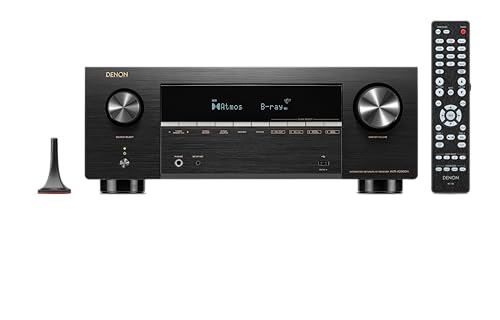
Denon AVR-X2900H
Buyers who want a full 7.2 channel home theater receiver with strong gaming features, built in Audyssey room correction, and HEOS whole home multiroom audio at an upper mid-range price.
Read the Denon AVR-X2900H review →
Marantz Cinema 60
Buyers who want a hand tuned, premium 7.2 channel receiver with a genuine phono input, 8K capable HDMI inputs, and HEOS hi-res streaming.
Read the Marantz Cinema 60 review →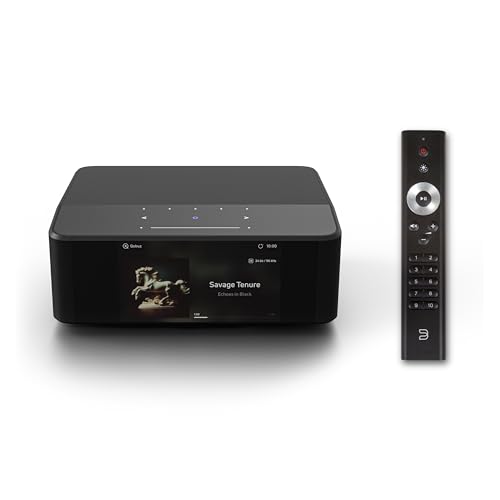
Bluesound Node Icon Streamer
Buyers who already have powered speakers or a separate amplifier and want a high end streaming DAC front end with a strong headphone amplifier and a bundled remote.
Read the Bluesound Node Icon Streamer review →Questions Buyers Ask
Bluesound Powernode
See the current listing, price and included accessories.
About This Review
Mandrillis Team
The Mandrillis editorial team researches and compares audio and music gear using manufacturer documentation, verified specs and real buyer feedback, so you can make a confident purchase without wading through marketing claims.
Read our full research methodology.